If you’re staring at a 2002 Nissan on a used lot, or you already own one and want to know where it sits in the lineup, this is the full picture. 2002 was a pivot year for Nissan. The Altima got a complete redesign that finally made it a real Camry rival, the brand was deep into Carlos Ghosn’s revival plan, and the trucks and SUVs were doing the heavy lifting on volume.
Most directory pages will hand you a grid of thumbnails and a starting price. That’s fine if all you need is a name. But it won’t tell you which of these holds up two decades later, what breaks, or which one is the smart buy in 2026. That’s the part below.
At a Glance: The 2002 Nissan Lineup
Nine core models carried the year. Here they are in one table — body type, base MSRP when new, engine, and EPA city/highway figures (original ratings, which run optimistic by today’s testing).
| Model | Body type | Base MSRP (new) | Engine | MPG (city/hwy) |
|---|---|---|---|---|
| Sentra | Compact sedan | ~$13,000 | 1.8L / 2.5L I4 | 28/35 |
| Sentra SE-R | Sport sedan | ~$17,400 | 2.5L I4 (165–175 hp) | 23/28 |
| Altima | Midsize sedan | ~$16,600 | 2.5L I4 / 3.5L V6 | 23/29 |
| Maxima | Full-size sedan | ~$23,000 | 3.5L V6 (255 hp) | 20/26 |
| Frontier / King Cab | Pickup | ~$13,500 | 2.4L I4 / 3.3L V6 | 19/23 |
| Xterra | Midsize SUV | ~$18,500 | 2.4L I4 / 3.3L V6 | 17/20 |
| Pathfinder | Midsize SUV | ~$27,000 | 3.5L V6 (240 hp) | 16/20 |
| Quest | Minivan | ~$23,000 | 3.3L V6 | 17/23 |
One note before you scroll: the 350Z and the Murano crossover are 2003 models, not 2002. The Z’s return and the Murano’s debut both landed for the ’03 model year. If a listing calls a “2002 350Z” anything other than a concept car, the year is wrong.
What Changed for 2002
The headline was the fourth-generation Altima. Nissan moved it onto the new FF-L platform, grew it into proper midsize territory, and — for the first time — dropped a 240-hp 3.5L V6 into a family sedan that previously topped out at a four-cylinder. It went from forgettable to a genuine Accord-and-Camry problem overnight.
The Maxima got a styling refresh and its own version of that 3.5L V6, now pushing 255 hp. The Sentra SE-R and SE-R Spec V arrived as the year’s enthusiast play, the Spec V getting a 175-hp 2.5L and a six-speed manual. Everything else was a carryover or a light update — the trucks and SUVs were still riding the goodwill of their late-’90s redesigns.
The Sedans
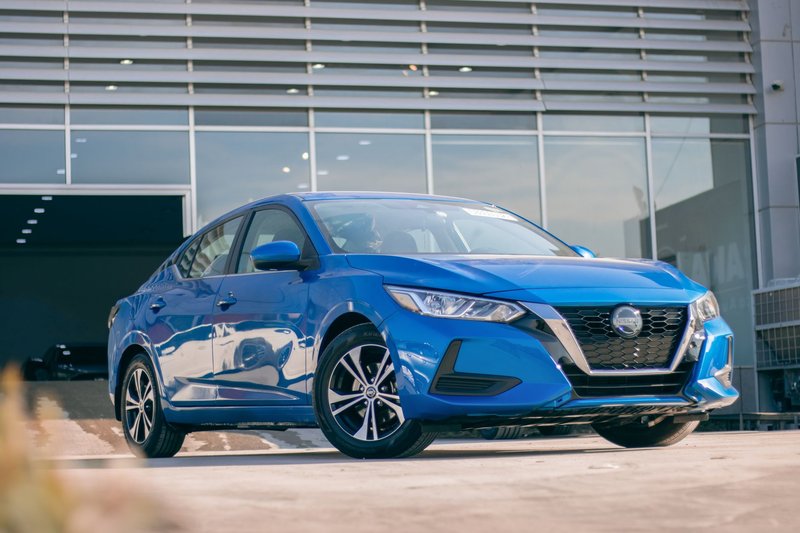
Sentra (B15)
The economy anchor. The base 1.8L is exactly what you’d expect — slow, cheap to run, and nearly impossible to kill. These are the cars still doing 250,000-mile commutes. The interior plastics are grim and road noise is loud, but as a first car or a beater that won’t strand you, a clean 1.8 Sentra is one of the safer used bets in this whole lineup.
Sentra SE-R and Spec V
The fun one. The Spec V with its 175-hp QR25DE and six-speed is the model enthusiasts still hunt for. The catch: early QR25DE engines had a known appetite for oil and some pre-cat failure issues that could send debris back into the cylinders. A Spec V with documented oil consumption history and a clean compression test is worth paying up for. One with a blank service record is a gamble.
Altima (Fourth Gen)
The most important car of Nissan’s 2002 year, and the one that needs the most caution used. The 3.5 SE V6 is genuinely quick and still feels modern to drive. But it shares the QR25DE oil-burning problem in four-cylinder form, and the V6 cars are known for occasional catalytic converter and timing-related issues at high mileage. The 2002–2003 Altimas also had more recalls than later years as Nissan worked the kinks out. Buy one that’s been maintained, budget for the oil-consumption check, and you’ve got a lot of car for the money.
Maxima
The “4DSC” — four-door sports car — still earned the badge in 2002. The 255-hp VQ35DE is one of Nissan’s best engines ever, smooth and torquey and reliable when the timing chain tensioners and motor mounts are looked after. The front motor mount failing is the classic Maxima tell; you’ll feel a clunk on acceleration. A Maxima is the value pick in this lineup if you want power and don’t need all-wheel drive — the VQ engine routinely crosses 200,000 miles.
The Trucks and SUVs
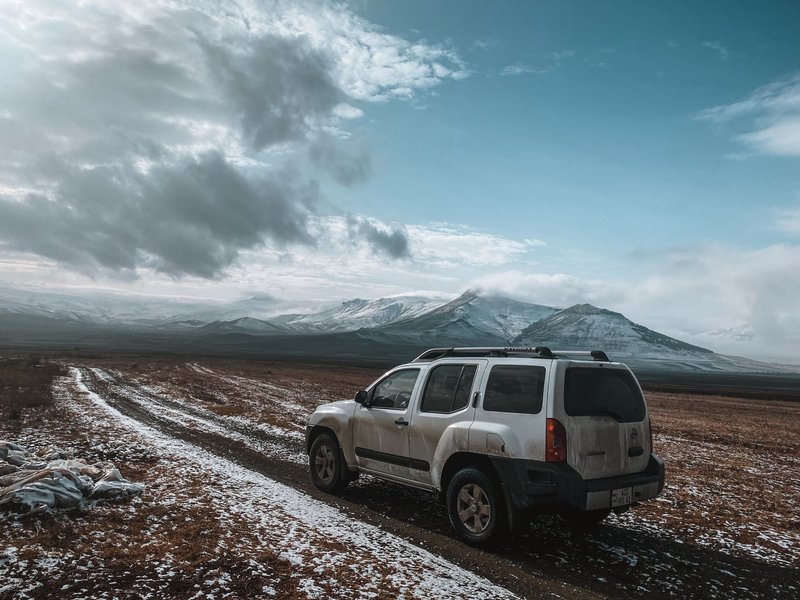
Frontier and King Cab
The compact pickup that punched above its size. The 3.3L V6 (and the supercharged version in the SC trim) is durable, and the body-on-frame Frontier shrugs off work that would tire out a unibody. Rust is the enemy here — check the frame and bed corners hard, especially on trucks from salt states. Mechanically these are some of the longest-lived vehicles Nissan made in this era — a toughness that traces straight back through the company’s Datsun-badged trucks and sedans that built the brand’s durability reputation in the first place.
Xterra (First Gen)
Built on the Frontier platform and aimed squarely at people who actually go outside. The first-gen Xterra is rugged, simple, and easy to wrench on. The 3.3L V6 is adequate, not fast — if you want more, the supercharged SC trim adds real grunt. Same rust caveat as the Frontier. These have a cult following for a reason: they’re cheap, capable, and parts are everywhere.
Pathfinder
The mature choice. The 2002 Pathfinder’s 3.5L V6 makes 240 hp, and the platform earns its strong owner-satisfaction scores — buyers consistently rate it above four out of five years later. It’s more refined than the Xterra and roomier inside. Watch for the same VQ-family timing chain wear at high mileage and check the body mounts. A well-kept Pathfinder is arguably the most comfortable daily driver in this group.
Xterra vs. Pathfinder
Quick version: the Xterra is the cheaper, more trail-focused, easier-to-repair choice. The Pathfinder is the more comfortable, more powerful, more on-road-friendly one. Both share Nissan’s tough body-on-frame DNA from this era. If you’re hauling a family and want quiet highway miles, Pathfinder. If you want a capable rig you won’t cry over scratching, Xterra.
The Minivan: Quest
The 2002 Quest was the last of the Ford-built, Mercury Villager-twin generation before Nissan brought production in-house for 2004. It’s an honest, unremarkable minivan with a 3.3L V6. Nothing exciting, nothing notably fragile either. If you find one cheap with low miles, it’ll do minivan things competently. Most buyers cross-shopping people-movers will find a same-era Honda Odyssey or Toyota Sienna more refined.
Which 2002 Nissan Should You Buy Today?
Stripped to the picks:
- Best all-around value: Maxima. The VQ35DE engine alone justifies it, and prices are low.
- Best for longevity / first car: base Sentra 1.8 or a Frontier V6. Both are famously hard to kill.
- Best SUV for families: Pathfinder. Most comfortable, well-rated by owners.
- Best for the trail: Xterra. Cheap to buy, cheap to fix, genuinely capable.
- For enthusiasts: Sentra Spec V — but only with a documented engine history.
The one consistent thing to check across the four-cylinder Altimas and Sentras is oil consumption on the QR25DE engine. It’s the defining weak point of this model year. The VQ-powered cars (Maxima, Pathfinder, V6 Altima) are the stronger long-term bets, with the usual high-mileage attention to timing chain tensioners and motor mounts.
For any of them, the NHTSA recall database is worth a two-minute check by VIN before you hand over money. Pull the service records, run a compression or oil-consumption test on the four-cylinders, and inspect the frame on the trucks. Do that, and a 2002 Nissan can still be a smart, cheap, reliable buy more than twenty years on.

Marco Delantero
More from Marco DelanteroHow we reviewed this article
This article was researched against manufacturer records and editorially reviewed before publishing. We accept no payment for coverage.