In 1913, Indian built roughly 32,000 motorcycles. Three years earlier the figure had been closer to 500. No American manufacturer before or since climbed that fast, and for most of the decade the company in Springfield, Massachusetts, was the largest motorcycle maker on the planet. Harley-Davidson, the brand everyone now thinks of first, spent the 1910s playing catch-up.
This is the decade where Indian earned the reputation it would spend the next century living off. It’s also the decade most “history of Indian” articles rush through in a paragraph or two before sprinting to the 1940s Chief. So here’s the 1910s on their own terms: the races that built the legend, the engines that defined the era, the men who ran the place, and a model-by-model breakdown for anyone trying to identify or value an early machine.
Table of Contents
- The Isle of Man Sweep That Changed Everything
- The Sales Explosion of 1911–1913
- The Men Behind the Machine
- Model-by-Model: The Indians of the 1910s
- Indian Goes to War
- How to Identify a 1910–1919 Indian
- What These Bikes Are Worth Today
- The Decade in Perspective
The Isle of Man Sweep That Changed Everything
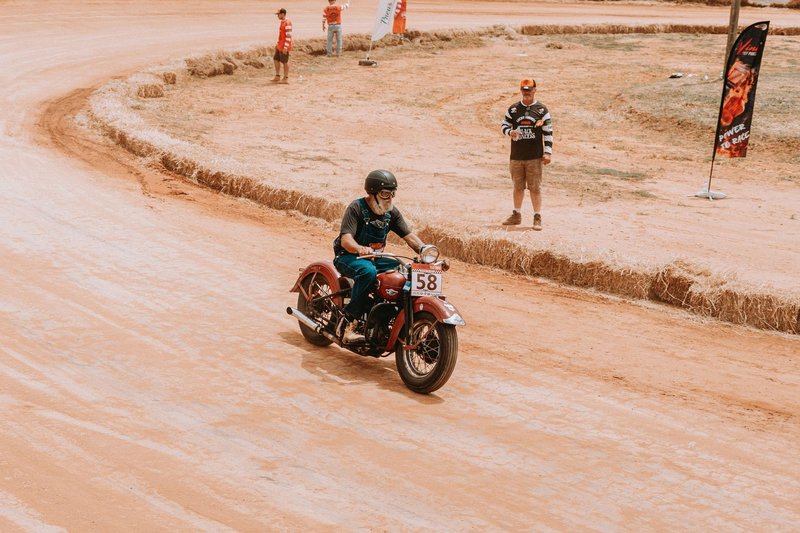
In June 1911, the Isle of Man Senior TT ran for the first time over the full Mountain Course — the brutal 37-mile loop still used today. Indian sent a team of riders on its new chain-drive, two-speed twins. They finished first, second, and third.
A clean podium sweep, on foreign soil, at the most prestigious road race in the world. The riders were Oliver Godfrey, Charles Franklin, and Arthur Moorhouse, and the result detonated across the Atlantic. An American factory had walked into Britain’s premier event and humiliated the home teams. The win is documented in the Isle of Man TT’s official race history, and it did for Indian what no advertising budget could.
The 1911 bikes that swept the TT introduced two things that mattered: a proper two-speed countershaft transmission and chain final drive, replacing the leather belts that slipped in the rain. While most American machines were still single-speed belt-drive contraptions, Indian was already racing — and winning — on hardware that pointed at the future.
The Sales Explosion of 1911–1913
The racing success translated directly into the order book. Indian’s production went vertical: a few hundred bikes early in the decade, around 20,000 in 1912, and roughly 32,000 in 1913. At its 1913 peak the Springfield plant covered acres and employed thousands, churning out more motorcycles than any factory anywhere.
What made it possible wasn’t just race wins. It was a genuinely modern product. By 1913 you could buy an Indian with electric lighting, a two-speed gearbox, and the company’s clever cradle-spring frame — an early swingarm rear suspension that put Indian years ahead of rigid-framed rivals. Few of the other names from the era — and there were many, as any survey of classic motorcycle brands makes clear — were offering anything close. The 1914 Hendee Special even offered an electric starter, decades before the feature became standard. That one was ahead of its time in the worst way: the batteries of the era couldn’t reliably deliver, and it flopped commercially. But the ambition tells you everything about where Indian’s head was at.
The Men Behind the Machine
Indian wasn’t a faceless corporation. A handful of specific people built it.
George Hendee was the founder and the businessman. A former champion bicycle racer, he ran Hendee Manufacturing Company, the corporate name behind the Indian brand until 1923. Hendee was the salesman and the organizer — the one who turned a workshop into the world’s biggest motorcycle factory.
Oscar Hedstrom was the engineer and the soul of the early product. A Swedish-born machinist, Hedstrom designed Indian’s first engine and most of what followed through the early 1910s. The deDion-influenced single and the later V-twins were his. When Hedstrom left the company in 1913 after disputes with the board over stock manipulation, Indian lost its founding engineering genius, and it showed.
Charles B. Franklin picked up that torch. An Irish engineer and one of the 1911 TT podium riders, Franklin joined the company and went on to design the Powerplus engine and, in the next decade, the legendary Scout and Chief. If Hedstrom defined Indian’s first decade, Franklin defined its second.
Two riders deserve their own line. Erwin “Cannonball” Baker set transcontinental records on Indians, including an 11-day, 12-hour run from San Diego to New York in 1914 that became a national sensation and gave the Cannonball Bapline endurance run its name. And Jake DeRosier, the board-track speed king, was Indian’s most famous racer before a crash on a rival machine ended his career and, soon after, his life. These were the names that sold bikes.
Model-by-Model: The Indians of the 1910s
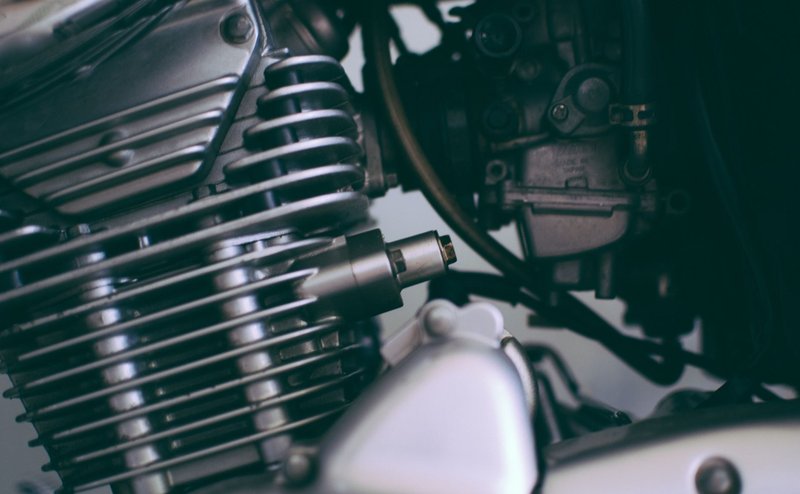
Indian’s 1910s lineup ran from tiny lightweights to big touring twins. Here are the machines that mattered.
The Powerplus V-Twin (1916–1924)
The defining engine of the late decade. Introduced for the 1916 model year, the Powerplus was a 61-cubic-inch (1,000cc) 42-degree side-valve (flathead) V-twin designed largely by Charles Franklin. It made about 18 horsepower and would push the bike past 60 mph — serious speed for 1916.
The flathead layout was the headline. Side valves meant the engine was quieter, cleaner, more reliable, and easier to maintain than the older inlet-over-exhaust “F-head” design it replaced. The Powerplus name was a literal claim — more power, fewer headaches. It stayed in production well into the 1920s Indian motorcycle lineup and set the template for American V-twin design for a generation.
The Model K “Featherweight” (1916)
At the opposite extreme. The Model K was a 221cc (13.5 ci) two-stroke single, a genuine lightweight aimed at riders who found the big twins intimidating or expensive. It was sometimes called the “Featherweight,” and it represented Indian hedging its bets — trying to own the entry-level market the same way it owned the performance end. It didn’t last long, but it shows the breadth of the catalog.
The Model O “Light Twin” (1917–1919)
A more unusual machine: a 257cc opposed flat-twin (boxer) — two cylinders pointing fore and aft, mounted longitudinally. Smooth, light, and easy to ride, the Model O was Indian’s answer to small-displacement European designs. Smooth running but underpowered, it never sold in big numbers, which is exactly why a surviving one is a collector’s prize today.
The Big Twins: Standard, Roadster, and Touring Models
Through the early-to-mid decade, the bread and butter was the 61-ci F-head V-twin in various trims — the bikes most buyers actually rode. These carried the two-speed gearbox, the cradle-spring frame on better-equipped versions, and the long, low Indian profile. By 1916 the Powerplus had largely taken over as the flagship twin.
Year-by-Year Model and Spec Reference
| Year | Notable model | Engine | Displacement | Key feature |
|---|---|---|---|---|
| 1911 | TT Racer | F-head V-twin | ~61 ci | Two-speed gearbox, chain drive |
| 1913 | Standard Twin | F-head V-twin | 61 ci (1000cc) | Cradle-spring rear suspension |
| 1914 | Hendee Special | F-head V-twin | 61 ci | Electric start (early, unreliable) |
| 1916 | Powerplus | Side-valve V-twin | 61 ci (1000cc) | Flathead, ~18 hp, 60+ mph |
| 1916 | Model K | Two-stroke single | 221cc | “Featherweight” lightweight |
| 1917 | Model O | Flat-twin (boxer) | 257cc | Smooth, longitudinal twin |
| 1917–18 | Powerplus (military) | Side-valve V-twin | 61 ci | WWI contract production |
Indian Goes to War
When the United States entered World War I in 1917, Indian made a decision that looks, in hindsight, like a strategic blunder dressed as patriotism. The company diverted the bulk of its production — by most accounts around 50,000 machines — to the U.S. military, largely Powerplus-based bikes used as dispatch and scout vehicles.
The problem wasn’t the war work itself. It was the price. Indian sold to the government at or near cost, which meant the factory’s best years of output generated little profit. Worse, it abandoned its civilian dealer network at exactly the moment Harley-Davidson chose to keep supplying dealers and customers. When the war ended, Indian’s dealers had spent two years with nothing to sell, and many had switched to Harley. The U.S. military’s reliance on motorcycle dispatch riders is well documented in Smithsonian accounts of WWI technology. Indian won the contract and lost the market — the long, slow decline that ended in 1953 arguably started right here.
How to Identify a 1910–1919 Indian
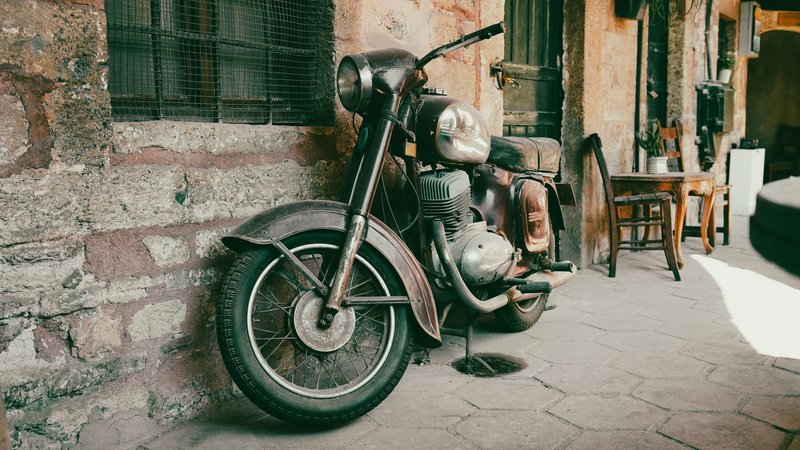
If you’ve found an early Indian — in a barn, at an auction, on a marketplace listing — here’s how to place it in the decade.
Frame and serial numbers. Indian stamped serial numbers on the engine cases and frame. The numbers are model- and year-specific, and the Indian Motocycle Club’s registries (note the period spelling, “Motocycle,” with no “r” — Indian dropped it deliberately) are the authoritative cross-reference. Match the engine number to a year before you trust a seller’s claim.
Valve layout tells you the era. An exposed pushrod, inlet-over-exhaust “F-head” arrangement points to 1916-and-earlier engineering. A clean side-valve (flathead) top end points to a Powerplus, meaning 1916 or later.
Drive and gearbox. Belt drive and single speed suggest the very early decade. Chain final drive with a two-speed countershaft gearbox is 1911-onward — Indian was ahead of the curve here.
Suspension. The cradle-spring rear (a leaf-sprung swingarm) is a strong Indian tell and helps date better-equipped models from roughly 1913 on. Most rivals were still fully rigid.
Color. The deep “Indian Red” became iconic, but early machines also came in dark blue and other finishes. Color alone won’t date a bike, but an original-looking red with correct decals supports a 1910s claim.
When in doubt, the serial number is king. Restorers fake a lot of things; matching, period-correct case numbers are the foundation of any honest valuation.
What These Bikes Are Worth Today
Values swing hard based on originality, completeness, and whether the bike runs. As a rough collector’s map for 1910s Indians:
- Project bikes and incomplete machines — often $10,000–$25,000, depending on how much original metal is there.
- Solid, running, older restorations — frequently $30,000–$60,000.
- Concours-correct or significant models (early TT-era twins, well-documented Powerplus machines) — regularly clear six figures at auction.
The 1914 Hendee Special and any documented race-history bike sit at the top of the market precisely because so few survive. Auction results from houses like Bonhams and Mecum are the best public price signal — a single barn-find Indian with a verifiable history can outrun every estimate in the room. Treat any number you see as a starting point and let the serial number and condition do the talking.
The Decade in Perspective
The 1910s were the only stretch where Indian was unambiguously king. The company went from a few hundred bikes a year to 32,000, swept the Isle of Man, set transcontinental records, built the flathead V-twin that defined American motorcycling, and then handed its civilian market to Harley-Davidson in the name of the war effort.
Every Indian that came after — the Scout, the Chief, the modern revival — traces back to the engineering and the mythology built in these ten years. Hedstrom’s engines, Franklin’s Powerplus, the TT sweep, Cannonball Baker’s records. If you’re holding a 1910s Indian, you’re holding the high-water mark of the most important American motorcycle company most people have never properly heard about.
Worth getting the serial number checked before you sell it.

Marco Delantero
More from Marco DelanteroHow we reviewed this article
This article was researched against manufacturer records and editorially reviewed before publishing. We accept no payment for coverage.