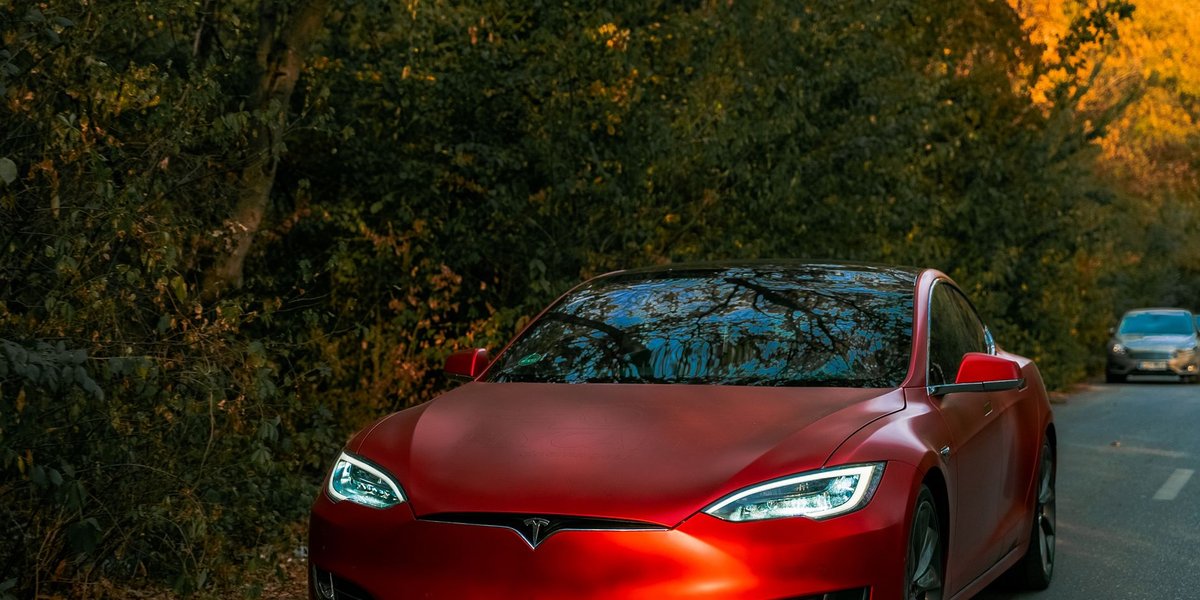
In 2015, “Tesla models” meant one car: the Model S. The Model X technically arrived that September, but Tesla built so few before year’s end that you can count 2015 examples in the wild on your fingers. So when you search for a 2015 Tesla, you’re almost certainly shopping a Model S — and a used one that’s now pushing a decade old, well past its original warranty, sitting at prices that look almost too good.
That last part is the catch. A 2015 Model S 85 that stickered north of $80,000 can be had for the price of a new Corolla. The question isn’t whether it’s cheap. It’s whether the cheap one will quietly hand you a $7,000 repair bill six months in. This guide breaks down every trim Tesla sold that year, what each is worth now, and the specific component failures that separate a smart buy from a money pit.
Table of Contents
- TLDR: The Quick Verdict
- 2015 Was the Model S Year
- Every 2015 Model S Trim
- The 2015 Model X Footnote
- What a 2015 Tesla Costs Today
- The Failures That Matter
- Who Should Buy, Who Should Walk
TLDR: The Quick Verdict
The sweet spot is a 2015 Model S 85D — dual motors, roughly 270 miles of original range, and the all-wheel-drive layout that ages better than the single-motor RWD cars. Budget $18,000–$28,000 depending on miles and condition.
Before you buy any 2015 Tesla, confirm three things: the media control unit (MCU) still works without lag or a black screen, the drive unit has been replaced or is quiet under acceleration, and — if it has the optional air suspension — that no corner is sagging overnight. Any 2015 Tesla is out of warranty, so a single ignored repair can erase your savings. Get a pre-purchase inspection from a Tesla-literate shop. Non-negotiable.
Skip the base 60 unless the price is genuinely a steal; its real-world range struggles in cold weather and it’s the least desirable trim to resell.
2015 Was the Model S Year
Tesla’s entire 2015 sales volume rode on the Model S. The Roadster was long discontinued, the Model 3 was years away, and the Model X had only just started trickling out of Fremont. So the 2015 lineup is really a single platform offered in a confusing ladder of battery sizes and motor configurations. It’s a strange standout, too: place it beside the rest of the 2015 U.S. car models and the Model S is the lone all-electric sedan in a field still dominated by gas engines.
What makes 2015 interesting is that it sits right at a hinge point in the car’s life. Early 2015 cars carried over the original interior and the older nose cone front fascia. Tesla also rolled out Autopilot hardware (HW1) to cars built in the second half of the year, meaning two 2015 Model S sedans off the same lot can have meaningfully different capabilities. If driver-assist matters to you, check the build date and confirm the car physically has the forward-facing camera and ultrasonic sensors — a late-2015 build is what you want.
The naming is its own puzzle. A number means battery size in kilowatt-hours (60, 85, 90). A trailing D means dual motor, which is Tesla-speak for all-wheel drive. A P prefix means Performance. So a P85D is a performance, 85-kWh, dual-motor car, and an 85 with no letters is the rear-drive single-motor version. Once you internalize that, the lineup stops looking random.
Every 2015 Model S Trim
Here’s the full ladder, from the entry car to the one that did the insane-mode 0–60 sprints that put Tesla on every enthusiast’s radar.
| Trim | Battery | Drivetrain | EPA Range (orig.) | 0–60 mph | Notes |
|---|---|---|---|---|---|
| 60 | 60 kWh | RWD | ~208 mi | ~5.9 s | Entry car, smallest pack, weakest resale |
| 70D | 70 kWh | AWD | ~240 mi | ~5.2 s | Replaced the 60 mid-year; great value used |
| 85 | 85 kWh | RWD | ~265 mi | ~5.4 s | The volume seller; long range, single motor |
| 85D | 85 kWh | AWD | ~270 mi | ~4.2 s | The sweet spot: range + AWD + efficiency |
| 90D | 90 kWh | AWD | ~288 mi | ~4.2 s | Late-year pack upgrade; most range |
| P85D | 85 kWh | AWD | ~253 mi | ~3.1 s | Performance, “Insane Mode” launch |
| P90D | 90 kWh | AWD | ~270 mi | ~2.8 s* | Top dog; “Ludicrous Mode” optional |
*With the Ludicrous upgrade.
A few things worth saying out loud. The 85D is the smartest all-rounder — adding the second motor barely dents range (it actually improves it slightly versus the RWD 85) while giving you traction and a quicker car. The 70D arrived as a mid-2015 replacement for the 60 and is the budget pick that doesn’t feel like a compromise.
The performance cars are a different conversation. A P85D or P90D still embarrasses far newer, far more expensive machinery off the line, and the novelty of a decade-old sedan running low-three-second 0–60 times hasn’t worn off. That launch-control party trick is a big part of why the Model S keeps showing up on retrospective rankings of the best cars of the 2010s. But performance trims chew through tires, and their batteries lived a harder life. Buy one because you want the party trick, not because you think it’s the sensible choice.
One honest note on range: every number above is the original EPA figure. A 2015 pack has lost capacity. Most well-kept examples show 8–15% degradation, so an 85D that once did 270 miles realistically does 230–250 now. That’s still plenty for daily driving, but plan road trips around it.
The 2015 Model X Footnote
If a listing says “2015 Model X,” look closely. Tesla delivered its first Model X units in late September 2015, but production was a trickle — the famous Falcon Wing doors and the complex second-row seats made the early build a manufacturing headache, and Tesla has since acknowledged those first cars were the hardest vehicles to build in its history.
A genuine 2015 Model X is a Signature or near-launch car, and it’s a different risk profile than a Model S. Those early Falcon Wing doors had alignment and sensor gremlins, the seats had recalls, and you’re buying first-year-of-a-new-platform hardware with no warranty left. Unless you specifically want the collector novelty of an early X and have a Tesla-savvy mechanic on speed dial, the 2015 Model S is the safer, cheaper, more sensible decade-old Tesla. Most 2015 Tesla shoppers should treat the X as a curiosity, not a target.
What a 2015 Tesla Costs Today
These cars stickered between roughly $69,900 and $108,000 new — proper 2010s luxury car money, putting the Model S up against the big German sedans of the era. A decade of depreciation — plus the gravitational pull of Tesla repeatedly cutting prices on its newer cars — has flattened those numbers hard.
Here’s the realistic 2026 used landscape:
- 60 / 70D: $14,000–$22,000. The cheapest entry into a Model S. The 70D is the better long-term hold.
- 85 / 85D: $17,000–$28,000. The volume of the market lives here. Pay the small premium for the D.
- 90D: $22,000–$32,000. Most range, newest pack of the bunch, priced accordingly.
- P85D / P90D: $28,000–$45,000+. Performance and Ludicrous-equipped cars hold value better and span a wide range based on miles and battery health.
Mileage matters less on these than on a gas car — there’s no oil to burn, no timing belt to snap. What matters is battery health and whether the expensive components have already failed and been fixed. A 120,000-mile car with a documented drive-unit and MCU replacement is often a better buy than an 80,000-mile car where those failures are still lurking. Counterintuitive, but true. Ask for service records and read them.
The Failures That Matter
This is the section the spec portals skip, and it’s the one that decides whether you’re happy in a year. A 2015 Tesla is mechanically simple but has a handful of well-documented, age-related failure points. None of them are mysteries. You just need to check.
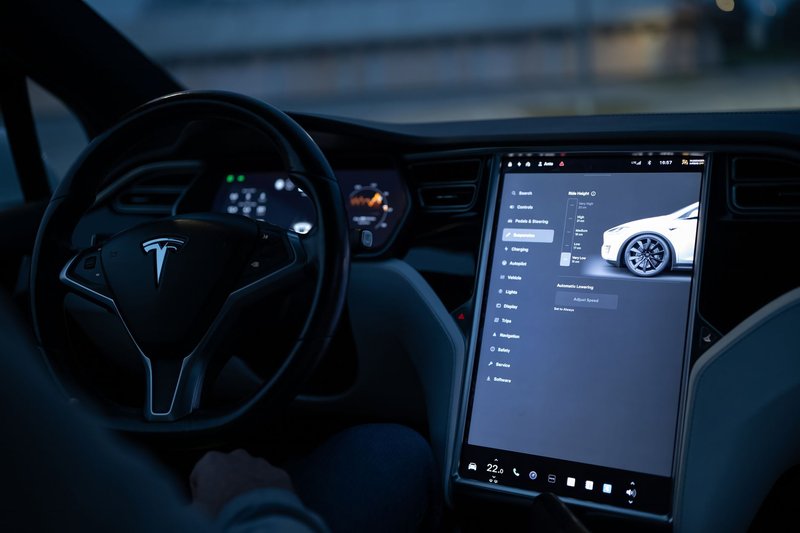
The MCU (the big screen). Early Model S units used an eMMC flash memory chip that wears out from constant write cycles. When it dies, the center touchscreen goes black or laggy, taking climate control, the backup camera, and charging settings with it. The car still drives, but it’s miserable. Replacement runs $1,500–$2,500 at Tesla, less at independents. Confirmed-working or already-upgraded MCUs are a real value add — treat a flaky screen as a guaranteed near-term bill.
The drive unit. Many early Model S cars had drive units replaced under warranty for a milling or whining noise. On a 2015 car that warranty is gone. A unit that’s already been swapped (check the records) is reassuring; an original, noisy one is a $3,000–$7,000 question mark. Listen for whine under acceleration on the test drive.
Air suspension. Optional on 2015 cars, and not every trim had it. When the compressor or an air strut fails, a corner sags overnight and repairs run into four figures. Park the car, come back the next morning, and check that it’s sitting level. The standard coil-spring cars sidestep this entirely.
Out-of-warranty math. This is the headline. Every 2015 Tesla is past its 4-year/50,000-mile basic warranty and, for most, past the 8-year battery warranty window depending on build date and mileage. Independent reliability reviews flag the early Model S as strong on the EV fundamentals — the motor and battery are durable — but uneven on the expensive peripherals. A pre-purchase inspection from a Tesla specialist costs a couple hundred dollars and is the best money you’ll spend in this whole process.
Who Should Buy, Who Should Walk
Buy a 2015 Model S if you want a genuinely fast, comfortable, long-range EV for the price of an economy commuter car, you’re handy enough to budget for one major repair without panic, and you’ll get a proper inspection first. The 85D at $18,000–$28,000 with clean records and a working MCU is one of the great used-car values in any segment, electric or not. You’re getting a car that still feels modern, still out-accelerates most traffic, and still does 230-plus real miles on a charge.
Walk away if the price is your only reason for buying, the seller can’t produce service records, the screen lags or the suspension sags, or you don’t have a financial cushion for an out-of-warranty surprise. A bargain 2015 Tesla with deferred maintenance isn’t a bargain — it’s a deposit on a repair bill.
The 2015 Model S aged better than almost anyone expected. The fundamentals — the motor, the battery chemistry, the basic packaging — were right the first time. What ages is the early-adopter hardware around them. Buy the car that’s already had its problems fixed, skip the one hoping you won’t notice, and a decade-old Tesla becomes one of the smartest cars you can put in your driveway.

Marco Delantero
More from Marco DelanteroHow we reviewed this article
This article was researched against manufacturer records and editorially reviewed before publishing. We accept no payment for coverage. Some guides contain affiliate links; see our affiliate disclosure.