Table of Contents
- Toyota in 1969: A Company on the Move
- Toyota Corolla
- Toyota Corona
- Toyota 2000GT
- Toyota Sports 800
- Toyota Hi-Lux
- Toyota Land Cruiser FJ40
- Quick-Reference Comparison Table
- Final Thoughts
Toyota in 1969: A Company on the Move {#toyota-in-1969}
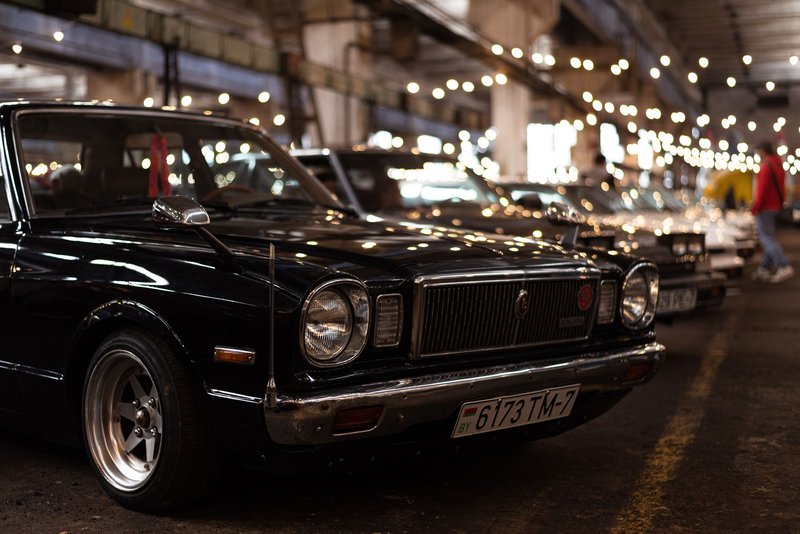
By 1969, Toyota had stopped being a curiosity in Western markets and started being a threat. The company had been selling cars in the U.S. since 1958, but for most of that decade they were cheap and forgettable — the kind of thing you bought if you couldn’t afford anything else. The 1960s changed that.
During this decade, Toyota tripled its export volume, opened its first U.S. manufacturing study tours, and launched models that competed seriously on engineering, not just price. The 1969 lineup reflects a company simultaneously chasing the economy car buyer, the enthusiast, the off-road crowd, and the export truck market — all at once, all with credibility.
Here’s every model Toyota had on the road in 1969.
Toyota Corolla {#toyota-corolla}
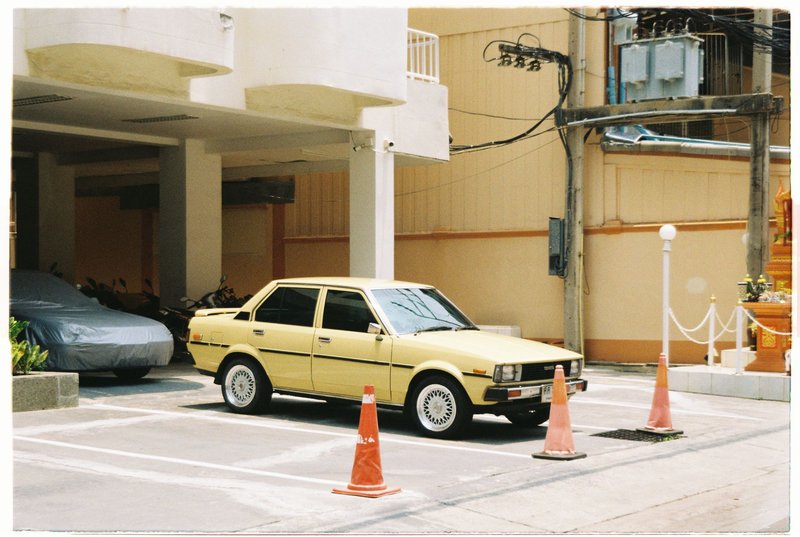
The Corolla was two years old in 1969, having launched in 1966, and it was already Toyota’s most important car globally. In Japan and in export markets, it went up against the Nissan Sunny and, in the U.S., against the Volkswagen Beetle and Ford Maverick’s predecessor models.
Body styles available in 1969:
- 2-door sedan
- 4-door sedan
- Fastback coupe (Sprinter)
- Station wagon (Van)
The engine across most variants was the 3K unit — a 1.1-liter, four-cylinder pushing around 60 horsepower in standard tune. Not a lot of power, but the Corolla was light (around 1,600 lbs), which made it lively enough to feel quick in urban traffic. The KE10 generation was still running in some markets, while the KE11 updated the body for key export regions.
The Sprinter variant is worth mentioning separately: it had a fastback roofline that gave it a sportier look than the standard sedan, aimed at buyers who wanted something with a bit more visual edge. Toyota would spin the Sprinter off into its own nameplate eventually — a lineage that traces directly back to this car.
Production numbers for the 1969 model year crossed 300,000 units globally, making the Corolla one of the highest-volume small cars in the world at that point. To see how Toyota’s lineup evolved from these foundations, the 1976 Toyota car models offer a useful comparison of where the Corolla and its siblings landed just seven years later.
Toyota Corona {#toyota-corona}
The Corona was a step up from the Corolla — more room, more power, more refinement. It had been the car that first made Toyota credible in American showrooms during the early 1960s, and the third-generation (T40/T50) model that ran through 1969 continued that reputation for sensible, reliable transportation.
Engine: The RT40 Corona used the 2R engine, a 1.5-liter four-cylinder producing around 78–83 hp depending on the market and specification. Later in the year, some markets received the 1.9-liter 3R engine, which pushed output to around 105 hp.
Body styles:
- 2-door sedan
- 4-door sedan
- Hardtop coupe
- Station wagon
The Corona hardtop is where things got interesting. With its pillarless greenhouse and the optional 3R engine, it was legitimately sporty — not just a warmed-over grocery getter. Toyota was learning how to build a car that felt good to drive, not just one that didn’t break down.
In the U.S., the Corona sold well enough to establish Toyota as a real alternative to Volkswagen, not just an oddity. It was dependable, cost less to maintain than domestic equivalents, and the dealership network was expanding.
Toyota 2000GT {#toyota-2000gt}
The 2000GT doesn’t belong in the same conversation as the Corolla or Corona — and that’s exactly the point. Toyota built it anyway.
Production of the 2000GT ran from 1967 to 1970, with 1969 falling in the heart of the run. Total production across all years was 351 units, making it one of the rarest Japanese production cars ever built. The price in Japan was roughly equivalent to a Porsche 911 at the time — deliberately so.
Specs:
- Engine: 2.0-liter DOHC inline-six (3M unit), developed with Yamaha
- Output: 150 hp (Japan spec)
- 0–60 mph: approximately 8.4 seconds
- Top speed: 135 mph
The Yamaha connection matters. Toyota handed the engine development to Yamaha, who put a DOHC head on the existing 3M block and transformed it into something genuinely high-revving. The result was an engine that could hold 6,500 rpm without drama — unusual for a Japanese car in 1967. The 2000GT belongs in the same conversation as the era’s most significant performance machines, a point underscored by its inclusion among the great 1960s sports cars that defined that decade of performance engineering.
The 2000GT appeared in the 1967 James Bond film You Only Live Twice, which introduced it to Western audiences who had never seen a Japanese sports car worth noticing. The car Bond actually drives in the film is a convertible conversion — Toyota built two of them specially for the production because the film’s producers needed a car that would fit actor Sean Connery’s frame.
By 1969 the 2000GT was winding toward the end of its run. Toyota knew it could never make money on it at that volume. But the brand equity it generated — the signal that Toyota could build a world-class sports car — was worth far more than the margin on 351 units.
Toyota Sports 800 {#toyota-sports-800}
The Sports 800 is the 2000GT’s overlooked sibling, and 1969 was its final year of production.
It launched in 1965 as Japan’s first mass-produced sports car — a two-seater with a 790cc air-cooled flat-twin engine derived from the Publica kei car. The engine made around 45 hp, but the Sports 800 weighed only 1,340 lbs. That power-to-weight ratio gave it a top speed of 90 mph, which was genuinely impressive for a sub-800cc engine in 1965.
What made the Sports 800 clever was the removable hardtop. Toyota designed it to come apart into two pieces and stow in the trunk — a targa-style solution years before Porsche popularized the term. The aerodynamics were also meticulously developed, resulting in a drag coefficient of 0.35, which was excellent for the era.
Total production: approximately 3,131 units across the entire run. Production ended in 1969, which means the last Sports 800s came off the line the same year the Apollo 11 crew landed on the moon. Toyota never replaced it directly — the market was moving toward the Celica, which would arrive in 1970.
The Sports 800 has quietly appreciated into serious collector territory. Clean examples now trade in the $50,000–$80,000 range depending on condition, driven by Japanese domestic market enthusiasm and a scarcity that makes the already-rare 2000GT look almost common by comparison.
Toyota Hi-Lux {#toyota-hi-lux}
The Hi-Lux launched in 1968 as Toyota’s entry into the compact pickup truck segment, targeting the same buyers who were choosing the Datsun 520. By 1969 it was in its first full production year, and it established a template that Toyota would follow — and continuously refine — for the next five decades. For context on what Nissan was fielding against it at the same moment, the 1969 Nissan car models cover the Datsun truck lineup and how the two brands competed that year.
First-generation specs:
- Engine: 1.5-liter inline-four (2R)
- Power: approximately 78 hp
- Payload: around 1,200 lbs
- Drive: rear-wheel drive
The original Hi-Lux was conventional by the standards of the day — body-on-frame, leaf springs in the rear, solid axle. Nothing exotic. What made it significant was Toyota’s manufacturing quality applied to a segment where reliability was genuinely variable. Nissan’s pickups were decent; American compact trucks were rougher around the edges. The Hi-Lux was simply put-together better, and that reputation compounded over the following decade into one of the most successful truck lines in automotive history.
The 4WD variant wouldn’t arrive until 1979, but the groundwork was laid in 1969.
Toyota Land Cruiser FJ40 {#toyota-land-cruiser-fj40}
The FJ40 is the model that dominates the surviving 1969 Toyota market. Ask eBay, ask any classic car auction — if it’s a 1969 Toyota, there’s a good chance it’s an FJ40. That’s partly because they were built tough enough to still exist, and partly because the off-road community has kept values high enough to incentivize restoration.
The FJ40 had been in production since 1960. By 1969 it was refined but not radically changed from its original form — a body-on-frame short-wheelbase SUV with a straight-six engine and four-wheel drive designed to go places other vehicles wouldn’t attempt.
1969 FJ40 specs:
- Engine: 3.9-liter inline-six (F engine), roughly 125 hp
- Transmission: 3-speed manual with 2-speed transfer case
- Body: steel-over-frame, removable soft or hard top
- Wheelbase: 90 inches
Toyota sold the FJ40 globally, including to military and government buyers across Asia, Africa, and South America, which expanded the production base beyond what the consumer market alone would support. That volume meant parts supply stayed healthy, which in turn meant more of them survived into the present day.
The FJ40’s closest competitor was the Land Rover Series II — same concept, different philosophy. The Land Rover leaned British utilitarian; the FJ40 was arguably more mechanically straightforward, which made field repairs easier in remote areas. That reliability reputation in harsh environments is why Toyota Land Cruisers became standard equipment for NGOs and UN field operations decades later.
Quick-Reference Comparison Table {#comparison-table}
| Model | Body Style | Engine | Displacement | Est. Power | Notes |
|---|---|---|---|---|---|
| Corolla (KE10/11) | 2-dr, 4-dr, wagon, fastback | 3K inline-4 | 1,100cc | ~60 hp | Best-selling model globally |
| Corona (RT40/T50) | 2-dr, 4-dr, hardtop, wagon | 2R / 3R inline-4 | 1,500–1,900cc | 78–105 hp | Key U.S. market model |
| 2000GT | 2-seat coupe | 3M DOHC inline-6 (Yamaha) | 2,000cc | 150 hp | 351 units total; Bond car |
| Sports 800 | 2-seat targa | Air-cooled flat-twin | 790cc | ~45 hp | Final year 1969; 3,131 total |
| Hi-Lux (1st gen) | Compact pickup | 2R inline-4 | 1,500cc | ~78 hp | First full year of production |
| Land Cruiser FJ40 | Short-wb SUV | F inline-6 | 3,900cc | ~125 hp | Most common survivor today |
Final Thoughts {#final-thoughts}
The 1969 Toyota lineup tells you a lot about how the company thought. They weren’t chasing one buyer — they were building a matrix. Economy car. Midsize car. Sports car. Kei-adjacent roadster. Pickup truck. Off-road SUV. Every segment covered, each model engineered to a specific purpose rather than engineered cheap and hoped nobody noticed.
The 2000GT and Sports 800 are the romantic picks. The FJ40 is the practical survivor. But the Corolla is the one that actually explains why Toyota became Toyota — because getting a high-volume economy car right, consistently, year over year, is harder than building 351 hand-assembled sports cars. Toyota managed both in the same calendar year.
That’s a 1969 worth remembering.

Marco Delantero
More from Marco DelanteroHow we reviewed this article
This article was researched against manufacturer records and editorially reviewed before publishing. We accept no payment for coverage. Some guides contain affiliate links; see our affiliate disclosure.