By 1965, Honda had already proven something that few believed a decade earlier: a Japanese manufacturer could dominate global motorcycle sales. That year, the company offered one of the broadest lineups in the industry — from a 50cc runabout to a 444cc twin that took direct aim at European prestige bikes. If you’re researching, restoring, or just trying to figure out what you’ve got in the garage, here’s every model Honda produced that year.
Table of Contents
- The Full 1965 Honda Lineup at a Glance
- CB Series: Sport Bikes
- CL Series: Scramblers
- CA/C Series: Dream and Benly Touring
- S and Trail Series: Small Displacement
- How to Identify a 1965 Honda
- Collector Notes
The Full 1965 Honda Lineup at a Glance {#lineup}
| Model | Displacement | Type | Notes |
|---|---|---|---|
| CB450 | 444cc | Sport twin | Honda’s largest displacement bike that year |
| CB77 Super Hawk | 305cc | Sport twin | Top of the Hawk family |
| CB72 Hawk | 247cc | Sport twin | Mid-range sport |
| CB160 | 161cc | Sport twin | Entry-level sport |
| CL77 Scrambler | 305cc | Scrambler twin | Dual-purpose CB77 variant |
| CL72 Scrambler | 247cc | Scrambler twin | Dual-purpose CB72 variant |
| CA77 Dream | 305cc | Touring twin | Enclosed-fender touring model |
| CA72 Dream | 247cc | Touring twin | Mid-size Dream |
| CA160 | 161cc | Touring | Smaller Dream variant |
| CA95 Benly | 154cc | Touring twin | Overhead-cam Benly |
| C102 / C110 | 50cc | Step-through | Super Cub variants |
| S65 | 63cc | Sport | Small sport bike |
| S90 | 89cc | Sport | Popular entry-level sport |
| CT90 Trail | 89cc | Trail | Off-road capable step-through |
| CL90 Scrambler | 89cc | Scrambler | Small-displacement scrambler |
CB Series: Sport Bikes {#cb-series}
CB450 — Honda’s Big Twin
The CB450 is the headline act. Honda developed it to compete head-to-head with British parallel twins from Triumph and BSA, and it arrived with technology those manufacturers weren’t offering: a twin-cam engine with torsion-bar valve springs instead of conventional coil springs. At 444cc, it produced around 43 horsepower — competitive with 500cc British bikes of the era. To understand just how dramatically the landscape had shifted, it helps to look at what the motorcycle world looked like in 1961, when Honda was still an upstart and the British and American makes still held the high ground.
The CB450 used a 180-degree crankshaft, meaning both pistons rise and fall together, giving it a distinctive sound and vibration character. Early examples (1965–1966) had a distinctive black engine finish and relatively simple styling. Collectors refer to these as “Black Bomber” examples, and they’re among the most sought-after Hondas of the decade.
Specs (1965 CB450):
- Engine: 444cc DOHC parallel twin
- Bore × Stroke: 70 × 57.8 mm
- Compression: 8.5:1
- Power: ~43 hp @ 8,500 rpm
- Transmission: 4-speed
- Weight: ~396 lb wet
CB77 Super Hawk
The CB77 was Honda’s performance flagship before the CB450 landed. At 305cc it was modest by European standards, but its twin-cam engine and high-revving character earned genuine respect on American racetracks. A stock CB77 could reach over 100 mph — something few buyers expected from a Japanese bike in the early 1960s.
By 1965, the Super Hawk had matured from its early growing pains (notably carburetor and electrical issues in earlier production runs). The 1965 model came with a 5-speed gearbox, a chrome-laced wheel package, and enough reliability to make it a credible sport tourer.
Specs (1965 CB77):
- Engine: 305cc DOHC parallel twin
- Power: ~28 hp @ 9,000 rpm
- Transmission: 5-speed
- Top speed: ~100 mph
CB72 Hawk
Essentially a smaller CB77 with a 247cc engine, the CB72 shared the same DOHC architecture and 5-speed gearbox. It was the preferred club-racing machine in the 250cc class. The power difference from the CB77 is modest enough that the CB72 often gets overlooked — but the lighter weight makes it a sharper handler.
CB160
A step down in complexity: the CB160 used a 161cc OHC engine (single cam, not dual) and was aimed at riders stepping up from 50cc machines. Reliable, economical, and easy to ride. Not a collector sensation, but a common survivor in decent condition.
CL Series: Scramblers {#cl-series}
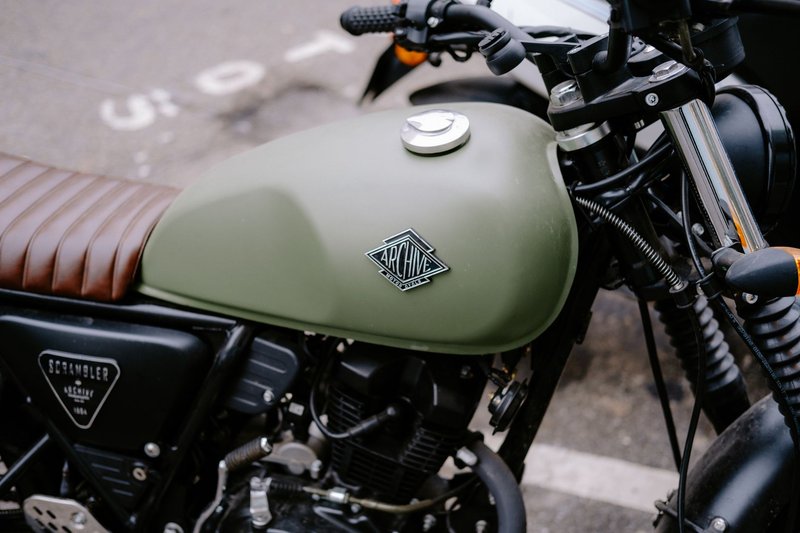
Honda’s CL designation stood for scrambler variants of the CB sport twins. The conversion was functional rather than cosmetic: high-mounted exhaust, longer suspension travel, knobbier tires, and upswept handlebars. These were genuine dual-purpose machines at a time when that segment was still emerging.
CL77 Scrambler
The CL77 took the CB77’s 305cc twin and turned it into something you could ride to a dirt trail and actually use. The exhaust pipes swept high on the right side — a signature visual element and a practical one, keeping the pipes clear of rocks and ruts. The CL77 was popular in the American West, where riders actually needed to cross unpaved terrain. For context on what the competition was offering in the American market at this time, the 1963 Harley-Davidson lineup shows how different the domestic approach to dual-purpose riding was compared to Honda’s.
What makes it notable: The CL77 is considered by many enthusiasts to be the better-looking of the two scrambler variants. The high pipes and upright riding position aged well in a way the more aggressive CB77 posture didn’t.
CL72 Scrambler
The 247cc counterpart. Same formula, smaller displacement. The CL72 was often the racing class choice — light enough to maneuver off-road, powerful enough to be competitive on the street.
CA/C Series: Dream and Benly Touring {#ca-series}
The “Dream” name had been Honda’s prestige touring designation since the 1950s. By 1965, the CA series offered fully enclosed fenders, step-through ergonomics on some variants, and smooth, quiet engines tuned for comfort over performance. These were not exciting motorcycles. They were reliable transportation — which is exactly what most buyers needed.
CA77 Dream
The top Dream model used the 305cc engine from the CB77 family, detuned for smooth power delivery. Fully enclosed chain, legshields on some markets, and a comfort-first seat. The CA77 was popular with everyday commuters and long-distance tourers across Asia, Europe, and the American suburb.
CA95 Benly
The CA95 is a historically interesting machine. Its 154cc OHC twin was unusually sophisticated for its displacement class — overhead cam in a 150cc commuter bike was a rarity in 1965. Honda used the Benly line to demonstrate engineering ambition at every price point. The National Motorcycle Museum has documented the CA95 as one of the overlooked technical achievements of the era.
S and Trail Series: Small Displacement {#s-trail-series}
S90
The S90 is probably the most underrated bike on this list. At 89cc it sounds inconsequential, but the S90 was a proper sport machine in miniature: OHC engine, 4-speed gearbox, and handling sharp enough that it attracted young riders who couldn’t yet afford the larger CB models. Honda sold enormous numbers of them.
The S90 also introduced many American teenagers to motorcycling in the mid-1960s — it was affordable, manageable, and genuinely fun. For that reason, it holds more sentimental value than its specs would suggest.
S65
A 63cc sport bike that occupied the space between the Super Cub runabouts and the S90. Less common in the US, more popular in markets where small-displacement bikes carried higher commuter loads.
CT90 Trail
Honda’s CT90 became one of the best-selling motorcycles in American history over its production run. The 1965 version was an early example, featuring an automatic dual-range transmission — essentially low and high gear ranges — that made it accessible to riders with no experience on manual gearboxes. It was designed for utility: farm use, hunting camps, and light trail riding.
CL90 Scrambler
Applied the scrambler formula to the 89cc engine. The CL90 was a budget-friendly entry point into the dual-purpose segment. Not as capable off-road as the larger CL twins, but more accessible.
How to Identify a 1965 Honda {#identification}
If you have a Honda from the mid-1960s and aren’t certain of the year, here’s how to narrow it down:
Frame and engine numbers: Honda stamped the frame number on the steering head and the engine number on the crankcase. For 1965 US-market bikes, frame numbers generally follow a format that encodes the model code. The CB450, for example, used the prefix “CB450-” followed by a sequential number beginning around 1000001 for the first production year.
Model-year clues for specific bikes:
- CB450: The 1965 model has a black engine finish, separate chrome side covers, and the earliest version of the instrument cluster. The tachometer reads to 10,000 rpm. Later 1968+ models moved to a silver engine finish.
- CB77: 1965 bikes have the 5-speed gearbox (earlier versions were 4-speed). Look for the revised fork seal design introduced that year.
- CA95 Benly: 1965 examples often have the earlier “bathtub” fully enclosed bodywork; later models simplified the fender coverage.
Documentation: Honda’s US subsidiary (American Honda Motor Co.) kept dealer records. Some marque specialists and clubs — including the Vintage Japanese Motorcycle Club — maintain registries that can help authenticate production dates from serial number ranges.
Collector Notes {#collector-notes}
A few practical notes for anyone buying or restoring a 1965 Honda:
CB450 “Black Bomber”: Correct early-production examples command a significant premium. The distinguishing feature collectors look for is the black engine cases — Honda switched to silver/natural aluminum on later models. Reproduction parts exist, so verify originality before paying a premium.
CB77 and CL77: Parts availability is reasonable thanks to overlap with the CB72/CL72 family. Carburetors are the most common restoration headache; the dual-carb setup requires careful synchronization and the float valves wear.
CA series Dreams: These survived in high numbers because most were not ridden hard. Finding a complete, rust-free example is easier than for the sport models. The enclosed chain case keeps the drivetrain protected, which is why so many Dreams still run.
S90: Exceptionally common, inexpensive to buy, straightforward to restore. A good starting point for anyone new to vintage Honda restoration before committing to a more complex CB twin.
General electrical note: All 1965 Hondas use a 6-volt electrical system. If you’re buying a bike that has been “upgraded” to 12 volts, verify the conversion was done completely — half-converted bikes with mismatched components are a reliability problem.
The 1965 model year represents Honda near the top of its early form: technically ambitious, commercially dominant, and producing machines that have survived six decades in running condition. That’s not a marketing claim. It’s just what the bikes turned out to be.

Sarah Thornton
More from Sarah ThorntonHow we reviewed this article
This article was researched against manufacturer records and editorially reviewed before publishing. We accept no payment for coverage. Some guides contain affiliate links; see our affiliate disclosure.