The 1970s was the decade where the muscle car got its legs cut out from under it. Then it spent the rest of the decade figuring out what to do about it.
When the calendar flipped to 1970, Detroit was still cranking out 400-plus horsepower brutes. By 1979, the same engines were strangled by emissions gear, wheezing out half the power and twice the apology. The 1973 oil embargo, new federal safety mandates, and unleaded-fuel rules rewrote the rulebook mid-game, and the popular cars of the decade tell that story better than any history textbook.
This list splits the difference between two things people actually mean when they search for this. Some want the cars that sold — the everyday metal that filled driveways. Others want the cars that mattered — the ones on bedroom posters and movie screens. You’re getting both, clearly labeled, because pretending the Ford Cortina and the Pontiac Trans Am belong in the same ranking does a disservice to each.
Table of Contents
- TLDR: The Short Version
- The Best-Sellers (The Cars People Actually Bought)
- The Icons (The Cars People Actually Wanted)
- Why the 1970s Changed Everything
- What’s Collectible Today
TLDR: The Short Version
If you want the single best-selling car of the decade in the US, it’s the Oldsmobile Cutlass, which became America’s top seller by 1976. In the UK, it’s the Ford Cortina, a fixture in British driveways the entire decade. And the most iconic car of the era — the one that defined 1970s cool — is the black-and-gold Pontiac Firebird Trans Am, thanks largely to a Burt Reynolds movie. Everything else below earns its place between those poles.
The Best-Sellers (The Cars People Actually Bought)
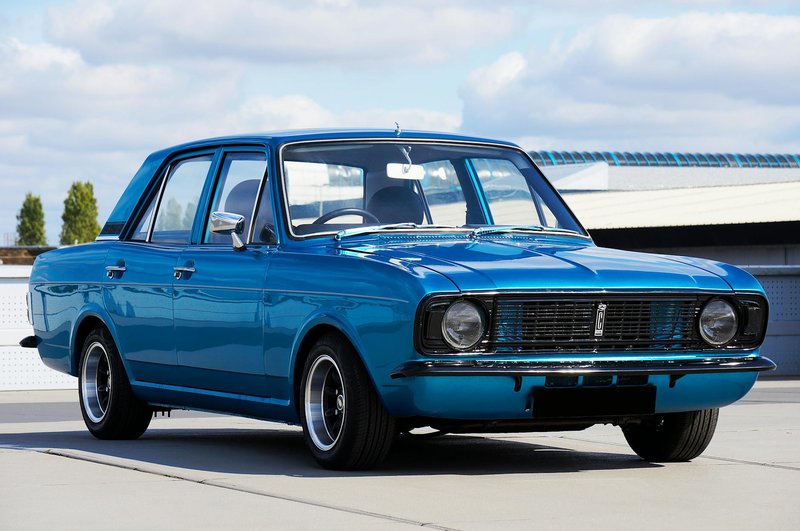
These are the cars that moved in real numbers. Not the dream machines — the metal that got people to work.
1. Oldsmobile Cutlass
The Cutlass is the answer to a trivia question most people get wrong. By 1976 it was the best-selling car in the United States, and the Cutlass Supreme coupe became the default American family car of the late decade. It wasn’t fast, it wasn’t flashy, and that was exactly the point. After the oil crisis spooked buyers, a comfortable mid-size with a soft ride and a formal roofline was what people wanted. Oldsmobile sold over a million of them across the back half of the decade.
2. Ford Cortina (UK)
Across the Atlantic, the Cortina was Britain’s car. The Mk III, IV and V versions dominated UK registration charts year after year, and it was the best-selling car in Britain for most of the 1970s. Fleet managers loved it, families could afford it, and it was simple enough to fix in your own driveway. If you grew up in the UK in this era, your parents, your neighbor, or your driving instructor owned one.
3. Ford Escort
The Escort was the Cortina’s smaller sibling and an even bigger global phenomenon. The Mk I and Mk II were everywhere in Europe, and the rear-wheel-drive Mk II turned the Escort into a rally legend — Ford built the RS2000 and Mexico versions specifically to feed that appetite. It was cheap, light, and chuckable, which is why it spent years near the top of European sales charts.
4. Chevrolet Caprice / Impala
The full-size Chevy was the American default before the Cutlass took the crown. The Impala and its plusher Caprice sibling sold in enormous numbers early in the decade — Chevrolet’s full-size line regularly cleared half a million units a year. These were the land yachts: bench seats, column shifters, and a trunk you could live in, and they sit comfortably among the all-time great classic American sedans. The 1973 fuel crisis hit them hard, but they soldiered on as taxis, police cruisers, and family haulers.
5. Volkswagen Beetle
The Beetle was already an institution by 1970, and it stayed a best-seller well into the decade. In February 1972, the Beetle officially passed the Ford Model T’s production record to become the best-selling car of all time — over 15 million built by that point, according to Volkswagen’s own corporate history. Air-cooled, rear-engined, and dead simple, it was the import that proved Americans would buy small if the small car had character. It anchored a 1977 Volkswagen lineup that was already pivoting toward the water-cooled Golf and Rabbit.
6. Datsun 510 and B210
While the Beetle owned the early decade, Datsun (Nissan’s export brand) quietly built the case for Japanese reliability. The 510 was a genuinely good-handling sedan that punched above its price, and the fuel-sipping B210 arrived right when gas lines made fuel economy a survival skill. These cars are the reason “Japanese import” stopped being a punchline by 1979.
7. Honda Civic
The Civic landed in the US in 1973 — perfect timing. When the oil embargo hit months later, here was a car that returned 40 miles per gallon and didn’t feel like a penalty box. Then Honda dropped the CVCC engine, which met the new Clean Air Act standards without a catalytic converter — a genuine engineering coup that embarrassed Detroit. The Civic is arguably the most consequential car on this entire list.
8. Ford Pinto
The Pinto sold over three million units, so it belongs here on numbers alone. It also became the decade’s cautionary tale after its rear-mounted fuel tank drew national scrutiny for fire risk in collisions, a controversy documented in the U.S. National Highway Traffic Safety Administration records of the era. Popular and infamous in equal measure — the Pinto is what happens when “build it cheap” meets new safety expectations head-on.
The Icons (The Cars People Actually Wanted)
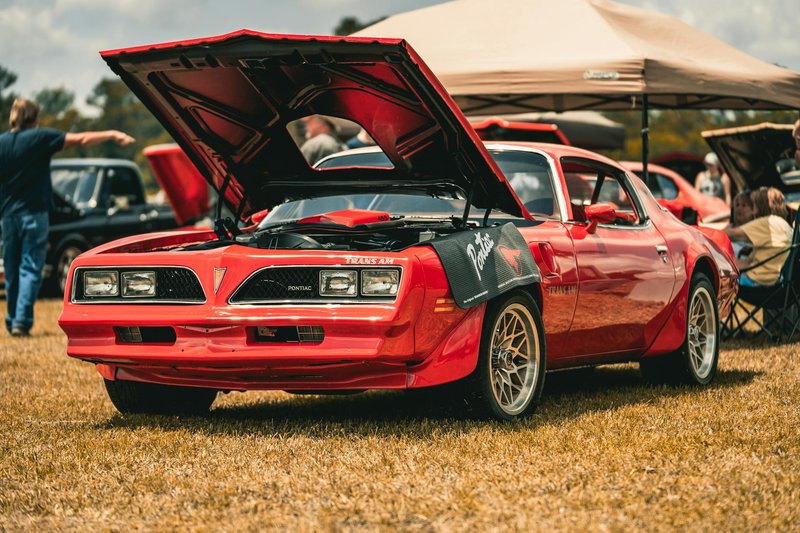
These didn’t all sell in Cutlass numbers. They didn’t need to. These are the posters, the movie cars, the ones that made the decade feel like it had a soundtrack.
9. Pontiac Firebird Trans Am
The Trans Am is the 1970s on four wheels. The black-and-gold “Special Edition” with the screaming-chicken hood decal became a cultural fixture after Smokey and the Bandit put Burt Reynolds behind the wheel of a 1977 model in 1977. Sales nearly doubled the year the film came out. The 455 V8 of the early years got neutered by emissions rules later on, but nobody cared — the look was the product. The Trans Am proved style could outrun horsepower.
10. Chevrolet Corvette (C3)
The “shark-body” C3 Corvette ran the entire decade and outlived the muscle car around it. Early big-block versions made serious power; by 1975 the base V8 was down to a embarrassing 165 horsepower thanks to emissions tuning. Didn’t matter. The wasp-waisted fiberglass body looked like nothing else on the road, and the Corvette stayed America’s halo car through the lean years. It’s the survivor.
11. Dodge Challenger / Plymouth ‘Cuda
The E-body Mopars burned bright and died fast. The 1970 Challenger R/T and Plymouth ‘Cuda — especially the legendary Hemi ‘Cuda — represent the absolute peak of the muscle era, and they vanished by 1974 as insurance costs and emissions rules killed the segment, a collapse we trace across the full roster of 70s muscle cars. Vanishing Point made the white 1970 Challenger immortal. Today these are six- and seven-figure auction cars, which tells you how badly people miss them.
12. Datsun 240Z
The 240Z is the car that told European sports-car makers their lunch was getting eaten. It looked like a Jaguar E-Type, cost a fraction of one, and the 2.4-liter straight-six actually ran when you turned the key — a sentence you couldn’t always say about its British rivals. Datsun sold them as fast as they could ship them. The 240Z made the affordable sports car a Japanese specialty for the next 40 years.
13. Ford Mustang II
Mustang purists wince, but the Mustang II is one of the most important cars here. When the original pony car had bloated into a barge by 1973, Ford shrank it back down onto a Pinto platform for 1974 — right as the fuel crisis hit. It sold over 385,000 units in its first year, far outselling the bloated 1973 model. It’s not fast or pretty, but it saved the nameplate. Sometimes survival is the achievement.
14. BMW 2002
The 2002 is the enthusiast’s choice, the car that built BMW’s modern reputation. A boxy little sedan with a willing 2.0-liter four, it handled like nothing else in its price class and basically invented the “sport sedan” as a category. The turbocharged 2002 Turbo of 1973 was Europe’s first production turbo car. If you wonder why people get misty-eyed about old BMWs, this is the source.
15. AMC Gremlin
The Gremlin earns its spot for sheer audacity. American Motors, the perennial underdog, beat Detroit’s giants to the subcompact market by launching it on April 1, 1970 — and the chopped-off Kammback rear made it look like nothing else on the road. It was odd, cheap, and weirdly lovable. The Gremlin is proof the 1970s had a sense of humor, even if it wasn’t always intentional.
16. Cadillac Eldorado
The Eldorado is the decade’s last gasp of pure excess. The 1970 model packed a 500-cubic-inch V8 — the largest production engine in any passenger car at the time. It was front-wheel drive, nearly 19 feet long, and dripping with chrome. As the decade tightened its belt, the Eldorado kept insisting that bigger was better, right up until it physically couldn’t anymore. It’s the bookend to everything the Civic represented.
Why the 1970s Changed Everything
You can’t understand these cars without the three forces that reshaped them.
The oil crisis. The 1973 OPEC embargo quadrupled fuel prices and put cars in gas lines around the block. Overnight, fuel economy went from an afterthought to a purchase requirement. This is the single biggest reason the decade’s second half looks so different from its first.
Emissions regulations. The Clean Air Act amendments forced catalytic converters and unleaded fuel onto the market. Compression ratios dropped, power figures cratered, and the “gross” horsepower numbers automakers had bragged about got replaced with honest, lower “net” figures. A 1970 muscle car and its 1975 descendant could share a name and a body while making half the power.
Safety mandates. Federal rules brought 5-mph crash bumpers in 1973, which is why so many mid-decade cars wear those heavy chrome battering rams front and rear. Combine that weight with the strangled engines and you get the decade’s reputation for slow, soft cars — earned, in the back half.
The result: the muscle era died, and the import era was born. The cars that thrived after 1974 were the small, efficient ones Detroit had ignored.
What’s Collectible Today
If you’re shopping the 1970s now, the value split is brutal and worth knowing.
The pre-1974 muscle cars — Hemi ‘Cudas, early Challengers, big-block Corvettes — are blue-chip and priced accordingly. A documented Hemi ‘Cuda convertible has crossed the seven-figure line at auction. These are investments, not weekend toys.
The icons that aren’t muscle are the smart money. Clean 240Zs, BMW 2002s, and black-and-gold Trans Ams have all climbed steadily, but they’re still attainable. A good 240Z costs a fraction of a ‘Cuda and arguably delivers more driving joy.
The best-sellers — the Cutlasses, Cortinas, and Caprices — stayed cheap for decades because there were so many of them. That’s flipping. Survivors are getting rare, and the nostalgia market for “the car grandpa drove” is real. A clean, unmolested malaise-era family sedan might be the last genuine bargain in the classic-car world.
Whatever lane you’re in, the 1970s reward buyers who know the story behind the metal. These cars aren’t just old — they’re the physical record of the decade everything changed.

Marco Delantero
More from Marco DelanteroHow we reviewed this article
This article was researched against manufacturer records and editorially reviewed before publishing. We accept no payment for coverage.