Here’s the thing nobody tells you when you search “popular cars in 1944”: there weren’t any. No new models rolled off American assembly lines that year. Not a single one. The factories that would have built them were stamping out tanks, jeeps, and bomber fuselages instead.
So if you came here expecting a glossy lineup of fresh 1944 sedans, this is going to recalibrate your whole mental picture. The cars Americans drove in 1944 were the same ones they’d been driving since before Pearl Harbor — aging, rationed, and held together with whatever parts a wartime mechanic could scrounge. Only about 610 new passenger cars were delivered in the entire country that year, and every one required a government permit.
This is the honest version of the story, plus a rundown of the actual models people kept on the road.
Table of Contents
- Why There Were No New Cars in 1944
- The Numbers Behind the Freeze
- What People Actually Drove
- Ford Deluxe (1941–1942)
- Chevrolet Master & Special Deluxe
- Plymouth (1942)
- Buick Special & Roadmaster
- The “Blackout” Cars of Early 1942
- What This Means for Collectors Today
Why There Were No New Cars in 1944 {#why-no-new-cars}
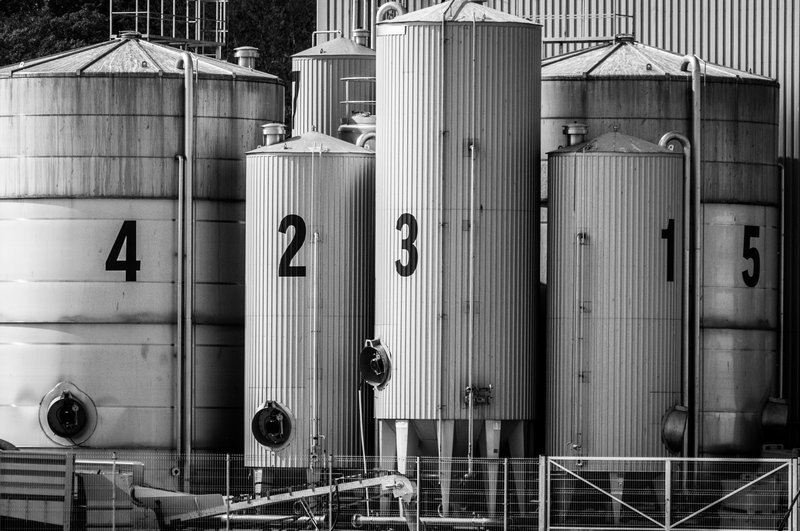
On February 22, 1942, the last civilian automobile rolled off a U.S. assembly line. After that, the War Production Board ordered all auto plants to stop building cars for the general public and convert to military output. Ford’s Willow Run plant — built to make cars — became one of the largest aircraft factories on earth, eventually turning out a B-24 Liberator bomber roughly every hour at peak.
Chrysler built tanks. General Motors built everything from machine guns to aircraft engines. The industry that had defined American consumerism spent the war years as the “Arsenal of Democracy,” and there was simply no spare steel, rubber, or labor for civilian sedans.
So 1944 sat squarely in the middle of that blackout. No design refreshes, no new chrome, no model-year announcements. The Hagerty automotive history team has documented how completely the industry pivoted — the assembly lines that built family cars in 1941 were building instruments of war by 1943.
The Numbers Behind the Freeze {#the-numbers}
The scale of the shutdown is easy to underestimate. A few figures put it in perspective:
- 610 — roughly the number of new passenger cars delivered nationwide in 1944, all by special government permit.
- February 22, 1942 — the day civilian production officially stopped.
- ~500,000 — the number of new, unsold cars the government “froze” and rationed out to essential users (doctors, defense workers, clergy) over the course of the war.
Gasoline was rationed too. An “A” sticker on your windshield — the lowest priority — got you about three to four gallons a week. Tires were so scarce that the government banned pleasure driving outright in much of the country for a stretch. The car in your driveway in 1944 wasn’t just old; it was a carefully managed wartime asset.
What People Actually Drove {#what-people-drove}
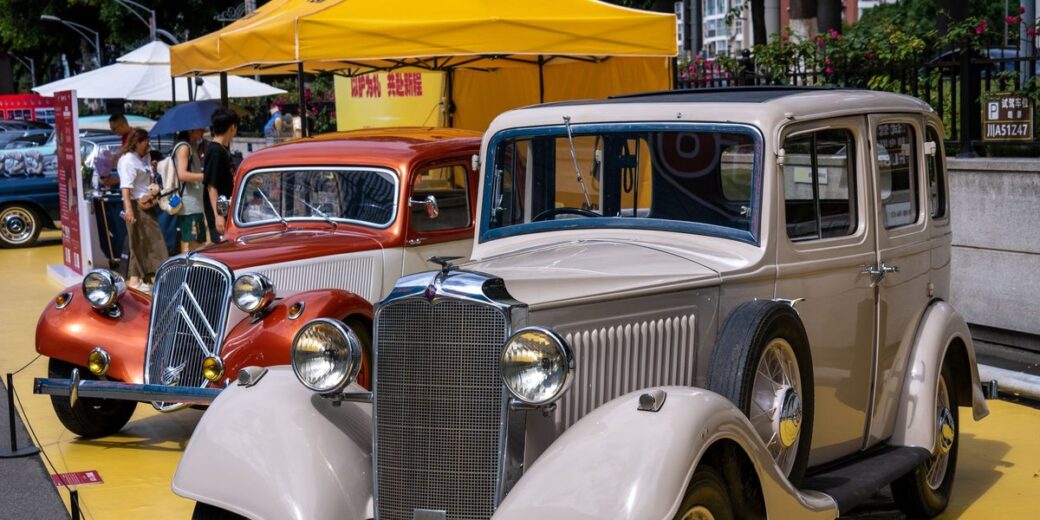
The cars on the road in 1944 were overwhelmingly the 1940, 1941, and early-1942 models — the last full pre-war lineups. These are the machines people kept alive with retreaded tires and black-market parts. Most were sedans, though the two-door body styles cataloged in our complete list of 1940s coupes were just as much a part of the wartime streetscape. Here are the ones you’d have seen most.
Ford Deluxe (1941–1942) {#ford-deluxe}
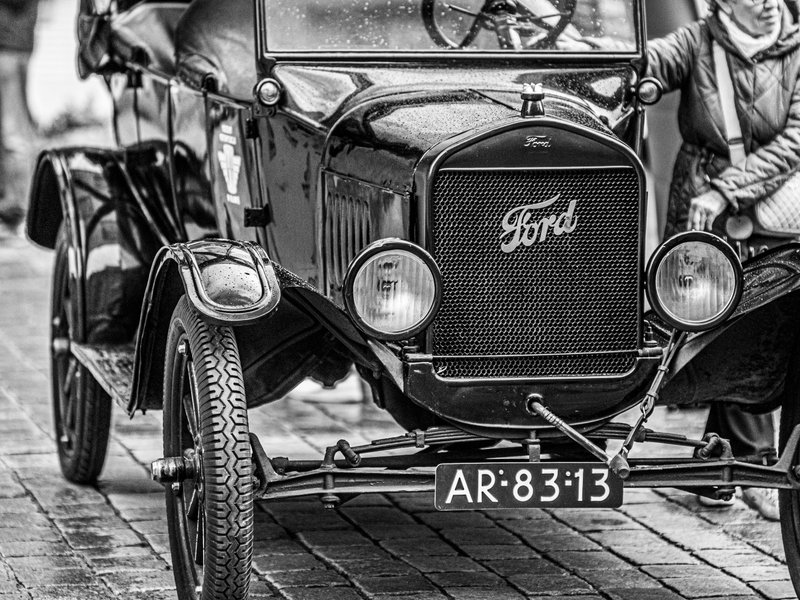
The Ford Deluxe was the everyman’s car going into the war, and it stayed that way through it. The 1941 redesign was Ford’s biggest in years — a wider body, a longer wheelbase, and a choice between the familiar flathead V8 and a new inline-six aimed at thrift-minded buyers.
That flathead V8 is the detail that matters here. By 1944 it had a decade of reputation behind it as the engine you could fix yourself, which is exactly what kept these cars running when no replacement vehicle existed. Bootleggers and hot-rodders prized it for the same reason after the war. If you picture a 1944 American driveway, there’s a good chance there’s a black Ford Deluxe sitting in it, odometer well past anything the warranty cared about.
Chevrolet Master & Special Deluxe {#chevrolet}
Chevrolet outsold Ford going into the war, and the Master Deluxe and Special Deluxe were the reason. The Special Deluxe, introduced for 1941, was the upscale trim — and it was genuinely popular, the kind of car a successful small-town family aspired to.
The signature feature was the “Stovebolt” inline-six, an overhead-valve engine Chevy had leaned on since the early 1930s. It made the car a little more refined than a flathead Ford to some buyers’ ears, and Chevrolet’s massive dealer network meant parts were easier to come by during the lean war years. The 1942 Special Deluxe also got the trim-heavy styling that would be among the last civilian flourishes before the chrome ran out.
Plymouth (1942) {#plymouth}
Plymouth was Chrysler’s value brand and the third leg of the “low-priced three” alongside Ford and Chevy. The 1942 Plymouth is a particularly interesting survivor because it represents the very end of the line — these were built in the few weeks of January and February 1942 before the cutoff.
What set Plymouth apart was its engineering reputation: a solid flathead inline-six and Chrysler’s “Floating Power” engine mounting, which genuinely smoothed out vibration in a way buyers noticed. A 1942 Plymouth in 1944 was a relatively young car by the standards of what was on the road, and Chrysler’s own wartime conversion to tank and weapons production meant no more were coming until the war ended.
Buick Special & Roadmaster {#buick}
Not everyone was driving a low-priced sedan. For the doctors, executives, and defense officials who could justify a bigger car, Buick was the aspirational mid-luxury choice — a step below Cadillac but well above the everyman brands.
The Special was the entry Buick; the Roadmaster sat near the top. Both ran Buick’s straight-eight engine, a smooth and torquey inline-eight that gave the cars a effortless, gliding feel that smaller sixes couldn’t match. The 1941–42 Buicks also wore some of the most confident styling of the pre-war era — long hoods, sweeping fenders, and the toothy grille that became a brand signature. A well-kept Roadmaster was a status object in 1944, precisely because no one could buy a new one.
The “Blackout” Cars of Early 1942 {#blackout-cars}
Here’s a detail collectors love. In the final weeks of 1942 production, the government had already restricted the use of bright metal — chrome and other materials were being diverted to the war effort. So the last cars built had their trim, bumpers, and grille details painted over instead of plated.
These are the famous “blackout” models. A 1942 Ford, Chevy, or Plymouth with body-color trim where the chrome should be is one of these rare end-of-the-line cars. They’re genuinely scarce, and they’re a tangible artifact of the exact moment the civilian auto industry shut its doors. If you ever see one at a show, you’re looking at one of the last cars America built before it spent four years building war machines.
What This Means for Collectors Today {#collectors}
If you’re hunting for a “1944 car,” what you actually want is a pre-war survivor: a 1940–42 Ford Deluxe, Chevrolet Special Deluxe, Plymouth, or Buick. These are the cars that defined the streets during the war, and they’re the period-correct choice for any 1944 scene, restoration, or collection.
The blackout 1942 models are the prizes for serious collectors — rare, historically specific, and a direct link to the production freeze. Everything else is the rolling stock of a country that put its car industry on hold and asked its drivers to make do. That’s the real story of 1944: not what was new, but what people refused to let die.
Marco Delantero
More from Marco DelanteroHow we reviewed this article
This article was researched against manufacturer records and editorially reviewed before publishing. We accept no payment for coverage. Some guides contain affiliate links; see our affiliate disclosure.