Table of Contents
- TLDR: The Short Version
- 2010 Porsche Lineup at a Glance
- The 911 (997.2): Carrera Through GT3 RS
- The IMS Bearing Question, Answered Properly
- Panamera: Porsche’s First Sedan Shows Up
- Cayenne: The Last Year of the Original
- Boxster and Cayman: The Cheap Way In
- Manual vs. PDK: Does It Still Matter?
- What These Cars Are Actually Worth Now
- Verdict: Which One to Actually Buy
TLDR: The Short Version
Porsche’s 2010 lineup covered five separate car lines, and none of them share much beyond a badge. The 911 (internally the 997.2) ran from a 345-horsepower Carrera to a 500-horsepower Turbo, all built on the direct-injection engine that finally killed off the intermediate shaft bearing problem. The Panamera arrived as Porsche’s first four-door, split opinion instantly, and now sits in the depreciation basement. The Cayenne you could buy in 2010 was the last model year of the original SUV before a full redesign. Boxster and Cayman were, and still are, the most car-per-dollar Porsche has ever built.
If you want the one-line answer: a 2010 Cayman S with a manual transmission and full service records is the best combination of engineering, reliability, and price on this entire list. If you want a collector piece instead of a driver, the 997.2 GT3 RS is the one that’s actually going up in value while everything else on this page goes down.
2010 Porsche Lineup at a Glance
| Model | Engine | Power | Transmission | Original MSRP (approx.) |
|---|---|---|---|---|
| 911 Carrera | 3.6L flat-six | 345 hp | 6-speed manual / PDK | $79,850 |
| 911 Carrera S | 3.8L flat-six | 385 hp | 6-speed manual / PDK | $92,450 |
| 911 Carrera 4 / 4S | 3.6L / 3.8L flat-six, AWD | 345 / 385 hp | Manual / PDK | $85,650 / $98,350 |
| 911 Targa 4 / 4S | 3.6L / 3.8L flat-six, AWD, glass roof | 345 / 385 hp | Manual / PDK | $91,650 / $104,350 |
| 911 GT3 | 3.8L flat-six, Mezger-based | 435 hp | 6-speed manual only | $112,200 |
| 911 GT3 RS | 3.8L flat-six, Mezger-based | 450 hp | 6-speed manual only | $131,000 |
| 911 Turbo | 3.8L twin-turbo flat-six | 500 hp | Manual / PDK | $132,800 |
| Panamera S | 4.8L V8 | 400 hp | 6-speed manual / PDK | $89,800 |
| Panamera 4S | 4.8L V8, AWD | 400 hp | PDK | $93,800 |
| Panamera Turbo | 4.8L twin-turbo V8 | 500 hp | PDK | $132,600 |
| Cayenne | 3.6L V6 | 290 hp | Tiptronic S | $46,700 |
| Cayenne S | 4.8L V8 | 385 hp | Tiptronic S | $61,700 |
| Cayenne GTS | 4.8L V8 | 405 hp | Tiptronic S | $70,500 |
| Cayenne Turbo | 4.8L twin-turbo V8 | 500 hp | Tiptronic S | $92,900 |
| Cayenne Turbo S | 4.8L twin-turbo V8 | 550 hp | Tiptronic S | $122,300 |
| Boxster | 2.9L flat-six | 255 hp | Manual / PDK | $47,600 |
| Boxster S | 3.4L flat-six | 310 hp | Manual / PDK | $58,100 |
| Cayman | 2.9L flat-six | 265 hp | Manual / PDK | $52,900 |
| Cayman S | 3.4L flat-six | 320 hp | Manual / PDK | $63,800 |
The 911 (997.2): Carrera Through GT3 RS
Porsche people call the 2010 911 the “997.2” — the second, facelifted phase of the 997 generation that ran 2009 through 2012. It’s the version to know, because Porsche used this exact model year to fix the engine problem that haunts every earlier 911 conversation.
The Carrera and Carrera S got LED running lights, a reworked front bumper, and — more importantly — the 9A1-series direct-injection flat-six that replaced the old M97 engine entirely. Carrera 4 and 4S added Porsche’s mechanical all-wheel-drive system, useful if you live somewhere that sees actual winter. Targa 4 and 4S kept the sliding glass roof for buyers who wanted the drama without giving up the coupe’s rigidity.
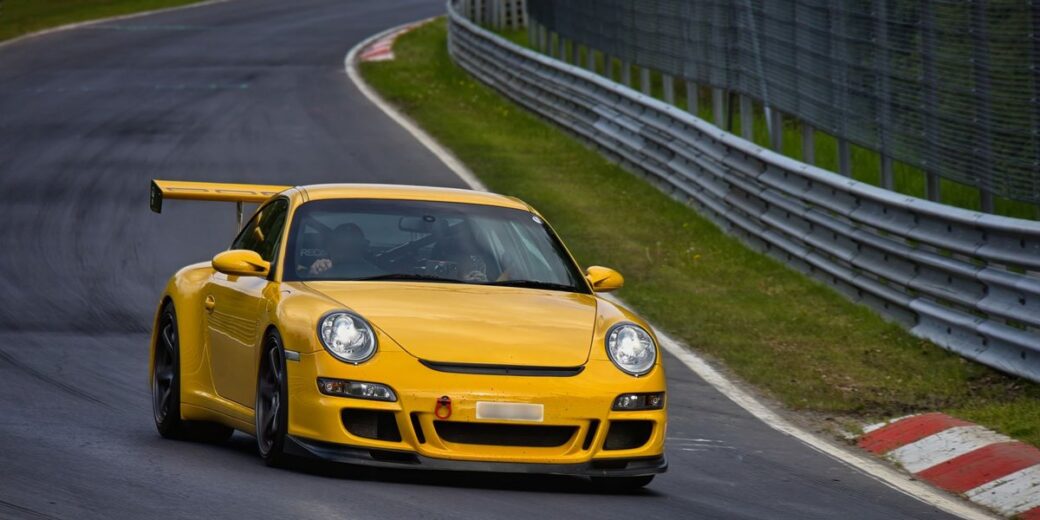
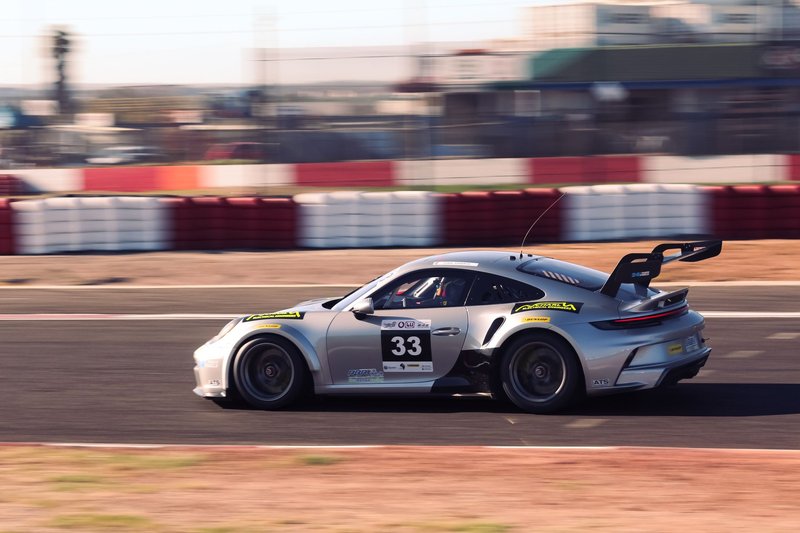
Then there’s the serious end of the range. The GT3 and GT3 RS never used the direct-injection engine at all — they run a descendant of the Mezger architecture that traces back to Porsche’s 962 race program, tuned to 435 and 450 horsepower respectively and paired exclusively with a six-speed manual. No PDK was offered on either, which is exactly why they’re the cars appreciating fastest today. The Turbo split the difference: same Mezger-family block, twin turbochargers, 500 horsepower, and — for the first time on a 911 Turbo — PDK as an option instead of the old Tiptronic S.
Drive a Carrera S back to back with a GT3 and the gap is obvious inside the first mile. The Carrera S is genuinely comfortable, quiet at highway speed, easy to live with daily. The GT3 rides like it’s still deciding whether you deserve to be in it — stiff, loud, and reporting every seam in the pavement straight into your spine. That’s not a flaw. It’s the point.
The IMS Bearing Question, Answered Properly
Every “2010 Porsche” search eventually runs into the intermediate shaft bearing, and most of what gets written about it is either outdated or wrong for this specific year. Here’s what actually happened.
Porsche’s M96 and early M97 flat-six engines, used from the 1997 Boxster through the 2008 model year 911 and Cayman, had an intermediate shaft bearing that could fail without warning and take the whole engine with it. It’s a real problem, well documented, and it’s the reason so many 2005–2008 Porsches trade at a discount.
The 2010 model year sits on the other side of that fix. Porsche switched the entire flat-six lineup — 911, Boxster, and Cayman — to direct fuel injection for the 2009 model year, and the new 9A1 engine family did away with the intermediate shaft bearing design that caused the failures. If you’re shopping a 2010 Carrera, Boxster, or Cayman, the bearing that keeps Porsche forums busy simply isn’t part of that car. The GT3, GT3 RS, and Turbo never had the problem in the first place, since they’ve always run the separate Mezger-based engine.
That doesn’t mean a 2010 Porsche has no engine risk at all. The 9A1 engines have their own known issue — cylinder bore scoring on certain early examples, usually flagged by excessive oil consumption. It’s rarer and cheaper to diagnose than an IMS failure, but a pre-purchase inspection that includes a borescope check is still worth the few hundred dollars, particularly on a Cayman or Boxster S with unknown service history.
Panamera: Porsche’s First Sedan Shows Up
The Panamera launched for 2010 as Porsche’s first-ever four-door production car, and it landed exactly as controversially as you’d expect. The proportions — long hood, sloping roofline stretched over a much bigger body than any 911 — divided people the moment photos leaked. Underneath, it’s a legitimate Porsche: a 4.8-liter V8 shared with the Cayenne, rear- or all-wheel drive, and a chassis tuned by the same engineers who built the 911.
2010 buyers had three choices. The Panamera S ran the naturally aspirated V8 at 400 horsepower with rear-wheel drive. The 4S added all-wheel drive for the same output. The Turbo doubled down with twin turbochargers and 500 horsepower, enough to embarrass most sports cars while carrying four adults and their luggage. The base V6 Panamera didn’t arrive until the following model year, so every 2010 Panamera on the used market is a V8.
What nobody selling these tells you upfront: the Panamera’s maintenance costs scared off exactly the buyers who’d normally protect its resale value. Air suspension components, the PDK unit, and the V8’s timing chain tensioners all get expensive once the factory warranty runs out, and that reputation has pushed early Panameras into genuine bargain territory. Which is either a warning or an opportunity, depending on how comfortable you are budgeting for repairs.
Cayenne: The Last Year of the Original
Here’s something the spec-database sites gloss over: the 2010 Cayenne is the final model year of the first-generation SUV, code-named 957 internally. Porsche replaced it with a fully redesigned second-generation Cayenne for the 2011 model year, so anyone shopping “a 2010 Cayenne” is specifically shopping the outgoing platform — heavier, less efficient, but also simpler and, by most owner accounts, a little more mechanically straightforward than the electronics-heavy generation that followed.
The 2010 range ran from the V6 base model at 290 horsepower up through the Cayenne S at 385, the GTS at 405, and the Turbo at 500. New for 2010 only: the Turbo S, a 550-horsepower send-off for the first-generation platform, produced in limited numbers and increasingly sought after by SUV collectors — a phrase that would have sounded absurd fifteen years ago.
The V6 and S versions serve well as unglamorous family haulers if you can absorb Porsche parts pricing on brakes and suspension bushings. The Turbo and Turbo S trade practicality for genuinely startling straight-line speed in something that seats five and tows a boat.
Boxster and Cayman: The Cheap Way In
If your goal is “drive something built by Porsche’s engineers without spending Porsche money,” the 2010 Boxster and Cayman are still the answer, and they were already the answer fifteen years ago.
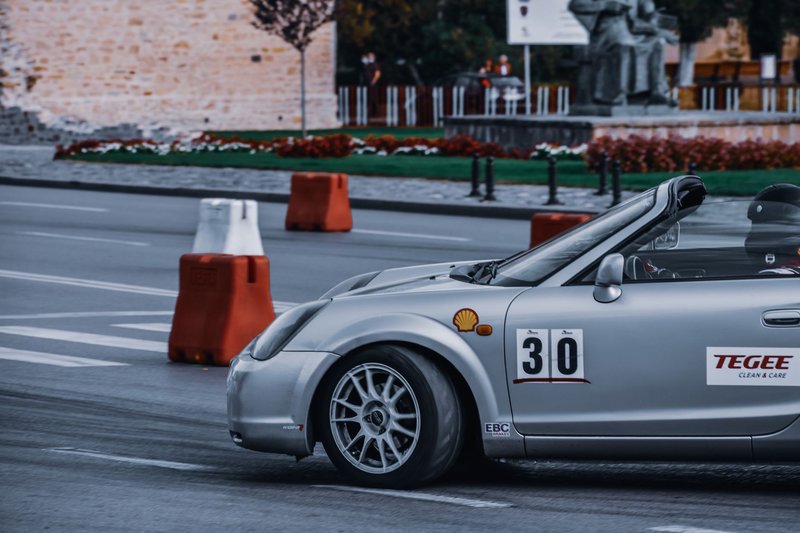
Both run the same direct-injection engine family as the 911 — no IMS bearing, same reasoning as above. The Boxster is the roadster: manual folding soft top, mid-engine layout, 255 horsepower in base form or 310 in the S. The Cayman is the fixed-roof coupe version of the same platform, consistently rated a few horsepower above its equivalent Boxster trim (265 and 320) because the closed roof adds chassis stiffness Porsche’s engineers were happy to exploit.
Enthusiasts have argued for two decades over which one drives better, and the honest answer is that the Cayman is the more focused car — stiffer, slightly quicker, and arguably the best-handling Porsche of this entire era for the money — while the Boxster gives up a little rigidity for open-air driving. Neither gives up much to the 911 Carrera in a corner. Porsche has spent real engineering effort over the years making sure of that.
Manual vs. PDK: Does It Still Matter?
In 2010, this was a genuine debate. In 2026, it’s mostly settled, but not entirely the way people expected.
PDK, Porsche’s dual-clutch automatic, is objectively faster in every measurable way — quicker shifts, better launch control, faster real-world lap times. On a Carrera S or Panamera Turbo, most owners who bought PDK never think about the choice again, and PDK units from this era have proven durable when serviced on schedule.
The manual gearbox won a different argument: the one about resale value and driver engagement—reasons explored in guides on manual vs automatic transmission benefits. On the GT3 and GT3 RS, Porsche didn’t even offer PDK for the 2010 model year, so the question doesn’t apply — but on the Carrera, Carrera S, and Turbo, a documented manual transmission now commands a real premium in the used market, often 10 to 20 percent over an otherwise identical PDK car. That premium didn’t exist when these cars were new. It’s a collector-market shift, driven by buyers who want the increasingly rare experience of rowing their own gears in a modern 911, and it’s one of the clearest examples of how this generation’s values have moved since 2010.
What These Cars Are Actually Worth Now
Fifteen years out, the 2010 Porsche lineup has split into two clear camps.
The volume cars — base Cayenne, Boxster, Panamera S, and standard Carrera — have depreciated the way every non-limited German car does, and most sit well under their original price today, particularly Panameras, which get penalized hardest for maintenance reputation regardless of how well a specific example has been kept up.
The performance and limited models have gone the other direction. The 997.2 GT3 RS, built in low numbers and never offered with an automatic, has appreciated meaningfully since new and continues climbing as fewer clean examples remain on the market. The regular GT3 has followed the same trend at a lower altitude. The Cayenne Turbo S, unusual for an SUV, is starting to attract collector interest simply because it was the send-off for an entire generation.
Condition and paperwork matter more than the badge at this point. A Carrera S with full service history, no accident record, and evidence of the factory-recommended maintenance intervals will out-earn a neglected GT3 in resale terms if the GT3’s history has gaps. Buy the paperwork as much as the car.
Verdict: Which One to Actually Buy
For a daily driver that still feels like a proper sports car, the Carrera S in manual form is the sweet spot in the 911 range — enough power to matter, none of the GT3’s compromise on comfort.
For the best value on the entire list, it’s the Cayman S. Same engine family as the 911, no IMS risk, a chassis some Porsche engineers privately preferred to the 911’s of this era, and a used price that hasn’t caught up to how good the car actually is.
For a genuine long-term asset rather than just a car, the GT3 RS stands alone here — the rest of this lineup is a depreciation story, and that’s the one exception.
Skip the base Panamera S unless you’ve already budgeted for repairs beyond the purchase price. It’s not a bad car. It’s an expensive one to own carelessly, and carelessness is exactly what its depreciation has been punishing for a decade.
Whatever you land on, get a pre-purchase inspection from someone who specializes in this era of Porsche specifically — a generalist mechanic will check the wrong things, because the problems that matter on a 2010 Porsche aren’t the ones that made the previous generation famous. According to EPA fuel economy data, even the V8-powered Cayenne and Panamera models of this era return notably better real-world economy than their outgoing predecessors, a detail worth checking against your specific configuration before you buy. It’s also worth running the VIN through NHTSA’s recall lookup tool before you commit, since open recalls on a used car are a five-minute check that can save a much longer headache later.

Daniela Voss
More from Daniela VossHow we reviewed this article
This article was researched against manufacturer records and editorially reviewed before publishing. We accept no payment for coverage. Some guides contain affiliate links; see our affiliate disclosure.