Table of Contents
- Vintage Isn’t a Synonym for Classic
- At a Glance: Founding Years and Countries
- American Vintage Brands
- British Vintage Brands
- Italian Vintage Brands
- French Vintage Brands
- German Vintage Brands
- Buying Your First Vintage Car
- Where to See Them in Person
- The Short List
Vintage Isn’t a Synonym for Classic
Most “vintage car” listicles are actually classic car listicles wearing a fancier hat. They’ll toss a 1957 Chevy Bel Air and a 1965 Mustang into the same bucket as a 1928 Bentley, and call it a day.
That’s not vintage. Vintage has a date range: 1919 to 1930. It’s the period between the end of World War I and the start of the Great Depression, when automobile makers moved past the brass-and-wood experimentation of the pre-war years and into mass production, hydraulic brakes, straight-eight engines, and — for a handful of marques — genuinely dangerous speed. The Antique Automobile Club of America and most concours judging bodies still use this window to separate “vintage” from the looser “antique” (pre-1919) and “classic” (roughly 1915-1948, with heavy overlap) categories.
This list sticks to that window. Every brand and every flagship model below comes from 1919-1930. No 1930s Duesenbergs padding out the count, no post-war Jaguars borrowing the vintage label because it sounds prestigious. If you’re hunting for a true vintage-era car rather than a broadly old one, this is the list built for that.
At a Glance: Founding Years and Countries
| Brand | Country | Founded | Vintage-Era Flagship |
|---|---|---|---|
| Duesenberg | USA | 1913 | Model J (1928) |
| Packard | USA | 1899 | Single Eight (1924) |
| Pierce-Arrow | USA | 1901 | Series 80 (1924) |
| Stutz | USA | 1911 | Vertical Eight (1926) |
| Cadillac | USA | 1902 | Series 314 (1926) |
| Rolls-Royce | UK | 1904 | Phantom I (1925) |
| Bentley | UK | 1919 | 4½ Litre “Blower” (1927) |
| Aston Martin | UK | 1913 | International (1929) |
| MG | UK | 1924 | M-Type Midget (1929) |
| Alfa Romeo | Italy | 1910 | 6C 1750 (1929) |
| Lancia | Italy | 1906 | Lambda (1922) |
| Isotta Fraschini | Italy | 1900 | Tipo 8 (1919) |
| Bugatti | France | 1909 | Type 35 (1924) |
| Delage | France | 1905 | 15-S-8 (1927) |
| Voisin | France | 1919 | C7 (1926) |
| Mercedes-Benz | Germany | 1926 | SSK (1928) |
| Horch | Germany | 1899 | Horch 8 (1926) |
American Vintage Brands
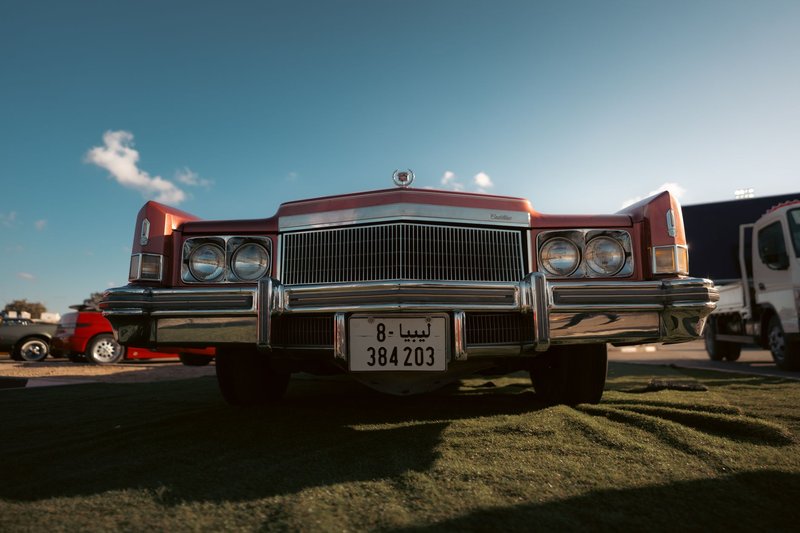
Duesenberg. Fred and Augie Duesenberg built race engines before they built road cars, and it shows. The 1921 Model A was the first American production car with four-wheel hydraulic brakes, years before anyone else bothered. Then came the Model J in 1928: a 265-horsepower straight-eight in an era when most cars struggled past 40. Original Model J Speedsters and the supercharged SJ variants now trade well into seven figures at auction, with the rarest coachbuilt examples pushing past $2 million.
Packard. “Ask the Man Who Owns One” wasn’t just a slogan — Packard’s reliability record in the 1920s actually earned it. The Single Eight, introduced in 1924, gave wealthy buyers a smooth straight-eight without Duesenberg money. Good driver-quality tourers today run $40,000 to $150,000 depending on coachwork, which makes Packard one of the more approachable entry points into genuine vintage ownership.
Pierce-Arrow. The Buffalo, New York maker built its identity around headlamps faired directly into the fenders starting in 1913 — a styling signature no competitor copied outright, since Pierce held the patent. The Series 80, built through the mid-1920s, is the model most likely to turn up at a regional concours. Expect mid five to low six figures for a sorted example.
Stutz. Everyone remembers the Bearcat racer, but the vintage-era Stutz Vertical Eight of 1926 mattered more to the industry: it was the first American production car fitted with safety glass as standard equipment, a full decade before most manufacturers made it common. Values sit between $150,000 and $400,000.
Cadillac. Cadillac had already put a V8 into production in 1915, which gave it a head start heading into the vintage era. The Series 314 of 1926 is the car most collectors point to — well-built, well-proportioned, and considerably cheaper to acquire and maintain than its luxury rivals. Solid tourers can still be found for $30,000 to $80,000.
British Vintage Brands
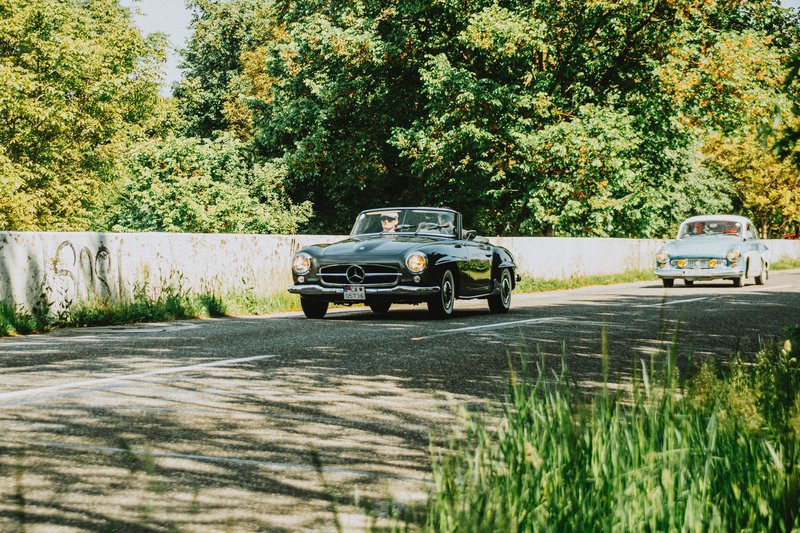
Rolls-Royce. The Silver Ghost carried the brand into the 1920s, and the Phantom I replaced it in 1925 with a new overhead-valve engine while keeping the same reputation for silence at speed. A good Phantom I tourer runs $150,000 to $400,000; exceptional coachbuilt bodies by Hooper or Barker go considerably higher.
Bentley. Founded in 1919, so every early Bentley is vintage almost by definition. The “Bentley Boys” — a informal group of wealthy British racers — drove 4½ Litre and supercharged “Blower” Bentleys to five Le Mans victories between 1924 and 1930. Cars with genuine period racing provenance command $500,000 to well over $2 million; the racing history, not just the badge, drives the number.
Aston Martin. Aston Martin in the 1920s was a boutique operation building a few dozen cars a year, which is exactly why survivors are so scarce now. The International model of 1929 is the vintage-era car most likely to surface, and scarcity alone pushes values into the low-to-mid six figures despite modest period performance.
MG. Cecil Kimber founded MG in 1924 with a simple idea: take a Morris chassis and make it sportier, cheaper, and more fun to drive than anything from Rolls-Royce’s end of the market. The M-Type Midget of 1929 is often called the car that invented the affordable British sports car formula. It’s also the most accessible entry on this list, with clean examples available for $20,000 to $60,000.
Italian Vintage Brands

Alfa Romeo. Engineer Vittorio Jano joined Alfa Romeo in 1923 and immediately reshaped the company’s racing program, which fed directly into road cars like the 6C 1750 of 1929. Alfa’s early Mille Miglia dominance was built on this platform. Super Sport variants now bring $300,000 to over $1 million depending on racing history and body style.
Lancia. The Lambda, launched in 1922, is arguably the single most important engineering milestone on this entire list: it was the first production car with a load-bearing unibody, and the first with independent front suspension. Every unibody car on the road today owes something to it. Despite that, Lambdas remain undervalued relative to their significance, typically $60,000 to $150,000.
Isotta Fraschini. The Tipo 8, introduced in 1919, was the first production car in the world with a straight-eight engine — a configuration everyone from Duesenberg to Mercedes would later chase. Isotta Fraschinis also had genuine Hollywood cachet: Gloria Swanson owned one, and it’s the car immortalized in the closing scene of Sunset Boulevard. Surviving examples now exceed $500,000.
French Vintage Brands

Bugatti. The Type 35, built from 1924 onward in Molsheim, is credited with more than 2,000 competition victories over its production run — a record no other racing car from the era comes close to matching. That racing pedigree keeps values strong: $400,000 to $1.2 million depending on chassis history and originality.
Delage. Delage’s 15-S-8 grand prix car swept the 1927 season, winning every championship race it entered that year. Delage stopped competing shortly after, partly because there was nothing left to prove. Surviving competition examples are rare enough to bring seven figures when one does reach auction.
Voisin. Gabriel Voisin built aircraft before he built cars, and the influence carried straight into the C7 of 1926: sleeve-valve engines borrowed from aviation practice, and Art Deco bodywork that looked like nothing else on the road. Design-focused collectors pay $200,000 to $500,000 for well-preserved examples.
German Vintage Brands
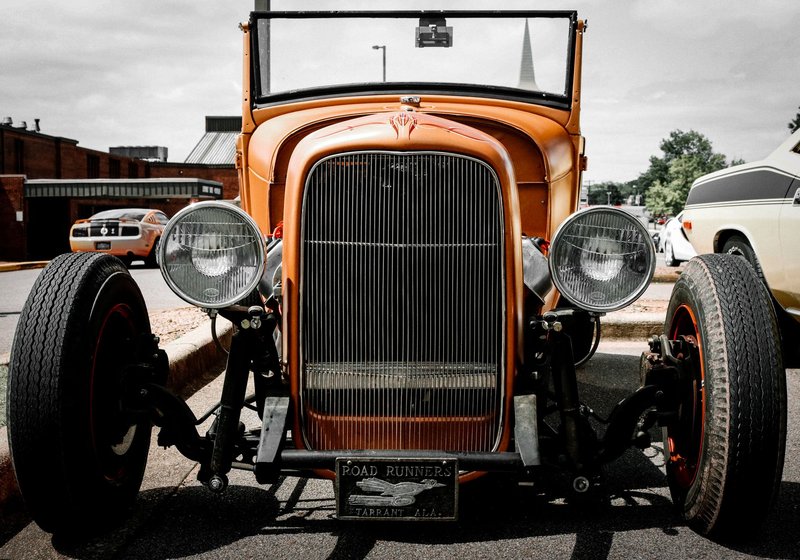
Mercedes-Benz. The Mercedes and Benz companies merged in 1926, and two years later the combined firm released the supercharged S, SS, and SSK models. Driver Rudolf Caracciola used the SSK to dominate European hillclimbs and endurance races through the end of the decade. SSKs are among the most valuable pre-war cars in existence today, with the rarest examples reaching eight figures; even a standard S model now clears $1 million.
Horch. August Horch founded the company in 1899, and by 1926 the Horch 8 was going head-to-head with Mercedes for German luxury buyers, offering a comparable straight-eight at a lower price. Horch later became one of the four founding brands behind Auto Union — the four interlocking rings now known as Audi. American buyers still overlook the marque, which keeps prices at $150,000 to $400,000 for a well-sorted Horch 8.
Buying Your First Vintage Car
A vintage car isn’t a weekend hobby purchase in the way a 1970s muscle car is. Parts are scarcer, documentation matters more, and mechanical sympathy is not optional. A few things worth sorting out before you write a check:
Chassis numbers over paint jobs. A repaint tells you nothing. What you want is a matching-numbers chassis, engine, and body combination, verified against the factory’s original build records where a marque club or registry keeps them. A mismatched drivetrain can cut a car’s value in half even if it looks identical from ten feet away.
Coachbuilt versus factory body. Many vintage luxury brands — Rolls-Royce, Isotta Fraschini, Delage — sold a rolling chassis and left the bodywork to an outside coachbuilder. Two cars with the same chassis number range can look completely different and carry very different values depending on who built the body and how many survive.
Parts availability is not guaranteed. Reproduction parts exist for the more collected brands — Bentley, Bugatti, Duesenberg — through active owner clubs. For rarer marques like Voisin or Horch, expect to have parts fabricated by a specialist, and budget accordingly.
Insure it as an agreed-value collector car, not a daily driver. Standard auto insurance will total a $300,000 Bentley for a fraction of its worth after a fender-bender. Agreed-value policies through specialist insurers protect the car’s actual market value.
Join the marque club before you buy, not after. The Antique Automobile Club of America, the Bentley Drivers Club, and similar organizations exist specifically to help new owners avoid buying someone else’s expensive mistake. Their vetting knowledge is worth more than a pre-purchase inspection from a generalist mechanic.
Where to See Them in Person
You don’t need seven figures to see any of these cars up close. The Smithsonian’s National Museum of American History keeps an ongoing transportation collection that includes early American luxury marques, and the Library of Congress documents surviving examples of historically significant vehicles through its National Historic Vehicle Register. In the UK, the National Motor Museum at Beaulieu holds one of the deepest collections of British vintage-era cars anywhere, including early Bentleys and Rolls-Royces in running condition.
For a more hands-on introduction, regional meets run by the Antique Automobile Club of America welcome newcomers and are free to attend — a far better way to learn what a genuine vintage car sounds, smells, and drives like than any auction catalog description. The Pebble Beach Concours d’Elegance and the modern Mille Miglia retrospective run are the higher-profile events, where the SSKs and Type 35s on this list actually turn a wheel in public.
The Short List
Seventeen brands, five countries, one twelve-year window. The throughline across all of them isn’t luxury for its own sake — it’s the pace of engineering change. Hydraulic brakes, straight-eight engines, unibody construction, supercharging: nearly all of it either debuted or matured in this specific decade, which is a big part of why vintage-era cars still command real money instead of fading into curiosities.
If you’re starting a collection, don’t chase the Duesenberg first. Start with an MG M-Type or a Packard Single Eight, learn what vintage ownership actually demands, and work your way up from there. The Bentleys and the Bugattis will still be there once you know what you’re looking at.

Marco Delantero
More from Marco DelanteroHow we reviewed this article
This article was researched against manufacturer records and editorially reviewed before publishing. We accept no payment for coverage. Some guides contain affiliate links; see our affiliate disclosure.