TLDR
Lamborghini sold three model lines in 2009: the Gallardo LP560-4 (coupe and Spyder), the Murciélago LP640 (coupe and Roadster), and the Reventón — a 20-car run based on the LP640 platform. The LP560-4 was brand new for the year, with a redesigned 552-hp direct-injection V10 replacing the old Gallardo’s engine entirely. The Murciélago LP640 carried on mostly unchanged in its second-to-last model year before the Aventador replaced it in 2011. The Reventón was neither a new engine nor a new platform — it was a $1.6 million styling exercise wrapped around Murciélago mechanicals, and it’s the one that’s actually appreciated since new.
Table of Contents
- What Changed for 2009
- 2009 Lamborghini Lineup Compared
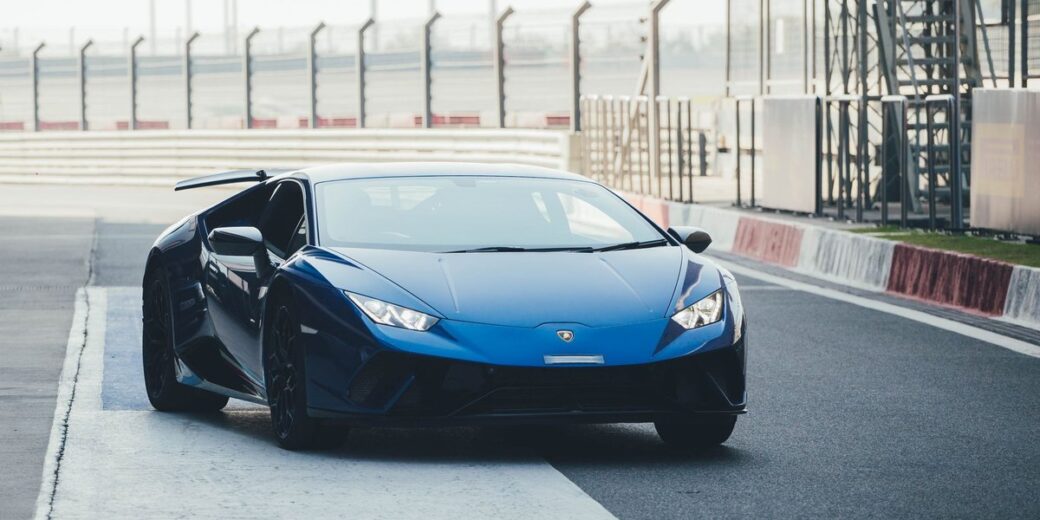
- Gallardo LP560-4: The New Baseline
- Murciélago LP640: The Flagship, Winding Down
- Reventón: 20 Cars, One Purpose
- Production Numbers and Rarity
- Collector Value: What’s Actually Appreciated
- Ownership Costs and Known Issues
- Which 2009 Lamborghini Should You Buy
What Changed for 2009
2009 was a genuine inflection point for Lamborghini, not just a trim refresh. The Gallardo got its first major engine overhaul since launch, the Murciélago was quietly running out the clock, and the company spent the year building the strangest, most expensive thing it had ever made.
The headline change was direct injection. The outgoing Gallardo’s 5.0-liter V10 got replaced with a 5.2-liter unit that injects fuel straight into the combustion chamber instead of the intake port — the same shift that was rippling through the entire auto industry around this time as manufacturers chased more power without a proportional fuel penalty. It bumped output from 512 hp to 552 hp and let Lamborghini rename the car LP560-4 — the “560” is the metric horsepower figure, not the imperial one, a naming quirk that trips up a lot of buyers scanning listings.
Underneath, the LP560-4 also picked up a reworked e-gear transmission with faster shifts, retuned all-wheel-drive torque split, and a suspension that finally felt sorted rather than punishing. The Murciélago LP640, by contrast, got none of that. It had already received its big update in 2006 and Lamborghini left it alone for 2009, aside from running production down as the Aventador’s development moved forward. The Reventón sat outside this whole conversation — it borrowed the LP640’s drivetrain wholesale and spent its development budget entirely on the body.
2009 Lamborghini Lineup Compared
| Model | Body | Engine | Power | 0–60 mph | Top Speed | Original MSRP | Used Value Today |
|---|---|---|---|---|---|---|---|
| Gallardo LP560-4 Coupe | 2-door coupe | 5.2L V10 | 552 hp | 3.7 sec | 202 mph | ~$198,000 | ~$110,000–$260,000 |
| Gallardo LP560-4 Spyder | Convertible | 5.2L V10 | 552 hp | 4.0 sec | 201 mph | ~$221,000 | ~$120,000–$270,000 |
| Murciélago LP640 Coupe | 2-door coupe | 6.5L V12 | 631 hp (640 PS) | 3.4 sec | 211 mph | ~$354,000 | ~$225,000–$400,000+ |
| Murciélago LP640 Roadster | Convertible | 6.5L V12 | 631 hp (640 PS) | 3.4 sec | 211 mph | ~$382,400 | ~$250,000–$650,000 |
| Reventón | 2-door coupe | 6.5L V12 | 650 hp | 3.3 sec | 211 mph | ~$1,600,000 | ~$1.5M–$2.5M+ |
Used values move fast and vary hugely by mileage, service history, and how many people are chasing the same car at auction that week — treat these as directional, not appraisals.
Gallardo LP560-4: The New Baseline
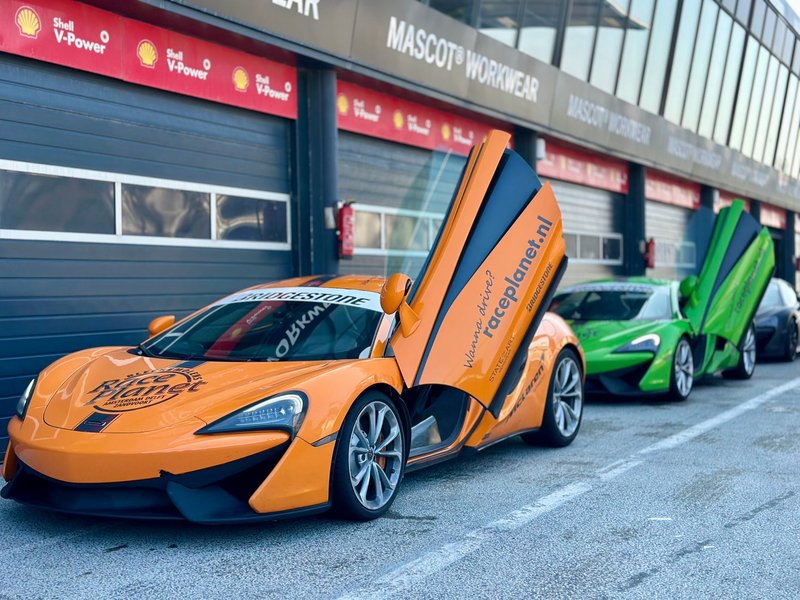
The LP560-4 is the car most people mean when they say “2009 Lamborghini” without qualifying it further, and for good reason — it was the volume model, the one dealers actually had in stock, and the one most first-time supercar buyers cross-shopped against the Ferrari F430 or 911 Turbo.
What you notice driving one isn’t the horsepower number, it’s how usable it is. All-wheel drive and a six-speed manual (a real one, with a gated shifter, if you can find it) or the e-gear automated manual both come standard, and the ride quality doesn’t punish you on a normal road the way the older Gallardo did. Fuel economy is still a joke by any sane standard — the EPA rated it around 12 city and 20 highway — but that’s the trade for 552 hp routed through all four wheels.
The Spyder loses about 100 pounds’ worth of rigidity to the folding roof and gains a slightly worse 0-60 time, but most buyers pick it for the sound with the top down, not the spec sheet. Both body styles share the same drivetrain, which means service parts and specialist knowledge overlap heavily — a real advantage if you’re buying used and want a shop within driving distance that’s actually worked on one.
Murciélago LP640: The Flagship, Winding Down
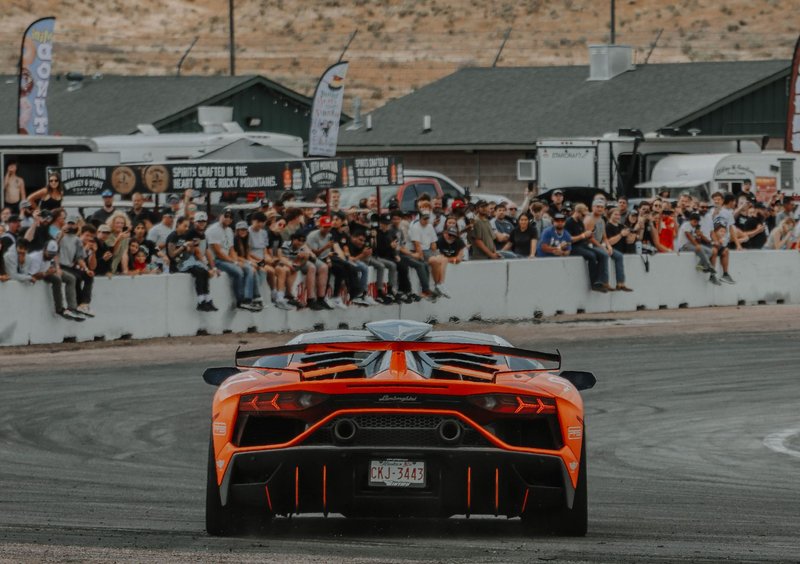
By 2009, the Murciélago LP640 was a car running out its lease on relevance. It launched in 2006 as the mid-cycle refresh of the original Murciélago, and Lamborghini kept it in production largely unchanged through 2010, when the Aventador took over as the flagship.
That’s not a knock on the car. The 6.5-liter V12 makes 631 hp (Lamborghini quoted it as 640 metric horsepower, hence the name) and pulls to 211 mph, and it does it with the naturally aspirated V12 wail that turbocharged and hybridized flagships since have had to work harder to replicate. The scissor doors, the origami-panel styling, the sheer physical presence — this is the last Lamborghini flagship that looks like it was styled by someone actively trying to intimidate you, before the brand’s designs softened into something more aerodynamically rational.
The trade-off is everything you’d expect from a 2009-era V12 supercar: heavier steering at parking speeds, a cabin that prioritizes drama over ergonomics, and running costs that make the Gallardo look reasonable. The Roadster adds a targa-style removable roof panel and commands a real premium over the coupe in most markets, partly because Lamborghini built noticeably fewer of them.
Reventón: 20 Cars, One Purpose
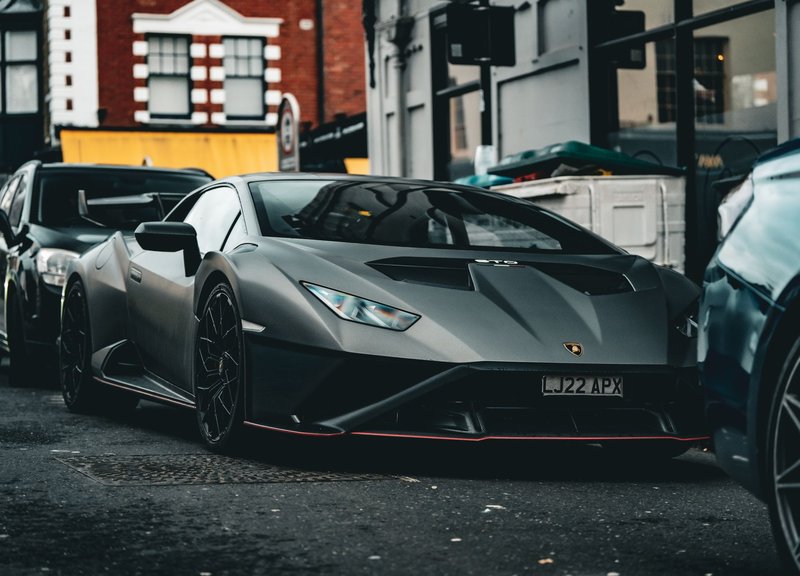
The Reventón is the one nobody else covering “2009 Lamborghini models” bothers to explain properly, probably because so few people will ever cross paths with one. Lamborghini built 20 for customers — a 21st reportedly stayed with the factory as a static display piece — each priced at roughly $1.6 million when new, and each sold before the design was even finalized to buyers Lamborghini hand-picked.
Mechanically, it’s a Murciélago LP640 wearing a completely different body. Same 6.5-liter V12, tuned up slightly to 650 hp, same 211 mph top speed. What you’re actually paying for is the angular, faceted bodywork — Lamborghini’s own marketing leaned into comparisons with the F-22 Raptor stealth fighter, and the resemblance isn’t just a talking point. The flat panels, the sharp creases, the fighter-jet-style digital instrument cluster — none of it was subtle, and none of it was meant to be.
If you’re researching the Reventón because you’re actually shopping for one, you’re not really cross-shopping it against the Gallardo or Murciélago. You’re buying a piece of Lamborghini history with a phone number, not a listing price.
Production Numbers and Rarity
Lamborghini doesn’t break out production by model year publicly, but the totals tell you what you need to know about rarity:
- Gallardo LP560-4 — part of a Gallardo production run that topped 14,000 units across its full 2003–2013 lifecycle, making it Lamborghini’s best-selling model ever by a wide margin. This is not a rare car, and that’s exactly why parts and specialist support are easy to find.
- Murciélago LP640 — the Murciélago as a whole totaled roughly 4,000 units across every variant from 2001 to 2010. The LP640 accounted for the back half of that run, with production actively winding down through 2009 and 2010 ahead of the Aventador’s launch.
- Reventón — 20 units built for sale, full stop. No other 2009 Lamborghini comes close to that scarcity, and it’s the single biggest reason its value behaves nothing like the other two.
Collector Value: What’s Actually Appreciated
Here’s the split that matters if you’re thinking about any of these as an investment rather than a driver’s car: the Gallardo and Murciélago have depreciated like normal used exotics, and the Reventón has done the opposite.
A 2009 Gallardo LP560-4 today typically trades in the low-to-mid six figures depending on mileage and condition — some clean, low-mile examples have pushed past $250,000, but the broad market sits well under its original sticker. That’s a normal depreciation curve for a supercar with a 14,000-unit production run: plentiful supply keeps prices tethered to condition and mileage rather than scarcity.
The Murciélago LP640 tells a slightly different story. Asking prices on clean examples have climbed noticeably over the past few years as V12, naturally aspirated Lamborghinis get recognized as the last of a dying breed before turbocharging and electrification took over. Roadsters in particular have commanded strong premiums at auction, sometimes trading well above their original MSRP for exceptional, low-mile cars.
The Reventón isn’t playing the same game at all. Original buyers paid $1.6 million; cars have since traded for well over that at auction, and 20-unit scarcity plus documented Lamborghini provenance means it behaves more like a collectible artwork than a depreciating car. If you already own one, you’re not reading a buyer’s guide to figure out whether to buy it.
Ownership Costs and Known Issues
None of these are cheap to own, but “expensive” means different things across the lineup.
The Gallardo LP560-4 is, relatively speaking, the sane choice. Parts availability is good, independent Lamborghini specialists exist in most major markets, and the clutch and e-gear actuator — the two components that scare off used buyers — are well understood failure points with known repair costs rather than mysteries. Budget for a major service interval and clutch wear if the car’s had a hard life; ask for full service records before anything else. It’s worth checking a specific VIN against NHTSA’s recall database before you buy, since outstanding recall work is one of the easiest things to verify and one of the easiest things a seller can forget to mention.
The Murciélago LP640 steps up meaningfully in running costs — more specialized service network, pricier parts, and a V12 that’s less forgiving of deferred maintenance than the Gallardo’s V10. Common pre-purchase checks include the e-gear pump and hydraulics, cooling system hoses (a known weak point on Murciélagos generally), and evidence of proper storage, since these cars sit more than they’re driven.
The Reventón isn’t a “check the service records” purchase. Buyers at this level work directly with Lamborghini’s factory support or dedicated collector-car specialists, and maintenance is handled with a level of documentation and care that makes the usual used-supercar checklist irrelevant.
Which 2009 Lamborghini Should You Buy
If you want to drive a Lamborghini regularly and not think too hard about it, the Gallardo LP560-4 is the answer — it’s the newest engineering in the 2009 lineup, the easiest to live with, and the easiest to get serviced. If you want the last naturally aspirated V12 flagship before Lamborghini moved on, and you can stomach the running costs, the Murciélago LP640 is a car that’s aging into genuine respect rather than just nostalgia. And if you’re asking about the Reventón as anything other than trivia, you already know the answer isn’t in this guide — it’s in whatever relationship gets you a phone call back from Sant’Agata.

Daniela Voss
More from Daniela VossHow we reviewed this article
This article was researched against manufacturer records and editorially reviewed before publishing. We accept no payment for coverage. Some guides contain affiliate links; see our affiliate disclosure.