Table of Contents
- TLDR
- Why chassis codes matter more than model names
- The pre-war and early post-war cars: 170V and 260D
- The Fintail era: W110 and W111
- The W113 “Pagoda” SL
- The W114/W115 “Stroke Eight”
- The W123: the one everyone actually drives
- The R107 SL
- The W126 S-Class
- What these cars actually cost right now
- Parts, ownership costs, and what breaks
- So which one should you buy
Most “classic Mercedes-Benz” roundups are just a slideshow: a photo of a Pagoda, a photo of a Gullwing, a caption that says “iconic” and moves on. That’s not a buying decision, it’s a mood board. If you’re actually cross-shopping a car from this era, you need chassis codes, real reliability track records, and what things sell for today — not a nostalgia lap.
TLDR
If you want the short version: the W123 (1976–1985) is the safest first classic Mercedes anyone can buy — diesel versions have covered millions of miles on stock engines and parts are everywhere. The W113 Pagoda (1963–1971) is the one that holds and gains value, but it’s a $60,000+ commitment. The R107 SL (1971–1989) is the best middle ground of usable, available, and appreciating. Skip the pre-war 170V and 260D unless you specifically want a museum piece and have a specialist on speed dial — parts and expertise are both scarce.
Why chassis codes matter more than model names
Mercedes-Benz reused nameplates like “SL” and “S-Class” for decades, which is exactly why the enthusiast world talks in chassis codes instead. A “280 SL” could mean the six-cylinder W108 sedan or the two-seat W113 roadster, and those are two entirely different cars with two entirely different price tags. When Karl Benz’s company merged with Daimler-Motoren-Gesellschaft in 1926 to form Daimler-Benz, the resulting Mercedes-Benz brand inherited nearly a century of naming overlap, and it hasn’t gotten simpler since.
The code is a letter plus three digits — W110, W113, W123 — stamped to a specific body, era, and engine family. Learn to read those and you can shop listings without getting fooled by a seller’s loose use of “vintage 280.”
The pre-war and early post-war cars: 170V and 260D
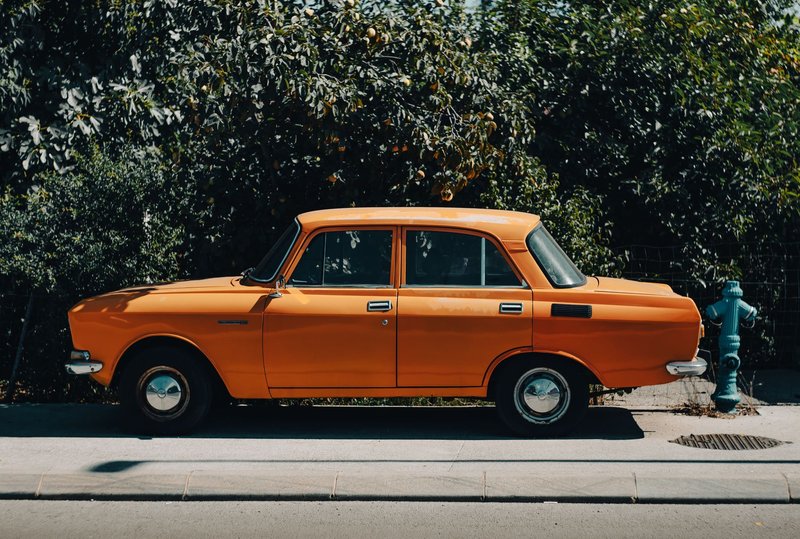
The 170V (1936–1942, then again 1946–1953) and the 260D built alongside it were genuinely significant cars — the 260D is credited as the first diesel-powered production passenger car in the world, running Bosch injection pumps on an engine platform descended directly from Rudolf Diesel’s original compression-ignition patents. Diesel’s design, developed in Augsburg in the 1890s, was built around thermal efficiency rather than raw power, and that philosophy shows up in every diesel Mercedes that followed it, right down to the W123 below.
That history is exactly why these cars are hard to recommend as a first purchase. Survivors are rare, parts are mostly NOS (new-old-stock) or fabricated to order, and any specialist willing to touch a 90-year-old chassis charges accordingly. Buy one because you love the specific history, not because you want a weekend driver.
The Fintail era: W110 and W111
The “Fintail” cars (Heckflosse in German) ran from 1959 to 1968 and introduced crumple zones to production cars years before most competitors — a Béla Barényi patent that quietly reshaped automotive safety engineering. The W110 covers the four-cylinder models (190, 200), while the W111 carries the six-cylinder sedans and the elegant W111 coupé and cabriolet.
The four-door sedans are underrated and undervalued: solid unibody construction, straightforward mechanicals, and none of the Pagoda’s price premium. The coupé and cabriolet variants are a different story entirely — those command Pagoda-adjacent money because there are so few left.
The W113 “Pagoda” SL
Named for the concave hardtop that resembles a pagoda roof, the W113 (1963–1971) is the classic Mercedes that non-enthusiasts actually recognize. Three variants — 230SL, 250SL, 280SL — trace a steady climb in displacement and torque, with the 280SL (1968–1971) generally considered the sweet spot for usability.
This is the model in this entire list that behaves like an appreciating asset rather than a depreciating hobby. Clean, numbers-matching cars routinely clear six figures, and even project cars start in the $40,000–$60,000 range before restoration costs. If your goal is “car that holds value while I enjoy it,” this is the answer — with the caveat that restoration shops specializing in the W113 have multi-year waiting lists, and rust in the floor pans and rear subframe mounts is the detail every serious buyer checks first.
The W114/W115 “Stroke Eight”
Built from 1968 to 1976, these mid-size sedans and coupés (nicknamed “Stroke Eight” for their 1968 launch year) are the least glamorous cars on this list and arguably the best value. The W114 covers six-cylinder models, the W115 the four-cylinders and diesels, including the early 220D and 240D that set up everything the W123 would later perfect.
Prices stayed low for years because nobody was chasing them — that’s changing as W123 prices climb and buyers look one generation back for the same reliability at a lower entry cost. If you want the W123 ownership experience for less money and don’t mind fewer parts suppliers, this is where to look.
The W123: the one everyone actually drives
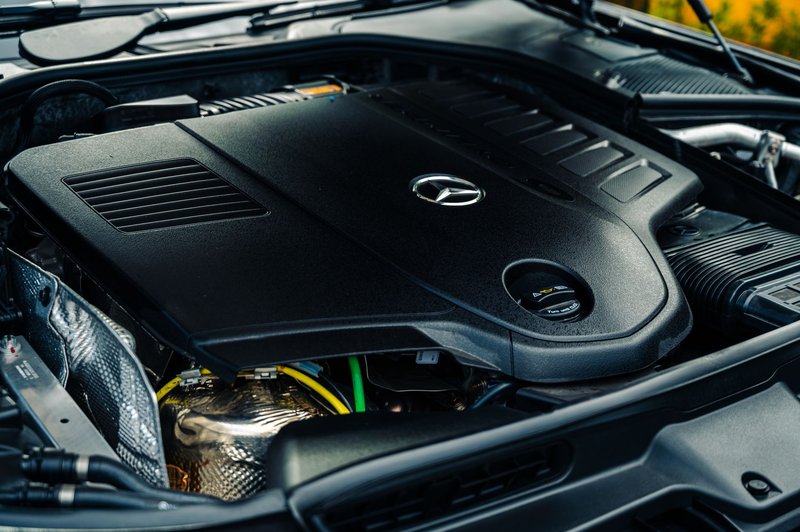
The W123 (1976–1985) is the model every “most reliable Mercedes” list eventually lands on, and for good reason. Multiple W123 diesel taxis have documented odometer readings past a million miles on their original OM616 and OM617 engines — cars that spent decades running fares in Greece, Portugal, and the Balkans on nothing but oil changes and injector pump service. That reputation isn’t marketing; it’s the reason mechanics who’ve never owned one still recommend it.
Body styles ranged from the standard sedan to the long-wheelbase, the coupé, and the wagon (the “T-model”), and nearly all of them are held together by the same over-built platform. Parts support is the best of any car on this list — specialist suppliers stock everything from injection pump seals to full interior kits, because there are simply more of these on the road than any other pre-1990s Mercedes. If you want one classic Mercedes and only one, start your search here.
The R107 SL
Mercedes’ longest-running single model generation, the R107 SL spanned 1971 to 1989 with barely any changes to its silhouette, which makes shopping by production year more important than shopping by “look.” Early cars ran the 350SL/450SL V8s; later US-market cars settled into the smoother, more efficient 380SL and 560SL.
It’s the practical answer to “I want a classic Mercedes convertible but don’t want Pagoda money.” Values have been climbing steadily as buyers who missed the W113 window look for the next roadster with the same DNA, but a clean R107 still comes in well under half of a comparable Pagoda. Rust around the rear wheel arches and a soft-top mechanism that’s expensive to rebuild are the two things to check before you commit.
The W126 S-Class
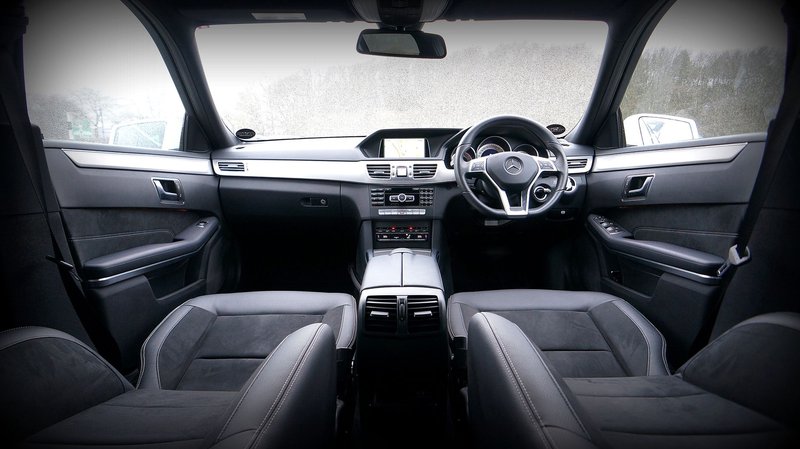
Produced from 1979 to 1991, the W126 is the car that defined “flagship Mercedes” for a generation — the first S-Class with a driver’s airbag as an option, and widely regarded as the last S-Class built with zero regard for cost-cutting. Diesel versions (300SD, 300SDL) share the W123’s bulletproof reputation and turbocharging on top of it.
It’s also the biggest car on this list, in every sense — largest, heaviest, and the one where “cheap to buy” can turn into “expensive to run” fastest if the climate control, hydraulic self-leveling suspension, or original wiring harness needs attention. Buy the best-documented example you can find, not the cheapest one.
What these cars actually cost right now
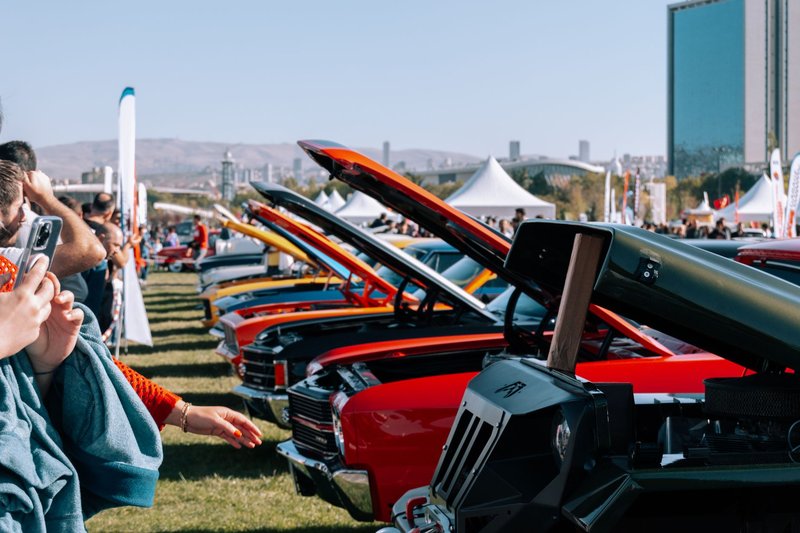
The collector car market broadly has cooled since its pandemic-era peak — higher financing costs and more cautious buyers have pulled mass-market classic values down from their 2022 highs. That correction has mostly hit generic “old cars,” not cars with a documented story or a strong enthusiast base, which is exactly the category most of these Mercedes models fall into.
The top of the market tells its own story: a 1955 Mercedes-Benz 300 SLR Uhlenhaut Coupé sold for roughly $143 million at a private Mercedes-Benz Classic auction in 2022, the highest price ever paid for a car at auction. Nobody buying a W123 is playing in that market, but it’s a useful signal — Mercedes-Benz’s own classic division actively curates and protects the value of its historic lineup, which trickles down to how the whole marque is perceived by collectors shopping far more attainable models.
Rough current street-level ranges, driver-quality condition:
- 170V / 260D: $25,000–$60,000, highly variable by originality and documentation
- W110/W111 sedan: $8,000–$20,000
- W111 coupé/cabriolet: $60,000–$150,000+
- W113 Pagoda: $60,000–$150,000+
- W114/W115: $6,000–$18,000
- W123: $8,000–$25,000 (sedans and wagons); coupés run higher
- R107 SL: $15,000–$45,000
- W126: $8,000–$25,000
These are directional, not appraisals — condition, documentation, and originality move any of these numbers by tens of thousands in either direction.
Parts, ownership costs, and what breaks
This is the gap most buying guides skip, and it’s the one that actually determines whether you enjoy owning the car or dread every check engine light.
W123 and W126 sit at the top for parts availability. Independent specialists and even some Mercedes-Benz Classic Center channels stock reproduction and NOS parts for both, because production numbers were high and demand from owners stayed constant for decades. Budget for routine maintenance like any 40-year-old car — fluids, rubber, electrical grounds — rather than exotic sourcing trips.
W113 and R107 are next tier. Trim and interior pieces get expensive fast because reproduction quality varies, and a full soft-top replacement on either can run into four figures alone.
170V, 260D, and W110/W111 are where ownership shifts from “maintenance” to “restoration project,” even for routine work. Expect to source parts through marque specialists, swap meets, and international networks rather than a parts counter, and expect labor rates to reflect the specialized knowledge required.
So which one should you buy
If you’ve never owned a classic before, buy the W123. It’s the most forgiving car on this list mechanically, has the deepest parts support, and won’t punish a first-time owner’s learning curve. If you want a car that’s genuinely likely to be worth more in ten years, the W113 Pagoda is the proven answer, provided you can absorb the entry price and the restoration wait times. If you want the middle path — open-top, V8, appreciating, but not Pagoda money — the R107 SL earns its reputation as the practical enthusiast’s choice.
Skip the pre-war cars unless the history itself is the point, and go into a W126 purchase expecting the size and complexity of a genuine flagship, not a bargain S-Class. Whichever chassis code you land on, buy the best-documented example your budget allows — with cars this old, paperwork and service history are worth more than a few extra options on the build sheet.

Marco Delantero
More from Marco DelanteroHow we reviewed this article
This article was researched against manufacturer records and editorially reviewed before publishing. We accept no payment for coverage. Some guides contain affiliate links; see our affiliate disclosure.