Table of Contents
- The Platform Handoff Nobody Explains
- Jaguar XJ6 (X300)
- Jaguar Sovereign
- Jaguar XJ12
- Jaguar XJR
- Daimler Six and Double Six
- Jaguar XJ8 (X308)
- Jaguar XK8 Coupe
- Jaguar XK8 Convertible
- What Actually Goes Wrong on These Cars
- A Buyer’s Checklist Before You Sign Anything
- What a 1997 Jaguar Is Worth Today
- Which 1997 Jaguar Is Worth Owning
Jaguar sold two completely different cars under the same badges in 1997, and almost nobody selling one today mentions it. If you’re cross-shopping a 1997 XJ, the engine, the electronics, and the parts bin depend entirely on when in the year that particular car left Browns Lane. That single fact explains most of the confusion in listings, forums, and the “which 1997 Jaguar should I buy” threads that never quite answer the question.
This is the full 1997 range — sedans and the XK8 sports car — with the specs that mattered, what Jaguar charged for them new, and what they’re actually worth as a used classic now, not what a seller hopes they’re worth.
The Platform Handoff Nobody Explains
For most of 1997, every Jaguar sedan on sale was still the X300: the car launched in 1994 to replace the much-loved but troubled XJ40. The X300 kept a version of the AJ6 straight-six, renamed AJ16, in 3.2 and 4.0-litre form, plus the carryover 6.0-litre V12 in the range-topping XJ12. It’s a genuinely good car — smoother and more reliable than the XJ40 it replaced, and the one most enthusiasts mean when they say “the last real Jaguar shape.”
Then, in August 1997, Jaguar pulled the X300 from production and replaced it with the X308. Same silhouette, almost nobody outside the trade could spot the difference at a glance, but underneath it’s a different car: the straight-six and the V12 were both dropped in favor of the new AJ-V8, in 3.2 and 4.0-litre displacements, mated to a five-speed automatic instead of the old four-speed. Jaguar had actually debuted the AJ-V8 a year earlier in the XK8 sports car, so by the time it landed in the sedan it was a known quantity, not a first-year experiment.
What this means for a buyer: a “1997 Jaguar XJ6” and a “1997 Jaguar XJ8” can both be titled the same model year in some markets, but they don’t share an engine, a transmission, or a parts catalog. Know which one you’re looking at before you fall in love with the price.
Jaguar XJ6 (X300)
The volume seller of the outgoing range, and the car most people picture when they hear “1997 Jaguar.” It came with the 3.2-litre AJ16 six as standard or the 4.0-litre as an upgrade, both fed through a four-speed ZF automatic. New, a well-equipped XJ6 ran in the neighborhood of $50,000 in the US.
It rides on double wishbones front and rear with a genuinely good ride-comfort balance for the era — Jaguar tuned this generation specifically to answer complaints that the outgoing XJ40 felt brittle over bad pavement. The cabin still uses real wood veneer and leather hides sourced the old way, which is part of why interiors this age can look remarkably fresh or completely wrecked depending on how the car was stored.
Jaguar Sovereign
Sovereign wasn’t a separate model so much as the XJ’s long-wheelbase, higher-trim variant — more chrome, better sound insulation, a slightly plusher interior, and in some markets the badge that sat between the base XJ6 and the Daimler above it. If you see “Sovereign” on a 1997 title, treat it as an XJ6 or XJ12 with the options list mostly filled in from the factory rather than a distinct engineering package.
Jaguar XJ12
1997 was the last model year Jaguar ever built a V12 in the XJ line — a fact that gets buried in most used-car listings but matters enormously to a collector. The 6.0-litre V12 traces its architecture back to the 1971 E-Type, refined for two more decades into a genuinely smooth, if thirsty, engine that Jaguar built for the final time here.
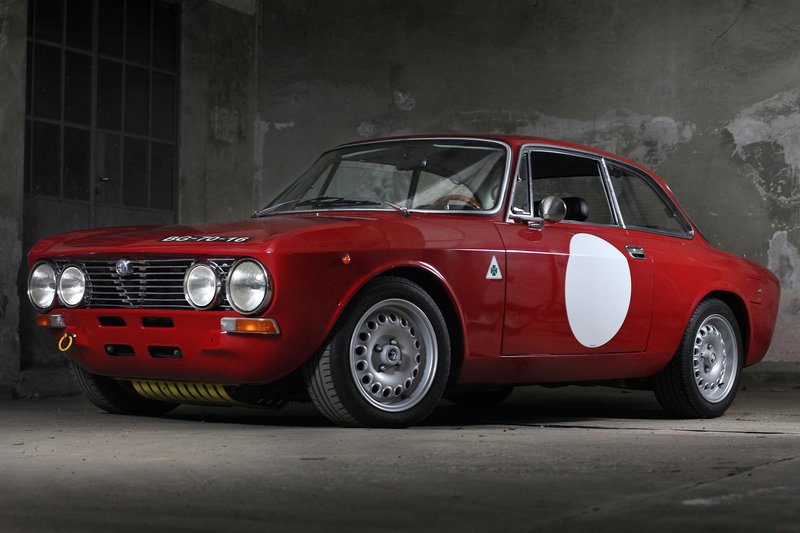
Buying one today means buying a piece of a lineage that Jaguar closed the book on the moment the X308 arrived. That alone puts a floor under XJ12 values that the six-cylinder cars don’t have.
Jaguar XJR
The performance flagship of the X300 range, and the one enthusiasts actually seek out. The XJR paired the 4.0-litre AJ16 six with an Eaton M90 supercharger, developed with Jaguar’s TWR racing arm, for a headline 321 bhp and 378 lb-ft of torque delivered in a flat, muscular curve rather than the laggy surge of a turbo car from the same era. Jaguar’s own management reportedly expected to sell a couple hundred of these; it ended up becoming the car that rewrote what a Jaguar sedan could be.
It’s also, by production numbers, the rarest variant of the three-year X300 run — which explains why clean XJRs command a real premium over standard XJ6s in the used market today.
Daimler Six and Double Six
Daimler was Jaguar’s in-house ultra-luxury badge, reserved for buyers who found even a loaded Sovereign insufficiently plush. The Daimler Six shared its six-cylinder drivetrain with the XJ6, while the Double Six carried the V12 — same engine as the XJ12, wrapped in a more formal grille, extra chrome, and interior trim a notch above anything else in the range, down to fold-out picnic tables in some configurations.
These sold in small numbers even when new, largely outside the US market, which makes a genuine 1997 Double Six one of the harder cars on this list to actually find today.
Jaguar XJ8 (X308)
The new arrival, and the car that quietly ended the six-cylinder-and-V12 era at Jaguar for good. Launched in three configurations — XJ8 3.2, XJ8 4.0, and a new-generation XJR — the X308 used the AJ-V8 exclusively, naturally aspirated in the base cars and supercharged in the XJR, paired with a five-speed automatic that replaced the old four-speed.
If your car was built in the back half of 1997, badged XJ8 rather than XJ6, this is what you’re looking at: smoother, more modern to drive, but a completely different maintenance profile than the six-cylinder car it replaced. Parts, common failure points, and even the sound of the thing are unrelated to the outgoing range.
Jaguar XK8 Coupe
Jaguar’s sports car answer, launched in late 1996 and sold through 1997 as the direct replacement for the aging XJS, the XK8 Coupe ranked among the best sports cars of the 1990s. It used the same 4.0-litre AJ-V8 that would later show up in the X308 sedans, here making around 290 bhp, sent through a five-speed automatic — no manual gearbox was offered at any point in the XK8’s run. Federal fuel economy testing put the six-cylinder XJ sedans in the mid-teens city and high-teens highway; you can check the exact certified numbers for a given engine and body style in the government fuel economy database.
The styling, penned under Geoff Lawson, is the reason people still stop and look at these in a parking lot: long hood, short deck, oval grille borrowed loosely from the E-Type without turning into pastiche.
Jaguar XK8 Convertible
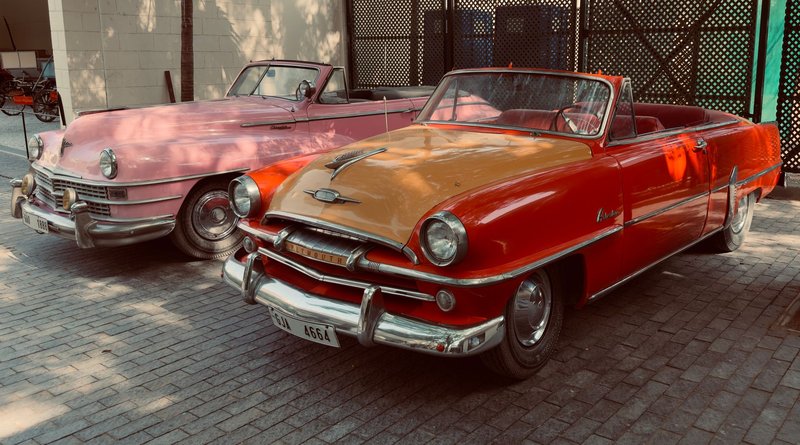
Mechanically identical to the Coupe, the Convertible added a power-folding soft top and a reinforced structure to compensate for the lost roof rigidity — Jaguar added extra bracing under the sills and around the windshield frame rather than accepting a floppier chassis. It launched at a premium over the Coupe and still commands one today, mostly because open-top classic Jaguars simply don’t come up for sale as often.
If you’re choosing between the two, the honest answer is that the Coupe is the better-engineered car and the Convertible is the one people actually want to be seen in. Both are right, for different reasons.
What Actually Goes Wrong on These Cars
Every engine on this list has a documented weak point, and knowing which one applies to your car matters more than any inspection checklist.
The early AJ-V8 — the one in the XK8 and, from August 1997 onward, the X308 sedans — used Nikasil-coated aluminum cylinder bores. High-sulfur fuel common in North America in the late 1990s reacted with that coating and accelerated bore wear, enough that Jaguar quietly extended warranty coverage and eventually replaced the bore treatment with cast-iron liners around 2000. A pre-2000 AJ-V8 with no documented bore work isn’t necessarily a ticking clock, but it’s a question worth asking before you buy, not after.
The AJ16 six in the XJ6, XJ12, and XJR is the more mechanically straightforward engine of the two, closer in lineage to Jaguar’s decades-old inline six. It’s generally the easier car to live with day to day, though the timing chain tensioners are a wear item worth having checked on any car this age regardless of mileage — they’re not a design defect so much as a 25-plus-year-old rubber-and-plastic component nobody’s replaced yet.
Electrical gremlins — window regulators, HVAC servo motors, dashboard warning lights that mean nothing and everything — show up across the whole range and are the single biggest reason a cheap 1997 Jaguar stays cheap. None of it is expensive individually. All of it adds up.
A Buyer’s Checklist Before You Sign Anything
- Confirm which platform you’re buying. Ask for the build date, not just the model year — anything from August 1997 onward on a sedan is almost certainly an X308 with the V8, not the six or V12.
- Check the sills, boot floor, and rear subframe mounts for rust. These are unibody cars from an era before Jaguar had fully solved corrosion protection, and rot in structural areas costs far more to fix than it costs to walk away.
- Ask for cooling system and timing chain service records on any six-cylinder car, and bore/liner history on any V8 built before 2000.
- Run the VIN through NHTSA’s vehicle safety database — 1997 XJ6s show no formal recalls on record, but the complaint history still surfaces the age-related patterns worth knowing about before you commit.
- Test every electrical accessory in one sitting — windows, seat memory, climate control, dash lights — since intermittent faults are the norm, not the exception, on a car this age.
- Budget for a specialist, not a generalist mechanic. A shop that knows these engines well will catch problems a general import shop will miss entirely.
What a 1997 Jaguar Is Worth Today
The six-cylinder XJ6 and Sovereign are still the entry point into classic Jaguar ownership: rough examples trade for a few thousand dollars, and even genuinely nice ones rarely crack the mid-teens. The XJ12 and Double Six carry a real premium over their six-cylinder siblings purely on account of being the last V12 Jaguar ever built for the XJ — expect to pay meaningfully more for a documented, rust-free example.
The XJR is the sleeper of the range. Values have climbed as buyers rediscover that a factory-supercharged, TWR-developed Jaguar sedan from the 1990s is a genuinely rare thing to own, and clean cars with service history now change hands well above a standard XJ6.
XK8 Coupes remain the cheapest way into that shape and that engine, while Convertibles ask a premium mainly on scarcity of clean, rust-free tops rather than any mechanical difference. None of these cars are appreciating fast. All of them are cheaper right now than they will be once the generation that remembers them new finishes buying them back.
Which 1997 Jaguar Is Worth Owning
If you want the most car for the least money, the XJ6 3.2 is still the honest answer — plentiful, cheap to buy, and mechanically simpler than anything that came after it. If you want the version enthusiasts will nod at when they see it in your driveway, it’s the XJR, supercharger whine and all. And if you’re chasing the last of something rather than the best of something, the XJ12 and Double Six are the two cars on this list that Jaguar will never build again.
Whichever one you choose, buy on documentation and rust history, not on the badge. In 1997, that badge covered two entirely different cars — and a quarter century later, that’s still the detail that separates a great buy from an expensive lesson.

Daniela Voss
More from Daniela VossHow we reviewed this article
This article was researched against manufacturer records and editorially reviewed before publishing. We accept no payment for coverage. Some guides contain affiliate links; see our affiliate disclosure.