Acura has killed off more nameplates than it currently sells. Thirteen models, from the brand’s 1986 launch through the last ILX rolling off the line in 2022, got cancelled, renamed, or quietly folded into something else. Some of that was Honda simplifying a lineup that had gotten confusing — TL, TSX, RL, RLX, who could keep track. Some of it was a model just not selling (the ZDX moved 7,191 units in four years). One of them, the SLX, got pulled into a very public rollover controversy that most people have forgotten about.
This is the full list, in the order each model arrived, with what it actually was, why Acura stopped building it, and what took its place — if anything did.
Table of Contents
- TLDR: Every Discontinued Acura at a Glance
- Legend (1986–1995)
- Integra (1986–2001)
- NSX, First Generation (1990–2005)
- Vigor (1992–1994)
- SLX (1996–1999)
- TL (1996–2014)
- RL (1996–2012)
- CL (1997–2003)
- RSX (2002–2006)
- TSX (2004–2014)
- ZDX, First Generation (2010–2013)
- ILX (2013–2022)
- RLX (2014–2020)
- Buying an Old Acura: Reliability, Parts, and What’s Actually Collectible
TLDR: Every Discontinued Acura at a Glance
| Model | Years | Replaced By |
|---|---|---|
| Legend | 1986–1995 | RL |
| Integra | 1986–2001 | RSX (revived 2023) |
| NSX (1st gen) | 1990–2005 | NSX (2nd gen, 2016) |
| Vigor | 1992–1994 | TL |
| SLX | 1996–1999 | MDX |
| TL | 1996–2014 | TLX |
| RL | 1996–2012 | RLX |
| CL | 1997–2003 | None direct |
| RSX | 2002–2006 | None direct (ILX, 2012) |
| TSX | 2004–2014 | TLX |
| ZDX | 2010–2013 | ZDX EV (2024) |
| ILX | 2013–2022 | None direct |
| RLX | 2014–2020 | None (flagship role folded into TLX Type S) |
Legend (1986–1995)
The Legend and the Integra launched Acura on the same day — March 27, 1986 — as Honda’s answer to a question nobody in Detroit or Stuttgart was asking yet: could a Japanese brand sell a genuine luxury car? The Legend, a V6 sedan and later a notchback coupe, said yes. It briefly outsold BMW and Mercedes-Benz in the US during Acura’s first few years on the market.
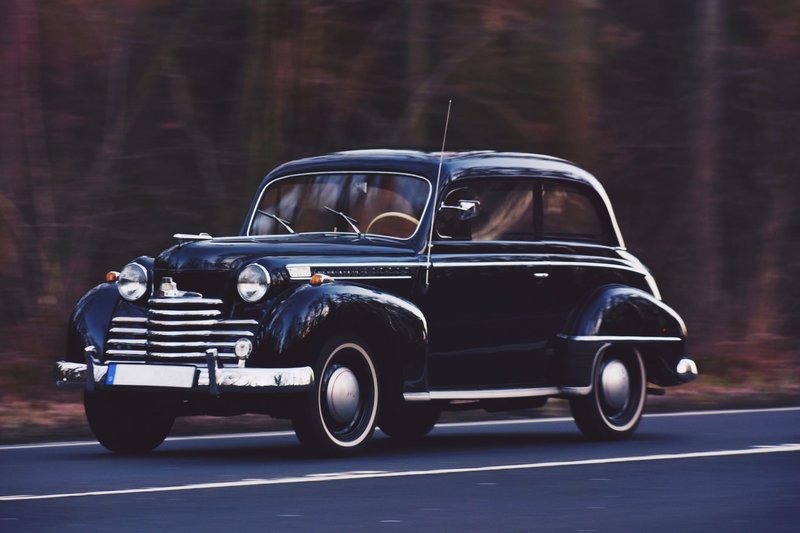
Honda pulled the plug on the Legend name in 1995, not because the car failed but because the company wanted its whole lineup running on the letter-based naming scheme (RL, TL, CL) it was rolling out across the brand. The Legend’s sedan body became the 1996 RL. In Japan and Europe, the same car kept being sold as the Honda Legend for another two decades — the “Acura” badge was always a North American thing.
Integra (1986–2001)
The Integra was Acura’s entry point: front-wheel drive, a high-revving four-cylinder, and — starting with the 1994 GS-R and especially the 1997–2001 Type R — some of the sharpest front-drive handling anyone had built. The Type R shaved weight, hand-blueprinted the B18C engine, and welded extra bracing into the chassis. Enthusiasts still cross-shop clean Type Rs against cars twice the price.
Acura discontinued the Integra after the 2001 model year and replaced it with the RSX for 2002 — a car built to look more grown-up and less like an economy hatchback wearing a luxury badge. The Integra name sat unused for 22 years until Acura brought it back in 2023 on a Civic Type R-based platform, but that revival is a different chapter; the original four generations are the ones this list covers.
NSX, First Generation (1990–2005)
Honda built the NSX to prove a mid-engine supercar didn’t have to be unreliable or physically punishing to drive. It used an all-aluminum monocoque and body — a first for a mass-production car — which cut roughly 200 kilograms versus a comparable steel structure. Ayrton Senna tested early prototypes at Suzuka and the Nürburgring and told Honda’s engineers the chassis was too flexible; they stiffened it by around 50% before the car went on sale.
Acura built 18,685 first-generation NSXs over 15 years before ending production in late 2005. Sales had been sliding for years against newer rivals, and Honda didn’t have a direct successor ready — the second-generation NSX didn’t arrive until 2016, an 11-year gap with no NSX in showrooms at all. For what it’s worth, that second-generation car didn’t last either: Acura built the final one, a 600-hp Type S, in November 2022, capping a limited 350-unit run.
Vigor (1992–1994)
The Vigor is the model most Acura owners have never heard of, and it lasted exactly three model years. It slotted between the Integra and the Legend and used an inline-five-cylinder engine — an unusual layout borrowed from the JDM-market Honda Vigor/Inspire, mounted longitudinally to keep the car balanced.
Acura didn’t really kill the Vigor so much as rename it. When the redesigned TL arrived for 1995, the base “2.5TL” trim carried over the Vigor’s platform and five-cylinder engine almost unchanged under a new badge. If you’ve ever wondered why an early TL sounds different from every other Acura on the road, that’s why.
SLX (1996–1999)
The SLX was Acura’s first SUV, and it wasn’t really an Acura — it was a rebadged Isuzu Trooper, brought in because Acura had no truck platform of its own as SUV demand exploded in the mid-90s. It got Acura’s grille, some extra sound insulation, and not much else underneath.
In August 1996, Consumer Reports ran emergency avoidance-maneuver tests on the Trooper and SLX and found both prone to tipping onto two wheels at around 33 mph, branding them “not acceptable” and calling for a recall, as the Washington Post reported at the time. Isuzu sued the magazine over the findings and eventually lost, though a jury also found Consumer Reports had made some false statements in its reporting. The SLX limped on for three more years before Acura discontinued it in 1999. The brand didn’t sell another SUV until the MDX arrived in 2001, built on Acura’s own platform this time.
TL (1996–2014)
The TL was Acura’s volume play — the car meant to go after the 3 Series and C-Class on price and features rather than outright badge prestige. Across three redesigns it grew from the Vigor-based 2.5TL into a genuinely quick, 280-hp V6 sedan with an available six-speed manual in its final generation, a rarity in the segment by 2014.
Acura discontinued the TL after 2014 for a simple reason: the lineup had become confusing. TL, TSX, and RL all competed for the same buyer at slightly different price points with barely differentiated styling. Honda folded the TL and TSX into a single new model, the TLX, to cut that overlap.
RL (1996–2012)
The RL was Acura’s flagship sedan and its technology showcase. The 2005 redesign introduced SH-AWD (Super Handling All-Wheel Drive), a torque-vectoring system that could send more power to the outside rear wheel mid-corner — genuinely clever hardware that later spread across the rest of the lineup. What the RL never did was outsell the rear-wheel-drive German flagships it was built to challenge.
Acura ended RL production in 2012 and left the flagship spot empty for two years before the RLX arrived for 2014.
CL (1997–2003)
The CL was a two-door “personal luxury coupe” built on the TL’s platform, aimed at buyers who wanted a sedan’s comfort with two fewer doors. The CL Type-S, sold from 2001 to 2003, paired a 260-hp V6 with a six-speed manual — genuinely quick for the class and increasingly sought after by enthusiasts now.
Acura dropped the CL after 2003 as the personal-luxury-coupe segment shrank across the entire industry, not just at Honda. Nothing replaced it directly; later TL and TSX generations occasionally offered sportier trims, but Acura never built another dedicated two-door again until the ILX coupe concept, which never reached production.
RSX (2002–2006)
The RSX picked up where the Integra left off, built on the Civic platform but wrapped in rounder, more adult styling. The RSX Type-S kept the high-revving K20 VTEC four-cylinder alive, spinning to 8,000 rpm and making 200 hp from two liters with no turbo — numbers that still read as impressive two decades later.
Acura discontinued the RSX after 2006 without a direct successor, walking away from the compact sport-compact segment entirely until the ILX showed up for the 2013 model year — a slower, more comfort-oriented car built for a different buyer.
TSX (2004–2014)
The TSX was Acura’s entry sedan, essentially a European-market Honda Accord brought to the US with a different badge and a genuinely well-sorted chassis. From 2011 to 2014, Acura even sold a TSX Sport Wagon — one of the last wagons any Japanese luxury brand offered in America, and a car with a small but devoted following today.
Like the TL, the TSX got discontinued after 2014 and merged into the TLX, ending Acura’s brief experiment with a Euro-sourced sedan.
ZDX, First Generation (2010–2013)
The ZDX was Acura’s answer to the BMW X6: a four-door “coupe” crossover that traded rear headroom and cargo space for a swoopy roofline. It debuted at the 2009 New York Auto Show to a mixed reception, and the styling didn’t win over enough buyers to justify keeping it around.
Acura built just 7,191 ZDXs for the North American market across its entire run, making it the rarest model the brand has built domestically. Production ended in 2013. The name went dormant for over a decade until Acura revived it in 2024 on an all-electric SUV — its first EV — built on GM’s Ultium platform and sharing almost nothing with the original except the badge.
ILX (2013–2022)
The ILX was Acura’s attempt to hold onto compact-sedan buyers after the RSX left the lineup, built on Civic underpinnings and positioned as an entry-level, price-accessible Acura. Early versions drew criticism for a base engine that felt underpowered for a luxury badge; later updates addressed that but never fully shook the car’s reputation as the least exciting thing in Acura showrooms.
Acura discontinued the ILX after 2022, ceding the compact-sedan segment to focus resources on the RDX and MDX crossovers, which by then were driving the overwhelming majority of the brand’s sales anyway.
RLX (2014–2020)
The RLX picked up flagship duty from the RL and, in Sport Hybrid trim, added a three-motor SH-AWD system producing over 500 lb-ft of combined torque — one of the more technically ambitious powertrains Acura has ever built for a sedan. It still couldn’t move the needle against a segment that had largely decided flagship sedans from mainstream luxury brands weren’t worth buying anymore.
Acura ended RLX production in 2020 and hasn’t built a direct flagship-sedan replacement since. Flagship duties effectively moved to the TLX Type S, and for the first time since 1986, there’s no RL-lineage sedan in an Acura showroom.
Buying an Old Acura: Reliability, Parts, and What’s Actually Collectible
Most of these cars share engines and platforms with contemporary Hondas — the Integra and RSX with the Civic, the TSX with the Euro Accord, the TL with the domestic Accord — which means parts availability is genuinely good compared to an equivalent-age Lexus or Infiniti. The exception is the NSX: its aluminum body panels and low-volume drivetrain parts are expensive and sometimes special-order, the price of owning something that was hand-assembled in small numbers.
Reliability-wise, the B- and K-series four-cylinders and J-series V6 engines from this era have a well-earned reputation for high mileage with basic maintenance. The weak points tend to be transmissions rather than engines — early-2000s TL and RL automatics in particular have documented failure patterns worth having a mechanic check before you buy.
On collectibility, the split is sharp. The Integra Type R and first-generation NSX are legitimate collector cars now, with values that have climbed steadily for a decade. A clean CL Type-S with the manual transmission draws real enthusiast interest. The Legend, Vigor, and SLX are mostly cheap curiosities — interesting to own, unlikely to appreciate. The ZDX sits in an odd spot: genuinely rare at 7,191 units, but rarity alone hasn’t translated into collector demand yet.
Whatever you’re looking at, run the VIN through NHTSA’s recall search before you commit — it’s free, takes thirty seconds, and several of these models (the SLX especially) have real safety-recall history worth knowing about. IIHS’s ratings database also still has crash-test data on file for anything built after the mid-90s, which is more than you’ll get from a seller’s word.

Marco Delantero
More from Marco DelanteroHow we reviewed this article
This article was researched against manufacturer records and editorially reviewed before publishing. We accept no payment for coverage. Some guides contain affiliate links; see our affiliate disclosure.