
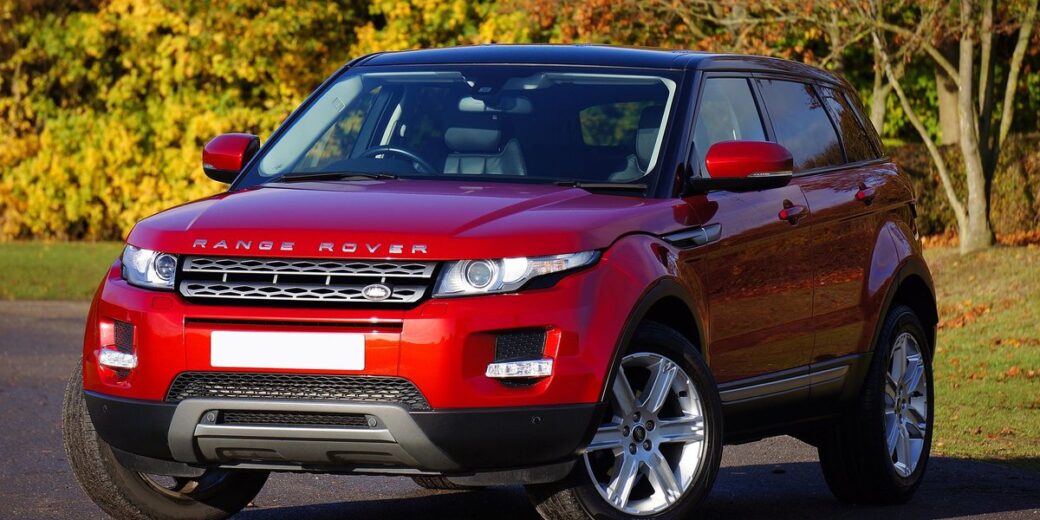
Most Land Rover pages online lock you into a single model year. You pick “2022 Range Rover,” you get its trims and its MSRP, and you learn nothing about how the lineup actually moved across the decade. That’s a problem if you’re shopping used, because the 2020s are when Land Rover blew up its own catalog: the Defender came back from the dead, the flagship Range Rover got a ground-up redesign, and nearly every model grew a hybrid.
So here’s the whole roster in one place — seven core nameplates, what each one is for, and what changed while you weren’t looking.
Table of Contents
- The 2020s Land Rover lineup at a glance
- Range Rover
- Range Rover Sport
- Range Rover Velar
- Range Rover Evoque
- Land Rover Defender
- Land Rover Discovery
- Land Rover Discovery Sport
- Electrification across the decade
- Which Land Rover is right for you
The 2020s Land Rover lineup at a glance
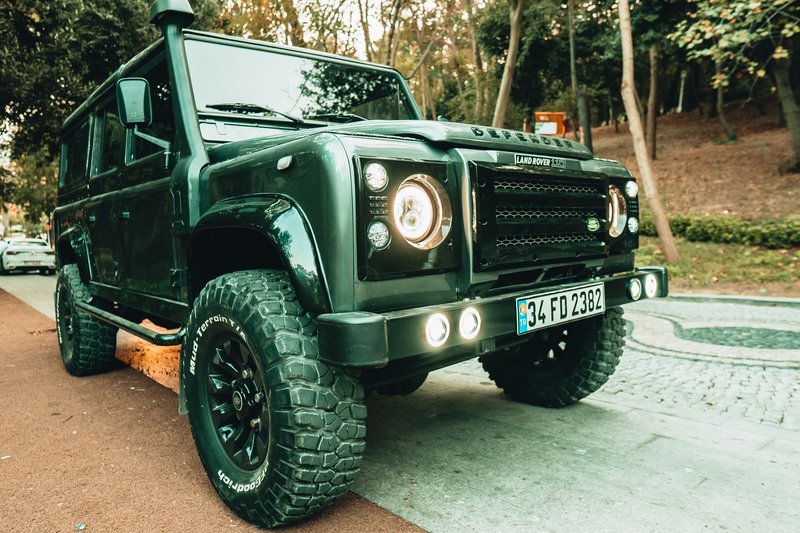
Land Rover splits its 2020s catalog into two families. The Range Rover family (Range Rover, Sport, Velar, Evoque) sells on luxury and road presence. The Land Rover family (Defender, Discovery, Discovery Sport) leans harder on capability and utility, though “utility” here still comes with heated leather.
| Model | Body / seats | Powertrains (2020s) | Rough price range (new) |
|---|---|---|---|
| Range Rover | Full-size SUV, 5–7 | MHEV inline-6, V8, PHEV, BEV (2024+) | $105k–$170k+ |
| Range Rover Sport | Mid-large SUV, 5 | MHEV inline-6, V8, PHEV | $83k–$150k |
| Velar | Mid-size coupe-SUV, 5 | MHEV inline-4/6, PHEV | $60k–$85k |
| Evoque | Compact SUV, 5 | MHEV inline-4, PHEV | $47k–$60k |
| Defender | 90 / 110 / 130, 5–8 | MHEV inline-6, V8, PHEV (110) | $56k–$110k |
| Discovery | Full-size 3-row, 5–7 | MHEV inline-6 | $60k–$75k |
| Discovery Sport | Compact 3-row, 5–7 | MHEV inline-4, PHEV | $48k–$58k |
Prices are U.S. ballpark figures across the decade — early-2020s cars started lower, and the loaded flagships climbed hard after the 2022 redesigns.
Range Rover
The one everyone pictures. In 2022 Land Rover launched the fifth-generation Range Rover, and it’s the single biggest change in the 2020s lineup. The new body ditched the boxy shoulder line for a cleaner, almost slab-sided look, added an available third row for the first time in a standard Range Rover, and introduced rear-wheel steering that shrinks its turning circle to something a Golf owner would recognize.
Powertrains span the entire spectrum. There’s a mild-hybrid inline-six, a BMW-sourced twin-turbo V8 in the P530 — the same Munich firm whose entire 2010s model range we’ve mapped out separately — and a plug-in hybrid (the P550e / P460e depending on year) that Land Rover rates for over 50 miles of electric-only range on the WLTP cycle. The fully electric Range Rover EV, long teased, opened its waitlist in the mid-2020s as the range-topper.
If you’re buying used, the split to know: pre-2022 cars are the fourth-gen “L405” — still handsome, more traditional inside. 2022-onward cars are the tech-heavy fifth-gen with the floating touchscreen and the hidden air vents.
Range Rover Sport
The Sport is the Range Rover for people who actually want to drive it. Third generation arrived for 2023, sharing the flagship’s platform but with a lower roof, tighter body control, and a more aggressive stance. It’s the enthusiast’s pick in the family.
The headline variant is the SV, which runs the 626-hp twin-turbo V8 and a trick hydraulic anti-roll system that keeps the body nearly flat through corners without the harsh ride you’d expect. Below it sit the mild-hybrid six and a plug-in hybrid that covers most commutes on electrons alone.
Where the full-size Range Rover feels like being chauffeured, the Sport feels like something you’d take up a mountain pass on purpose. Same air suspension, same off-road hardware, noticeably more urgency.
Range Rover Velar
The Velar is the design statement — the one where Land Rover flattened the door handles into the bodywork and called it a day. It slots between the Evoque and the Sport in size and sells almost entirely on how it looks in a driveway.
Through the 2020s it stayed on mild-hybrid four- and six-cylinder engines, then picked up a plug-in hybrid option to keep pace with the rest of the range. The bigger mid-decade update was inside: Land Rover swapped the old dual-touchscreen setup for a single curved 11.4-inch display, which cut the button clutter dramatically.
It’s the least “Land Rover” of the Land Rovers — lower, sleeker, more about the boulevard than the trail. That’s the point.
Range Rover Evoque
The Evoque is the entry point, and it’s the one you see most because it’s the one most people can afford. The second generation carried through the 2020s: compact footprint, coupe-ish roofline, and a cabin that punches above the price.
It runs mild-hybrid three- and four-cylinder engines, with a plug-in hybrid (P300e) that pairs a 1.5-liter three-cylinder with an electric motor for roughly 30-plus miles of EV range — genuinely useful for a small SUV that spends its life in the city. A neat party trick is the available “ClearSight” rear-view mirror, which shows a camera feed so rear-seat passengers or a full cargo load don’t block your view.
It’s front-heavy in character compared to its bigger siblings, but for a first Land Rover, it delivers the badge and the look without the six-figure entry fee.
Land Rover Defender
The comeback story of the decade. Land Rover killed the original Defender in 2016, and the all-new one launched for the 2020 model year — a total reinvention on a modern unibody rather than the old ladder frame. Purists grumbled; buyers didn’t. It became one of the brand’s best sellers almost immediately.
The Defender comes in three sizes, and the numbers refer to (loose) wheelbase heritage, not literal measurements:
- Defender 90 — the short, two-door. Tightest, most playful, five seats. The one that looks best covered in mud.
- Defender 110 — the four-door workhorse. Five to seven seats, the volume seller, the one most people should buy.
- Defender 130 — the stretched three-row, seating up to eight. Added mid-decade for families who need the length.
Under the hood you’ll find mild-hybrid inline-sixes, a plug-in hybrid on the 110, and the monster Defender OCTA — a 626-hp twin-turbo V8 with a bespoke hydraulic suspension built for flat-out desert running. If you want the full 90-vs-110-vs-130 breakdown, the short version is: 90 for fun, 110 for everything, 130 for people-hauling.
For the engineering-curious, Land Rover’s own newsroom documents the shift from the original’s body-on-frame construction to the new D7x monocoque, which is a big part of why the modern Defender rides so much better on-road.
Land Rover Discovery
The Discovery is the practical seven-seater that the Defender’s comeback slightly overshadowed. Fifth generation, running through the 2020s with a mid-decade refresh, it’s built around family logistics: three real rows, a boxy cargo hold, and clever seat-folding you can control from a screen or your phone.
By the 2020s the powertrain simplified to mild-hybrid inline-sixes (gas and diesel, depending on market). It’s less fashionable than the Defender and less plush than a Range Rover, which is exactly why it’s often the smart-money choice — you get most of the capability and all of the space for less.
If your priority is hauling people and gear across bad weather and worse roads without drama, this is the one the lineup quietly built for you.
Land Rover Discovery Sport
The compact sibling, and the other affordable entry into the brand. The Discovery Sport offers an optional third row — tight, kids-only, but there when you need it — inside a footprint that still fits a normal parking space.
Through the 2020s it ran mild-hybrid four-cylinders and a plug-in hybrid (P300e) that mirrors the Evoque’s setup. Mechanically the two are close cousins, but the Discovery Sport trades the Evoque’s style-first roofline for a squarer body that’s more useful when you actually load it up.
Think of it as the Evoque’s sensible sibling: same money, less flash, more room.
Electrification across the decade
The single biggest through-line of the 2020s Land Rover story is electrons. At the start of the decade, “hybrid” mostly meant a mild-hybrid system that recovered braking energy and smoothed out the stop-start. By mid-decade, plug-in hybrids were available across nearly the entire range — Evoque, Discovery Sport, Velar, Range Rover, Range Rover Sport, and the Defender 110 — most offering somewhere between 30 and 50-plus miles of electric-only driving.
The capstone is the electric Range Rover, the brand’s first full BEV, which moved from concept to customer waitlists in the back half of the decade. The International Energy Agency’s tracking of the global EV market puts Land Rover’s timing in context: the whole luxury-SUV segment electrified in this window, and Land Rover moved from laggard to full participant across a single decade.
The used-buyer takeaway: a “2020s Land Rover” could be a pure-gas V8, a mild hybrid, a plug-in, or a full EV. Check the badge carefully, because the name on the tailgate no longer tells you what’s driving the wheels.
Which Land Rover is right for you
- Want the flagship, chauffeur-grade experience? Range Rover. Post-2022 for the latest tech, pre-2022 for a more classic feel and a lower used price.
- Want to actually drive it? Range Rover Sport, ideally the SV if the budget stretches.
- Buying your first Land Rover on a real-world budget? Evoque or Discovery Sport — the plug-in versions if you commute.
- Design-led, city-dweller? Velar.
- Want the icon? Defender. 90 for fun, 110 for daily life, 130 for the whole family.
- Need three genuine rows and maximum practicality? Discovery — the underrated value pick of the lineup.
Whichever nameplate you land on, the decade’s real lesson is that the badge matters less than the drivetrain and the model year. A 2020 and a 2024 wearing the same name can be very different cars. Shop the spec, not the silhouette.

Marco Delantero
More from Marco DelanteroHow we reviewed this article
This article was researched against manufacturer records and editorially reviewed before publishing. We accept no payment for coverage. Some guides contain affiliate links; see our affiliate disclosure.