In 1995, Lexus had exactly four nameplates and not one of them was a crossover. That’s the whole lineup: the ES 300, the GS 300, the LS 400, and the two-door SC. Toyota’s luxury arm was only six years old, still living off the shockwave the original LS 400 sent through Mercedes and BMW showrooms in 1989. Every car you’ll read about here is now thirty years old, which means they’ve crossed from “old used car” into early collector territory — and a few of them are still some of the most reliable luxury cars you can buy for under ten grand.
Most pages that list the 1995 Lexus range just dump a spec table and walk away. This one tells you which engine never dies, which model is the smart used buy, and what each one is actually worth now.
Table of Contents
- The 1995 Lexus lineup at a glance
- TLDR: which 1995 Lexus to buy
- LS 400: the flagship that built the brand
- GS 300: the new sport sedan
- ES 300: the value play
- SC 300 and SC 400: the coupe
- The 1UZ-FE V8: why these cars don’t die
- What they’re worth today
- Which 1995 Lexus is right for you
The 1995 Lexus lineup at a glance
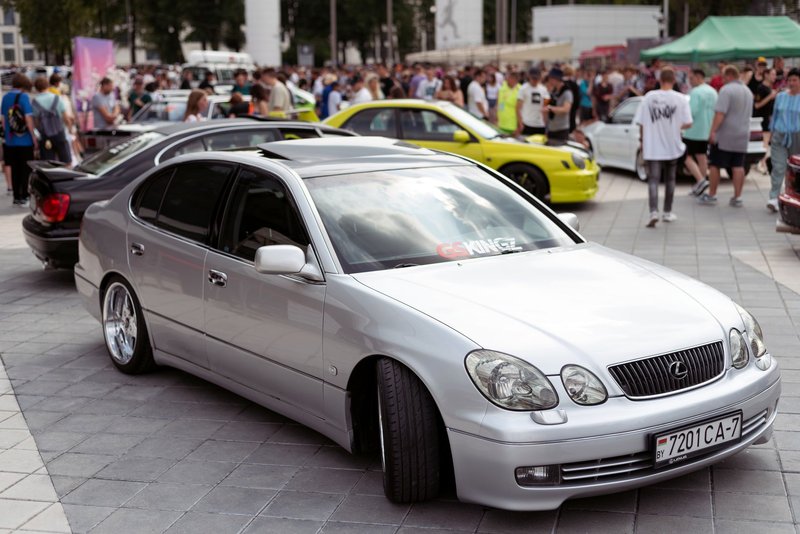
Four models, two engine families, prices spanning twenty grand. Here’s the full roster as it sat in showrooms.
| Model | Body style | Engine | Power | 0–60 mph | Original MSRP |
|---|---|---|---|---|---|
| ES 300 | 4-door sedan | 3.0L V6 (1MZ-FE) | 188 hp | ~8.0 sec | ~$31,500 |
| GS 300 | 4-door sedan | 3.0L inline-6 (2JZ-GE) | 220 hp | ~8.5 sec | ~$37,900 |
| SC 300 | 2-door coupe | 3.0L inline-6 (2JZ-GE) | 225 hp | ~7.5 sec | ~$39,000 |
| SC 400 | 2-door coupe | 4.0L V8 (1UZ-FE) | 250 hp | ~6.9 sec | ~$45,000 |
| LS 400 | 4-door sedan | 4.0L V8 (1UZ-FE) | 260 hp | ~7.5 sec | ~$51,200 |
A few things jump out. The ES is the only front-wheel-drive car here and the only one that shares its bones with a Toyota (the Camry). Everything else is rear-wheel drive and purpose-built. And two of the five powertrains use the same 4.0-liter V8 — the one that earned Lexus its reputation in the first place.
TLDR: which 1995 Lexus to buy
If you want the smart buy, get a GS 300 or SC 300. Both run the 2JZ-GE inline-six — yes, the non-turbo cousin of the Supra’s legendary 2JZ-GTE — which means parts, knowledge, and a tuning community are everywhere. They’re rear-wheel drive, they handle, and clean examples are still cheap.
If you want the icon, get an LS 400. It’s the car that made “luxury” and “reliable” mean the same word, and a well-kept one will outlast you.
If you just want a cheap, comfortable, bulletproof daily that nobody will ever bother you about, the ES 300 is the most car for the least money — at the cost of soul.
The SC 400 is the enthusiast’s heart pick: V8, two doors, gorgeous. But it’s the hardest to find unmolested and the priciest to insure your emotions on.
LS 400: the flagship that built the brand
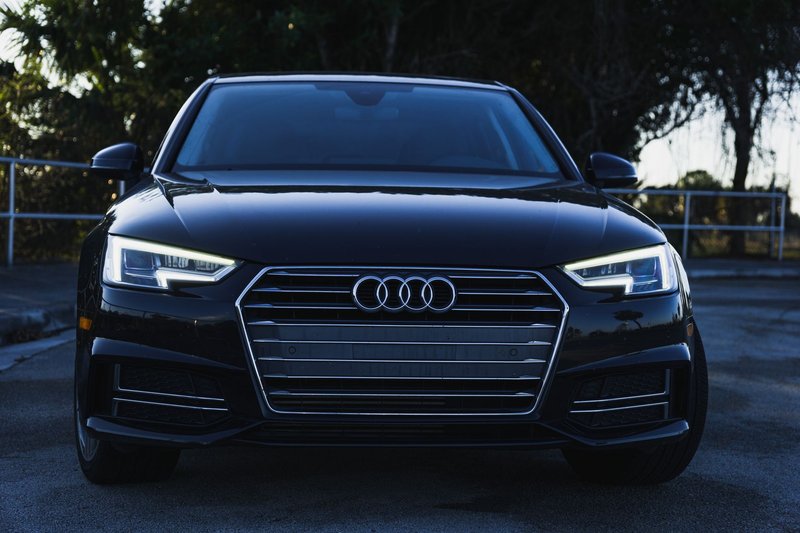
The 1995 LS 400 was in the middle of its second generation, and it’s the car the entire brand was built to deliver. When Lexus engineers developed the original, they reportedly logged hundreds of prototypes and a wind-tunnel obsession that produced a 0.28 drag coefficient — slipperier than most sports cars of the era. The result was a full-size sedan that idled so quietly the launch ad balanced a stack of champagne glasses on the running engine.
By 1995 the LS 400 made 260 horsepower from its 4.0-liter quad-cam V8, paired to a four-speed automatic that shifts like it’s apologizing for interrupting. Inside you got real walnut trim, available heated seats, and a build quality that genuinely rattled Mercedes — German engineers famously tore one down and couldn’t figure out how Toyota built it for the price. That formula set the template for every Lexus that followed through the 1990s, and the dependability wasn’t marketing. The LS line has repeatedly placed at or near the top of J.D. Power’s long-term dependability rankings, and 250,000-mile examples are unremarkable.
Known issues are minor for the era: the starter is buried in the engine valley (a labor-heavy job when it eventually goes), the timing belt needs replacing every 90,000 miles, and aging cars develop the usual suspension-bushing softness. None of it is scary. None of it is expensive relative to a German rival of the same vintage, which is the entire point.
GS 300: the new sport sedan
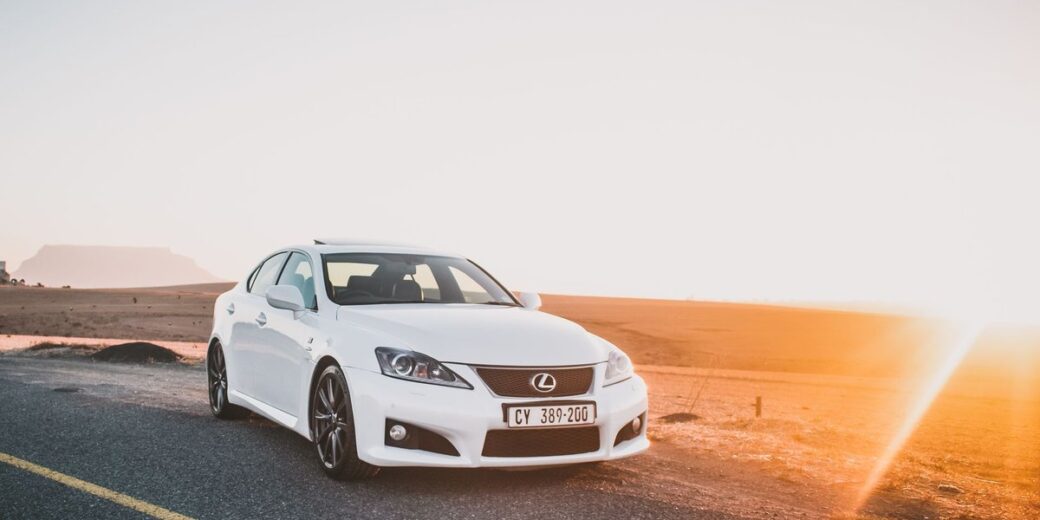
The GS 300 was the fresh face in a quietly strong 1995 — Lexus’s answer to the BMW 5 Series and the gap between the mid-size ES and the flagship LS. The styling came from Giugiaro’s Italdesign, which is why it looks more interesting than its siblings, with a fastback-ish silhouette that’s aged better than anyone expected.
Under the hood sits the 2JZ-GE: a 3.0-liter inline-six making 220 horsepower. This is the naturally aspirated version of the same block that, in twin-turbo 2JZ-GTE form, made the MkIV Supra a tuner legend. That shared lineage matters even if you never touch a wrench — it means the engine is over-engineered, the internals are forged-iron tough, and any independent shop has seen one. The GS drives like the rear-drive sport sedan it is: balanced, quiet, a little soft by modern standards but composed.
The catch in 1995 was price. At nearly $38,000 it sat uncomfortably close to the more prestigious LS, and sales were modest as a result. That’s good news for you now — fewer were sold, but the ones that survive are underpriced relative to how good the platform is. Watch for the same timing-belt interval as the V8 cars and aging power-steering lines.
ES 300: the value play
The ES 300 was, and is, the entry door to Lexus. It rode on the Camry platform, used a transverse 3.0-liter V6 (the 1MZ-FE, 188 hp), and drove the front wheels. Enthusiasts roll their eyes at it. They’re missing the point.
The ES exists to be effortless. It’s whisper-quiet, the ride is plush to the edge of floaty, and because it shares so much with the Camry, it’s the cheapest 1995 Lexus to own and repair by a wide margin — parts are at every store and any mechanic alive has worked on a 1MZ-FE. It’s the only car here you can buy without a second thought about maintenance costs.
The trade-off is character. There isn’t much. The steering tells you nothing, the front-drive layout means it understeers when pushed, and it shares its silhouette with a car costing fifteen grand less. The one mechanical gremlin worth knowing: early 1MZ-FE engines can be prone to oil sludge if oil changes were neglected, so a documented service history matters more here than on any other 1995 Lexus. Find a one-owner car with a folder of receipts and you’ve got the most painless classic-luxury ownership experience money can buy.
SC 300 and SC 400: the coupe
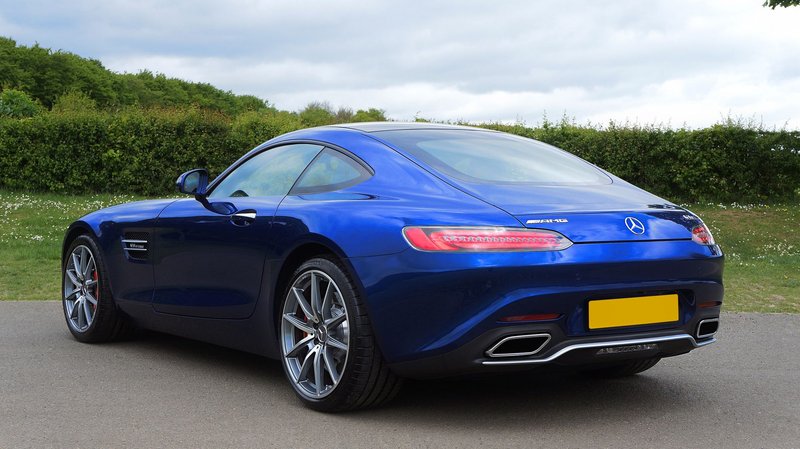
The SC was the lineup’s halo — a sleek two-door whose curves were styled in California and which still stops people in parking lots thirty years on. There were two flavors, and the difference is the whole story.
The SC 300 uses the 2JZ-GE inline-six, same as the GS, and was the only 1995 SC you could get with a manual transmission. That makes the manual SC 300 the unicorn: a rear-drive coupe with the famous 2JZ block and three pedals. The tuning crowd figured this out long ago, which is why clean manual cars now command real money — many have been swapped to the turbo 2JZ-GTE.
The SC 400 drops in the 4.0-liter 1UZ-FE V8, 250 horsepower, automatic only. It’s the more relaxed, more luxurious of the two: a effortless grand tourer rather than a back-road weapon. It’s quicker in a straight line (under seven seconds to 60) and feels every bit the flagship coupe.
Both share the same caveat: finding one that hasn’t been modified, curbed, or sun-baked is the hard part. The interiors use a soft-touch dash material that cracks in hot climates, and good unmodified examples are genuinely scarce.
The 1UZ-FE V8: why these cars don’t die
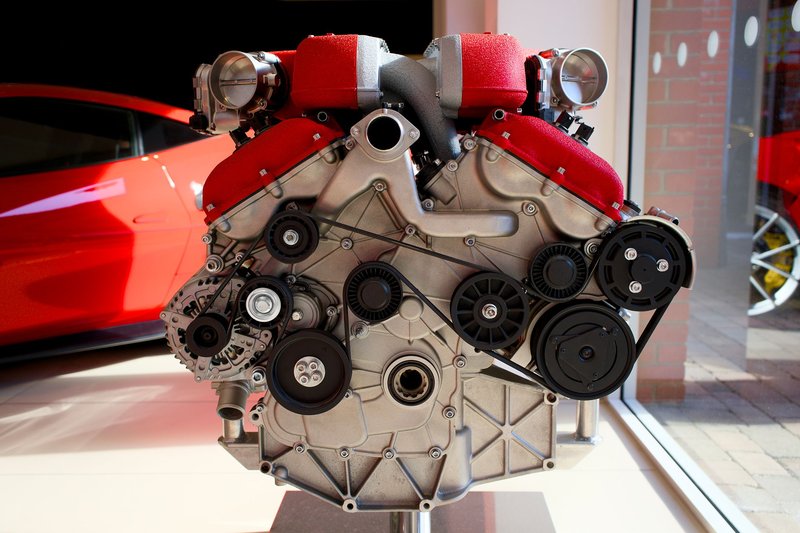
Two of these cars — the LS 400 and SC 400 — share the 1UZ-FE, and it deserves its own section because it’s the reason “Lexus reliability” became a phrase. This 4.0-liter quad-cam aluminum V8 was engineered with tolerances closer to a precision instrument than a mass-market engine. Toyota built it to run a quarter-million miles with nothing but oil and the occasional timing belt.
It delivered — exactly the kind of overbuilt restraint that defined the best Japanese engineering of the late 1980s. The 1UZ is so durable it became a go-to engine swap for everything from boats to British kit cars, precisely because it makes good power and refuses to break. The crank is forged. The block is over-built. There’s no factory turbo to wear out. Your only real maintenance flags are the 90,000-mile timing belt (it’s an interference engine, so don’t skip it) and keeping the cooling system honest. Do those two things and the engine is effectively a non-issue. That’s not nostalgia talking — it’s why a clean 200,000-mile LS 400 still sells with confidence.
What they’re worth today
Thirty years on, these cars have stopped depreciating and started appreciating — slowly, selectively, and only for the good ones. Rough numbers for clean, well-documented examples in 2025:
- ES 300 — $4,000 to $8,000. The cheapest entry, plentiful supply. A daily, not an investment.
- LS 400 — $6,000 to $14,000. Low-mile, single-owner cars are the ones climbing. Auction data on platforms like Classic.com shows the cleanest examples now clearing five figures comfortably.
- GS 300 — $5,000 to $11,000. Underrated and underpriced for the platform you get.
- SC 300 (manual) — $12,000 to $25,000+. The enthusiast unicorn; unmodified manuals are the blue chip of the bunch.
- SC 400 — $9,000 to $20,000. V8 coupe scarcity is pushing clean ones up steadily.
The pattern is clear: condition and documentation matter more than model. A pampered ES can outsell a tired SC 400. Buy the best example you can find, not the most desirable badge in poor shape.
Which 1995 Lexus is right for you
If you want a cheap, reliable daily that happens to wear a luxury badge, the ES 300 wins and it isn’t close. Buy on service history, drive it for a decade, spend nothing.
If you want a rear-drive classic with upside, the GS 300 is the connoisseur’s value pick — the 2JZ platform for sport-sedan money — while the LS 400 is the safe, iconic, will-never-let-you-down choice that also happens to be the most comfortable car here.
If you want a weekend car with soul, it’s the SC. Get the manual SC 300 if you’re a driver and you can find one that hasn’t been hacked up; get the SC 400 if you’d rather waft than wring it out.
There’s no bad answer in this lineup. That was the whole idea in 1989, and in 1995 the formula was at its peak: four cars, zero compromises on the thing that mattered most. Buy the cleanest one you can find and it’ll still be running long after the cars parked next to it aren’t.

Marco Delantero
More from Marco DelanteroHow we reviewed this article
This article was researched against manufacturer records and editorially reviewed before publishing. We accept no payment for coverage. Some guides contain affiliate links; see our affiliate disclosure.