Table of Contents
- The Road in 1931
- Ford Model A
- Chevrolet AE Independence
- Chrysler Eight
- Cadillac V-12
- Duesenberg Model J
- Lincoln Model K
- Packard Eighth Series
- Buick Series 90
- Alfa Romeo 8C 2300
- Rolls-Royce Phantom II
- What Survives Today
The Road in 1931
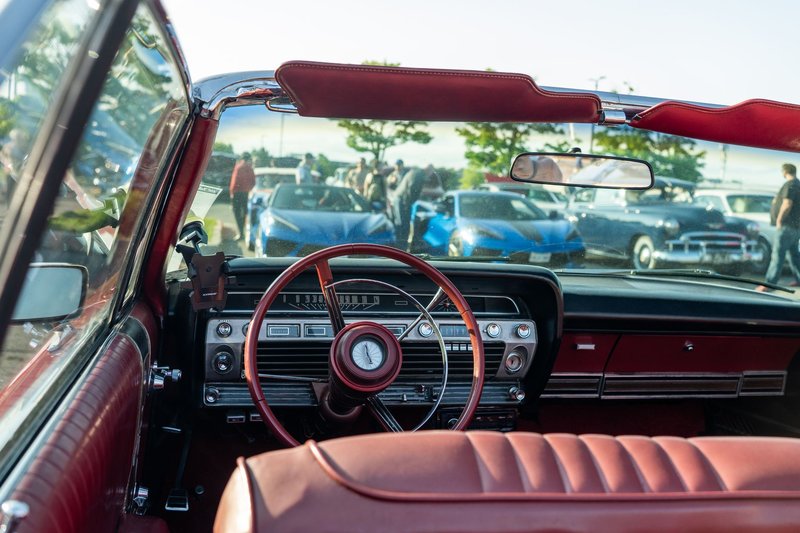
In 1931, the American automotive industry was in freefall. US car production dropped roughly 27% compared to the year before, and factory floors that had hummed with activity in the late 1920s sat half-empty. Banks were failing, unemployment was climbing toward 15%, and buying a new car was a luxury most people had no business considering.
And yet cars were built. Some were extraordinary — the last gasp of pre-Depression excess from American luxury marques that would be bankrupt or gutted within a few years. Others were honest, functional machines that kept the working class moving even when money was almost gone. Together they form a snapshot of an industry caught between two worlds: the extravagance of the 1920s and the survival economics of the 1930s.
Here are the cars that mattered most in 1931 — by volume, by engineering achievement, or by the mark they left on automotive history.
Ford Model A
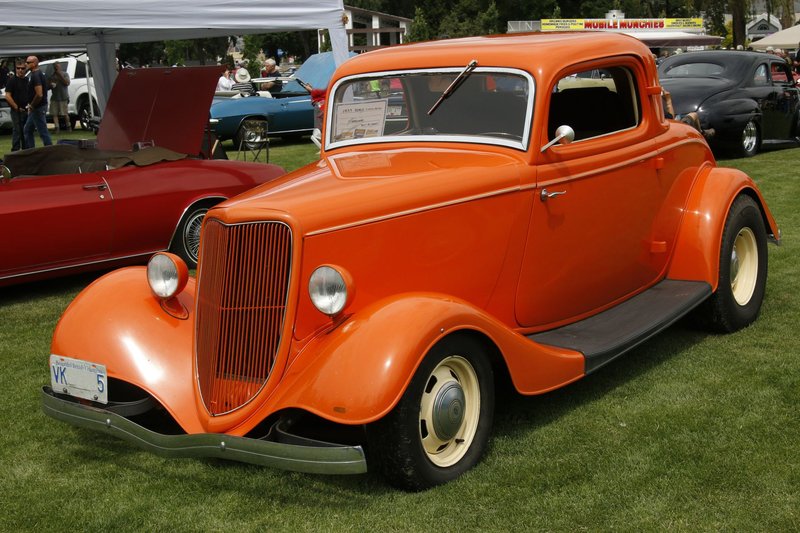
Engine: 3.3L inline-4, 40 hp
Production (1931): ~626,000 units
Price: ~$435–$640
The Model A was the car most Americans actually drove in 1931. Ford had introduced it in 1927 to replace the aging Model T, and by 1931 it had been refined into a genuinely good machine — reliable, easy to work on, and available in enough body styles (roadster, Tudor sedan, Fordor sedan, cabriolet, phaeton) that buyers could find something resembling their taste even on a constrained budget.
The 40-horsepower four-cylinder engine wasn’t fast, but it was robust in the way farm equipment is robust. Owners could pull parts from a hardware store and fix most problems themselves, which mattered enormously in an era where dealer networks were thin and cash was thinner. Ford sold about 626,000 Model As in 1931, which sounds like a lot until you realize the company had moved over a million units annually just a few years earlier.
Today, the Model A is among the most approachable entry points into classic car collecting. Restoration parts are abundant, prices at auction range from roughly $15,000 to $50,000 depending on body style and condition, and the community of Model A clubs across the US is genuinely active. It regularly appears alongside other classic American sedans that defined the era.
Chevrolet AE Independence
Engine: 3.2L inline-6, 50 hp
Production (1931): ~623,000 units
Price: ~$475–$650
Chevrolet finished 1931 in a dead heat with Ford for sales supremacy — a rivalry that defined the industry. The AE Independence was Chevy’s answer to the Model A, and it had one meaningful technical edge: a six-cylinder engine when Ford was still running four cylinders. The slogan “a six for the price of a four” was exactly what it sounds like, and it worked.
The Independent Suspension on the front wheels was a genuine engineering advancement for a mainstream car, giving the Independence noticeably better ride quality on the rutted roads of the era. It wasn’t glamorous, but for a buyer who spent eight hours a day in a car — salesmen, rural doctors, small business owners — it was a real difference.
Chrysler Eight
Engine: 4.9L straight-eight, 100 hp
Production (1931): ~30,000 units (across series)
Price: ~$1,145–$1,595
Chrysler’s straight-eight line in 1931 sat in the upper-middle tier of the market — too expensive for everyday buyers, but well below the true luxury marques. What it offered was a smooth, powerful engine in a well-engineered body at a price point where value was measurable.
Walter Chrysler had built his company on engineering credibility, and the 1931 Eight reflected that. The hydraulic brakes were a step ahead of competitors who still relied on mechanical systems, and the streamlined styling — Chrysler hired designer Oliver Clark to bring something more cohesive to the lineup — gave the car a look that held up through the decade. For buyers who could still afford something better than a Ford but couldn’t stretch to Cadillac, the Chrysler Eight was the rational choice.
Cadillac V-12
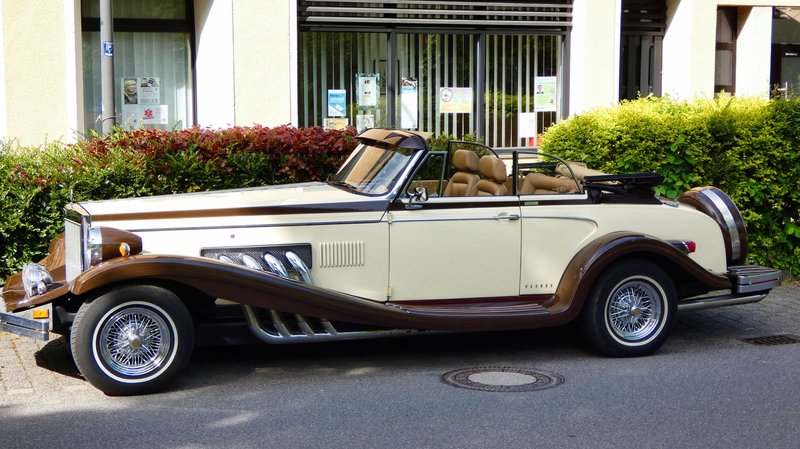
Engine: 6.0L V-12, 135 hp
Production (1931): ~5,733 units
Price: ~$3,795–$5,995
Cadillac did something audacious in 1931: it introduced not just a V-12, but a V-16 in the same year, apparently deciding that the Depression was a fine moment to launch the most complex engines in American production history. The V-12 was the more attainable of the two and sold in meaningful numbers for the price bracket.
The LaSalle-derived coachwork was elegant without being fussy, and the V-12’s power delivery was so smooth that contemporary road testers struggled to find the right words — “turbine-like” was the comparison that came up repeatedly. Cadillac produced several thousand V-12s across various body configurations in 1931, enough to say this wasn’t just a halo product but an actual attempt to sell in volume to wealthy buyers.
At auction today, Cadillac V-12s from 1931 regularly fetch $75,000 to $150,000 in excellent condition, with coachbuilt examples going higher. The V-16, rarer and more spectacular, commands significantly more.
Duesenberg Model J
Engine: 6.9L DOHC straight-eight, 265 hp (320 hp in supercharged SJ form)
Production (total run): ~481 units
Price: ~$8,500 chassis only (coachwork extra, often doubling the price)
The Duesenberg Model J is the standard against which American luxury cars of the era are still measured. Fred and August Duesenberg built the J from 1928 until the company’s collapse in 1937, and 1931 represented the model at something close to its peak — before the supercharged SJ variant arrived but after the early production gremlins had been sorted.
The numbers are genuinely staggering for the era: 265 horsepower from a twin-cam straight-eight, a top speed that could exceed 115 mph, and a chassis so stiff that coachbuilders could body it in almost any configuration without flex problems. Clark Gable had one. Gary Cooper had one. William Randolph Hearst had one. The car wasn’t just expensive — it was the American answer to Bugatti and Bentley, proof that domestic engineering could match anything Europe produced.
Production was always small; Duesenberg built fewer than 500 Model Js across the entire run. Complete 1931 examples with documented coachwork now sell for $1 million or more, and a supercharged SJ Speedster set records at $22 million at Gooding & Company’s Pebble Beach auction in 2018.
Lincoln Model K
Engine: 6.3L V-8, 120 hp
Production (1931): ~3,500 units
Price: ~$4,400–$7,200
Ford had acquired Lincoln in 1922, and by 1931 the company was producing something genuinely impressive. The Model K used a large V-8 in an era when most competitors were pivoting to multi-cylinder configurations, and the chassis was long enough to accommodate the most elaborate custom coachwork of the period. The full sweep of the brand’s coachbuilt history is catalogued in the Lincoln old models list, which traces the marque from its earliest years through its Depression-era peak.
Lincoln’s relationship with coachbuilders like Brunn, Judkins, and Murphy meant that wealthy buyers could get virtually any body style they wanted on the K chassis. Formal sedans for heads of state, touring cars for cross-country trips, convertible roadsters for California buyers — the Lincoln was a platform as much as a car. Franklin Roosevelt’s Secret Service detail used Model Ks through much of the 1930s, a connection that keeps appearing in auction provenance notes to this day.
Packard Eighth Series
Engine: 5.2L straight-eight, 100 hp
Production (1931): ~34,000 units
Price: ~$2,425–$3,495
Packard occupied a peculiar position in 1931: it was the best-selling true luxury brand by a wide margin, which sounds like success until you realize it partly reflected how aggressively the company had moved downmarket. The Eighth Series included models priced within reach of upper-middle-class buyers, and Packard sold tens of thousands of them in a year when Duesenberg sold hundreds.
The top of the Packard line — the Custom Eight with bespoke coachwork — was legitimate competition for Cadillac and Lincoln. The base models were more honest transportation for professionals who wanted the name on the hood. Both versions used the same excellent straight-eight engine, which was smooth enough and powerful enough that no buyer had reason to complain.
Packard’s decision to build affordable cars in the 1930s is often blamed for diluting the brand’s prestige, a slow erosion that contributed to the company’s final collapse in the 1950s. Whether that’s fair is debatable, but it’s the lens through which automotive historians almost always view the Depression-era Packard.
Buick Series 90
Engine: 5.7L straight-eight, 104 hp
Production (1931): ~88,000 units (all series)
Price: ~$1,835–$2,595
Buick in 1931 was GM’s aspirational middle ground — priced above Oldsmobile and Pontiac, below Cadillac, and aimed at buyers who had made it in life but weren’t in the Duesenberg tax bracket. The Series 90 was the flagship, using a large straight-eight in a body that had enough presence to park in front of a country club without embarrassment.
Buick’s synchromesh transmission, introduced in the late 1920s and refined by 1931, made the car genuinely easier to drive than competitors who still required double-clutching through gear changes. That’s a mundane detail, but in 1931 it separated a car from the field as surely as horsepower did. Drivers who’d learned on older machines noticed it immediately.
Alfa Romeo 8C 2300
Engine: 2.3L supercharged straight-eight, ~155 hp
Production: ~188 units (1931–1934)
Price: Very high (exact contemporary figures vary by market)
On the European side of 1931, Alfa Romeo’s 8C 2300 was arguably the most significant car launched anywhere in the world that year. Designed by Vittorio Jano, the supercharged straight-eight was compact, mechanically sophisticated, and devastatingly fast. The 8C won the Mille Miglia four times between 1932 and 1935, and took the 24 Hours of Le Mans four consecutive times from 1931 to 1934.
The road cars were built around the same competition hardware, which meant they were brutal, noisy, and required a driver who knew what they were doing. That was, more or less, the point. Tazio Nuvolari raced one. So did Rudolf Caracciola. The 8C exists in the same company as the Duesenberg J and the Bugatti Type 41 Royale as cars where the engineering achievement was genuinely exceptional rather than merely expensive. The 8C is one of the most celebrated entries in the full Alfa Romeo old models catalogue, which spans the marque’s entire production history.
Surviving examples are extraordinarily rare and correspondingly valuable. A 1931 8C 2300 Spider with documented racing history can exceed $10 million at auction.
Rolls-Royce Phantom II
Engine: 7.7L inline-six, ~120 hp (Rolls-Royce declined to publish official figures)
Production: ~1,680 units (1929–1935)
Price: Chassis only, custom coachwork required
Rolls-Royce’s Phantom II arrived in 1929 and was in full production through 1931, carrying on the company’s tradition of building the finest automobile chassis money could buy and leaving the body to independent coachbuilders of the customer’s choosing. The inline-six was large, refined, and notably silent — Rolls-Royce’s chief test criterion was whether a coin balanced on the engine would stay put at idle.
The Phantom II rode lower than the original Phantom, with a more modern suspension layout that made it genuinely pleasant to drive rather than merely impressive to be driven in. Maharajas ordered them by the dozen. Lawrence of Arabia traveled in one. The standard chassis was long enough to body as a formal limousine; the Continental chassis, slightly shorter and with sportier gearing, attracted buyers who wanted to drive themselves.
What Survives Today
The cars of 1931 occupy a specific niche in the collector market: old enough to be significant, young enough that surviving examples aren’t impossibly fragile. The mainstream cars — Model As, Chevrolet Independences, Buicks — are genuinely collectible without being unobtainable. A well-restored Model A Tudor Sedan can be purchased for less than a new compact car. The parts network is intact, the knowledge base is documented, and the ownership experience is rewarding without being punishing.
The luxury tier is a different proposition. Duesenberg Model Js and Alfa Romeo 8C 2300s are museum pieces that happen to be driveable, and their auction prices reflect it. These were rare when new — Depression economics ensured that — and the ones that survived are cared for accordingly.
What connects all of them is the context in which they were built: a year when the American economy had cratered and automakers were selling cars to a market that could barely afford them. Every car sold in 1931 was sold against that backdrop. That some of them were masterpieces of engineering anyway says something about the people who built them.

Marco Delantero
More from Marco DelanteroHow we reviewed this article
This article was researched against manufacturer records and editorially reviewed before publishing. We accept no payment for coverage. Some guides contain affiliate links; see our affiliate disclosure.