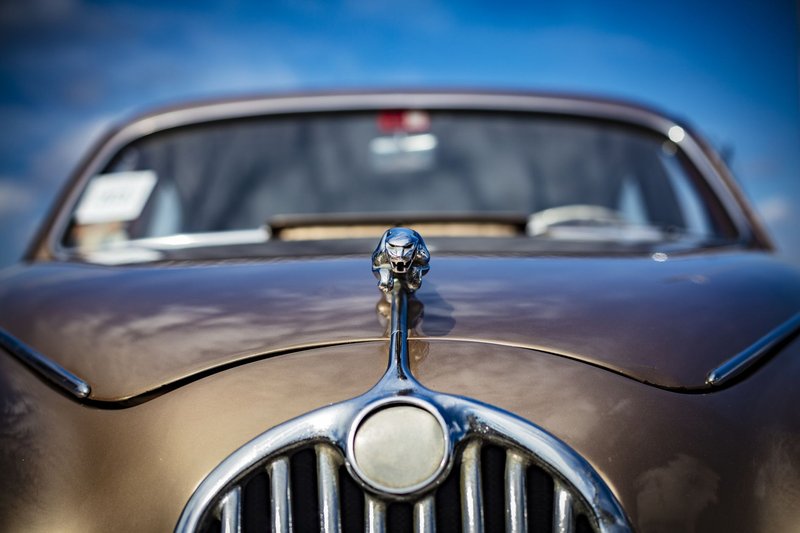
The 1985 Jaguar lineup was a small one. Three models, 10,349 cars built for the North American market. But that small number tells the real story: this was the final stretch of the Series III era, a generation that had been selling since 1979 and would be replaced by the XJ40 in 1986. Jaguar knew it. Buyers knew it. And what you ended up with was a lineup that felt both polished and slightly out of time — a hand-stitched leather interior and a fuel-injected straight-six in a body that Pininfarina had redesigned over a decade earlier.
If you’re a collector or a classic car researcher trying to nail down exactly what Jaguar offered in 1985, this is the breakdown you need.
Table of Contents
- The 1985 Jaguar Lineup at a Glance
- 1985 Jaguar XJ6
- 1985 Jaguar XJ6 Vanden Plas
- 1985 Jaguar XJ-S V12
- Collector Value Today
- Why 1985 Matters
The 1985 Jaguar Lineup at a Glance {#at-a-glance}
| Model | Engine | Horsepower | Original MSRP (US) | Body Style |
|---|---|---|---|---|
| XJ6 | 4.2L I6 | 176 hp | ~$33,500 | 4-door sedan |
| XJ6 Vanden Plas | 4.2L I6 | 176 hp | ~$38,500 | 4-door sedan |
| XJ-S V12 | 5.3L V12 | 262 hp | ~$36,000 | 2-door coupe |
All three were imported to North America as official Jaguar offerings. The XJ-S cabriolet variant existed in some markets but was not widely sold in the US in 1985 as a distinct model.
1985 Jaguar XJ6 {#xj6}
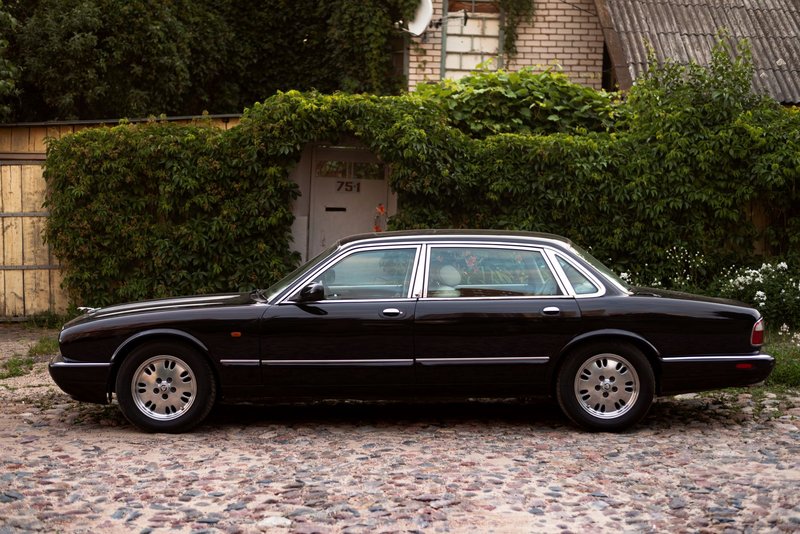
The XJ6 was Jaguar’s core product — the car that kept the lights on at Browns Lane. Under the hood sat a 4.2-liter SOHC inline-six, fuel-injected and producing 176 horsepower. That number sounds modest today, but the XJ6 weighed just under 4,000 lbs and was geared for long-haul highway cruising rather than track days. The result was a car that felt effortless at 70 mph and genuinely refined in a way that was unusual for the price.
The transmission was a GM-sourced Turbo-Hydramatic three-speed automatic — a pragmatic choice that Jaguar made to improve reliability, since earlier all-Jaguar drivetrain combinations had earned a reputation for quirks.
Standard equipment included power-assisted rack-and-pinion steering, four-wheel independent suspension with twin coil springs at the rear, air conditioning, leather seating, and burled walnut veneer on the dash and door cappings. This wasn’t optional equipment — it was the base configuration.
Dimensions:
- Wheelbase: 113 inches
- Length: 197.8 inches
- Width: 69.6 inches
- Height: 53.9 inches
The XJ6’s ride was its signature feature. Jaguar’s independent rear suspension, designed by William Heynes in the 1960s and still going strong in 1985, delivered a smoothness that impressed automotive journalists every time they reviewed it. Car and Driver repeatedly described it as the best-riding sedan available in America at its price point.
Original pricing started around $33,500 in 1985, which in 2025 dollars is roughly $96,000. For that money, you got a hand-built sedan from a historic British marque with craftsmanship that few competitors could match.
1985 Jaguar XJ6 Vanden Plas {#vanden-plas}
The Vanden Plas wasn’t a separate platform — it was the XJ6 with the trim level turned all the way up. Mechanically identical (same 4.2L six, same transmission, same suspension), the Vanden Plas distinguished itself through interior appointments and exterior badging.
What you got over the standard XJ6:
- Thicker hide — higher-grade leather throughout, including on the headliner and door cards
- Rear passenger treatment — fold-down picnic tables, individual rear reading lights, and more generous rear legroom achieved through slimmer front seatback design
- Chromed exterior trim — additional chrome on the grille surrounds, window frames, and bumpers compared to the base car
- Vanden Plas badging — subtle, but immediately recognizable to anyone who knew Jaguar’s hierarchy
The Vanden Plas nameplate had a long history at Jaguar, tracing back to coachbuilt prewar cars and later applied to the long-wheelbase variants of earlier XJ generations. By 1985, the name was attached to the top luxury specification rather than a stretched body, but it still carried the right connotations.
Original pricing came in around $38,500 — about $5,000 over the base XJ6, which today maps to roughly $110,000 equivalent. For a buyer who planned to be driven rather than drive, it was the correct choice.
1985 Jaguar XJ-S V12 {#xjs-v12}
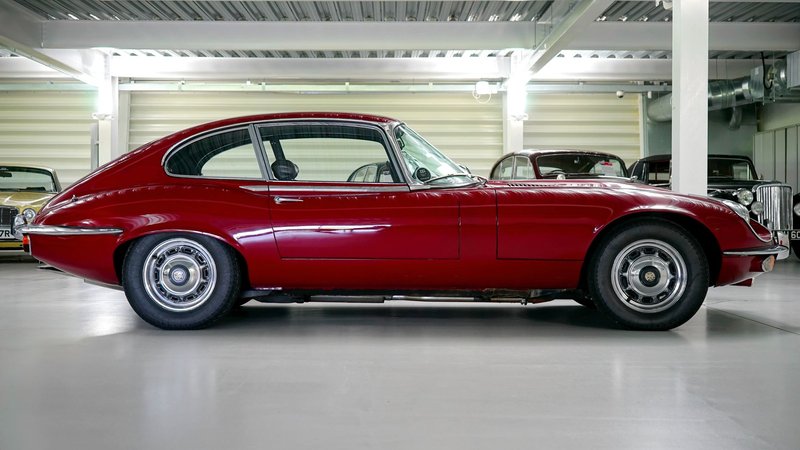
The XJ-S was an entirely different animal. Where the XJ6 saloon was restrained and aristocratic, the XJ-S was wide, low, and provocative — a grand tourer that looked unlike anything else on the road in 1985.
The body design came from Malcolm Sayer (working up until his death in 1970), the aerodynamicist who had also designed the D-Type and E-Type. The XJ-S retained the E-Type’s long hood and low roofline but moved the architecture toward a more formal 2+2 layout, complete with the distinctive flying buttresses flanking the rear window that either make you love it or leave you cold.
Under the long hood: a 5.3-liter SOHC V12. In 1985, this engine was producing around 262 horsepower with Jaguar’s HE (High Efficiency) combustion chamber design, which Michael May had developed to significantly improve fuel economy without sacrificing output. Earlier XJ-S V12s had been notorious fuel hogs; the HE head made the 1981-onward cars genuinely daily-drivable.
Performance figures for 1985:
- 0–60 mph: approximately 7.6 seconds
- Top speed: 150 mph (claimed)
- Fuel economy: roughly 14–16 mpg highway
The transmission was the GM Turbo-Hydramatic three-speed, same as the saloons — a sensible match for long-distance touring.
Interior space was the trade-off. The rear seats existed mainly to satisfy insurance classifications; no adult wanted to ride back there for more than an hour. But the front cabin was well-appointed, with the same leather and walnut you’d expect from any Jaguar of the period.
Original MSRP: approximately $36,000 — making it a slightly more expensive alternative to the base XJ6, but less than the Vanden Plas. For a two-door grand tourer with a V12, that was considered a bargain by contemporary standards. The comparable Mercedes 450SL cost more and made fewer cylinders.
Collector Value Today {#collector-value}
The 1985 Series III cars have settled into a clear pecking order on the collector market.
XJ6 (base): Clean, low-mileage examples in solid condition trade in the $8,000–$18,000 range. The supply is substantial — enough were built and preserved that buyers aren’t desperate. The risk with these cars is the cost of maintenance on a 40-year-old British vehicle: electrical gremlins (Lucas electrics have a well-earned reputation), body seals, and specialized service requirements keep values from climbing too aggressively.
XJ6 Vanden Plas: A modest premium over the base car, typically $10,000–$22,000 for excellent examples. Collectors value the higher-spec interior, but the mechanical identity to the base car limits how far the premium can stretch.
XJ-S V12: This is where it gets interesting. According to Hagerty valuation data, the XJ-S V12 in excellent condition has been appreciating steadily. Concours-quality examples have crossed $30,000, and even driver-quality cars in good shape hold around $12,000–$18,000. The V12 engine is the draw: it’s complex and expensive to maintain (a full cooling system service is not a weekend job), but when it’s running correctly, there’s nothing quite like it. The sound at wide-open throttle is a legitimate reason to own this car.
One practical note for buyers: avoid any 1985 XJ-S with deferred maintenance on the cooling system or evidence of overheating. The V12 head gaskets are not a failure you want to discover after purchase.
Why 1985 Matters {#why-1985-matters}
Jaguar in 1985 was a company in transition in more ways than one. The Series III XJ saloons had been in production since 1979, based on a platform that dated to Sir William Lyons’ original XJ6 design of 1968. The Pininfarina reskin of 1979 had refreshed the shape — wider taillights, new bumpers to meet US regulations, cleaner greenhouse — but underneath it was still fundamentally the same architecture.
What made 1985 specifically significant was that it was the last full model year before everything changed. The XJ40 debuted in 1986, bringing a completely new platform, new engines, and new electronics. The Series III would continue in production for a short time alongside the XJ40 (primarily the Vanden Plas for North America), but 1985 was the last year where the entire Jaguar saloon range consisted of Series III cars.
There’s also a quality story worth telling. Jaguar’s reputation through the late 1970s and early 1980s had been damaged by reliability problems — partly a consequence of under-investment during the British Leyland years. By 1984–1985, under the leadership of John Egan, the company had made measurable improvements in build quality, warranty claims were down, and customer satisfaction was recovering. The 1985 cars benefited from that effort: they’re more reliable than their reputation suggests, provided they’ve been properly maintained.
Jaguar was privatized in August 1984, listed on the London Stock Exchange as an independent company for the first time since the British Leyland merger in 1968. Jaguar sits among the most storied UK car brands — a lineage that stretches from prewar coachbuilders to postwar sports cars and luxury saloons. The 1985 model year was the first full lineup produced under that new structure.
For collectors who want a piece of Jaguar history without paying E-Type prices, the 1985 Series III cars represent a genuine opportunity. They’re hand-built British luxury cars from a historically significant production year, and at current values, they’re still approachable — assuming you have a good independent Jaguar specialist in your area.
That last part is not optional advice.

Daniela Voss
More from Daniela VossHow we reviewed this article
This article was researched against manufacturer records and editorially reviewed before publishing. We accept no payment for coverage. Some guides contain affiliate links; see our affiliate disclosure.