Table of Contents
- The 1975 Context
- 1975 Toyota Corolla
- 1975 Toyota Celica
- 1975 Toyota Corona
- 1975 Toyota Mark II
- 1975 Toyota Land Cruiser
- 1975 Toyota Pickup
- 1975 Toyota Lineup at a Glance
- Collector Value Today
Toyota’s 1975 U.S. lineup had six models, and every single one of them was shaped by a single external force: federal emissions regulations. The 1975 model year was the first to comply with the Clean Air Act’s tightened hydrocarbon and carbon monoxide standards, and Toyota responded by leaning hard into fuel efficiency and engine rationalization. The result was a lineup that looked similar to 1974 on the surface but ran differently underneath.
Here’s the full picture.
The 1975 Context
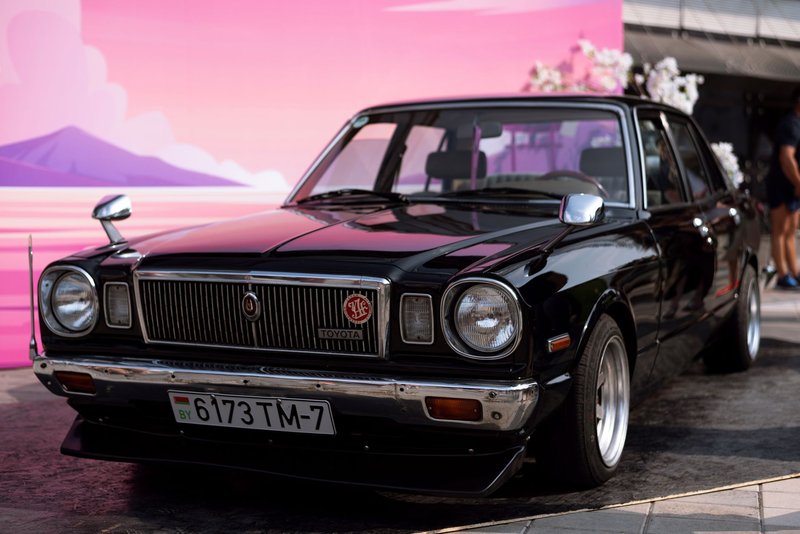
By 1975, Toyota had been selling cars in the United States for over fifteen years, but this was the year the company truly solidified its reputation for reliability over flash. The OPEC oil embargo was still fresh, American buyers were actively looking for fuel-efficient alternatives to domestic iron, and Toyota had exactly what they wanted.
To meet EPA emissions standards introduced with the 1975 model year, Toyota retuned engines across the board — lower compression ratios, recalibrated carburetors, and exhaust gas recirculation (EGR) systems on most models. Power numbers dropped slightly compared to 1974 across almost every model, but fuel economy improved, and the cars became significantly easier to own in states with strict smog testing.
Six models made up the U.S. lineup that year: the Corolla, Celica, Corona, Mark II, Land Cruiser, and Pickup. If you want a broader snapshot of what the entire market looked like that year, the most popular cars in 1975 puts Toyota’s offerings in context against the competition they were up against.
1975 Toyota Corolla
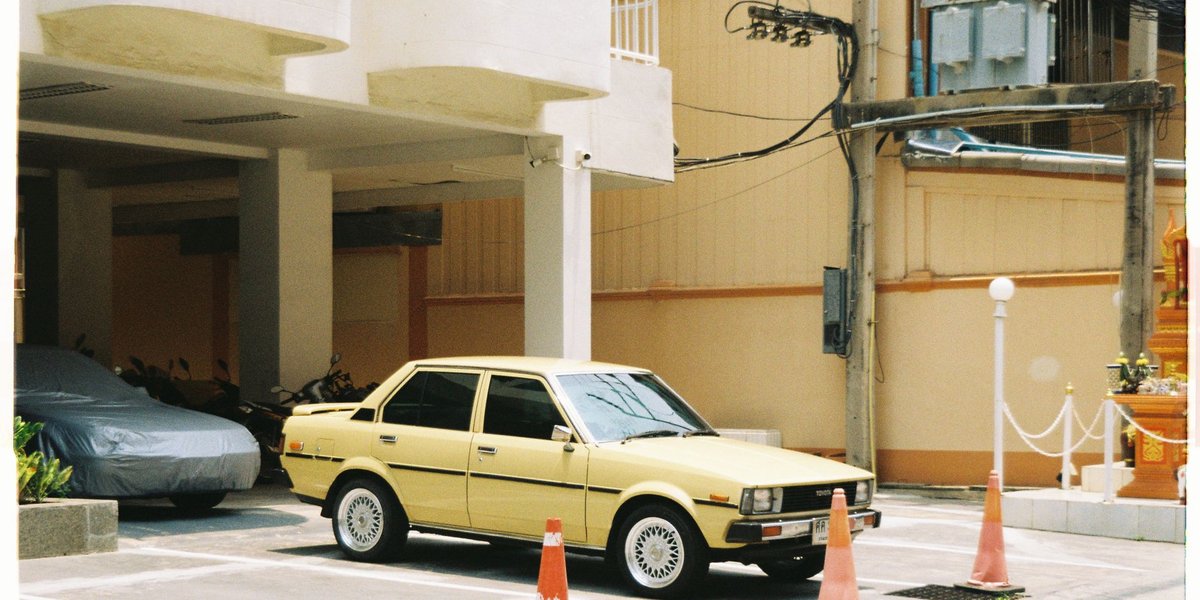
The Corolla was already Toyota’s best-seller worldwide, and the 1975 model was the third generation of the nameplate in the U.S. market. It came in a wide range of body styles — two-door sedan, four-door sedan, two-door hardtop, two-door liftback, and station wagon — giving buyers more configuration options than almost any competitor in the subcompact class.
Under the hood, the 1975 Corolla ran a 1.2-liter inline-four (3K-C engine) producing around 60 horsepower, or the slightly larger 1.6-liter 2T-C making approximately 78 hp in standard tune. The power figures were modest even by mid-70s standards, but the Corolla’s curb weight hovered around 1,900 lbs, so it moved acceptably in everyday driving.
The SR5 sport trim was the one to have: five-speed manual gearbox, bucket seats, and a slightly sportier suspension tune that made the Corolla feel more like a driver’s car than the base trim’s appliance-grade setup.
Restorers today gravitate toward the SR5 coupe. Finding one with rust-free floors and an intact 2T-C is the first challenge; sourcing the correct five-speed linkage is often the second.
1975 Toyota Celica
The first-generation Celica — the “Celica A20/A35” series — was two years into its U.S. run by 1975, and it was the closest thing Toyota had to a pony car. Long hood, short deck, available in notchback coupe or liftback body styles, and positioned directly against the Ford Mustang II and Chevrolet Monza in the sporty compact segment.
The 1975 Celica GT ran the 2T-C 1.6-liter engine producing around 87 horsepower in its sportier state of tune — though emissions detuning brought that number down compared to earlier 1974 examples. The ST trim used the 12R-C 1.9-liter, which was punchier at low revs but not as characterful to drive.
What made the GT trim appealing then and now: a proper five-speed gearbox, front disc brakes, and a dashboard that actually looked like someone cared about the interior. The liftback body style in particular has aged well — it’s one of those mid-70s designs that avoided the worst of the era’s excesses.
First-generation Celicas are among the most actively traded 1970s Toyotas today. Clean GT liftbacks in good condition regularly trade in the $15,000–$25,000 range depending on condition and documentation.
1975 Toyota Corona
The Corona occupied the mid-size slot in Toyota’s lineup — bigger than the Corolla, smaller than the Mark II — and by 1975 it was in its fourth U.S. generation. It came as a two-door hardtop, four-door sedan, and a surprisingly capable station wagon.
Power came from the 18R-C 2.0-liter inline-four, producing around 97 horsepower. The 18R-C was a durable unit — less exciting than the Celica’s twin-cam options from other markets, but straightforward to maintain and tolerant of neglect.
The Corona’s role was essentially that of the sensible family car: enough room, reasonable economy, nothing to get excited about. That’s exactly what a lot of buyers needed in 1975, which is why Toyota sold a meaningful number of them. Today, the Corona is arguably the most undervalued car in the 1975 Toyota lineup — they’re genuinely rare at shows, and the wagon body in particular is nearly impossible to find in driver-quality condition.
1975 Toyota Mark II
If the Corolla was the economy play and the Celica was the sport play, the Mark II was Toyota’s attempt at near-luxury. It sat above the Corona and came in a more upmarket trim specification: four-door sedan and hardtop coupe body styles, plusher interior materials, and a more refined ride tuning.
The U.S.-market 1975 Mark II used the 18R-C 2.0-liter engine — same block as the Corona, but the Mark II’s added weight meant it felt a bit more sluggish. That wasn’t really the point. Toyota positioned this car against the smaller domestic luxury sedans, buyers who wanted something that felt more substantial than a Corolla but couldn’t justify a full-size American car.
The Mark II is the most obscure car in the 1975 Toyota lineup for American audiences. Production numbers for the U.S. market were relatively low, they’ve been abandoned at higher rates than the sportier models, and parts availability has thinned out considerably. Finding a clean four-door hardtop is a genuine project.
1975 Toyota Land Cruiser
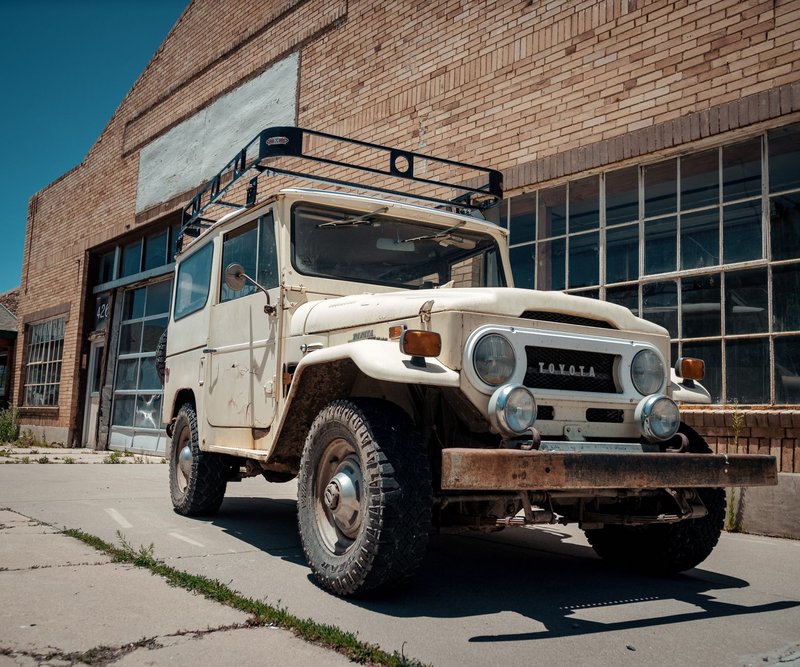
The FJ40 was the one model in Toyota’s 1975 lineup that needed no repositioning, no emissions-era justification, and no marketing to convince buyers it was the right choice. It simply was the right choice if you needed a go-anywhere box on wheels.
The 1975 FJ40 ran the F-series 3.9-liter inline-six, producing around 125 horsepower. It was a truck engine in a truck body — part-time four-wheel drive, solid axles front and rear, a body-on-frame construction that made it infinitely more repairable in the field than any unibody design.
The 1975 model year FJ40 gained minor refinements over earlier examples, but the fundamental character was unchanged since the early 1960s. Short wheelbase, a boxy canvas or hardtop option, and no pretension whatsoever about being a road vehicle that happened to have four-wheel drive.
FJ40 values have gone from “found abandoned in barns” to aggressive collector territory over the past decade. Unrestored examples in original condition now command $30,000–$60,000 or more depending on originality, and professionally restored builds routinely exceed $80,000. The 1975 model year is no exception.
1975 Toyota Pickup
Toyota’s compact pickup — often called the “Hilux” in export markets, though Toyota marketed it more generically in the U.S. — was in its third generation by 1975. It came in standard cab configuration, long or short bed, with two-wheel drive standard and four-wheel drive as an option on certain variants.
The engine was the 20R 2.2-liter inline-four, an engine that built Toyota’s durability reputation in North America as thoroughly as any car in the lineup. The 20R was not an exciting engine. It produced approximately 96 horsepower and made no particular noise about it. What it did was run for 200,000+ miles with basic maintenance, and in 1975 that was a genuinely unusual claim. Datsun’s competing 1970s Nissan truck and car lineup was chasing the same durability reputation at the same time, which gives a useful sense of how competitive this segment was.
The 1975 Pickup also benefited from the emissions compliance work Toyota had done across the line — the 20R responded well to the cleaner tune and actually gained a small fuel economy advantage over earlier versions.
First-generation Toyota trucks are now serious collector objects in the American West, where the “mini truck” culture has driven prices sharply upward. Two-wheel-drive examples still surface regularly; 4WD 1975 pickups in good shape are considerably harder to find.
1975 Toyota Lineup at a Glance
| Model | Body Styles | Engine | Est. Horsepower |
|---|---|---|---|
| Corolla | Sedan, hardtop, liftback, wagon | 1.2L / 1.6L I4 | 60–78 hp |
| Celica | Coupe, liftback | 1.6L / 1.9L I4 | 87–96 hp |
| Corona | Sedan, hardtop, wagon | 2.0L I4 | ~97 hp |
| Mark II | Sedan, hardtop coupe | 2.0L I4 | ~97 hp |
| Land Cruiser FJ40 | Short-wheelbase SUV | 3.9L I6 | ~125 hp |
| Pickup | Standard cab, S/LB | 2.2L I4 | ~96 hp |
Collector Value Today
The 1975 Toyota lineup hits a specific sweet spot for collectors: old enough to be genuinely classic, young enough that parts availability isn’t hopeless, and pre-dating the catastrophic rust problems that would plague some 1980s Japanese imports.
The Celica GT and FJ40 are the headline acts — they’ve been “discovered” by the collector market and priced accordingly. The Corolla SR5 coupe is a solid mid-tier collectible with active parts support from suppliers like Toyota’s own heritage parts program and the aftermarket. The Corona, Mark II, and early Pickup remain legitimate bargains for buyers who don’t need the social proof of the more famous nameplates.
Whichever model you’re tracking down: prioritize rust-free body structure above everything else. Frame rust on the FJ40 and pickup, floor rust on the sedans, and rear quarter rot on the Celica are the deal-killers. Engines are serviceable; structural problems are not.

Marco Delantero
More from Marco DelanteroHow we reviewed this article
This article was researched against manufacturer records and editorially reviewed before publishing. We accept no payment for coverage.