Table of Contents
- TLDR
- Why the 90s Were Special
- Japan: The Decade’s Overachievers
- Mazda RX-7 FD (1992–2002)
- Honda NSX (1990–2005)
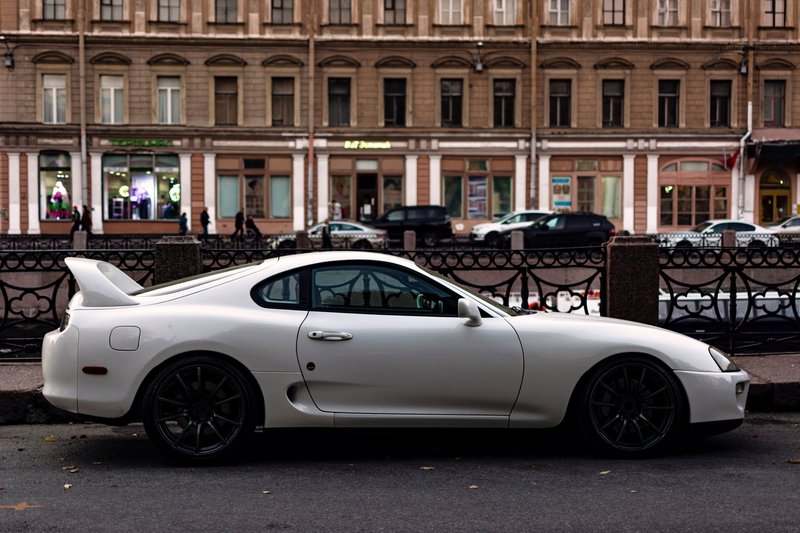
- Toyota Supra MK4 (1993–2002)
- Nissan Skyline GT-R R33 (1995–1998)
- Mitsubishi 3000GT VR-4 (1990–1999)
- Europe: Engineering With Attitude
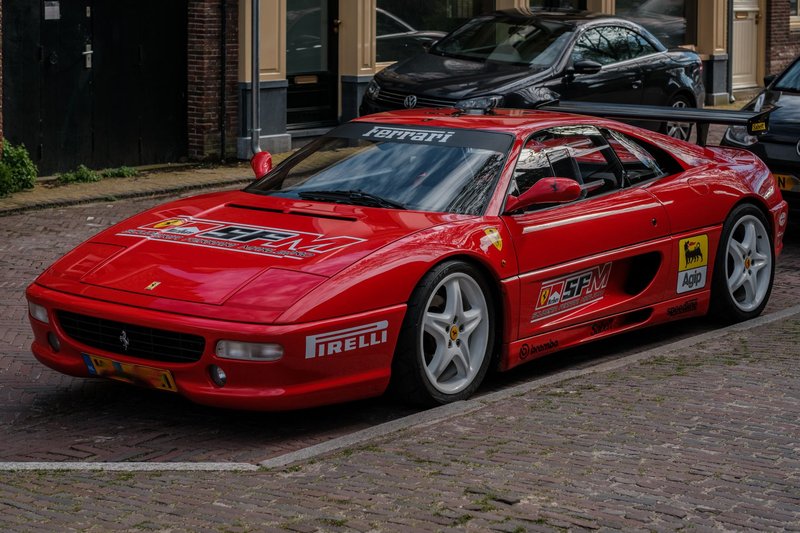
- Ferrari F355 (1994–1999)
- Porsche 993 911 (1994–1998)
- McLaren F1 (1992–1998)
- BMW M3 E36 (1992–1999)
- Dodge Viper RT/10 (1992–1996)
- America: Muscle Meets Modernity
- Chevrolet Corvette C5 (1997–2004)
- Ford SVT Mustang Cobra R (1993 & 1995)
- The Underrated Ones
- Lotus Elise Series 1 (1996–2000)
- Alfa Romeo GTV V6 (1994–2005)
- Collector Market: Who’s Rising
- How to Actually Buy One
TLDR
The Mazda RX-7 FD, Honda NSX, and Toyota Supra MK4 define the decade from Japan. Europe’s answer is the Porsche 993, Ferrari F355, and the McLaren F1 — the fastest production car of the 1990s, full stop. For value buyers, the Nissan Skyline GT-R R33 and Lotus Elise Series 1 are still relatively accessible. All of them are appreciating. The window to buy at a sane price is closing.
Why the 90s Were Special
The 1990s happened at an unusual moment in automotive history. Emissions and safety regulations were tightening globally, but engineers still had enough room to do genuinely weird, ambitious things. Fuel injection was mature. Turbocharging was reliable. Electronics were useful without being intrusive. The result: a decade of sports cars that were mechanically inventive, driver-focused, and built before the weight creep of the 2000s turned everything into a gym-going GT coupe.
It also happened to be the decade when Japanese manufacturers were in their fullest creative sprint — the Gran Turismo era, when every teenager had a poster of an NSX or a Supra on their wall and the engineers building those cars knew it.
These cars mattered. Here’s why, and what you’ll pay to own one now.
Japan: The Decade’s Overachievers
Mazda RX-7 FD (1992–2002)
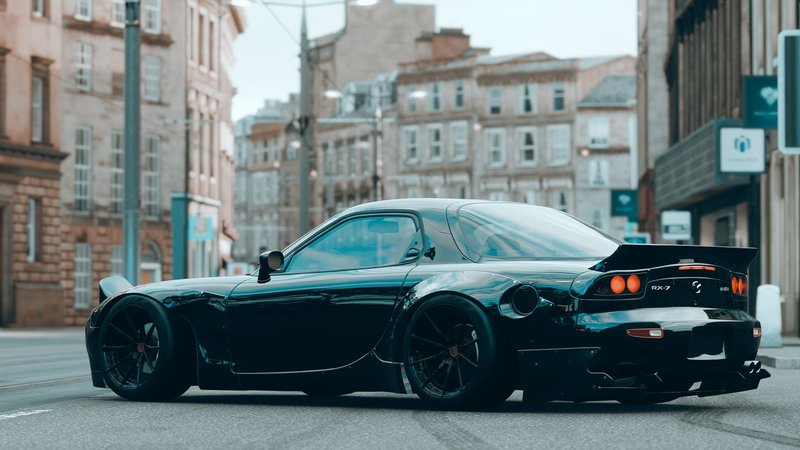
Engine: 1.3L twin-rotor 13B-REW | Power: 276 hp (JDM) | 0–60: 5.0 sec | Production: ~68,000 units (FD)
The FD RX-7 is a car that makes no compromises you’d expect and several you wouldn’t. It runs a sequential twin-turbo rotary engine in a body that weighs around 1,250 kg — lighter than a modern Mazda MX-5 Miata with a V8 welded to it. The result is a handling balance that was genuinely alien to drive when it launched: 50/50 weight distribution, near-perfect turn-in, and an engine that spins to 8,000 rpm and sounds like nothing else.
The catch is the 13B-REW itself. Rotary engines require fastidious maintenance — regular apex seal checks, careful warm-up and cool-down procedures, clean oil. A neglected FD will punish the next owner. A properly maintained one is one of the most rewarding sports cars ever built.
Collector status: Firmly established. Clean examples have crossed $50,000–$80,000 USD and continue to climb. Low-mileage JDM imports command a premium. Avoid anything with overheating history.
Honda NSX (1990–2005)
Engine: 3.0–3.2L VTEC V6 (NA1/NA2) | Power: 270–290 hp | 0–60: 5.2 sec | Production: ~18,000 units
Ayrton Senna helped develop the NSX’s suspension setup. That detail alone tells you what Honda was going for. The NSX was designed to prove that a Japanese manufacturer could beat Ferrari at its own game — not with more power, but with better ergonomics, better reliability, and a mid-engine layout that an actual human could drive fast on a normal road.
It largely succeeded. The NSX has a lightness to it — aluminum body and frame, a naturally aspirated V6 mounted behind the seats — that makes the car feel immediate and honest. It doesn’t need a lot of speed to feel alive.
Collector status: NSX prices have roughly doubled over the past decade. Early NA1 models in clean condition: $60,000–$90,000. The 3.2L NA2 models command similar money. Avoid flood cars (the aluminum structure corrodes in ways that aren’t always obvious).
Toyota Supra MK4 (1993–2002)
Engine: 3.0L 2JZ-GTE twin-turbo inline-6 | Power: 276 hp (JDM, factory limited) | 0–60: 5.1 sec stock, 4.0 sec with common mods
The 2JZ-GTE is one of the most over-engineered production engines ever put in a car. Toyota built it to handle 600 horsepower on stock internals with basic bolt-ons, then shipped it in a car rated at 276 hp. That gap between factory output and actual capability is why the Supra became the tuner world’s reference point for “reliable power” — and why its price has gone completely sideways since Fast & Furious premiered in 2001 and never really came back down.
The Supra MK4 is a good car. It is not a $150,000 car in stock form, which is what clean examples now sell for. You’re buying the legend as much as the machine. If you’re torn between the Supra and its closest rival from Nissan, the Toyota Supra MK4 vs Nissan Skyline R34 GT-R comparison breaks down exactly how these two JDM legends stack up for tuning potential and real-world value.
Collector status: Speculative territory. Stock 6-speed manual Supras regularly fetch $100,000–$180,000. Modified cars are worth whatever someone will pay. Know what you’re buying.
Nissan Skyline GT-R R33 (1995–1998)
Engine: 2.6L RB26DETT twin-turbo inline-6 | Power: 276 hp (factory limited) | 0–60: 4.5 sec | Drivetrain: ATTESA E-TS all-wheel drive
The R33 GT-R sits in a strange spot: overshadowed by the R32 that launched the legend and the R34 that became the poster car, which means it’s often the most accessible entry point into GT-R ownership. The RB26DETT engine is shared across the R32/R33/R34 family and is similarly bulletproof under boost. The ATTESA E-TS AWD system was genuinely cutting-edge in 1995 — it transfers torque rear-biased in normal driving, then sends power forward the moment grip breaks.
It set a production car lap record at the Nürburgring in 1996: 7 minutes, 59 seconds. Nissan’s engineers flew to Germany, ran the lap, and flew home. The record stood for years.
Collector status: R33 GT-Rs have hit 25 years old, clearing US import restrictions. Prices are rising fast. Clean examples: $40,000–$70,000 depending on spec and mileage. The window for affordable entry is narrowing.
Mitsubishi 3000GT VR-4 (1990–1999)
Engine: 3.0L DOHC twin-turbo V6 | Power: 320 hp | 0–60: 4.6 sec | Features: AWD, active aerodynamics, four-wheel steering
The 3000GT VR-4 is one of the most genuinely complex sports cars of the decade — four-wheel steering, all-wheel drive, electronically controlled active aerodynamics (a rear spoiler that deployed based on speed), and twin turbos. In 1991. Mitsubishi threw the kitchen sink at it, and the result is a car that weighs nearly 1,800 kg and goes like hell anyway.
It’s currently undervalued. The complexity that scared off buyers — electronics, turbo seals, active aero actuators — is also what makes it interesting. Parts availability is improving as the community grows.
Collector status: One of the better value plays in 90s Japanese sports cars. Clean VR-4s: $15,000–$30,000. Expect to budget for deferred maintenance on any example.
Europe: Engineering With Attitude
Ferrari F355 (1994–1999)
Engine: 3.5L F129 V8 | Power: 375 hp | 0–60: 4.7 sec | RPM limit: 8,500
The F355 is the car Ferrari got right after the somewhat underwhelming 348. The engine is the story: a naturally aspirated 3.5-liter V8 that produces 375 horsepower and revs to 8,500 rpm with a sound that has been described, accurately, as operatic. Ferrari fitted it with a five-valve-per-cylinder head — a layout borrowed from motorcycle engineering — that accounts for both the power density and the noise. The F355 shared showroom years with some of the most interesting Maranello machinery of the decade — if you want a broader look at what Ferrari was producing at the time, the full rundown of every Ferrari made in 1996 puts the F355 in useful context alongside the F512 M and the GT’s early development.
Road & Track named it Car of the Year in 1995. Enzo Ferrari’s son Piero called it his personal favorite Ferrari of the era.
Collector status: The F355 is in the middle of its appreciation curve. Entry-level examples: $80,000–$110,000. The Berlinetta (coupe) is slightly more sought-after than the Spider. Major service (the timing belt alone is a $5,000–$8,000 job) can get expensive — budget for it.
Porsche 993 911 (1994–1998)
Engine: 3.6–3.8L air-cooled flat-6 | Power: 272–316 hp (Carrera/S) | 0–60: 5.0 sec (Carrera)
The 993 is the last air-cooled 911. That fact has made it the most coveted entry point in the 911 lineage and pushed prices into stratospheric territory for the past decade. It’s not pure sentiment — the 993 was also objectively excellent: multi-link rear suspension replaced the old trailing-arm setup (fixing the 911’s notorious snap-oversteer tendency), the interior was the most refined of any air-cooled car, and the 3.6-liter engine was the culmination of 30 years of Porsche flat-six development.
The Turbo S variant — 450 hp, 0–60 in 3.8 seconds — was one of the fastest production cars in the world in 1997.
Collector status: Premiums are severe. Base Carrera coupes: $90,000–$130,000. Turbos: $200,000+. Turbo S: north of $400,000. The market knows exactly what this car is.
McLaren F1 (1992–1998)
Engine: BMW S70/2 6.1L naturally aspirated V12 | Power: 627 hp | 0–60: 3.2 sec | Top speed: 240.1 mph | Production: 106 total
The McLaren F1 is not a fair comparison to anything else on this list. Gordon Murray designed it with a central driving position, a gold-lined engine bay to reflect heat, no power steering, no ABS, and no traction control — because he believed those systems should be unnecessary if the car was properly balanced. BMW built a bespoke 6.1-liter V12 for it. The car weighed 1,138 kg. It held the production car top speed record for nine years.
It cost $970,000 new in 1992. Most examples have now sold for $15–20 million at auction.
Collector status: Not applicable. This is a museum piece that occasionally appears at Pebble Beach.
BMW M3 E36 (1992–1999)
Engine: 3.0–3.2L S50/S52 inline-6 | Power: 240–321 hp depending on market | 0–60: 5.5 sec (US-spec)
The E36 M3 is the accessible end of this list, which is part of why it’s been climbing steadily. It was a genuine driver’s car — rear-wheel drive, a naturally aspirated straight-six that rewards high revs, and chassis tuning that BMW’s M division spent years refining. The European S50-engined version (up to 321 hp) is more sought-after than the US-market S52; if you can source a European example, the difference is significant. The E36 sits within a long lineage of iconic M cars — 15 iconic old BMW models traces that arc from the 2002 Turbo through the M1 and into the 90s M cars, which helps explain why the E36 is often underestimated relative to its siblings.
Early examples have cleared the 25-year classic threshold and are appreciating accordingly. Clean low-mileage sedans and coupes are becoming harder to find.
Collector status: Still relatively affordable at $15,000–$35,000 for clean examples. The trajectory is up. Lightweight (LTW) versions are rarer and command premiums.
Dodge Viper RT/10 (1992–1996)
Engine: 8.0L V10 | Power: 400 hp | 0–60: 4.5 sec | Torque: 465 lb-ft
The original Viper is cartoonish by design. No windows, no outside door handles, side pipes that will burn your calf if you’re not paying attention, and a truck-derived 8.0-liter V10 that Carroll Shelby and Bob Lutz greenlit partly as a middle finger to everyone who thought American performance was dead. It has no ABS, no traction control, and no stability management — the RT/10 will punish a careless throttle input in the wet without mercy.
It is one of the most honest cars of the decade. What you feel is what’s happening.
Collector status: First-gen RT/10s: $30,000–$55,000 for clean examples. The lack of creature comforts keeps prices saner than some of the Japanese competition. Condition matters enormously — look for rust around the frame rails.
America: Muscle Meets Modernity
Chevrolet Corvette C5 (1997–2004)
Engine: 5.7L LS1 V8 | Power: 345 hp | 0–60: 4.7 sec | Weight: 1,495 kg
The C5 arrived after the C4’s long and awkward twilight and fixed nearly everything. The LS1 was a new engine architecture — lightweight, efficient, and strong. The C5 used a torque-tube drivetrain (the gearbox sits at the rear axle for weight distribution) and a hydroformed steel backbone chassis that made it the most rigid Corvette built to that point. It undercut most of its European competition on price and outperformed most of them in real-world metrics.
The Z06 variant (2001–2004), with 405 hp and a fixed-roof coupe body, is the one collectors want. According to Car and Driver, the Z06 lapped the Nürburgring in under 8 minutes in 2001 — quicker than the base Porsche 911.
Collector status: Z06 models: $20,000–$40,000 for clean examples. Base C5s remain genuinely attainable at $12,000–$20,000. Strong bang-for-buck in the collector market.
Ford SVT Mustang Cobra R (1993 & 1995)
Engine: 5.0L/5.8L V8 | Power: 235 hp (1993) / 300 hp (1995) | Production: 107 units (1993) / 250 units (1995)
The Cobra R versions exist only for racing. Both years shipped without air conditioning, a radio, or rear seats — weight reduction, full stop. The 1993 car made 235 hp; the 1995 used a 5.8-liter engine producing 300 hp and ran the Firehawk Endurance series. Ford required buyers to hold a valid competition license to purchase one.
They’re rare, documented, and increasingly valuable.
Collector status: 1993 Cobra Rs: $80,000–$120,000. 1995 examples: $100,000–$150,000. Racing provenance (documented race history) adds significant value.
The Underrated Ones
Lotus Elise Series 1 (1996–2000)
Engine: 1.8L Rover K-Series | Power: 118 hp | 0–60: 5.5 sec | Weight: 723 kg
The Elise weighs 723 kilograms. Not a typo. Lotus used a bonded extruded aluminum chassis — a manufacturing process normally reserved for aerospace — to build a car so light that 118 horsepower produces genuine performance. The power-to-weight ratio matches far more powerful machines. The steering has no power assistance, which means you feel everything the front tires are doing.
The Rover K-Series engine has a known head gasket weakness; Series 1 cars with the original engine need monitoring. Later examples retrofitted with Toyota or Honda engines sidestep the issue.
Collector status: Series 1 prices have risen sharply: $25,000–$45,000 for original-engine examples in good condition. Japanese-engine conversions trade at a discount to purists but are mechanically sounder.
Alfa Romeo GTV V6 (1994–2005)
Engine: 3.0L Busso V6 | Power: 218 hp | 0–60: 6.5 sec
The Busso V6 engine is one of the best-sounding engines of the 20th century. Full stop. Alfa Romeo engineers developed it across several decades, and in the GTV it sits in a transversely-mounted front-wheel-drive configuration that should be a recipe for understeer — and mostly isn’t, because the chassis balance and weight distribution are well sorted. It’s a different kind of sports car than the GT-R or NSX: softer, more emotional, more Italian.
It’s also deeply undervalued in the English-speaking collector market compared to its significance in European automotive culture.
Collector status: Clean V6 GTV examples: $10,000–$20,000. One of the few genuine bargains left in 90s sports cars. Electrical reliability is the primary concern; buy a car with full service history.
Collector Market: Who’s Rising
The 90s sports car collector market has moved substantially since 2018, driven by millennial buyers entering their peak earning years and a global scarcity of genuine analog driving experiences. A few patterns are clear:
- Japanese sports cars have seen the most dramatic appreciation — Supras and NSXs doubled or tripled in value between 2018 and 2024. Much of this is speculative froth, but the underlying demand is real.
- Air-cooled Porsches have plateaued at extremely high prices after a decade of violent appreciation. The 993 Carrera is essentially priced out of casual enthusiast territory.
- European GT cars (E36 M3, GTV, Alfa) remain undervalued relative to their Japanese peers — probably because they require more attentive maintenance and parts sourcing is more complex.
- American muscle (C5 Corvette, Viper) sits at sane price points and offers the best performance-per-dollar in the classic market. The Corvette community is particularly active.
The Hagerty Price Guide publishes quarterly valuations for nearly every car on this list and is worth bookmarking if you’re serious about tracking the market.
How to Actually Buy One
A few practical notes if you’re moving from “interested” to “shopping”:
Pre-purchase inspection is non-negotiable. Every car on this list has model-specific failure points — the RX-7’s apex seals, the NSX’s timing belt, the Viper’s frame rails, the Ferrari’s cam belt service interval. Hire a specialist, not a general mechanic. The $200–$400 inspection fee has saved buyers from $10,000 surprises repeatedly.
Mileage matters less than maintenance history. A 120,000-mile NSX with full Honda dealer records is a better buy than a 40,000-mile car with an unknown service history. Ask for every receipt.
Join the community before you buy. Every model on this list has an active owners’ forum or club — RX-7Club, NorCal NSX Registry, MR2 Owners Club equivalents exist for most of these cars. Spend three months reading before you spend your money. You’ll learn the known failure modes, the trustworthy vendors, and the red flags that photos never show.
Budget 15–20% above purchase price for initial sorting. Most cars have deferred maintenance from previous owners. Factor it in.
The 90s sports car era won’t come back. The engineering constraints that produced these cars — pre-electrification, pre-stability-management proliferation, pre-passive-safety arms race — are gone. What’s left is a finite pool of machines getting older and more expensive every year. If you want one, the math gets harder the longer you wait.

Marco Delantero
More from Marco DelanteroHow we reviewed this article
This article was researched against manufacturer records and editorially reviewed before publishing. We accept no payment for coverage.