In 1962, Toyota was not yet the global automotive empire it would become. The company had been exporting to the United States for only five years — and the early attempts had been rough enough that Toyota quietly retreated to regroup before trying again. But domestically and in emerging markets, Toyota was building momentum fast, fielding a surprisingly diverse lineup of cars, trucks, and utility vehicles.
Here’s every model Toyota offered in 1962, what it was, and why it mattered.
Table of Contents
- Toyota Crown
- Toyota Publica
- Toyota Land Cruiser (FJ40/BJ40)
- Toyota Stout
- Toyota Masterline
- Toyota Tiara
- Toyota Bandeirante
- Toyota Publica Sports (Concept)
- 1962 Toyota Lineup at a Glance
Toyota Crown
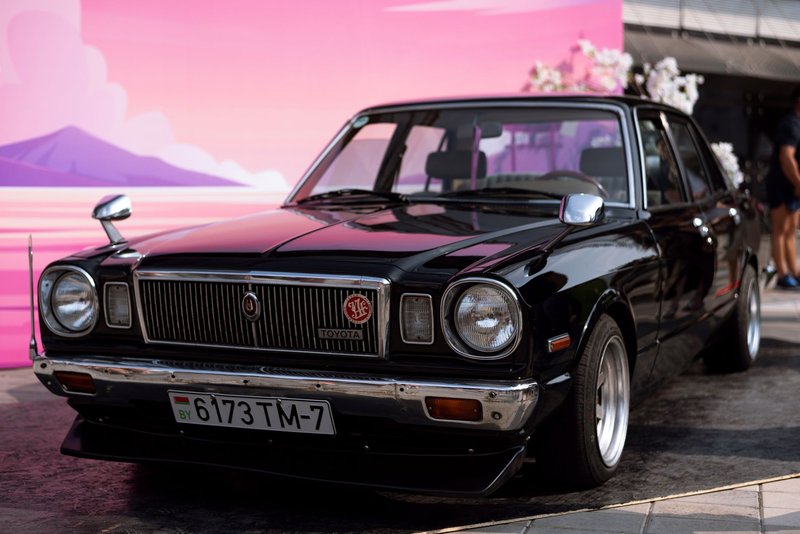
The Crown was Toyota’s flagship in 1962 — the car the company used to prove it could compete with the best Japan had to offer. The second-generation Crown (S40 series) had launched in 1962, replacing the original RS series that had suffered an embarrassing failure when Toyota tried to sell it in the United States in 1958. The RS Crown simply couldn’t handle American highways at sustained high speeds. Toyota learned that lesson and went back to the drawing board.
The 1962 Crown ran a 1.9-liter inline-four producing around 70 horsepower. That doesn’t sound like much, but the car was built for the Japanese domestic market — narrow roads, lower speed limits, and buyers who valued comfort and refinement over outright power. It came in sedan and station wagon (Van) body styles, with a column-shift manual transmission as standard.
What made the Crown significant: it was aspirational. In Japan’s postwar economy, a Crown was what a successful businessman drove. It positioned Toyota above the economy car fray and forced Nissan’s Cedric to actually compete.
Toyota Publica
The Publica was Toyota’s answer to the question every Japanese automaker was asking in the early 1960s: how do you sell a car to people who’ve never owned one? Japan’s economy was booming, but cars were still luxuries. The Publica — officially designated UP10 — was designed to change that.
It launched in 1961 and was already in production by 1962, running a 697cc air-cooled flat-twin mounted in the rear. Output was a modest 28 horsepower, but the car weighed under 500 kilograms. Fuel economy was the pitch: Toyota marketed it as a people’s car (Publica literally derives from “public”), and the pricing was kept low by government encouragement. Japan’s Ministry of International Trade and Industry had been pushing automakers to develop affordable domestic vehicles, and the Publica was Toyota’s direct response.
The flat-twin was unconventional for Toyota at the time, borrowed more from aircraft-influenced thinking than from conventional automotive architecture. It cooled itself via a fan and didn’t need a radiator — which simplified production. The tradeoff was a rough, buzzy character at highway speeds, but most Publica buyers weren’t doing highway speeds.
Toyota Land Cruiser (FJ40/BJ40)
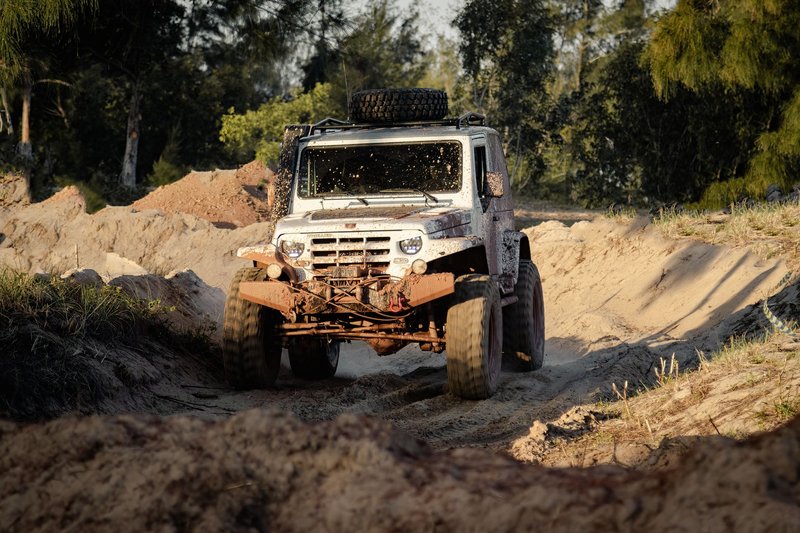
By 1962, the Land Cruiser had been refining its formula for over a decade, tracing roots back to the BJ that Toyota built to fulfill Japanese military and police contracts in the early 1950s. The FJ40 — which became the iconic short-wheelbase Land Cruiser — was either just entering production or in its very early stages during 1962, depending on the market. Some sources date the FJ40’s introduction to 1960, though production ramp-up and export variants came later.
The FJ40 ran Toyota’s F-series inline-six: a 3.9-liter unit making around 125 horsepower in the FJ variant. The BJ40 used a diesel — a 3.6-liter B-series four-cylinder — which made it popular with operators who needed cheap fuel costs over performance. Both versions used a part-time four-wheel-drive system with a separate low-range transfer case, leaf springs all around, and a body-on-frame construction that prioritized durability over comfort.
What the Land Cruiser did in 1962 that nobody else quite managed: it sold credibly across four continents. You’d find FJ40s on Australian sheep stations, in East African game parks, and on South American mining operations. That global utility vehicle reputation — earned rather than marketed — is what separates the Land Cruiser lineage from every competitor that tried to chase it later.
Toyota Stout
The Stout was Toyota’s light pickup truck, and in 1962 it sat in the RK lineup (the predecessor to the Hilux that would arrive later in the decade). The name “Stout” was used specifically for export markets, particularly Australia and some parts of Asia, while the domestic version carried different designations.
Power came from a 1.5-liter inline-four, and the truck was available in standard and long-bed configurations. The Stout was a workhorse rather than a lifestyle vehicle — farmers, tradespeople, and small business operators were the buyers. It wasn’t doing anything architecturally novel, but it was reliable and parts were available, which counted for more than horsepower in most of the markets where it was sold.
The Stout is historically interesting because it represents the direct lineage that eventually became the Hilux — arguably the most successful commercial vehicle Toyota ever made.
Toyota Masterline
The Masterline occupied an odd but practical niche: it was essentially a commercial-use van and station wagon built on truck underpinnings, sold for taxi fleets, delivery operators, and rural buyers who needed something that could haul cargo and passengers interchangeably. The RR series Masterline had been in production since the mid-1950s and was still going in 1962.
Engine options varied by market, but a 1.5-liter four-cylinder was typical. The body style was a long, upright station wagon with a flat load floor — functional rather than stylish. Toyota wasn’t trying to win design awards with the Masterline. It was trying to move product in markets where utility was the only sales pitch that mattered.
Toyota Tiara

The Tiara is the most obscure entry in Toyota’s 1962 lineup by a significant margin. It was produced specifically for the North American market — Toyota’s second serious attempt to crack US sales after the Crown’s failure in 1958. The Tiara ran a 1.5-liter engine and was sold through a distribution deal with Sears, of all partners.
Yes, Sears. Toyota’s American distribution infrastructure barely existed in the early 1960s, so the company cut a deal to move the Tiara through Sears catalog stores. It was a short-lived and largely unsuccessful arrangement. The Tiara couldn’t compete on performance with American compacts or on price and economy with European imports like the VW Beetle, which had already established itself firmly in the budget-conscious American buyer’s mind. For context on how crowded and competitive the compact car segment was at the time, the popular cars of 1962 included everything from domestic giants to scrappy European imports all fighting for the same buyers.
The Tiara ran from 1960 to 1964. It sold poorly. But it was part of how Toyota learned what the American market actually wanted — lessons that directly shaped the Corona and eventually the Corolla. Sometimes the failures are the most instructive chapter.
Toyota Bandeirante
The Bandeirante is Toyota’s most geographically specific entry from this era. It was produced in Brazil — not Japan — beginning in 1958 under a licensing agreement that eventually evolved into full local manufacturing. By 1962, the Bandeirante was a robust utility vehicle built on Land Cruiser FJ25 underpinnings, with local Brazilian content increasing over time.
The name means “pioneer” or “explorer” in Portuguese, reflecting its intended role in Brazil’s interior. The Brazilian government was actively developing the country’s vast interior during this period, and the Bandeirante ended up serving military, government, and agricultural users in terrain that would have destroyed lesser vehicles.
What makes the Bandeirante unusual in the Toyota story: it kept being produced in Brazil until 2001. A vehicle with roots in 1958 was still rolling off a Brazilian assembly line four decades later — updated and modified, yes, but recognizably the same basic machine. That’s a production run that most automotive lines never come close to matching.
Toyota Publica Sports (Concept)
The Publica Sports wasn’t a production vehicle in 1962 — it was a concept that Toyota showed to gauge public interest in a sporty variant of the economy-focused Publica platform. The concept used the same air-cooled flat-twin as the standard Publica but dropped it into a low-slung, open roadster body.
It’s historically significant because it’s the direct ancestor of the Toyota Sports 800, which entered production in 1965. The Sports 800 — known as the Yota-Hachi in Japan — would become one of the most beloved small sports cars of its era, notable for its lightweight construction and the early use of a targa-style roof. Toyota took the Publica Sports concept, refined the platform, added a more powerful 790cc engine, and produced one of the purest lightweight sports cars of the 1960s — a decade that gave the world some of the most celebrated performance machines ever built, as any survey of iconic 1960s sports cars makes clear.
The 1962 concept is the proof of concept. Without it, the Sports 800 likely doesn’t exist — and without the Sports 800, Toyota’s sporting credibility in the 1960s is considerably thinner.
1962 Toyota Lineup at a Glance
| Model | Type | Engine | Notes |
|---|---|---|---|
| Crown (S40) | Sedan / Wagon | 1.9L I4, ~70 hp | Flagship, domestic focus |
| Publica (UP10) | Economy sedan | 697cc flat-twin, 28 hp | People’s car, rear-engine/air-cooled |
| Land Cruiser FJ40 | 4×4 utility | 3.9L I6, ~125 hp | Global workhorse, short wheelbase |
| Land Cruiser BJ40 | 4×4 utility | 3.6L diesel I4 | Diesel variant for commercial use |
| Stout | Pickup truck | 1.5L I4 | Hilux predecessor |
| Masterline | Van / Wagon | 1.5L I4 | Commercial and fleet use |
| Tiara | Compact sedan | 1.5L I4 | US market, sold through Sears |
| Bandeirante | Utility vehicle | Various | Brazil-built, FJ25-based |
| Publica Sports | Concept | 697cc flat-twin | Sports 800 predecessor |
Toyota in 1962 was a company that knew what it was good at — building reliable, practical transportation — and was methodically extending that competence into new markets and new segments. The lineup reflects that: no exotic machinery, no racing pedigree, but an impressive range of vehicles from economy cars to serious off-road hardware, covering buyers from Brazilian frontier workers to Japanese salary-men to Australian farmers.
The Tiara was flopping in America. The Publica Sports was a sketch of a future that hadn’t arrived yet. And the Land Cruiser was quietly building the reputation that would carry Toyota through the next six decades. In hindsight, 1962 looks like exactly the right moment to be patient — which is exactly what Toyota was.

Marco Delantero
More from Marco DelanteroHow we reviewed this article
This article was researched against manufacturer records and editorially reviewed before publishing. We accept no payment for coverage.