Ford’s 1990 lineup was a company mid-transition. The Taurus had already rewired what an American sedan was supposed to look like, the Mustang was coasting on a platform older than most of its buyers, and a handful of nameplates were living out their final year before Ford quietly buried them. If you’re trying to make sense of what Ford actually sold that year — or you’re eyeing one on a classifieds site right now — here’s the full picture, model by model.
The 1990 Lineup at a Glance
Ford sold twelve distinct model lines in the US for 1990: Mustang, Thunderbird, Probe, Escort, Tempo, Taurus, LTD Crown Victoria, Bronco, Bronco II, F-150/F-250/F-350, Ranger, and Aerostar. Two of those — the Bronco II and the LTD-badged Crown Victoria — took their final bow that year. The rest either carried on unchanged or were quietly aging out ahead of the next redesign cycle.
If you’re shopping for a collector-grade example, the short version: the Mustang GT convertible, the Thunderbird Super Coupe, and a clean Bronco II are the three worth chasing. Everything else is either too common to appreciate meaningfully or too obscure to find parts for.
Table of Contents
- Ford Mustang
- Ford Thunderbird
- Ford Bronco II
- Ford Bronco
- Ford Escort
- Ford Tempo
- Ford Taurus
- Ford Probe
- Ford LTD Crown Victoria
- Ford F-150, F-250, and F-350
- Ford Ranger
- Ford Aerostar
- 1990 Ford Price and Value Comparison
- Buying Advice for Collectors
Ford Mustang
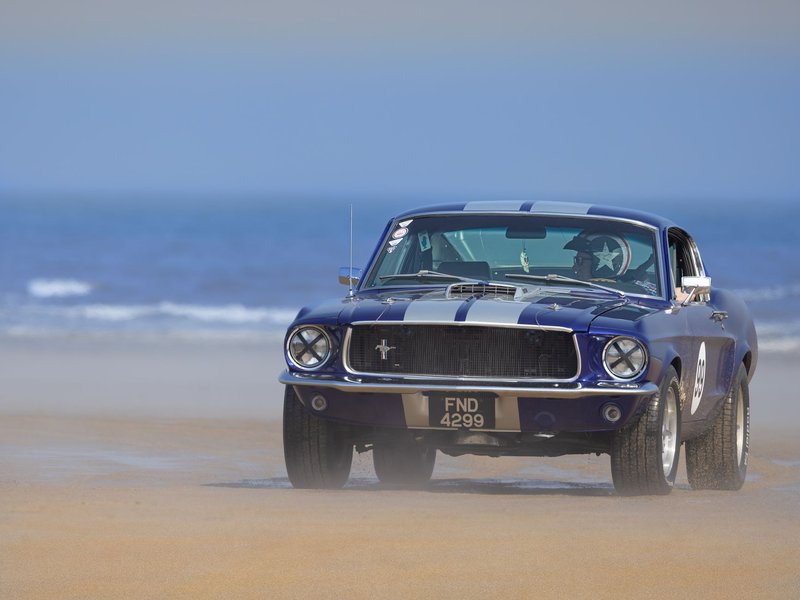
The 1990 Mustang was a Fox-body running out the clock — the same basic platform Ford had been selling since 1979, with the 5.0-liter GT still doing the heavy lifting. It wasn’t flashy. It also didn’t need to be, because the 5.0 badge already meant something to anyone paying attention.
The genuinely interesting 1990 story is the convertible pace cars. Ford built a small run of Mustang GT convertibles finished in an Emerald Jewel green, used for the Presidential Inaugural parade and tied to a 7-Up marketing promotion — cars that collectors now hunt specifically because of the color and the paperwork trail, not because the mechanicals differ from any other GT. Beyond that, 1990 also marked the first year Ford added a standard driver’s-side airbag to the Mustang, a real safety jump for a car whose interior hadn’t changed much in a decade.
Base LX models with the 2.3-liter four are common and cheap, and they’ll stay that way — there’s nothing about them collectors chase. The GT, especially in convertible form, is the one with actual upward value pressure.
Ford Thunderbird
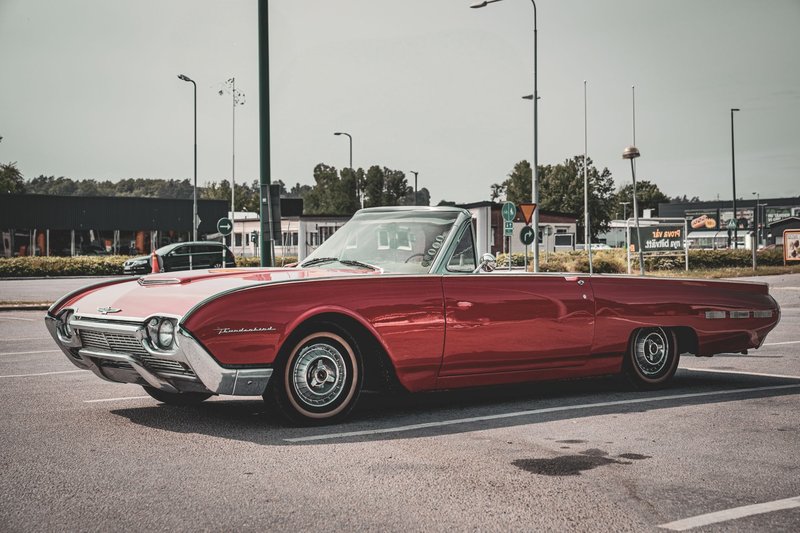
The Thunderbird had just been through a full redesign for 1989, so the 1990 model was the aero-styled “aerobird” in its second year, not its debut — worth clearing up since it gets confused online. The headline trim was the Super Coupe (SC), which paired a supercharged and intercooled 3.8-liter V6 with a driver-adjustable suspension, a five-speed manual, and a torque figure that embarrassed a lot of contemporary V8s off the line.
The base and LX Thunderbirds are fine highway cruisers and largely forgettable as collector pieces. The SC is the one people still talk about, and it’s the one where the 3.8’s known head gasket weakness actually matters when you’re evaluating a used example — get a compression and leak-down test before you buy, not after.
Ford Bronco II
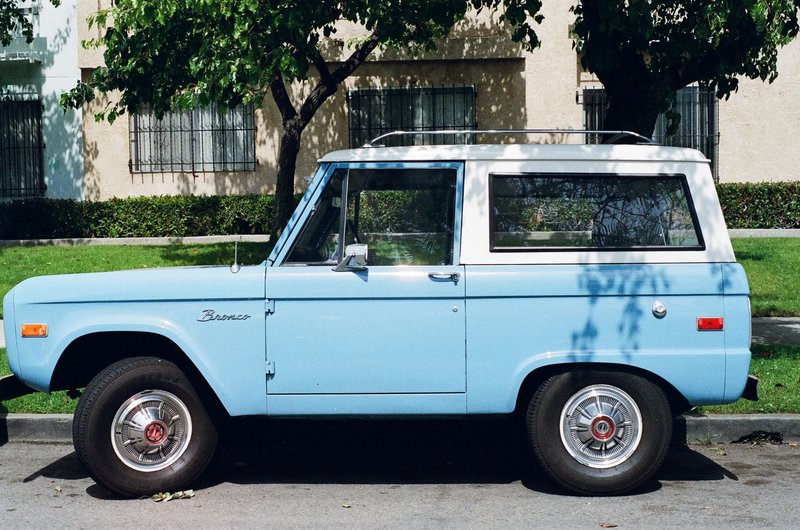
1990 was the last model year for the Bronco II. Ford replaced it for 1991 with the Explorer, which went on to define the entire SUV segment for the next decade — which makes the Bronco II the direct ancestor of a vehicle far more famous than it is. That “final year” status is exactly why it’s become the sleeper pick on this list: production numbers dropped in its last year, and clean, non-rusted, non-modified examples are getting hard to find.
Mechanically it’s a compact SUV built on the Ranger platform, with a 2.9-liter V6 as the only engine offered by 1990. Reliability is generally solid for the drivetrain; the weak points are rust in the rear wheel wells and a suspension geometry that earned the Bronco II a reputation — deserved or not — for tipping in hard cornering, a concern documented enough at the time that it’s worth checking current NHTSA recall records before buying one to drive regularly rather than display.
Ford Bronco
The full-size Bronco continued largely unchanged for 1990, built on the F-150 platform with the same 5.0-liter and 5.8-liter V8 options. It’s a bigger, heavier, more traditional truck-based SUV than its little sibling, and it holds up better mechanically simply because there’s more of a parts and support ecosystem around F-Series trucks generally.
Ford Escort
1990 quietly closed out the first-generation Escort’s run before Ford brought a fully redesigned version for 1991. That makes the ’90 Escort the last of the original front-wheel-drive economy cars Ford launched back in 1981 — a car built to be cheap and disposable, and treated that way by most owners at the time, which is exactly why intact survivors are thinner on the ground than you’d expect for a car Ford sold in huge numbers.
There’s no real collector premium here. It’s a footnote entry, useful mainly for anyone building a complete picture of the year’s lineup rather than anyone shopping to buy.
Ford Tempo
The Tempo sat in the middle of its model cycle for 1990, unchanged in any meaningful way since its 1988 refresh. It was Ford’s compact sedan for buyers who wanted something more substantial than the Escort without stepping up to Taurus money. Nothing about the 1990 model distinguishes it from the years around it, and nothing about it has developed any collector interest since.
Ford Taurus
The first-generation Taurus, launched in 1986, was still one year away from its 1992 facelift when the 1990 model rolled out — and it was already Ford’s proof that American buyers would embrace aerodynamic, European-influenced sedan styling if the execution was right. The Taurus SHO, with its Yamaha-developed V6, is the version with genuine enthusiast interest; the standard GL and LX trims are comfortable, competent, and essentially invisible to today’s collector market.
Ford Probe
The Probe was two years into its first generation for 1990, built on a Mazda platform and sold through Ford dealers as a sporty coupe positioned against cars like the Nissan 240SX. The GT trim added a turbocharged four-cylinder that gave it real performance credibility at the time. It never developed the cult following of its Japanese rivals, and values have stayed flat accordingly — it’s an affordable way into a genuinely fun-to-drive ’90s coupe if you’re not chasing appreciation.
Ford LTD Crown Victoria
1990 was the last year Ford sold this car with “LTD” attached to the name — starting in 1991, it became simply the Crown Victoria, the name it would carry for the next two decades. Under the badge change, it’s a body-on-frame, rear-wheel-drive full-size sedan aimed at buyers who wanted a traditional American car and, increasingly, at police and taxi fleets who valued the simple, durable drivetrain over anything flashy.
Ford F-150, F-250, and F-350
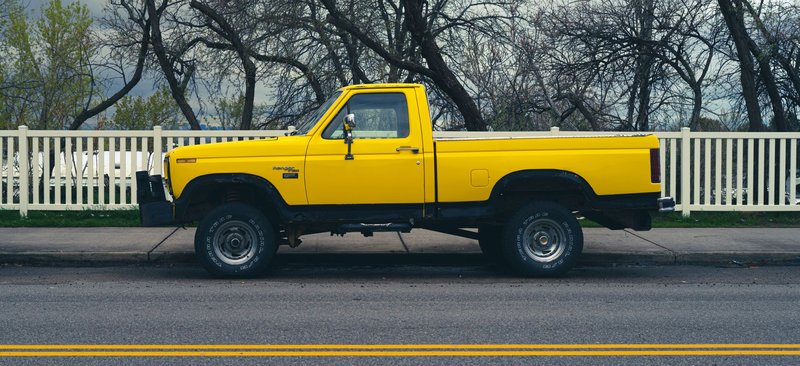
The eighth-generation F-Series, introduced in 1987, continued into 1990 with its aerodynamic-for-the-time styling and a broad engine lineup: a 4.9-liter inline-six standard, with 5.0-liter, 5.8-liter, and 7.5-liter V8 options moving up the range. These trucks are the backbone of why Ford’s parts ecosystem for this era is as strong as it is — the sheer volume sold means engines, trim, and body panels are still easy to source three decades later, which keeps ownership costs down relative to almost anything else on this list.
The F-250 and F-350 share the same basic cab and styling with heavier-duty frames, axles, and available diesel power for buyers who needed real towing and payload capacity.
Ford Ranger
Ford’s compact pickup had been redesigned for 1989, so the 1990 Ranger carried that styling into its second year with only minor trim adjustments. It shares its platform with the Bronco II, and it shares the Bronco II’s general reputation for a durable drivetrain paired with rust-prone rear quarters on trucks that spent winters anywhere salt gets used on roads.
Ford Aerostar
The Aerostar was Ford’s rear-wheel-drive-based minivan answer to the Chrysler minivans that had created the category, and by 1990 it was well into its production run with available all-wheel drive as a genuine differentiator against the competition. It’s mechanically simple and reasonably durable, but it never carried the brand cachet of a Caravan, and it shows in how little collector attention it gets today.
1990 Ford Price and Value Comparison
| Model | Approx. Original MSRP | Notable 1990 Detail | Buying Consideration |
|---|---|---|---|
| Mustang GT | ~$14,500 | Standard driver airbag added | Convertibles hold value best |
| Mustang LX | ~$9,900 | Base 2.3L or optional 5.0L | Common, low collector interest |
| Thunderbird SC | ~$19,800 | Supercharged 3.8L V6 | Check for head gasket wear |
| Bronco II | ~$13,800 | Final model year | Inspect rear wheel wells for rust |
| Bronco (full-size) | ~$16,000 | Shares F-150 platform | Stronger parts availability |
| Escort | ~$7,700 | Last year of gen-one design | No meaningful collector premium |
| Tempo | ~$10,000 | Mid-cycle, unchanged | Purely a driver, not a collectible |
| Taurus GL/SHO | ~$14,000–$19,500 | One year before facelift | SHO is the enthusiast pick |
| Probe GT | ~$15,000 | Turbocharged four-cylinder | Affordable, underappreciated |
| LTD Crown Victoria | ~$16,000 | Last year with “LTD” name | Fleet-heavy survivors, check history |
| F-150 | ~$10,400 | Engine range from I6 to 7.5L V8 | Best parts support of any model here |
| Ranger | ~$8,000 | Second year of redesign | Watch for rear-quarter rust |
| Aerostar | ~$12,000 | Available AWD | Solid but low collector demand |
Prices are approximate base MSRPs and will vary by trim and options; treat them as a starting reference point, not an appraisal.
Buying Advice for Collectors
Prioritize the Mustang GT convertible, the Thunderbird SC, and the Bronco II if you want something with genuine upside — in that order, roughly, based on current scarcity and enthusiast demand. All three share one practical advantage: Ford built the underlying drivetrains in huge volumes across other models, so even though the specific trim is scarcer, engine and driveline parts are rarely hard to source.
Whatever you’re looking at, get a pre-purchase inspection focused on frame and floor pan rust rather than cosmetics — thirty-five-plus years of road salt and Southern humidity have taken out more of these cars than any mechanical failure. Pull a vehicle history report, confirm the VIN matches the body tag, and if it’s a trim with a documented weak point — the Thunderbird SC’s head gaskets, the Bronco II’s rear suspension bushings — budget for that inspection specifically rather than assuming a clean-looking example is a clean-running one. And don’t skip checking current safety recall status even on a thirty-five-year-old car; outstanding recalls on trucks and SUVs from this era do still turn up, and remediation parts aren’t always trivial to find. For anyone cross-shopping fuel costs against a modern daily driver, EPA historical fuel economy data makes it easy to see exactly what you’re trading away in efficiency for that V8 rumble.
None of these cars are appreciating fast. What they offer instead is a genuinely different ownership experience than anything sold today — carbureted or early-EFI simplicity, repairable interiors, and a drivetrain you can diagnose with a timing light and a compression gauge instead of a laptop. That’s the actual case for buying one, and it’s a better one than chasing a number on a value chart.

Tyler Bridges
More from Tyler BridgesHow we reviewed this article
This article was researched against manufacturer records and editorially reviewed before publishing. We accept no payment for coverage. Some guides contain affiliate links; see our affiliate disclosure.