Ask ten people to name a 1970s Ferrari and you’ll get the same five cars back: Dino, Daytona, Boxer, 308, maybe the 400 if they’re showing off. They’re not wrong, exactly. Those cars earned the reputation. But stopping there skips a decade that also gave us Ferrari’s first mid-engine V8, its last front-engine V12 grand tourer for two decades, and a concept car so strange it got registered as a New York taxi.
This is a rundown of eight cars that actually defined the decade, in the order Ferrari built them, with the numbers that matter if you’re chasing one at auction rather than just admiring it in a poster.
Table of Contents
- Ferrari Dino 246 GT
- Ferrari 512 S Modulo
- Ferrari 365 GTB/4 Daytona
- Ferrari 365 GTC/4
- Ferrari 308 GT4
- Ferrari 365 GT4 BB / 512 BB
- Ferrari 308 GTB
- Ferrari 400 GT
- Buying a 1970s Ferrari today
Quick reference
| Model | Years | Engine | Power | Value today |
|---|---|---|---|---|
| Dino 246 GT | 1969–74 | 2.4L V6 | 195 hp | $350,000–$500,000 |
| 512 S Modulo | 1970 (concept) | 5.0L V12 | 550 hp | Not for sale |
| 365 GTB/4 Daytona | 1968–73 | 4.4L V12 | 352 hp | $500,000–$700,000+ |
| 365 GTC/4 | 1971–72 | 4.4L V12 | 340 hp | $250,000–$400,000 |
| 308 GT4 | 1973–80 | 2.9L V8 | 255 hp | $60,000–$100,000 |
| 512 BB | 1976–81 | 5.0L flat-12 | 340–360 hp | $200,000–$320,000 |
| 308 GTB | 1975–85 | 2.9L V8 | 252–255 hp | $100,000–$250,000+ |
| 400 GT | 1976–79 | 4.8L V12 | 335 hp | $40,000–$70,000 |
Ferrari Dino 246 GT
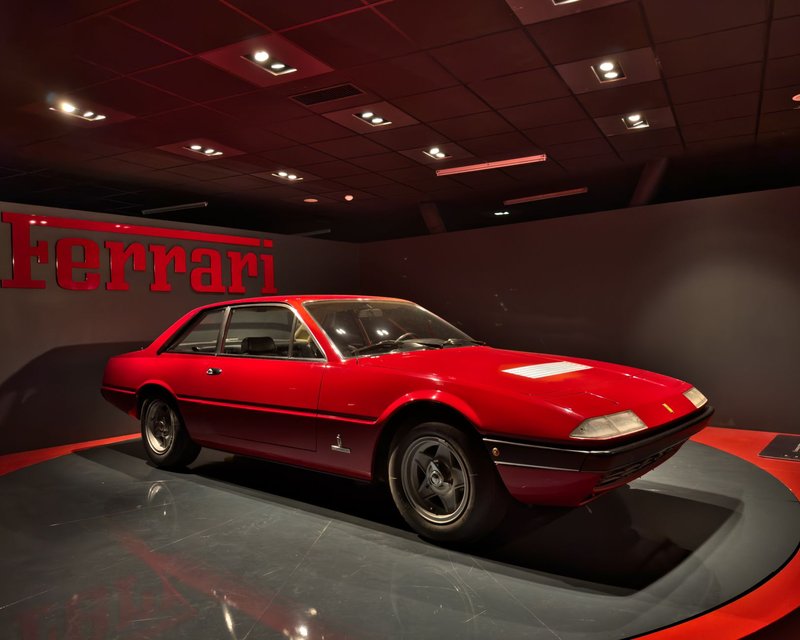
Ferrari didn’t even put its own badge on the Dino when it launched — the name honored Enzo’s son Alfredino, and the car wore “Dino” script instead of the prancing horse, partly to soften the blow of a V6 in a company built on twelve cylinders. That decision alone tells you the 246 GT was never meant to be the flagship. It was meant to be the car regular rich people could actually drive daily, and it turned out to be one of the best-handling road cars Maranello ever built.
The transverse 2.4-liter V6, developed with input from Fiat and mounted just ahead of the rear axle, made 195 hp at a screaming 7,600 rpm — modest on paper, thrilling in a car that weighed barely over 1,080 kg. Ferrari built 2,295 of the GT coupe and 1,274 of the open GTS between 1969 and 1974, for a total run of 3,569 cars. Values have roughly doubled over the past three years; a clean GT now trades in the $350,000–$500,000 range, with GTS Spyders — especially “chairs and flares” cars with the flared fenders and Daytona-style seats — pushing well past that.
Ferrari 512 S Modulo
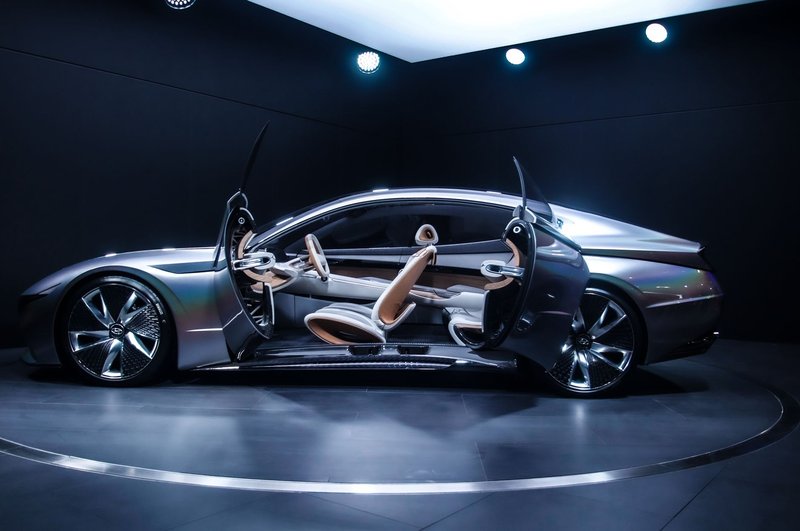
Not a road car, and it never will be, but no honest list of 1970s Ferraris skips it. Pininfarina designer Paolo Martin built the Modulo on a 512 S racing chassis and unveiled it at the 1970 Geneva show: a wedge so flat it looks squashed, with a canopy roof that slides forward instead of doors that open up. It won 22 international design awards and then spent decades sitting in Pininfarina’s museum, occasionally driven around a parking lot for photographers.
The Modulo matters here because it’s the shape the rest of the decade was reacting to. Bertone’s Gandini, working the Countach and the 308 GT4 around the same years, was clearly having the same conversation about wedges and low beltlines. James Glickenhaus eventually bought the Modulo in 2014 and had it made road-legal, which is its own strange coda to a car built to never touch public roads.
Ferrari 365 GTB/4 Daytona
The Daytona wasn’t Ferrari’s official name — journalists pinned it on after Ferrari’s 1-2-3 finish at the 1967 Daytona 24 Hours, and it stuck harder than the factory designation ever did. What matters is the car underneath: a front-mounted 4.4-liter, four-cam V12 with six twin-choke Webers, sending 352 hp to a rear transaxle for near-perfect weight balance. European cars ran that full output; American Daytonas got detuned to 330 hp to meet the emissions rules the newly formed EPA began enforcing under the 1970 Clean Air Act, a compliance tax nearly every V12 on this list eventually paid.
It was also, briefly, the fastest production car in the world, with a genuine 174 mph top speed that embarrassed the mid-engine Lamborghini Miura it was supposedly obsolete next to. Ferrari built 1,406 Daytonas total — 1,284 GTB berlinettas and 122 open GTS/4 Spyders — between 1968 and 1973. Coupes run $500,000 to $700,000 depending on condition and matching numbers; genuine factory Spyders are a different game entirely, with the rarest examples clearing $3 million.
Ferrari 365 GTC/4
If the Daytona is the famous sibling, the GTC/4 is the one everyone forgets existed — which is exactly why it’s on this list. Built on a shortened Daytona platform but reworked as a genuine 2+2 with a softer, more restrained Pininfarina body, it swapped the Daytona’s dry-sump six-carb V12 for a wet-sump version with six Weber 38s, tuned down slightly to 340 hp for smoother everyday manners rather than outright top speed.
Ferrari made just 505 of them in a production run that lasted barely two years, 1971 to 1972, which makes the GTC/4 rarer than the Daytona it’s built from while costing a fraction of the price — usually $250,000 to $400,000. It’s the car serious collectors point to when they want to talk about the Daytona’s chassis without paying Daytona money, and it’s genuinely more comfortable on a long drive because Ferrari built it to be.
Ferrari 308 GT4
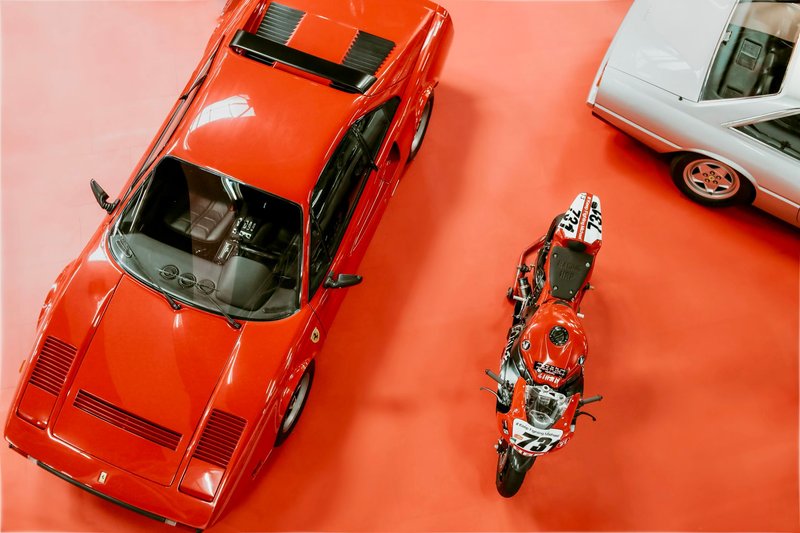
Two things make the 308 GT4 stand apart from every other car in this piece: it’s the only production Ferrari body ever designed by Bertone instead of Pininfarina, and it’s the first Ferrari road car built around a mid-mounted V8. Marcello Gandini — the same designer behind the Miura, the Countach, and the Espada — gave it a sharp, angular wedge that looked nothing like a traditional Ferrari, which is part of why period buyers were lukewarm even as the engineering underneath quietly set the template every V8 Ferrari would follow for the next fifty years.
The transverse 2.9-liter V8 made 255 hp in European trim, 240 hp for the US, mated to a five-speed gearbox in a proper 2+2 body — genuinely useful rear seats, not the token bench some rivals bolted in. Ferrari sold 2,826 of them, making it one of the higher-volume cars here, and that volume plus the Bertone styling kept prices depressed for decades. That’s changing: clean examples now run $60,000 to $100,000, still the most attainable V8 Ferrari of the era and, by most accounts, the most underrated.
Ferrari 365 GT4 BB / 512 BB
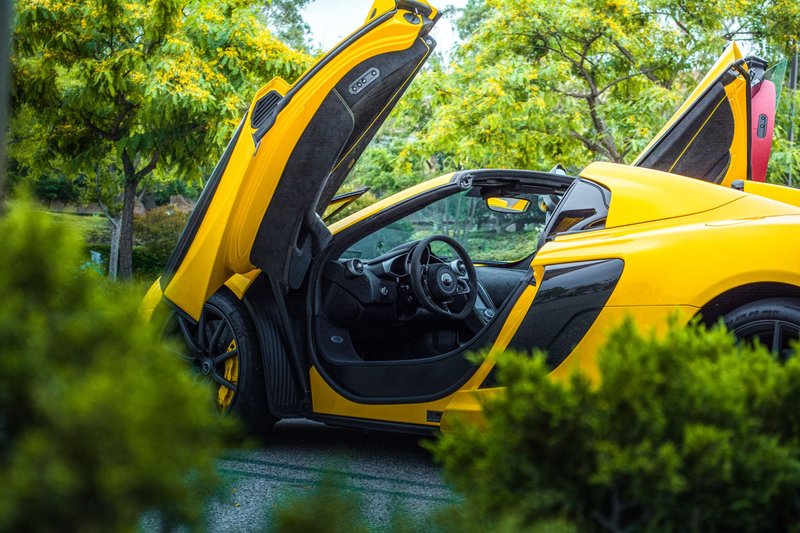
Ferrari resisted the mid-engine layout for its road-going flagship longer than any of its rivals, worried a tail-happy supercar with Ferrari’s own name on it would be a liability in the wrong hands. The Berlinetta Boxer, launched in 1973 as the 365 GT4 BB and enlarged to 5.0 liters as the 512 BB in 1976, was the surrender — and it arrived with a flat-12 laid low in the chassis, which Ferrari marketed as a “boxer” even though it’s technically a 180-degree V12, not a true boxer engine.
The 512 BB made a claimed 340 hp, though period road tests measured closer to 360, enough for a sub-6-second 0–60 and a genuine 180-mph top end that made it Ferrari’s fastest road car at the time. Just 929 examples of the 512 BB were built between 1976 and 1981. It never got official US certification — grey-market imports exist, but factory federalization never happened — which keeps American-market cars scarce and pushes clean 512 BBs to $200,000–$320,000 today.
Ferrari 308 GTB
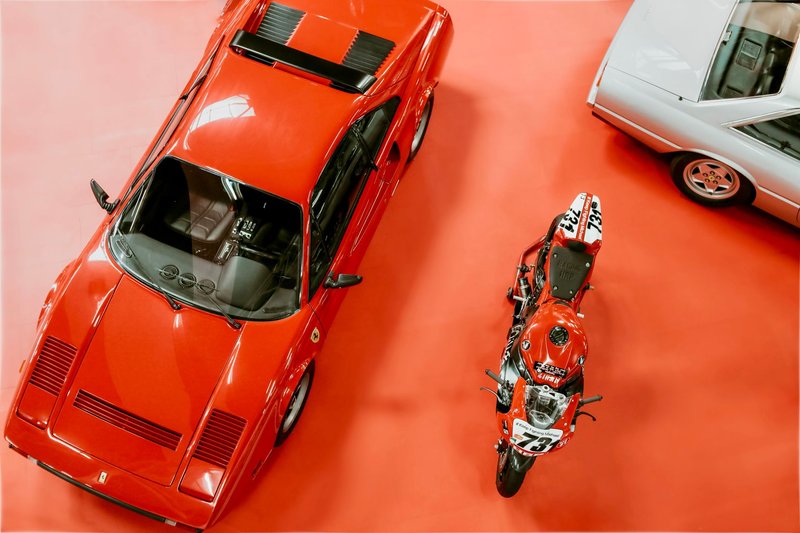
This is the Ferrari most people picture when you say “1970s Ferrari,” largely thanks to a certain red example on a TV detective show a few years later. But the 308 GTB earns its spot independent of Magnum P.I.: it’s a genuinely gorgeous Pininfarina shape, penned in-house by Leonardo Fioravanti, wrapped around the same 2.9-liter V8 as the GT4 but in a tighter, two-seat body with sharper reflexes.
The earliest GTBs, built from 1975 through 1977, used fiberglass bodywork instead of steel — a first and last for a production Ferrari — before the factory switched to steel for cost and repairability. Ferrari built somewhere between 712 and 808 of those early “Vetroresina” fiberglass cars, and they’re the ones collectors chase hardest now, commanding $190,000 to $250,000-plus in good condition versus roughly $100,000–$150,000 for the more common steel-bodied cars that followed. More than 12,000 308s in total left the factory across the GTB, GTS, and later 328 variants through 1985, so parts and specialist knowledge are far easier to find than on the rarer cars above.
Ferrari 400 GT
Every list needs the car nobody nominates, and the 400 GT is it — which is exactly why it belongs. Launched in 1976 as Ferrari’s answer to a very specific problem, wealthy customers who wanted a proper four-seat V12 grand tourer they could also, occasionally, let someone else drive, it was the first Ferrari ever offered with an automatic transmission, a three-speed GM-sourced unit badged the 400 Automatic alongside the traditional five-speed 400 GT.
The 4.8-liter V12 made 335 hp, enough to push a genuinely large, 1,700 kg car to 153 mph, with the manual reaching 60 mph nearly a second quicker than the automatic. Ferrari built 502 examples through 1979, split between manual and automatic, and it remains the cheapest route into V12 Ferrari ownership from the entire decade — clean cars routinely trade for $40,000 to $70,000, a fraction of what a Daytona commands for a similarly sized engine. It’s not the car anyone dreams about, but it’s the one you can actually afford to dream in.
Buying a 1970s Ferrari today
The market for these cars isn’t uniform, and treating it that way is how buyers overpay. Volume cars like the 308 GT4 and steel-bodied 308 GTB have deep parts support and enough surviving examples that a bad one is easy to walk away from. Low-production cars — the GTC/4, the 512 BB, any Daytona Spyder — get bought and sold within a small circle of specialists, and provenance gaps or non-matching numbers hit resale value hard.
Rust is the universal enemy across every car on this list; Ferrari’s steel bodies from this era were not rustproofed with any real conviction, and a car that looks straight in photos can hide serious sill and floor corrosion. Carburetor-fed V12s and V8s also need regular, expert attention — a Daytona or Boxer that’s sat unused for years will need a full fuel system service before it’s trustworthy, and skipping that step is the single most common way buyers turn a $300,000 car into a $400,000 repair bill.
Timing matters too. Collector-car auction volume hit roughly $4.8 billion in 2025, but Hagerty’s own market index slid to its lowest reading in nearly fifteen years heading into 2026, a sign the froth of the early-2020s boom has cooled even as interest in the segment stays high. That’s good news for buyers: patient shopping in a softer market beats chasing an auction hammer in a hot one, especially on cars where six figures separate a good decision from a bad one.

Daniela Voss
More from Daniela VossHow we reviewed this article
This article was researched against manufacturer records and editorially reviewed before publishing. We accept no payment for coverage.