Ask ten people to name a 1964 car and you’ll get the same three answers: Mustang, GTO, maybe the Corvette Sting Ray. Fair enough — those three genuinely changed the industry. But Detroit built dozens of other models that year, and most of them get erased from the story entirely. The Rambler that kept AMC solvent. The Riviera that made Cadillac nervous. The Studebaker built in Canada because the American plant had already shut its doors.
1964 wasn’t just the year of two new performance categories. It was the last model year before federal safety mandates started reshaping how cars were built, and the lineup reflects an industry still designing purely for looks, power, and price. Here’s the full picture, make by make.
Table of Contents
- Why 1964 Matters
- Quick Reference: The 1964 Lineup at a Glance
- American Motors
- Buick
- Cadillac
- Chevrolet
- Chrysler
- Dodge
- Ford
- Mercury
- Oldsmobile
- Plymouth
- Pontiac
- Studebaker
- What Actually Made 1964 Different
Why 1964 Matters
Two new market segments were born in the same twelve months. Pontiac’s GTO — technically just an option package bolted onto the mid-size LeMans — dropped a 389-cubic-inch V8 into a car that wasn’t supposed to have one, and the muscle car era started almost by accident. Then in April, Ford unveiled the Mustang at the New York World’s Fair, and the Smithsonian’s own account of that debut notes the exhibit drew over four million visitors in its first two days alone. Ford sold more than 400,000 Mustangs before the year was out — a first-year record no car had touched before.
Everything else on this list sold in that shadow, which is exactly why most “1964 cars” articles stop at four or five names. They’re missing the wagons families actually bought, the full-size cruisers that still outsold every muscle car combined, and the also-rans fighting for survival.
Quick Reference: The 1964 Lineup at a Glance
| Make & Model | Segment | Engine | Horsepower (range) |
|---|---|---|---|
| Rambler American 440 | Compact economy | 195.6 ci inline-6 | ~90–125 hp |
| Buick Riviera | Personal luxury coupe | 401/425 ci “Nailhead” V8 | 325–340 hp |
| Cadillac DeVille | Full-size luxury | 429 ci V8 | 340 hp |
| Chevrolet Corvette Sting Ray | Sports car | 327 ci V8 | 250–375 hp |
| Chevrolet Chevelle Malibu SS | Mid-size / muscle | 283–327 ci V8 | 195–300 hp |
| Chevrolet Impala SS | Full-size | 409 ci V8 | up to 425 hp |
| Chevrolet Corvair Monza Spyder | Compact / sporty | Turbocharged flat-6 | 150 hp |
| Chrysler 300K | Full-size performance | 413 ci V8 | 360–390 hp |
| Dodge Polara 500 | Full-size | 383/426 ci V8 | up to 425 hp |
| Ford Mustang | Pony car | 170 ci six / 260–289 ci V8 | 101–271 hp |
| Ford Fairlane 500 | Mid-size | 289 ci V8 | up to 271 hp |
| Ford Galaxie 500 XL | Full-size | 427 ci V8 | up to 425 hp |
| Ford Thunderbird | Personal luxury | 390 ci V8 | 300 hp |
| Mercury Comet Cyclone | Compact / sporty | 289 ci V8 | 210 hp |
| Oldsmobile Cutlass 4-4-2 | Mid-size / muscle | 330 ci V8 | 310 hp |
| Plymouth Barracuda | Pony car | Slant-6 / 273 ci V8 | up to 180 hp |
| Plymouth Valiant Signet | Compact | 225 ci slant-6 | 101 hp |
| Pontiac GTO | Muscle car | 389 ci V8 | 325–348 hp |
| Pontiac Bonneville | Full-size | 389 ci V8 | 256–303 hp |
| Studebaker Daytona | Compact / sporty | 259/289 ci V8 | up to 210 hp |
American Motors {#american-motors}
Rambler American 440. AMC completely redesigned the American for 1964, dropping the boxy old unibody for genuinely modern-looking sheet metal — curved side glass, a lower roofline, none of the frumpiness that had defined the nameplate since the ’50s. It stayed six-cylinder-only, no V8 option yet, and that restraint is the point: while Detroit chased horsepower, AMC bet its survival on being the car families bought when gas mileage actually mattered. It worked well enough to keep the company independent for another two decades.
Buick {#buick}
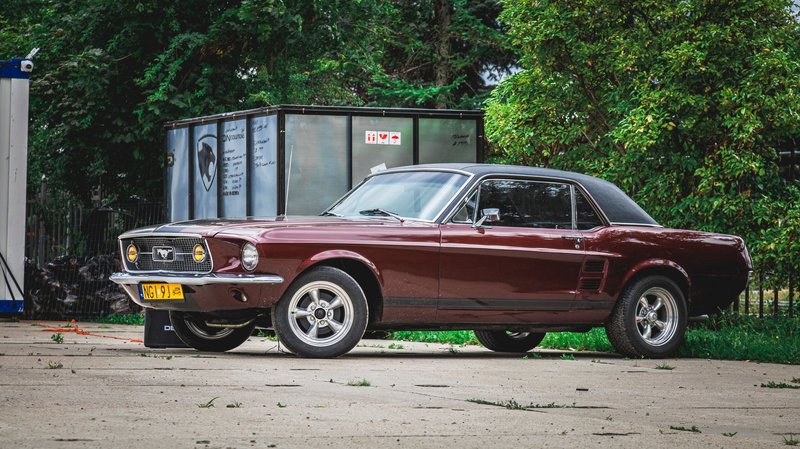
Riviera. Bill Mitchell’s personal-luxury coupe was only in its second year for 1964, and it still looked like nothing else on a Buick lot — knife-edge fenders, a formal roofline, hidden headlamps tucked behind the grille on later cars. Buick’s 401 or optional 425-cubic-inch “Nailhead” V8 pushed up to 340 horsepower, enough to make a two-ton coupe feel genuinely quick. It out-designed the Ford Thunderbird it was built to compete with, and most collectors will still tell you that today.
Cadillac {#cadillac}
DeVille. The 1964 DeVille carried a 429-cubic-inch V8 rated at 340 horsepower and, for the first time, Cadillac’s Comfort Control — an early automatic climate system that held cabin temperature to a driver-set number instead of just blasting hot or cold air. Turbo Hydra-Matic transmissions went standard across the whole lineup this year too. It’s an easy car to overlook next to a GTO, but it’s the one that shows how far mainstream luxury tech had already come.
Chevrolet {#chevrolet}
Chevrolet ran the broadest lineup in its history for 1964, and it shows in how differently these four models drive.
Corvette Sting Ray. The split rear window that defined the 1963 coupe was gone — replaced by a single curved pane after buyers and even GM’s own designers complained it wrecked rearward visibility. The 327-cubic-inch V8 ranged from a 250-horsepower base engine up to a fuel-injected 375-horsepower version that could out-accelerate cars costing twice as much.
Chevelle Malibu SS. Brand new for 1964, built specifically to answer Ford’s Fairlane. It launched with a 283 making 195 horsepower, then Chevrolet slotted in a 327 rated at 300 horsepower partway through the model year once it became clear buyers wanted more than a tidy mid-size sedan.
Impala SS. The 409-cubic-inch V8 — yes, the one from the Beach Boys song — could be optioned up to 425 horsepower with dual four-barrel carburetors. It was still Chevrolet’s best-selling full-size trim, proof that in 1964 raw sales volume had nothing to do with which cars got remembered.
Corvair Monza Spyder. Rear-engine, air-cooled, and turbocharged — genuinely strange engineering for a mainstream American compact. 150 horsepower from a flat-six doesn’t sound like much now, but the driving experience was closer to a European sports car than anything else GM built.
Chrysler {#chrysler}
300K. The “letter series” 300 had been Chrysler’s performance flagship since 1955, and by 1964 the K car carried a 413-cubic-inch V8 making 360 horsepower standard, 390 with the optional cross-ram induction setup. It’s a full-size car that could embarrass smaller, lighter competitors in a straight line — and it did, regularly, on NASCAR ovals a decade earlier.
Dodge {#dodge}
Polara 500. Dodge’s full-size performance trim could be ordered with the 383 or the 426 “wedge” V8, the latter good for up to 425 horsepower in Max Wedge tune. It’s a car most people forget existed because it competed in the same space as the Galaxie and Impala without the marketing budget either of those nameplates had—a pattern that repeated throughout Dodge’s full 1964 lineup.
Ford {#ford}
Ford fielded 44 models across four series in 1964, but four tell the real story.
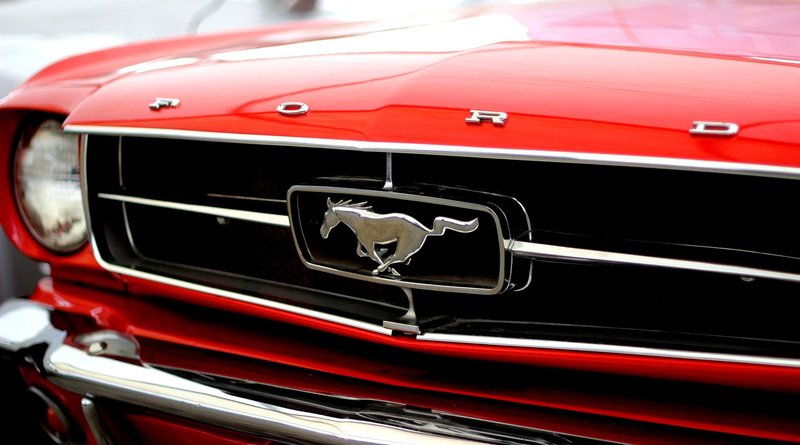
Mustang. Introduced April 17, 1964, mid-model-year, and immediately the best-selling launch in American automotive history. Base cars came with a modest 170-cubic-inch six making 101 horsepower; buyers who wanted the version enthusiasts still chase today ordered the 289 “Hi-Po” K-code V8, rated at 271 horsepower with solid lifters and a four-barrel carb. Ford didn’t invent the idea of a sporty compact, but it invented the category — pony cars are named after this specific model.
Fairlane 500. Ford’s mid-size answer to the Chevelle, offered with an optional 289 V8 that could be pushed to 271 horsepower in the same Hi-Po tune found in the Mustang. Less celebrated, mechanically almost identical underneath.
Galaxie 500 XL. The full-size Ford’s top trim could be had with the 427-cubic-inch V8, built largely to satisfy NASCAR homologation rules, rated at up to 425 horsepower with dual four-barrel carburetors. It’s a factory hot rod wearing a family sedan’s body.
Thunderbird. Ford’s personal-luxury coupe ran a 390-cubic-inch V8 at 300 horsepower and leaned hard into gadgetry — a Swing-Away steering wheel that slid sideways for easier entry, a dash full of aircraft-inspired toggle switches. It sold well against the Riviera without ever quite matching its design reputation.
Mercury {#mercury}
Comet Cyclone. Mercury’s compact performance model carried a 289 V8 rated at 210 horsepower, and it wasn’t just a showroom special — Comets ran the East African Safari Rally and set endurance records at Daytona that year, which is more competition pedigree than most of the muscle cars getting all the attention.
Oldsmobile {#oldsmobile}
Cutlass 4-4-2. The option package that gave the name to an entire sub-genre of muscle cars debuted in 1964: four-barrel carburetor, four-speed manual, dual exhaust. A 330-cubic-inch V8 rated at 310 horsepower went into the mid-size Cutlass/F-85 body, and Oldsmobile had its answer to the GTO within months of the GTO existing, creating a performance model that would define Oldsmobile’s legacy.
Plymouth {#plymouth}
Barracuda. This one deserves more credit than it gets — Plymouth launched it on April 1, 1964, a full two weeks before the Mustang, making it technically the first pony car to reach a showroom. Its signature was a fastback rear window built from one continuous piece of curved glass, at the time the largest sheet of glass ever used in a production car. Built on the humble Valiant platform with an optional 273-cubic-inch V8, it sold roughly 23,000 units against the Mustang’s 126,000 in that abbreviated first season — a lesson in how “first” doesn’t beat “best marketed.”
Valiant Signet. The compact Plymouth was built to be sensible: a 225-cubic-inch slant-six making 101 horsepower, unkillable reliability, and a shape nobody would call exciting. It’s the car that quietly outsold most of the models people actually remember from this era.
Pontiac {#pontiac}
GTO. Officially just a $295.90 option package on the mid-size LeMans, sidestepping a GM corporate ban on big engines in mid-size cars by classifying it as an option rather than a model. The standard 389-cubic-inch V8 made 325 horsepower with a single four-barrel Carter carburetor; the Tri-Power setup with three two-barrels bumped that to 348. Pontiac projected selling 5,000. They sold over 32,000, and the muscle car market existed the moment the first one left the lot.
Bonneville. Pontiac’s full-size flagship rode the “Wide-Track” chassis the division had been promoting since the late ’50s, with a 389 V8 tuned anywhere from 256 to 303 horsepower depending on carburetion. It’s the car that funded the GTO’s marketing budget, even though nobody puts a Bonneville poster on their wall.
Studebaker {#studebaker}
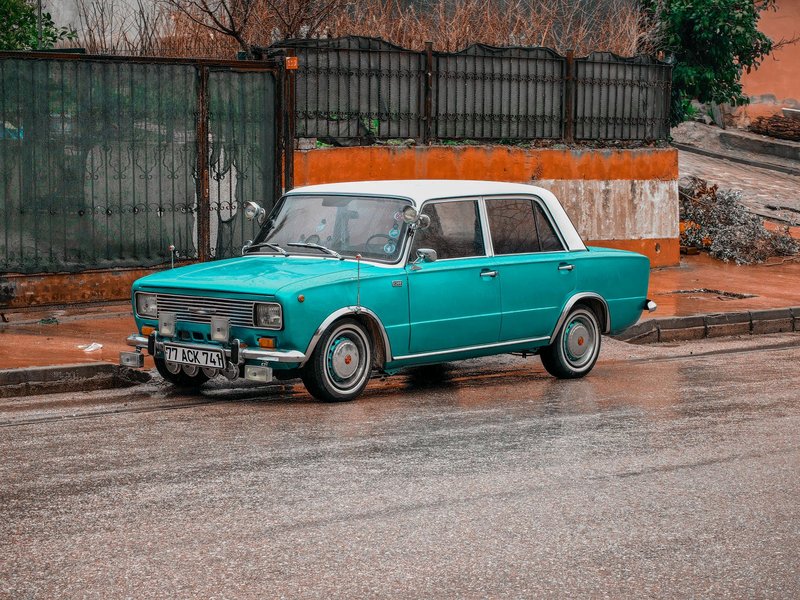
Daytona. By the time the 1964 Daytona reached dealers, the story behind it was already grim. The U.S. Department of Labor’s own archive of the closure records that Studebaker shut its South Bend, Indiana plant on December 20, 1963 — the end of 111 years of production in the city that had built the company. The 1964 Daytona, wearing a Brooks Stevens facelift and offered with a 259 or 289-cubic-inch V8, was built instead at Studebaker’s Hamilton, Ontario plant. It’s a genuinely handsome car carrying the weight of a company that had less than two years of American-market life left.
What Actually Made 1964 Different {#what-made-1964-different}
The GTO and Mustang get the credit because they created categories that are still around six decades later. But the more interesting story is what was happening underneath the hood-scoop headlines: The Henry Ford museum’s archive of a 1964 seat belt shows that this was also the first model year every American car shipped with front lap-belt anchorages as standard — years before federal law would force the issue in 1968. Cadillac was adding real climate control. AMC was betting on economy instead of power. Studebaker was fighting to exist at all.
Look at the whole lineup and 1964 stops being a story about two famous nameplates. It’s the year the industry split in three directions at once — faster, safer, cheaper — and every one of those directions turned out to be right.
Sources:

Marco Delantero
More from Marco DelanteroHow we reviewed this article
This article was researched against manufacturer records and editorially reviewed before publishing. We accept no payment for coverage. Some guides contain affiliate links; see our affiliate disclosure.