
Table of Contents
- The short answer
- What Honda actually was in 1955
- Honda’s real timeline, year by year
- 1955 mattered anyway — just not for the reason you’d think
- Honda’s actual first cars: the T360 and S500
- Why classic car sites still show “1955 Honda” listings
The short answer
There’s no such thing as a 1955 Honda car. Honda didn’t build a car — any car — until 1963. In 1955, Honda was eight years into making motorcycles and hadn’t put a four-wheeled vehicle into production yet.
If you landed here searching a marketplace for “1955 Honda” and got a wall of results, that’s not a hidden cache of rare classics. It’s a filter quirk on sites like Classic.com and Car & Classic, and we’ll get into exactly why further down.
What Honda actually was in 1955
Soichiro Honda started the company as the Honda Technical Research Institute in 1946, repairing and modifying war-surplus generator engines to sell as motorized bicycles. Honda Motor Co., Ltd. was formally incorporated in September 1948, and by 1955 the company had already released its first fully Honda-engineered motorcycle: the D-Type, nicknamed the Dream, which debuted in August 1949 with a 98cc two-stroke engine putting out 3 horsepower.
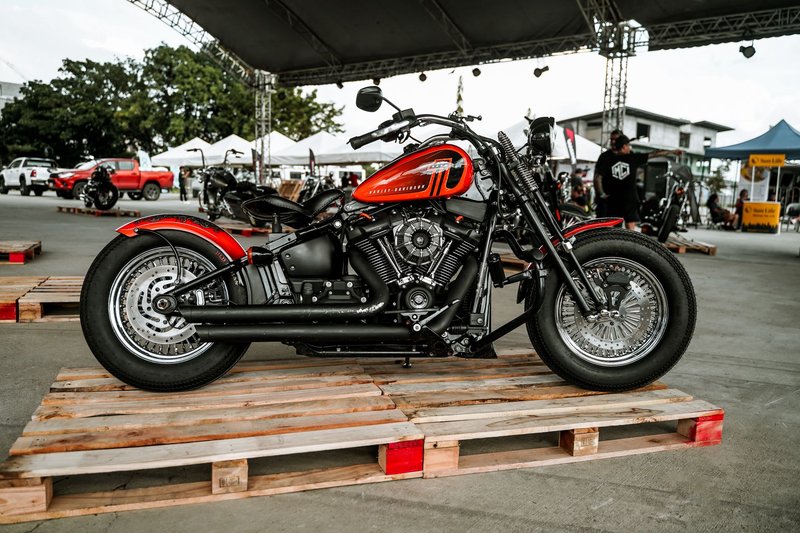
By the mid-1950s Honda was a motorcycle manufacturer, full stop. It wouldn’t touch automobile production for another eight years. Anyone shopping for a “1955 Honda car” is chasing a vehicle that was never built, in a segment Honda hadn’t entered yet.
Honda’s real timeline, year by year
| Year | Milestone | Vehicle type |
|---|---|---|
| 1946 | Honda Technical Research Institute founded | N/A |
| 1948 | Honda Motor Co., Ltd. incorporated | N/A |
| 1949 | D-Type “Dream” released — Honda’s first fully in-house motorcycle | Motorcycle |
| 1955 | MITI floats its “People’s Car” concept; Honda has no car yet | Motorcycle only |
| 1958 | Honda Super Cub launched, becoming the best-selling motor vehicle in history | Motorcycle |
| June 1963 | T360 mini-truck released — Honda’s first production automobile | Car (truck) |
| October 1963 | S500 released — Honda’s first production passenger car | Car (sports car) |
That table is the entire answer to “what was Honda’s oldest car.” It’s the T360, by four months, and most people mean the S500 when they ask the question because it’s the sports car everyone actually remembers.
1955 mattered anyway — just not for the reason you’d think
Here’s where the confusion probably comes from, and it’s a fair mix-up. In 1955, Japan’s Ministry of International Trade and Industry floated a “People’s Car” concept: a four-seater capable of 100 km/h, around 30 km per liter of fuel, priced at roughly 250,000 yen. The idea, modeled loosely on the Volkswagen Beetle, was part of a broader postwar push by Japanese industrial policy to build a domestic motor vehicle industry, and the ministry hoped domestic manufacturers would compete to build it.
The formal contest never happened — manufacturers pushed back hard enough that MITI dropped the competitive format. But the concept did what these things sometimes do anyway: it put a target on the table, and several companies moved toward it independently. Suzuki answered first with the Suzulight in 1955. Subaru followed with the 360 in 1958, and Mazda with the R360 Coupe in 1960.
Honda’s response was slower and more stubborn. Soichiro Honda reportedly thought the kei-class “people’s cars” being built in Japan, and the small cars coming out of Europe, were underpowered for how Japanese roads actually worked. Honda experimented with prototypes through the late 1950s — including the XA-series test vehicles — but didn’t rush a compromised product to market just to hit the 1955 moment. That patience is a big part of why the real Honda car debut landed in 1963, not 1957 or 1958 like its competitors.
Honda’s actual first cars: the T360 and S500
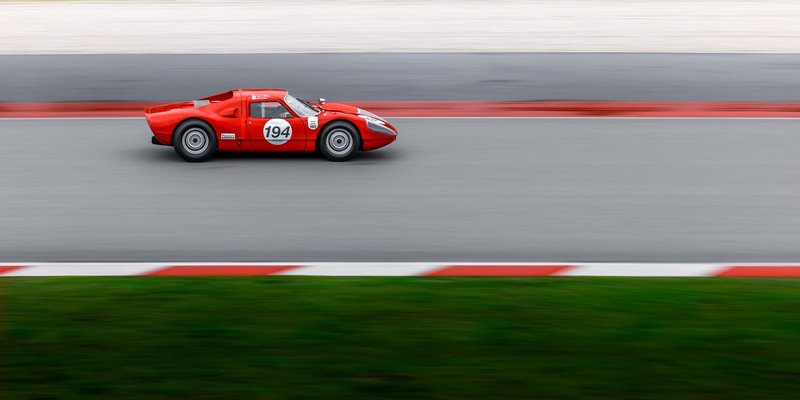
When Honda finally did enter the car business, it came in through the side door — motorsport engineering, not economy transport.
The T360, launched in June 1963, was a compact truck, and it’s technically Honda’s first production car by a few months. But the S500, released that October, is the one people mean when they say “Honda’s first car.” It used a 0.53-liter engine with dual overhead cams, fed by four carburetors borrowed from Honda’s motorcycle and marine-engine parts bin, producing 45 horsepower in a car that weighed about 680 kilograms. Honda built a race-bred engine for a road car before it had built almost any road car at all — a sequencing that tells you a lot about the company’s priorities from day one.
Both cars share styling and mechanical DNA with the S360, a smaller prototype shown earlier in 1962 that never reached full production. If you’re mapping Honda’s earliest models by year, the order is: D-Type Dream (1949, motorcycle), T360 (June 1963, truck), S500 (October 1963, sports car).
Why classic car sites still show “1955 Honda” listings
This part is simple once you know how these marketplaces work. Sites like Classic.com and Car & Classic build their year-range URLs from a database filter, not a curated page. A URL like /m/honda/year-1955/ or /list/501/1955/ typically means “show me Honda listings starting from 1955 onward” — the year in the address bar is the floor of the filter, not a guarantee of matching inventory. Since Honda’s earliest car is a 1963 model, every result that loads under a “1955” Honda filter is actually a 1964-or-later vehicle. The page isn’t lying, exactly. It’s just structured in a way that reads like a promise it can’t keep.
The same pattern shows up across other manufacturers whose production start dates are more recent than the filter range being searched. It’s worth checking the actual model year on the listing itself rather than trusting the URL, especially on sites that generate these pages programmatically instead of hand-curating them.
So if you came here looking for a 1955 Honda to buy, restore, or just satisfy some trivia curiosity: it doesn’t exist, and it was never going to. What does exist is a genuinely interesting eight-year gap between Honda’s first motorcycle and its first car — one where the company watched its competitors rush cheap “people’s cars” to market and decided, on purpose, to wait.

Marco Delantero
More from Marco DelanteroHow we reviewed this article
This article was researched against manufacturer records and editorially reviewed before publishing. We accept no payment for coverage. Some guides contain affiliate links; see our affiliate disclosure.