Search “1940 Volkswagen” and you get two kinds of results: dry Wikipedia entries about a military-vehicle program, or marketplace listings with no context at all. Neither answers the actual question, which is simple — what did Volkswagen build in 1940, and why does one photo show a curvy little sedan while another shows something that looks like a bathtub with a spare tire on the hood?
Both are Volkswagens. Both trace back to the same factory, the same engineer, and the same 1938 groundbreaking outside Fallersleben. What split them apart was a war that started five months before the first production car left the line.
Table of Contents
- The Quick Answer
- The KdF-Wagen: A Car for Everyone, Built for No One
- Type 82 Kübelwagen: The Volkswagen That Actually Shipped in 1940
- The Type 86: Volkswagen’s Four-Wheel-Drive Dead End
- KdF-Wagen vs. Kübelwagen: Why the Names Confuse Everyone
- What Came Next: The Type 82E and the Schwimmwagen
- What They’re Worth Now (and How Many Are Left)
The Quick Answer
Volkswagen produced exactly one model in real numbers during 1940: the Type 82 Kübelwagen, a stripped-down military runabout that entered full production in February of that year. The civilian KdF-Wagen — the car that became the Beetle — existed only as a handful of pre-war prototypes (the VW38 and VW39 series) by 1940; it never reached the ordinary German buyers who’d been paying into a savings scheme for one since 1938. A four-wheel-drive variant, the Type 86, was tested the same year and never built at scale. Everything else people associate with wartime VW — the Type 82E officer’s car, the amphibious Type 166 Schwimmwagen — came later, in 1942 and 1943.
The KdF-Wagen: A Car for Everyone, Built for No One {#kdf-wagen}
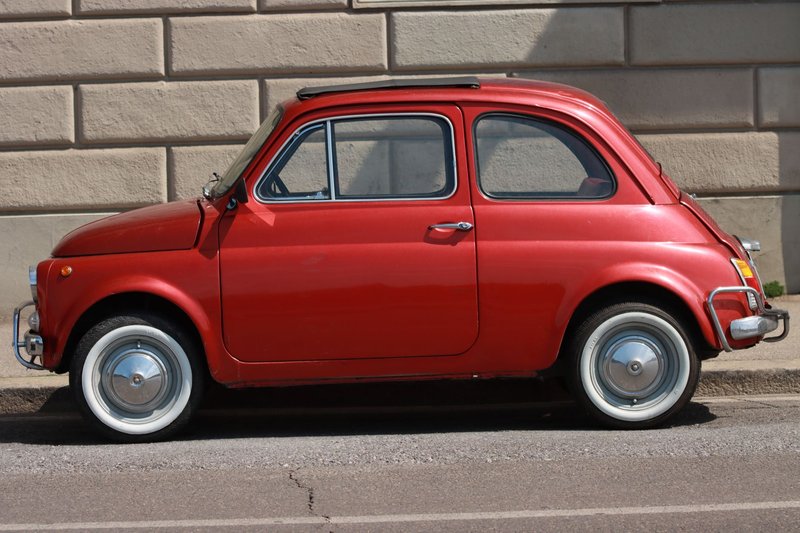
The KdF-Wagen — “Kraft durch Freude Wagen,” or “Strength Through Joy Car” — was never supposed to be a military footnote. Ferdinand Porsche’s design office signed a contract with the Reich Association of the Automotive Industry back in June 1934 with three non-negotiable specs: carry five people, hit 100 km/h, and cost little enough that a factory worker could buy one on a payment plan. Hitler laid the foundation stone for the Volkswagen works near Fallersleben on May 26, 1938, and workers were already paying five Reichsmarks a week into a savings stamp book for a car that, for almost all of them, would never arrive — a scheme the US Holocaust Memorial Museum documents as one built partly on forced and coerced labor once the war began.
By 1940, the KdF-Wagen existed mostly as pre-production hardware: 44 VW38 prototypes had been built starting in 1938, followed by 50 more VW39 cars completed by mid-1939. These are the direct ancestors of the Beetle’s silhouette — split rear window, rounded fenders, air-cooled flat-four humming under the trunk floor at the back. What they weren’t, in 1940, was a car you could buy. The Wolfsburg plant that was supposed to build 150,000 KdF-Wagens a year pivoted almost entirely to military production before civilian output ever ramped up.
KdF-Wagen (VW38/VW39), 1938–1940
- Engine: 985cc air-cooled flat-four
- Output: roughly 23.5 hp
- Layout: rear-engine, rear-wheel-drive
- Units built by 1940: under 100 pre-production examples
- Civilian sales: effectively zero
Type 82 Kübelwagen: The Volkswagen That Actually Shipped in 1940 {#type-82-kubelwagen}
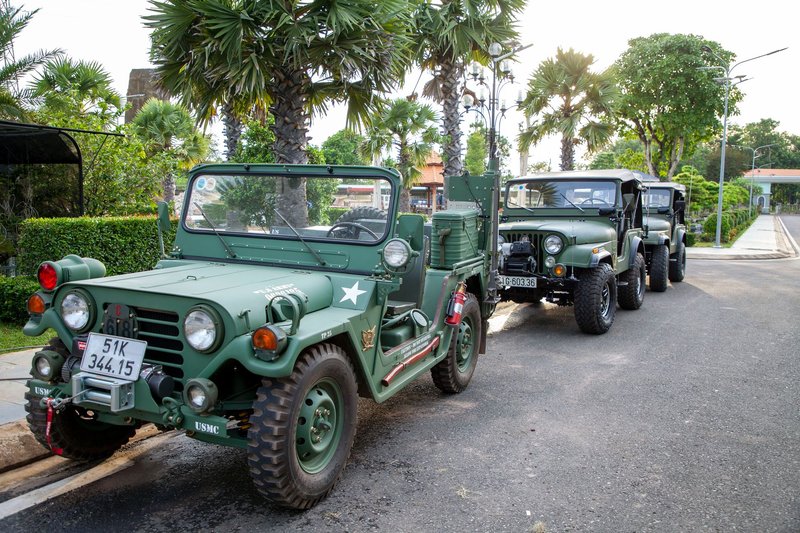
This is the 1940 Volkswagen — the one with a real production line and a real serial number sequence. Porsche had been developing it since 1938 under the internal designation Type 62, refining it into the Type 82 by the time the German army placed its first orders. The name “Kübelwagen” is German army slang, roughly “bucket car,” a reference to its bare, bucket-seat-and-flat-panels body rather than any official model name.
Full-scale production started in February 1940 at Fallersleben, and it ran almost unchanged through the end of the war — by 1945, Volkswagen had built 50,435 of them. It shared the KdF-Wagen’s floorpan, rear-engine layout, and torsion-bar suspension, which meant it inherited that car’s biggest advantage for military use: with the engine sitting over the drive wheels and no radiator to puncture or freeze, it shrugged off conditions that stopped water-cooled trucks. Rommel’s Afrika Korps ran them through sand that buried Italian transport trucks, a durability the National WWII Museum notes was central to how thin German supply lines managed to function at all in North Africa.
Type 82 Kübelwagen, 1940
- Engine: 985cc air-cooled flat-four (later 1,131cc from 1943)
- Output: 23.5 hp originally, 25 hp on the revised engine
- Length / width: 3,740mm / 1,600mm
- Curb weight: roughly 715kg
- Total production (1940–1945): 50,435 units
There’s no separate 1940-specific engine spec beyond this — VW made only minor field-reliability tweaks to the Kübelwagen for the rest of the war, mostly deleting parts that didn’t matter and reinforcing ones that broke.
The Type 86: Volkswagen’s Four-Wheel-Drive Dead End {#type-86}
Less known, and easy to miss if you only read the Wikipedia military-vehicle page: Volkswagen also tested a four-wheel-drive Kübelwagen variant, the Type 86, around the same period. It used the same body and running gear philosophy but added drive to the front axle for better off-road capability on rough terrain. It never got past evaluation. The added mechanical complexity and cost didn’t justify the traction gains once the standard Type 82 proved itself capable enough off-road on its own — a rare case of the German military deciding “good enough” actually was.
If you’re building a mental list of “1940 Volkswagen models,” the Type 86 belongs on it as a footnote: tested, not fielded, and effectively invisible next to the tens of thousands of standard Kübelwagens rolling out the same year.
KdF-Wagen vs. Kübelwagen: Why the Names Confuse Everyone {#naming}
Here’s the confusion, stated plainly: the KdF-Wagen and the Kübelwagen are not two names for the same car. They’re two different bodies built on the same underlying platform.
The KdF-Wagen is the civilian sedan — the one that became the Beetle after the war, once Allied occupation authorities restarted production for a very different customer base. The Kübelwagen is the military body: flat steel panels instead of curves, no doors on early models, a fold-down windshield, and a raised, simplified suspension. Both use the same rear-mounted air-cooled flat-four and the same torsion-bar layout underneath. Think of it less as two cars and more as one chassis wearing a tuxedo in one photo and work boots in the other.
The reason searches turn up separate, disconnected articles for each is that historians and VW clubs treat them as separate lineages — one civilian, one military — even though in 1940 they were being engineered and built by the same small team at the same plant, sometimes in the same week.
What Came Next: The Type 82E and the Schwimmwagen {#what-came-next}
Neither of these is technically a 1940 model, and it’s worth being precise about that, because plenty of secondhand sources blur the timeline.
The Type 82E showed up in 1943 — a hybrid that dropped the civilian KdF-Wagen body onto the tougher Kübelwagen floorpan, built as a more comfortable staff car for officers who didn’t need full off-road capability but did need reliability. It’s the car people mean when they say “the Beetle body on military running gear,” and it’s often mistakenly dated earlier because it looks so much like the pre-war prototypes.
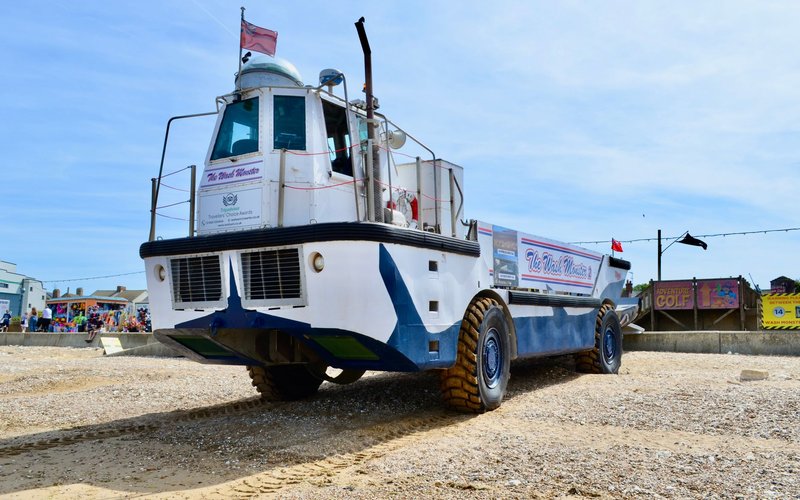
The Type 166 Schwimmwagen is the one everyone remembers: a fully amphibious Kübelwagen derivative with a retractable propeller and a boat-shaped hull, in production from 1941 through 1944. Volkswagen and Porsche built 15,584 of them between the Fallersleben and Porsche plants — still the most-produced amphibious vehicle in history. It belongs in any honest account of the 1940s Volkswagen models, just not in the 1940 model year specifically.
What They’re Worth Now (and How Many Are Left) {#value}
Survivor numbers separate these models sharply. KdF-Wagen prototypes from the VW38/VW39 series are effectively museum pieces — a handful exist worldwide, tracked individually by registries, and none change hands in any normal sense. The related Porsche Type 64 prototype, a 1939 sports-bodied variant of the same platform, went to auction at RM Sotheby’s in 2019 with a $20 million estimate; the sale famously fell apart mid-bidding when the room misread the increments, and it went unsold, which NBC News covered as one of the stranger auction failures in collector-car history. That’s the ceiling for what this lineage can command.
The Kübelwagen is far more attainable, precisely because Volkswagen built over 50,000 of them. Restored examples with correct chassis and body typically land in the $58,000–$85,000 range at auction, depending on originality and documentation; unrestored, honestly-aged survivors with clean paperwork tend to command a premium over over-restored show cars, which is the opposite of how most classic-car markets work. Parts availability is decent thanks to Beetle cross-compatibility on drivetrain components, though body panels and correct wartime fittings are their own specialty market.
The Schwimmwagen is the real rarity relative to its production run. Of roughly 15,584 built, the Schwimmwagen Registry tracks only 189 known survivors today, and just 13 of those are unrestored originals. That scarcity — a survival rate under 1.5% — is why clean Schwimmwagens routinely outprice Kübelwagens several times over at specialist auctions, despite the Kübelwagen being the historically more significant vehicle.
If you’re chasing an actual 1940 Volkswagen rather than a wartime derivative, the Type 82 Kübelwagen is both the only realistic option and the right one — it’s the car that was actually rolling off the line that year, in the numbers to make ownership possible today.

Marco Delantero
More from Marco DelanteroHow we reviewed this article
This article was researched against manufacturer records and editorially reviewed before publishing. We accept no payment for coverage. Some guides contain affiliate links; see our affiliate disclosure.