Table of Contents
- Why 1940 Is the Year to Know
- Harley-Davidson
- Indian
- AJS & Matchless
- Norton
- BSA & Ariel
- BMW
- What These Bikes Are Worth Now
Why 1940 Is the Year to Know
Most lists of 1940s motorcycles lump the whole decade together, which flattens the one thing that makes 1940 itself worth isolating: it was the last year any of these companies built bikes purely for civilians, with no army procurement officer looking over the design brief. Harley-Davidson and Indian were already filling small government orders, and BSA, Norton, Ariel, and Matchless were deep into supplying the British War Office. But 1940 catalogs still led with chrome, skirted fenders, and touring comfort — not blackout lighting and gun scabbards.
By February 1942 the U.S. War Production Board had halted civilian vehicle manufacturing outright, and across the Atlantic, Triumph’s Coventry factory was leveled in the November 1940 Blitz before it could finish out that model year’s production run. What follows is every major model line still sold as a consumer motorcycle in 1940, organized by manufacturer, with the specs and the detail that makes each one more than a name on a spec sheet.
Harley-Davidson
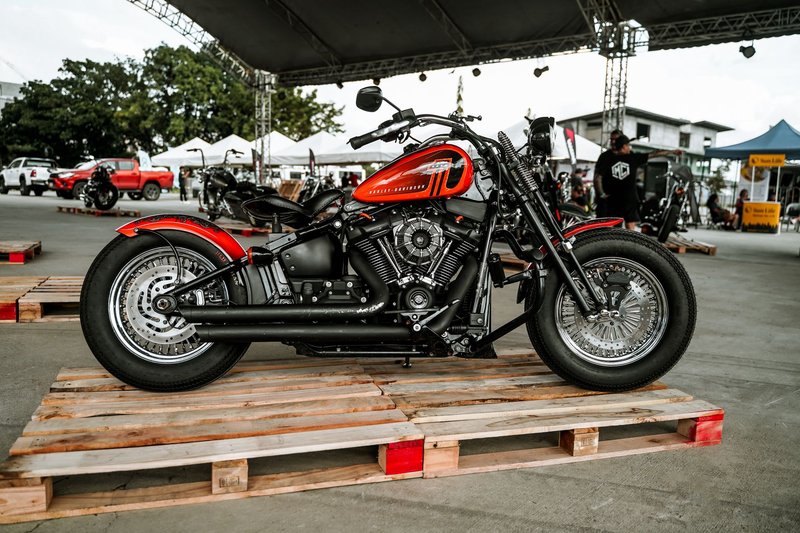
Harley’s 1940 range split cleanly along displacement lines: a big flathead for touring, a mid-size flathead for the police and sidecar trade, and the still-new overhead-valve twin that dealers were pushing hardest.
| Model | Engine | Output | Notes |
|---|---|---|---|
| EL “Knucklehead” | 61ci OHV V-twin | ~40 bhp | Recirculating oil system, distinctive rocker-box covers |
| WL | 45ci flathead V-twin | — | 3-speed hand-shift, dry multi-disc clutch |
| UL | 74ci flathead V-twin | — | Big-bore tourer, roughly $385 new |
The EL had only been in production since 1936, and 1940 is the year the “Knucklehead” nickname — earned from the fist-like bumps on its rocker covers — really stuck in dealer showrooms and owner slang alike. Fewer than 4,000 were built that year, which is part of why surviving originals command serious money now. The WL’s 45-cubic-inch flathead is the same basic architecture Harley handed the U.S. Army a year later for the WLA, so if you’ve ever seen a khaki Harley in a war movie, you’ve already seen this engine — just civilianized, with whitewalls instead of blackout lamps.
Indian
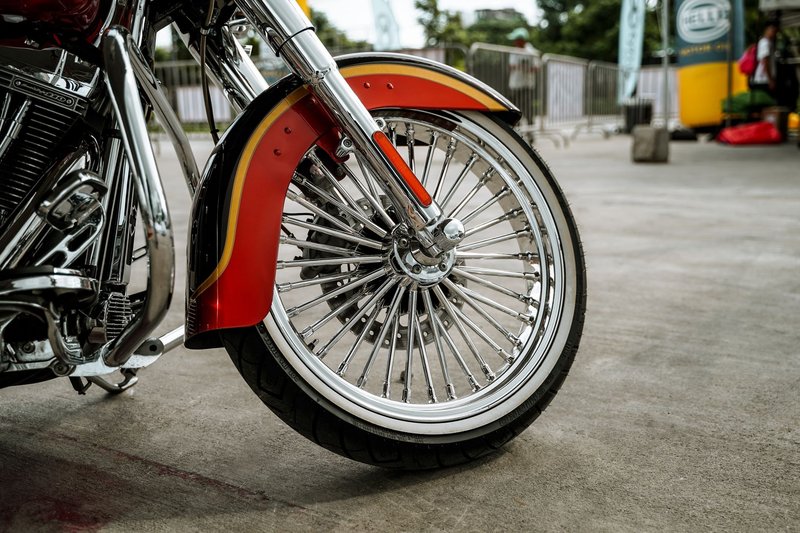
Indian’s 1940 lineup is the one collectors point to first, mostly because of a single design change: this was the first year the Chief and Sport Scout wore the deep, fully skirted fenders that became the brand’s visual signature for the rest of its history.
| Model | Engine | Top Speed | Notes |
|---|---|---|---|
| Chief | 74ci flathead V-twin | ~85 mph | First year of full skirted fenders |
| Sport Scout | 45ci (745cc) flathead V-twin | — | New 16-inch wheels, same year as the fender redesign |
| Four | ~77ci inline four | — | Low-volume flagship, discontinued for good in 1942 |
The Chief’s fenders weren’t just cosmetic flourish — Indian’s own advertising leaned hard on “their matchless sweeping beauty,” and the look proved durable enough that modern Indian Motorcycle still echoes it on the current Chief lineup eight decades later. The Sport Scout, meanwhile, was Indian’s answer to riders who wanted the flathead V-twin without the Chief’s bulk; it’s the model that dominated American flat-track racing through the late ’30s and into the ’40s. The Four was already on its way out — expensive to build, expensive to buy, and increasingly hard to justify next to the cheaper V-twins that did nearly as well on the road—a fate that defined Indian’s struggles through the 1950s.
AJS & Matchless
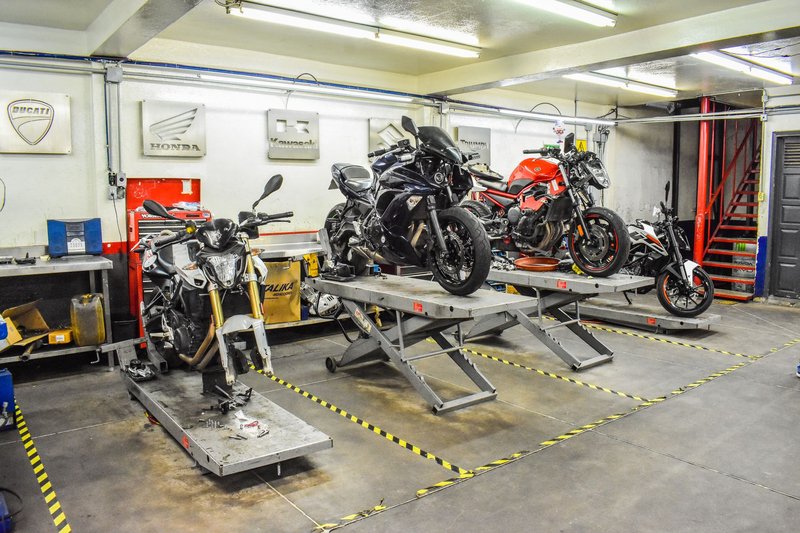
By 1940, AJS and Matchless were sister brands under the same parent company, Associated Motor Cycles, and it shows: several 1940 models were nearly identical machines wearing different fuel-tank badges.
| Model | Engine | Configuration | Notes |
|---|---|---|---|
| AJS Model 16 | 348cc OHV single | Girder fork, rigid rear | Basis for wartime WD contract bikes |
| AJS Model 18 | 498cc OHV single | Girder fork, rigid rear | Larger sibling to the 16 |
| Matchless G3 | 350cc OHV single | Girder fork | Badge-engineered twin of the AJS 16 |
None of these had the sprung “Teledraulic” front fork yet — that upgrade landed on the wartime G3L in 1941, once the British Army had seen enough of despatch riders getting thrown off rigid-fork bikes on shell-cratered roads. The 1940 versions are the last of the old-school girder-fork singles before AMC’s most influential engineering change of the decade. Both companies were already fulfilling War Department orders alongside their dealer-network sales, which is part of why so few genuinely civilian-spec 1940 AJS and Matchless bikes survive.
Norton
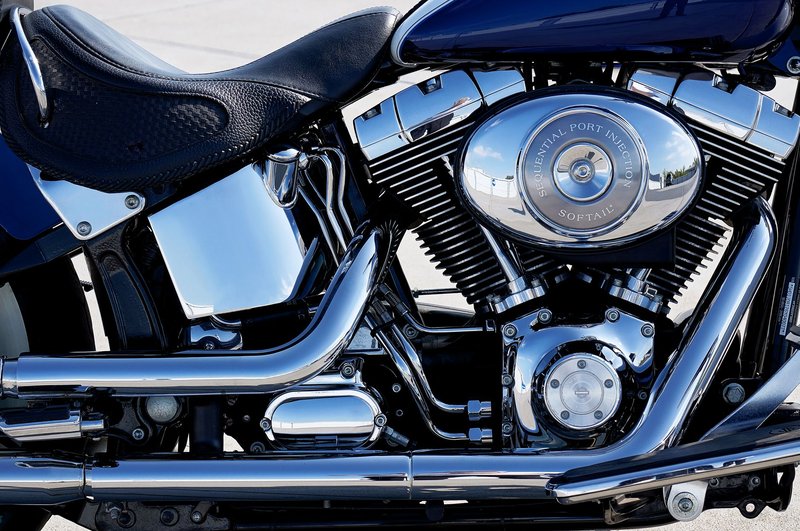
Norton entered 1940 with its racing pedigree intact but its most exotic model already fading. The overhead-cam International — Norton’s factory-racer-for-the-road, good for 93 mph and 29 bhp — had effectively wound down production as the company pivoted toward War Office contracts, though a handful still left the factory.
| Model | Engine | Output | Top Speed |
|---|---|---|---|
| 16H | 490cc side-valve single | 14 bhp | ~68 mph |
| ES2 | 490cc OHV single | — | ~80 mph |
The 16H is the one that matters most historically: it became the single most common British Army motorcycle of the entire war, built by the tens of thousands for despatch work right through 1945. In 1940 it was still just Norton’s mid-range side-valve single, unglamorous next to the ES2’s overhead-valve punch, but its side-valve simplicity — fewer parts to break, easier to fix in a ditch — is exactly why the military kept ordering it. The ES2 was the sportier civilian counterpart, sharing the 16H’s basic bottom end but built for riders who wanted 80 mph instead of a courier’s reliability.
BSA & Ariel
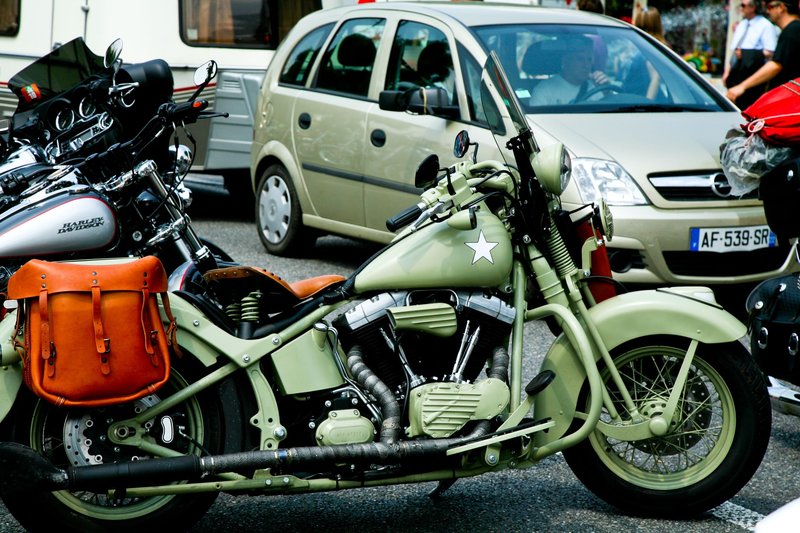
BSA’s 1940 line was already tilting toward what the War Office wanted: something simple, torquey, and cheap to fix in the field. Ariel, based just down the road in Birmingham, kept its sportier single in production for the civilian market a little longer.
| Model | Engine | Output | Notes |
|---|---|---|---|
| BSA M20 | 496cc side-valve single | 13 bhp | Rigid frame, girder forks, hand-change 4-speed |
| Ariel Red Hunter (500) | 497cc OHV single | ~26 bhp | Val Page design, ~85 mph top speed |
The M20’s low-revving, low-maintenance flathead single made it the British military’s default despatch bike almost by accident — over 126,000 were eventually built for the war effort, more than any other single model supplied to British forces. It wasn’t fast and it wasn’t glamorous; it just started every time. The Red Hunter, by contrast, was Ariel’s showcase sporting single, designed by Val Page back in 1932 and still competitive in 1940 trials and road-racing circles. Ariel’s own W/NG military single would take over the war-contract role soon after, freeing the Red Hunter to stay a civilian bike a little longer than most of its Midlands rivals.
BMW
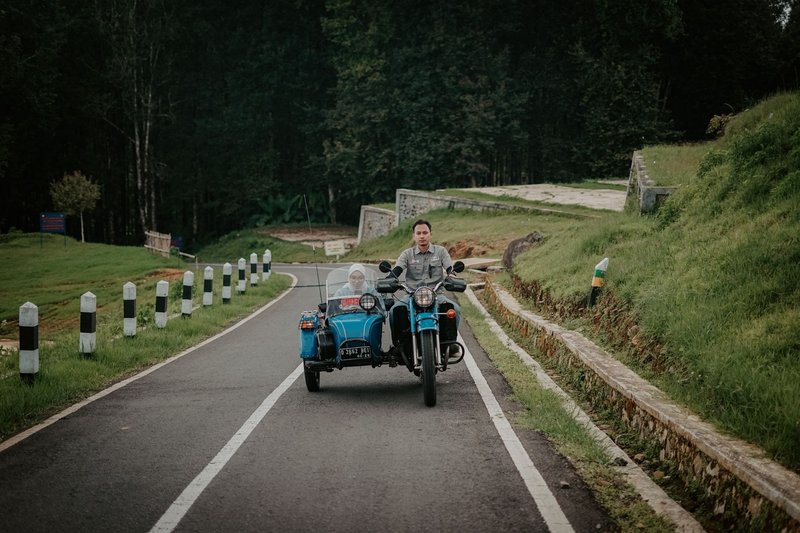
BMW’s 1940 range was built around the boxer twin, already the company’s defining engine layout, in two displacements aimed at very different riders.
| Model | Engine | Output | Top Speed |
|---|---|---|---|
| R51 | 494cc OHV boxer twin | — | — |
| R71 | 746cc side-valve boxer twin | 22 bhp | ~78 mph |
The R71 is the one worth remembering: it was the last BMW ever built with a side-valve engine and a hand-operated gearbox, closing out a design lineage that stretched back to the marque’s earliest twins. Its telescopic front fork — hydraulically damped, years ahead of the girder forks still standard on most British bikes in this list — previewed the suspension technology BMW would lean on for the rest of the century. Within a year, the R71’s basic architecture would be scaled up and militarized into the R75, the sidecar combination that became a fixture of the German army’s motorized units.
What These Bikes Are Worth Now
Values across this list vary enormously, but the pattern is consistent: low original production numbers plus wartime attrition equals real money today. A restored Harley EL Knucklehead — never a high-volume bike even when new — routinely clears five figures at auction, and clean, numbers-matching examples have pushed well past that. Indian Fours, built in tiny quantities before Indian pulled the plug on the model in 1942, are among the most sought-after prewar American motorcycles that exist, full stop. On the British side, running Norton 16Hs and BSA M20s are comparatively affordable simply because so many survived the war as military surplus — but the earlier, unmodified civilian-spec examples, badge-correct and pre-WD conversion, carry a real premium over the ex-army bikes that flooded postwar markets.
If you’re chasing one of these for restoration rather than display, start with the despatch-rider models. A Norton 16H or BSA M20 was engineered from the outset to be field-stripped by a soldier with a toolkit and a bad attitude, and the Imperial War Museums’ own wartime photo archive makes clear how hard these bikes were actually run — which means parts, manuals, and specialist mechanics are all easier to find than they are for a rarer civilian-only model like the Indian Four or Norton International. The trade-off is obvious: easier ownership, less rarity. What all of them share is the same closing chapter — 1940 was the last year any of them rolled off the line as a machine built purely to be ridden, before every one of these companies got a very different kind of customer. Harley’s own WLA “Liberator,” built directly from the WL’s 45ci flathead, would go on to become one of the defining machines of the entire war — proof that the line between a showroom motorcycle and a military one, in 1940, was thinner than either company’s advertising let on.

Sarah Thornton
More from Sarah ThorntonHow we reviewed this article
This article was researched against manufacturer records and editorially reviewed before publishing. We accept no payment for coverage. Some guides contain affiliate links; see our affiliate disclosure.