There was no “Jaguar Mark IV” in 1939. That name got bolted on years later, and if you’re trying to sort out what SS Cars Ltd actually built that year, the retroactive label is half the confusion. The other half is that the company ran four distinct bodies across three engine sizes, sold under the “SS Jaguar” name, and stopped making all of them within twelve months when Britain went to war.
Here’s every 1939 Jaguar car model, what separated them, and what they’re worth if you’re chasing one down today.
Table of Contents
- SS Jaguar or Jaguar Mark IV? The Naming, Solved
- The SS Jaguar 1.5 Litre
- The SS Jaguar 2.5 Litre
- The SS Jaguar 3.5 Litre
- The SS Jaguar 100
- 1939 Jaguar Models Compared
- How Rare Are These Cars Now
- Where Collectors Find Them Today
TLDR
SS Cars Ltd sold four 1939 Jaguar model lines, all badged “SS Jaguar”:
- 1.5 Litre — four-cylinder saloon and drophead coupé, the entry point
- 2.5 Litre — six-cylinder saloon and drophead coupé
- 3.5 Litre — the six-cylinder flagship saloon and drophead coupé
- SS Jaguar 100 — the two-seat sports roadster, built with either the 2.5 or 3.5 Litre engine
The 100 is the one everyone wants and the one that’s genuinely rare. The saloons and dropheads are more affordable, more usable, and far easier to actually find.
SS Jaguar or Jaguar Mark IV? The Naming, Solved
If you buy a car described online as a “1939 Jaguar Mark IV,” you’re buying an SS Jaguar with a name it never had in period. SS Cars Ltd built this body style, largely unchanged, from 1935 through 1949 — a design lineage traced through the full 1930s Jaguar lineup — with a five-year gap while the factory built aircraft components instead of cars. Britain declared war on 3 September 1939, and within weeks the Imperial War Museums archive shows the country moving onto a full wartime footing; the shift hit the motor industry immediately.
Car production resumed in 1945, but the company had a problem: “SS” had picked up unfortunate associations it didn’t want attached to a British consumer brand, so SS Cars Ltd became Jaguar Cars Ltd. The old saloon and drophead body carried on largely as-is until 1949, when the all-new Mark V arrived. Only then did Jaguar retroactively call the outgoing model the “Mark IV,” purely to distinguish it from its replacement. Nobody driving one off the lot in 1939 ever saw that name on a badge, a brochure, or a bill of sale. It was an SS Jaguar, full stop.
That distinction matters if you’re researching parts, registering a car, or just trying to search for the right thing — “SS Jaguar” and “Jaguar Mark IV” pull up overlapping but not identical results, and pre-war cars specifically predate the renaming by six years.
The SS Jaguar 1.5 Litre
The 1.5 Litre was the affordable end of the range, and by 1939 it had left its rougher origins behind. Earlier cars used a sidevalve engine bought in from Standard; from 1938 onward, SS Cars fitted its own 1,776cc overhead-valve four-cylinder, good for roughly 65 bhp. That’s not quick by any modern measure, but it was enough to move a five-seat saloon at a genuine 70 mph, which put the 1.5 Litre well ahead of most family cars in its price bracket.
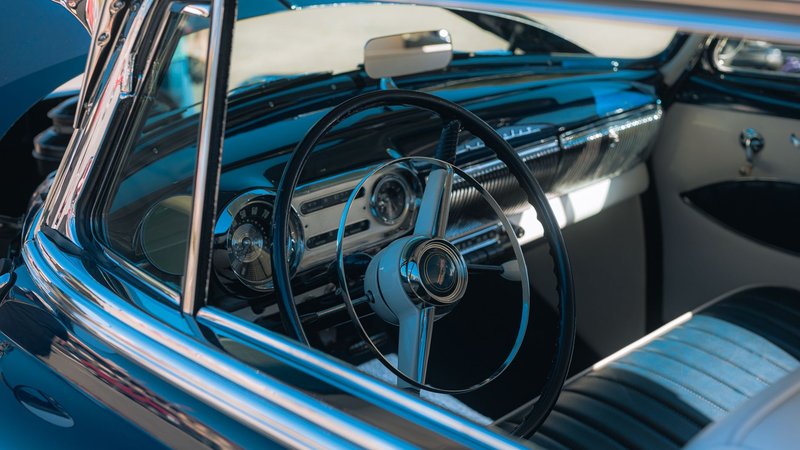
It came in two body styles: a four-door saloon and a two-door drophead coupé, both seating five. New, the saloon retailed at £285 — expensive relative to a family runabout, but a fraction of what the six-cylinder cars cost, and the reason the 1.5 Litre sold in far higher volumes than any other model in the range.
The SS Jaguar 2.5 Litre
Step up to the 2.5 Litre and you got the engine that actually built Jaguar’s reputation: a 2,663cc overhead-valve straight-six producing 102 bhp, tuned by Harry Weslake and installed by William Lyons in a chassis that looked far pricier than it was. That combination — a genuinely quick six-cylinder car dressed like something twice the price — is the reason people still talk about “the Jaguar formula” in relation to this era, and why these classic British cars remain so coveted.
Body choices matched the 1.5 Litre: four-door saloon or two-door drophead coupé, both on a 120-inch wheelbase. New price was £395. The drophead is the one worth hunting for today — SS Cars built roughly 270 of them, and only a small fraction survive, making it noticeably scarcer than the saloon despite sharing the same running gear.
The SS Jaguar 3.5 Litre
Added to the range in 1938 and carried through 1939, the 3.5 Litre used a bored-out version of the same six — 3,485cc, 125 bhp — in the identical saloon and drophead coupé bodies as the 2.5. It was the quickest, most expensive closed car SS Cars sold, priced at £445, and the one most likely to get cross-shopped against considerably pricier British sixes from Alvis or SS’s own more expensive contemporaries.
Search “SS Jaguar 3.5 Litre for sale” today and most of what turns up isn’t the saloon — it’s this engine wearing the SS 100’s two-seat body, which brings us to the car everyone actually means when they say “1939 Jaguar.”
The SS Jaguar 100
The SS 100 is the reason this whole lineup gets remembered. It’s a two-seat sports roadster, offered with either the 2.5 Litre six (102 bhp) or the 3.5 Litre six (125 bhp), and the 3.5 Litre version could hit 100 mph and run 0–60 mph in about 10.4 seconds — genuinely fast for 1939, and fast enough that the car’s name was a literal claim about its top speed.
It was also always rare. SS Cars built roughly 314 examples across the model’s full run: about 198 with the 2.5 Litre engine and 116 with the 3.5. New, the 3.5 Litre roadster cost £445 — the same as the 3.5 Litre saloon, which tells you SS Cars was pricing the sports body on desirability, not on extra machinery.
1939 Jaguar Models Compared
| Model | Engine | Power | Body Styles | New Price (1939) | Auction Value Today |
|---|---|---|---|---|---|
| SS Jaguar 1.5 Litre | 1,776cc OHV inline-4 | ~65 bhp | Saloon, Drophead Coupé | £285 | roughly $20,000–$45,000 |
| SS Jaguar 2.5 Litre | 2,663cc OHV inline-6 | 102 bhp | Saloon, Drophead Coupé | £395 | roughly $30,000–$70,000 |
| SS Jaguar 3.5 Litre | 3,485cc OHV inline-6 | 125 bhp | Saloon, Drophead Coupé | £445 | roughly $40,000–$90,000 |
| SS Jaguar 100 (2.5 Litre) | 2,663cc OHV inline-6 | 102 bhp | 2-Seat Roadster | £395 | roughly $170,000–$500,000 |
| SS Jaguar 100 (3.5 Litre) | 3,485cc OHV inline-6 | 125 bhp | 2-Seat Roadster | £445 | roughly $250,000–$700,000+ |
The gap between the saloons and the 100 isn’t subtle. You’re paying for a body style that was already scarce in 1939 and has spent eighty-six years getting scarcer, not for meaningfully different engineering underneath.
How Rare Are These Cars Now
Across its full production run — 1935 into 1939, then 1945 through 1949 under the Jaguar name — the shared saloon and drophead body totaled roughly 5,761 1.5 Litre cars, 1,861 2.5 Litre cars, and 4,420 3.5 Litre cars. Those numbers span both the pre-war and post-war years, since the same basic design carried through the gap. Wartime production simply didn’t happen: from late 1939, the Institution of Engineering and Technology notes that Jaguar, like most of the British motor industry, switched over to building aircraft components instead of cars, and stayed there until the war ended.
Survivor counts drop off fast once you get specific. The 2.5 Litre drophead coupé, for instance, had roughly 270 built and an estimated 20 known survivors worldwide — a single-digit percentage. The SS 100 fares a little better proportionally, since it was always treated as a car worth preserving rather than a daily driver worth scrapping, but with only 314 built across both engine sizes, “a little better” still means a genuinely short list.
Where Collectors Find Them Today
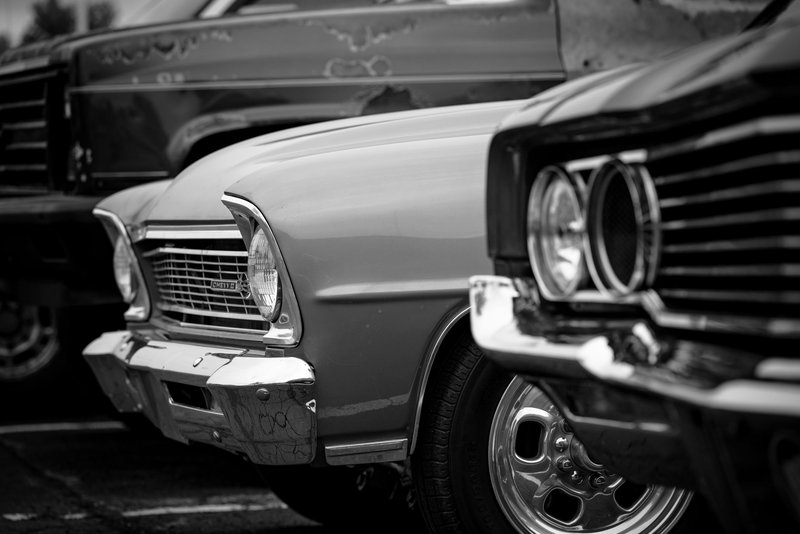
SS 100s move through the major auction houses and specialist dealers — Bonhams, Gooding & Company, and classic-car marketplaces that track pre-war British cars specifically. Recent results put 2.5 Litre examples starting around $170,000, with well-documented 3.5 Litre cars pushing well past $500,000 depending on originality, racing history, and how many prior owners actually drove it versus stored it.
The saloons and dropheads trade in a completely different world — specialist British classic-car dealers, marque clubs, and the occasional barn-find listing, rather than headline auction lots. That’s good news if you actually want to own one rather than just admire it: a usable 1.5 or 2.5 Litre saloon costs a fraction of an SS 100 and can still be driven the way SS Cars intended, on a Sunday, with the windows down and no six-figure insurance policy riding along.
Whatever you’re after, start with the chassis number. SS Cars Ltd kept detailed build records, and most surviving cars can be traced back to their original specification — engine size, body style, even the factory that built them before the war put a stop to all of it.

Daniela Voss
More from Daniela VossHow we reviewed this article
This article was researched against manufacturer records and editorially reviewed before publishing. We accept no payment for coverage. Some guides contain affiliate links; see our affiliate disclosure.