Table of Contents
- The lineup, in one glance
- Sedans and coupes: 2/3/4/5/6 GT/7/8 Series
- SUVs: X1 through X7
- M cars: the performance lineup
- Plug-in hybrids: the quiet middle option
- Reliability by model: what actually breaks
- What a 2020 BMW is worth in 2026
- Chassis codes, decoded
- Which one should you actually buy
The lineup, in one glance
2020 was a transition year for BMW, and that’s the detail every “complete lineup” list glosses over. The 3 Series (G20) was one year into its new generation. The 7 Series had just gotten a controversial facelift with a grille roughly the size of a barn door. And the M3 sedan didn’t exist in the U.S. lineup at all that year — the outgoing F80 stopped at 2018, and its G80 replacement didn’t land until 2021. If you’re cross-shopping a “2020 M3,” you’re actually looking at a unicorn that BMW never built for this market.
That’s the kind of gap that matters if you’re shopping used in 2026, because it changes which chassis code you’re actually getting for your money. Here’s the full picture: every sedan, SUV, M car, and plug-in hybrid BMW sold in the U.S. for the 2020 model year, what it cost new, what’s failed on high-mileage examples, and what it trades for today.
Sedans and coupes: 2/3/4/5/6 GT/7/8 Series
| Model | Chassis | Engine / Power | 0–60 mph | Starting MSRP |
|---|---|---|---|---|
| 2 Series (230i / M240i) | F22/F23 | 2.0L I4, 248 hp / 3.0L I6, 335 hp | 5.5s / 4.2s | ~$36,000 |
| 3 Series (330i / M340i) | G20 | 2.0L I4, 255 hp / 3.0L I6, 382 hp | 5.6s / 4.2s | $40,750 |
| 4 Series (430i / 440i) | F32/F33/F36 | 2.0L I4, 248 hp / 3.0L I6, 320 hp | 5.5s / 4.6s | ~$43,700 |
| 5 Series (530i / 540i / M550i) | G30 | 2.0L I4, 248 hp / 3.0L I6, 335 hp / 4.4L V8, 456 hp | 5.7s / 4.9s / 3.9s | ~$54,200 |
| 6 Series Gran Turismo | G32 | 3.0L I6, 335 hp | 5.1s | ~$60,700 |
| 7 Series (740i / 750i / M760i) | G11/G12 | 3.0L I6, 320 hp / 4.4L V8, 456 hp / 6.6L V12, 601 hp | 5.5s / 4.3s / 3.6s | $86,450 |
| 8 Series (840i / M850i) | G14/G15/G16 | 3.0L I6, 335 hp / 4.4L V8, 523 hp | 5.6s / 3.6s | $76,700 |
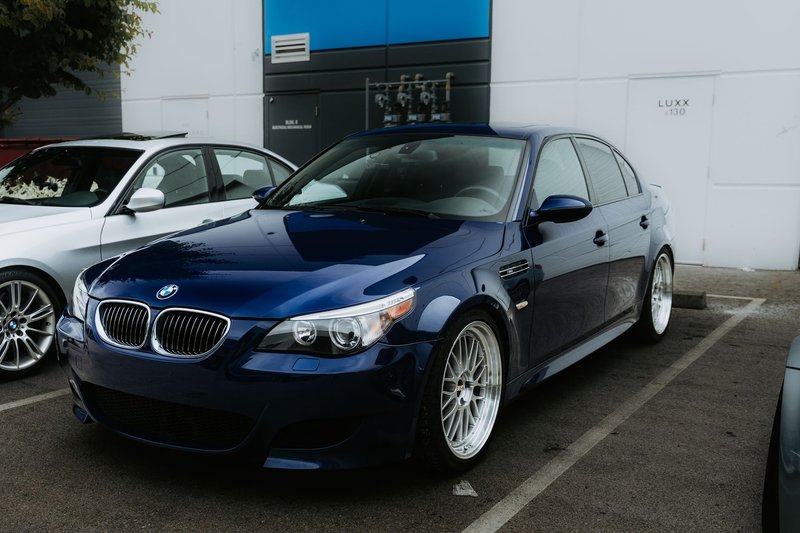
The 3 Series is the one that matters most here — it was still fresh for 2020, running BMW’s new B48/B58 engine family and a chassis about 50 pounds lighter than the outgoing F30. The 330i’s 255 hp doesn’t sound dramatic on paper, but the EPA rates it around 26 city/36 highway, which is genuinely good for a rear-drive sport sedan.
The 6 Series Gran Turismo, meanwhile, was on its way out — 2020 was its last year in the U.S. before BMW quietly dropped it. If you find one cheap used, know that you’re buying a car nobody replaced, which cuts both ways: no waiting list of buyers when you sell, but also no successor competing for parts demand.
SUVs: X1 through X7
| Model | Chassis | Engine / Power | Starting MSRP |
|---|---|---|---|
| X1 (sDrive28i / xDrive28i) | F48 | 2.0L I4, 228 hp | ~$36,700 |
| X2 (sDrive28i / xDrive28i) | F39 | 2.0L I4, 228 hp | ~$37,150 |
| X3 (sDrive30i / xDrive30i) | G01 | 2.0L I4, 248 hp | ~$42,150 |
| X4 (xDrive30i) | G02 | 2.0L I4, 248 hp | ~$50,050 |
| X5 (sDrive40i / xDrive40i / xDrive50i / M50i) | G05 | 3.0L I6, 335 hp / 4.4L V8, 456 hp / 523 hp | $58,900 |
| X6 (xDrive40i / M50i) | G06 | 3.0L I6, 335 hp / 4.4L V8, 523 hp | ~$65,300 |
| X7 (xDrive40i / xDrive50i) | G07 | 3.0L I6, 335 hp / 4.4L V8, 456 hp | ~$74,900 |
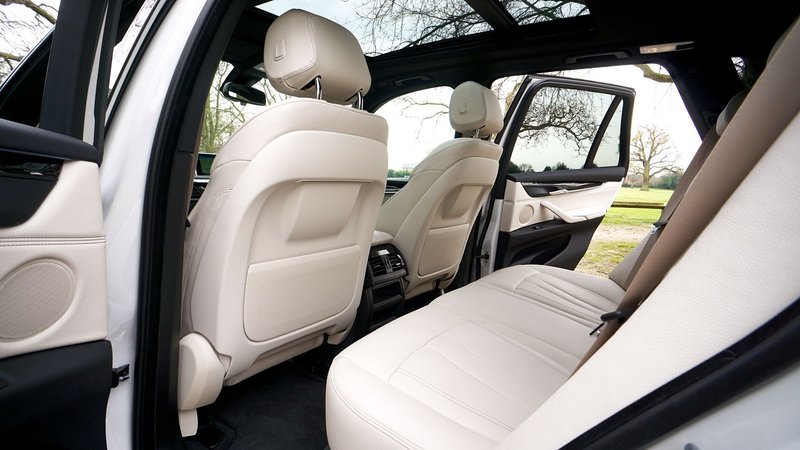
The X3 and X5 are the volume sellers, and it shows in how BMW built them: both got a full ground-up redesign for this generation rather than a warmed-over carryover, and both share a lot of their electrical architecture with the 3 and 5 Series sedans. That matters for reliability, which we’ll get to.
The X7, on the other hand, was brand new for 2019 and still felt like it in 2020 — BMW’s answer to the Mercedes GLS, three rows, and a grille that started the whole “bigger kidneys” trend before the 7 Series took it further.
M cars: the performance lineup
| Model | Chassis | Power | 0–60 mph | Starting MSRP |
|---|---|---|---|---|
| M2 Competition | F87 | 3.0L I6, 405 hp | 4.0s | ~$59,900 |
| M4 / M4 Competition (final F-body year) | F82/F83 | 3.0L I6, 425–444 hp | 4.1s | ~$71,000 |
| M5 / M5 Competition | F90 | 4.4L V8, 600–617 hp | 3.1–3.2s | $103,500 |
| M8 / M8 Competition | G14/G15 | 4.4L V8, 600–617 hp | 3.0–3.1s | $131,995 |
| X3 M / X3 M Competition | F97 | 3.0L I6, 473–503 hp | 4.0–4.1s | $69,900 |
| X4 M / X4 M Competition | F98 | 3.0L I6, 473–503 hp | 4.0–4.1s | ~$72,400 |
| X5 M / X5 M Competition | F95 | 4.4L V8, 600–617 hp | 3.8–3.9s | $105,100 |
| X6 M / X6 M Competition | F96 | 4.4L V8, 600–617 hp | 3.8–3.9s | ~$108,900 |
The one everyone gets wrong: there’s no 2020 M3 sedan. BMW sold the F80 M3 through 2018, then left a gap while it developed the G80. If a listing says “2020 BMW M3,” it’s either a typo, a Canadian-market car with different model-year conventions, or something to walk away from. The M4 coupe and convertible, though, soldiered on through 2020 as the last of the F82/F83 generation — the S55 twin-turbo six with the six-speed manual still available, before the G82’s split-headlight redesign took over.
The X3 M and X4 M were brand new for 2020, BMW’s first attempt at a genuinely fast compact SUV rather than just a sportier trim. Between 473 and 503 hp depending on Competition trim, they’re the SUVs most likely to embarrass a hot hatch at a stoplight.
Plug-in hybrids
| Model | Chassis | System Power | Electric Range | Starting MSRP |
|---|---|---|---|---|
| 330e | G20 | 288 hp combined | ~22 miles (EPA) | ~$44,450 |
| 530e / 530e xDrive | G30 | 252 hp combined | ~16 miles (EPA) | ~$54,700 |
| 745e xDrive | G12 | 389 hp combined | ~16 miles (EPA) | ~$95,750 |
| X5 xDrive45e | G05 | 389 hp combined | ~30 miles (EPA) | ~$65,300 |
Worth flagging: the iX3, which some spec sheets lump into the 2020 lineup, was never actually sold in the U.S. It launched in China and Europe and BMW ultimately canceled U.S. plans entirely in favor of the iX and i4. If you see it listed on a “2020 BMW models” roundup aimed at American buyers, that’s the page copying a spec sheet without checking which market it applies to.
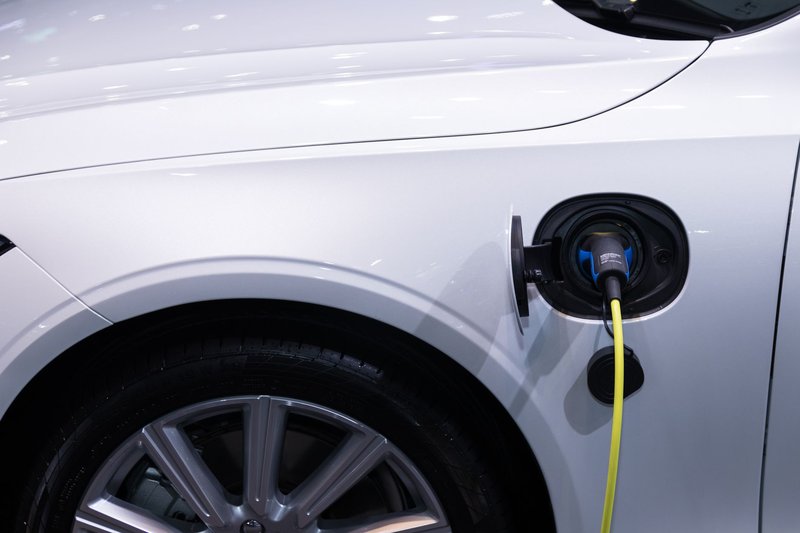
The X5 xDrive45e is the sleeper of this group — nearly 390 combined horsepower and enough battery to cover a real commute on electricity alone, which is more than you can say for most PHEVs from this era that treated the electric motor as a compliance-only afterthought.
Reliability by model
This is the part the spec-sheet aggregators skip, and it’s the part that actually matters if you’re buying one of these used in 2026 rather than new in 2020.
3 Series / 4 Series (G20-based): The B48 four-cylinder has a documented tendency toward oil consumption from worn piston rings and valve seals, and valve cover gasket leaks show up commonly by 60–80K miles. The G20-specific quirk is folding-mirror electronics — moisture gets into the mirror module, shorts it out, and can take the master switch for windows and trunk down with it. Annoying, not catastrophic, and cheap to fix if caught early.
X5 / X3 (G05/G01): Consumer Reports has flagged engine and electrical-system complaints as the two most common categories for the 2020 X5. The V8-equipped versions burn oil at a rate BMW considers normal but most owners don’t — a byproduct of the hot-vee turbo layout shared across BMW’s V8 lineup. There was also a battery-related recall on certain 2020 X5 plug-in hybrids over debris inside the high-voltage battery pack; worth checking NHTSA’s recall database by VIN before buying any 2020 X5 xDrive45e.
2 Series (F22/F23, pre-G42): Shares the B48 engine’s valve-cover and coolant-loss issues, plus turbo charge-pipe failures that are common enough to be considered routine maintenance by 100K miles rather than a surprise repair.
M models: The high-output S55 (M2/M3/M4) and S63 V8 (M5/M8/X5M/X6M) are both durable when maintained on schedule, but neither forgives skipped oil changes. Rod bearing wear on the S63 is the one to have a pre-purchase inspection specifically check for — it’s not universal, but it’s expensive enough when it happens that skipping the inspection is a bad bet.
None of this makes the 2020 lineup unreliable by luxury-car standards. It makes it a car that rewards buying with service records in hand and skipping the one with none.
What a 2020 BMW is worth in 2026
Six years out, depreciation has done most of its work. BMWs as a brand typically shed 45–55% of their value over five years, faster than the roughly 40% industry average, and the 2020 lineup is tracking right on that curve.
| Model | Typical used range (2026) |
|---|---|
| 3 Series | $19,000–$36,000 |
| 5 Series | $19,000–$32,000 |
| X3 | $21,000–$34,000 |
| X5 | $26,000–$42,000 |
| M4 | $38,000–$55,000 |
| M5 Competition | $50,000–$68,000 |
The 3 Series holds value slightly better than the 5 Series in percentage terms — it depreciated about 27% over three years against the 5 Series’s 32% — which tracks with it being the newer, more in-demand chassis at the time. V8 and M-badged cars hold value better in dollar terms but are more expensive to insure and maintain, so the percentage story looks better than the ownership-cost story.
Chassis codes, decoded
Every 2020 BMW spec sheet references a chassis code, and knowing them saves you from cross-shopping the wrong generation on a marketplace search:
- G20 — 3 Series sedan
- G22 — 4 Series (didn’t launch until MY2021; 2020 4-Series is still F32/F33/F36)
- G30 — 5 Series sedan
- G01 — X3
- G05 — X5
- G07 — X7
- G11/G12 — 7 Series (long-wheelbase is G12)
- G14/G15/G16 — 8 Series (convertible/coupe/Gran Coupe)
- F87 — M2 Competition
- F90 — M5
If a listing’s chassis code doesn’t match its stated model year, that’s your cue to ask the seller for the actual build sheet before anything else.
Which one should you actually buy
For most buyers shopping used in 2026, the 330i or X3 xDrive30i hits the sweet spot — new enough chassis, six-cylinder-adjacent tech in a four-cylinder body, and a used price that’s dropped enough to make sense against a comparable Audi or Mercedes competitor. If you want the six-cylinder feel without M-car running costs, the M340i and X3 M40i (not covered above, but worth cross-shopping) split the difference.
If you’re chasing performance and can stomach the maintenance bills, the M4 is the one to grab before F82/F83 values start climbing the way E46 M3s did — it’s the last of a manual-transmission, naturally-aspirated-feeling turbo generation before BMW went fully digital with the G82. Buy on service history, not just mileage, and you’ll end up with a genuinely good car six years removed from its showroom debut.

Daniela Voss
More from Daniela VossHow we reviewed this article
This article was researched against manufacturer records and editorially reviewed before publishing. We accept no payment for coverage. Some guides contain affiliate links; see our affiliate disclosure.