The model year 1980 gets blurred into “the 80s” by almost everyone who writes about it. That’s a shame, because 1980 is a specific and strange moment in car history. The malaise era was at its bleakest in America, Japan was about to eat Detroit’s lunch, and Europe quietly launched two of the most important cars of the entire decade in the same twelve months.
This is a list of cars that actually debuted in 1980 — not “popular in the 80s,” not “an 80s icon that came out in 1983.” Eighteen of them. Some you’d kill to own now. A few you couldn’t give away. All of them tell you something about where the world was heading.
Table of Contents
- What 1980 Actually Looked Like
- The Quick List
- The 18 Cars
- Audi Quattro
- Fiat Panda
- Austin Metro
- Renault 5 Turbo
- Lotus Esprit Turbo
- Ferrari Mondial 8
- Lincoln Town Car
- Plymouth Reliant / Dodge Aries
- Yugo 45
- Pontiac Firebird Turbo Trans Am
- Chevrolet Citation X-11
- Triumph Acclaim
- DeLorean DMC-12
- Honda Acty
- Talbot Tagora
- Mazda RX-7 (first full year)
- BMW M1 (final run)
- Vauxhall Astra
- Where They Are Now
What 1980 Actually Looked Like
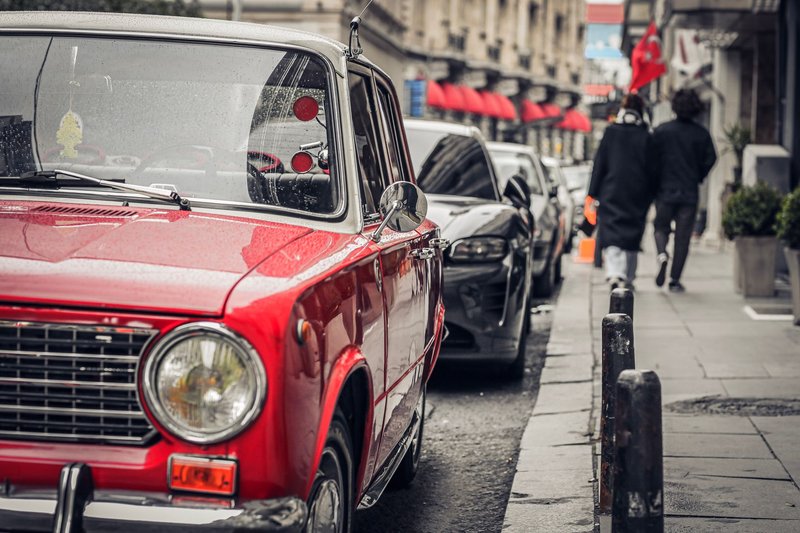
Two oil shocks in seven years had rewired the entire industry. The 1979 crisis sent fuel prices through the roof again, and buyers who’d shrugged off the 1973 embargo were now genuinely scared. Small was suddenly smart. Front-wheel drive went from oddity to default. Turbocharging stopped being an exotic race trick and started showing up on cars normal people could buy.
In America, this collided with strangling emissions rules and the result was grim. A 1980 Corvette made 190 horsepower from 5.7 liters — a number a modern hatchback laughs at. Detroit’s answer was the K-car platform and a wave of badge-engineered economy boxes. Meanwhile Japanese imports kept climbing, and by 1980 the pressure was severe enough that voluntary export restraints were being negotiated within a year.
Europe took the opposite lesson and ran with it. Instead of just shrinking engines, Audi and Renault asked what turbocharging and clever drivetrains could actually do. The two cars that opened this list came out of that question and changed rallying, supercars, and eventually every performance car you can buy today.
The Quick List
If you only remember three cars from 1980, make them the Audi Quattro (it rewrote what a fast car could be), the Fiat Panda (it rewrote what a cheap car should be), and the DeLorean DMC-12 (it rewrote nothing but became immortal anyway). The Renault 5 Turbo is the enthusiast’s pick and the smartest money. The K-car is the most historically important thing nobody wants in their garage.
Full table of current values is at the bottom.
The 18 Cars
1. Audi Quattro
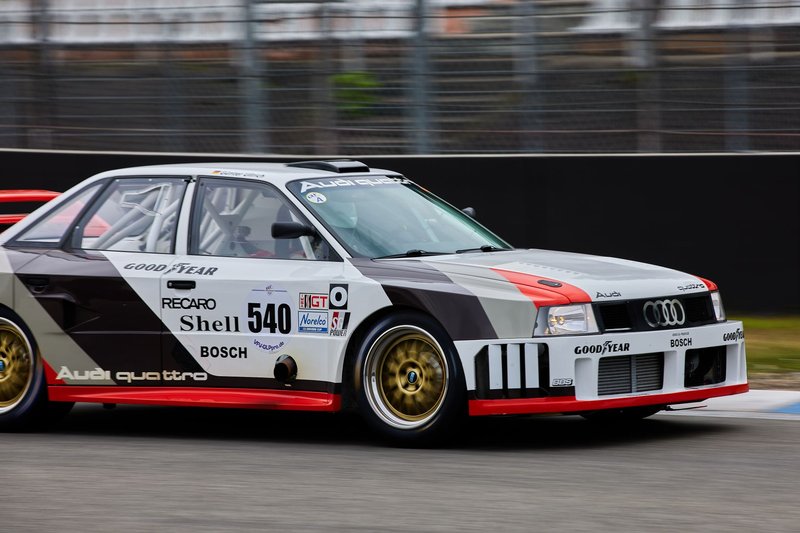
The single most influential car on this list, and it isn’t close. Audi took a turbocharged 2.1-liter inline-five, bolted it to a permanent four-wheel-drive system nobody thought belonged on a road car, and dropped the result onto the 1980 Geneva show stand. Output was 197 horsepower — modest now, transformative then, because all four wheels could actually use it.
In rallying it was a massacre. The Quattro turned two-wheel-drive Group B cars into museum pieces almost overnight and forced every rival to go four-wheel drive or go home. The “ur-Quattro,” as collectors call the original, now trades well into six figures for clean early cars. The flared arches and that warbling five-cylinder soundtrack are the whole reason “Quattro” is still a badge Audi prints money with, even as plenty of other Audi nameplates have quietly been axed over the years.
2. Fiat Panda
Giorgetto Giugiaro designed the Lamborghini Countach and the DeLorean. He also designed the Fiat Panda, and he was prouder of the Panda. Launched in 1980, it was a deliberately, gloriously honest box — flat glass to cut cost, a fabric rear seat you could fold into a hammock or pull out entirely, and a dashboard that was a single full-width shelf.
It was transport stripped to its purpose, and it was brilliant at it. The Panda stayed in production in updated forms for decades and sold in the millions. It’s the anti-Quattro: no turbo, no glamour, just a perfectly judged answer to the question “what does a cheap car actually need to be?” Original first-series Pandas are now genuinely collectible, which would have baffled everyone in 1980.
3. Austin Metro
British Leyland’s last real shot, and for a moment it looked like it might land. The Metro arrived in October 1980 carrying the desperate hope of a company circling the drain, marketed with a famous ad showing Metros lined up at the white cliffs of Dover repelling foreign imports. Cheeky, patriotic, and ultimately not enough.
The Metro itself was a competent supermini with clever packaging and the venerable A-series engine. It sold well at first and genuinely propped up the company for years. But quality and rust did their usual British Leyland work, and survivors are now rare enough that the Metro has flipped from punchline to nostalgic curiosity.
4. Renault 5 Turbo
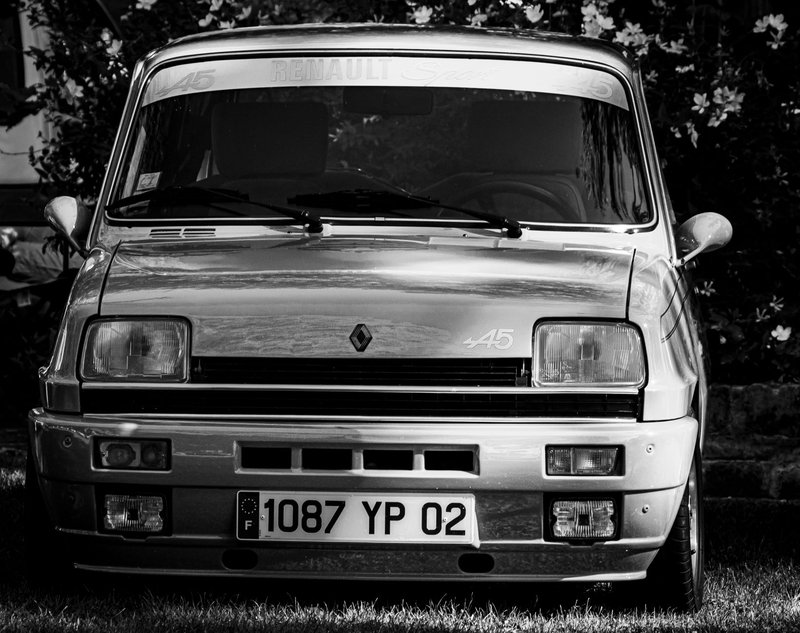
Take a humble Renault 5 economy hatch. Now move the engine from the front to the middle, where the back seats used to be, turbocharge it, and blister the bodywork out to fit fat rally tires. That’s the 5 Turbo, and it’s one of the maddest things a mainstream maker has ever sold to the public.
The mid-mounted 1.4-liter turbo four made around 158 horsepower in road trim, which doesn’t sound like much until you remember it’s shoving along a tiny car with all the weight behind the driver. It was built to go rallying and it won, including a famous Monte Carlo victory. Today it’s the connoisseur’s 1980 car: rarer than a Quattro, weirder than anything, and climbing in value fast.
5. Lotus Esprit Turbo
The Esprit had been around since 1976, but 1980 is when it got the turbo and finally had the performance to match Giugiaro’s wedge. The Esprit Turbo’s 2.2-liter four made about 210 horsepower, enough to put it in genuine supercar conversation while weighing almost nothing.
It’s the Bond car, of course — the submarine Esprit was the white S1, but the turbo is the one that made the shape stick around for the entire decade. Driving impressions of the day praised its mid-engined balance over outright grunt, which is the Lotus way. Clean Turbo Esprits have appreciated steadily as 80s wedge supercars became fashionable again.
6. Ferrari Mondial 8
The Ferrari everyone loves to dunk on, and the reputation is mostly unfair. Launched in 1980 to replace the 308 GT4, the Mondial 8 was a 2+2 with a transverse mid-mounted 3.0-liter V8 making a famously underwhelming 214 horsepower in its earliest form, choked by emissions gear.
That soft debut gave the Mondial a lasting image problem. But it’s a usable, comfortable, genuinely pretty Pininfarina shape, and for years it was the cheapest way into a real mid-engined Ferrari V8. Smart buyers have noticed; the gap between Mondial money and 308 money has narrowed as people realize the “worst Ferrari” framing was always lazy.
7. Lincoln Town Car
While Europe turbocharged and downsized, Lincoln did the most American thing imaginable and made “Town Car” a standalone model for 1981 — first shown and built into the 1980 lineup transition. Vinyl roof, velour interior the size of a studio apartment, and a ride tuned to isolate you from the very concept of a road — the same formula Lincoln had perfected with the enormous chrome land yachts it built all through the 1970s.
It became the default airport limo and funeral car for a generation, which is its own kind of immortality. The Town Car represents the road not taken: while the rest of the industry panicked about efficiency, Lincoln bet that some Americans would always want a living room on wheels. They were right for about twenty more years.
8. Plymouth Reliant / Dodge Aries (K-car)
The most boring car here and possibly the most important to its maker’s survival. Chrysler was hours from bankruptcy, propped up by federal loan guarantees signed in early 1980, and the K-car platform was the bet-the-company product those loans paid for.
The Reliant and Aries were front-drive, three-box, supremely sensible economy sedans. Nobody’s heart races. But they were exactly what panicked, fuel-conscious 1980 buyers wanted, they sold by the hundreds of thousands, and the stretchy K platform underpinned everything Chrysler made for years — including the minivan that printed money. No K-car, probably no Chrysler. That’s a bigger legacy than most supercars manage.
9. Yugo 45
It became the international punchline for “bad car,” but the Yugo started in 1980 as the Zastava-built version of a Fiat 127 derivative, badged in its home market before its infamous American adventure later in the decade. The 45 in the name was the horsepower. That tells you most of what you need to know.
Cheapness was the entire pitch, and cheapness has consequences. The Yugo earned its reputation honestly. But there’s a weird affection for it now, the way people love a famously terrible movie, and running examples have become ironic collector items. The car that everyone mocked is now harder to find than some of the exotics on this list.
10. Pontiac Firebird Turbo Trans Am
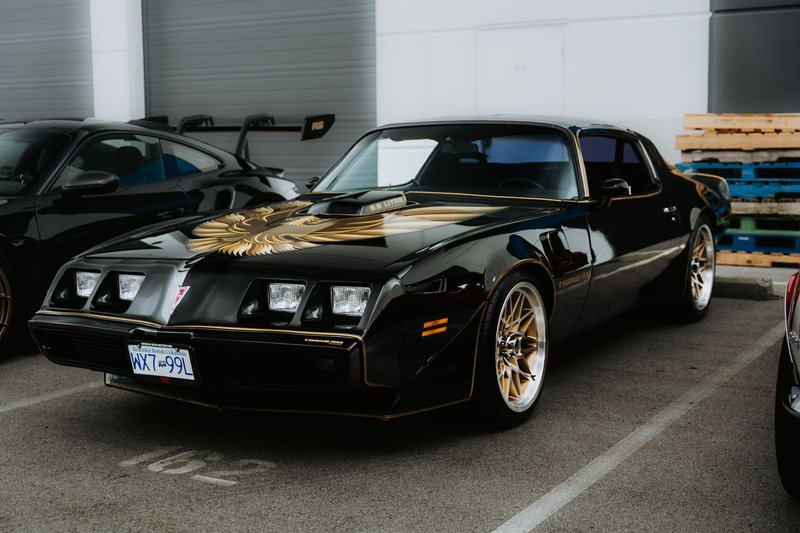
Detroit’s answer to the malaise-era horsepower drought was forced induction, and the 1980 Turbo Trans Am was the loud, gold-decaled result. With the big-block options gone, Pontiac strapped a turbo to a 4.9-liter V8 to claw back performance, landing around 210 horsepower — and it was the pace car at the Indy 500 that year.
It’s not fast by any sane standard, and the turbo setup was famously laggy and fragile. But the screaming-chicken hood decal and Smokey and the Bandit cool kept it desirable, and it’s a perfect time capsule of how American performance survived its worst decade: with attitude standing in for output.
11. Chevrolet Citation X-11
GM’s X-body cars launched for 1980 as the General’s big front-wheel-drive gamble, and the Citation was the volume seller. The X-11 was the sporty one, with a high-output V6 and a genuine attempt at being fun. Early sales were enormous; the Citation was briefly one of America’s best-selling cars.
Then the recalls started, and they didn’t stop. The X-cars became a byword for rushed GM engineering, and the Citation’s reputation cratered as fast as it had risen. It matters as a cautionary tale: the right idea (front-drive, efficient, roomy) executed badly enough to poison buyer trust for years. Survivors are scarce because few were worth keeping.
12. Triumph Acclaim
A genuinely strange historical footnote: the Triumph Acclaim, which arrived right at the end of 1980 into 1981 production, was a Honda Ballade built under license in Britain. It’s effectively a Honda wearing a Triumph badge, and it was reliable in a way British Leyland products famously were not — precisely because it was Japanese underneath.
The Acclaim was the first fruit of the Honda-Rover partnership that would shape British carmaking for the next decade. It’s not exciting and almost nobody preserved one, but it marks the exact moment Britain stopped trying to out-engineer Japan and started copying its homework instead.
13. DeLorean DMC-12
The DMC-12 was revealed and entered production in 1980, John DeLorean’s stainless-steel, gullwing dream built in a brand-new Northern Ireland factory propped up by British government money. The brushed steel body never rusted and never needed paint. The car underneath, with its rear-mounted PRV V6 making around 130 horsepower, was slow and the build quality was rough.
Then the whole thing collapsed in scandal and bankruptcy by 1982. The DeLorean should be a forgotten failure. Instead, Back to the Future turned it into one of the most recognizable cars on earth, and that single piece of casting means a tatty, slow, badly-built 1980 sports car is now a genuine collectible worth more than most contemporaries that were objectively better.
14. Honda Acty
Easy to overlook from a Western desk, but the Acty kei truck launched in 1980 and represents a whole philosophy. Japan’s kei class capped engine size and dimensions in exchange for tax and parking breaks, and the Acty was Honda’s tiny, mid-engined, unkillable answer — a working vehicle for farmers, tradesmen, and narrow city streets. Remarkable from a company that hadn’t built a single car until the 1960s, having started out making motorcycles.
These things just refuse to die, which is why decades-old kei trucks now get imported into the US and snapped up the moment they clear the 25-year rule. The 1980 Acty is the start of a lineage that’s become an unlikely cult obsession on the other side of the world.
15. Talbot Tagora
A magnificent failure, and the kind of obscure entry that separates a real 1980 list from a recycled one. The Tagora was a large executive saloon launched as Peugeot tried to do something with the wreckage of Chrysler Europe, which it had bought and rebadged Talbot. It was big, boxy, and aimed squarely at the BMW and Mercedes buyer.
Almost nobody bought it. The Tagora was discontinued after a couple of years with tiny production numbers, killed by a confused brand and a market that had no idea what Talbot even was anymore. That rarity makes it a curiosity now; you can go to a dozen classic shows and never see one.
16. Mazda RX-7
The first-generation RX-7 had just landed, and 1980 was its first full year of taking on the world. Mazda’s commitment to the rotary engine looked stubborn in a fuel-crisis market, but the payoff was a light, beautifully balanced, front-mid-engined sports car that spun to a redline no piston engine could match.
It undercut European sports cars on price and embarrassed plenty of them on a back road. The RX-7 proved a Japanese maker could build a real driver’s car, not just appliances, and it kicked off a sports-car golden age for Japan. Clean first-gen examples have quietly become serious collector cars as rotary nostalgia peaks.
17. BMW M1
1980 was the final year of M1 production, and that scarcity is the point. BMW’s only true mid-engined supercar of the era, designed with Giugiaro and originally built for racing rules that changed underneath it, was made in tiny numbers before the plug was pulled. Around 450 were built across the whole run.
The road car’s 3.5-liter straight-six made about 273 horsepower, and the racing versions spawned the wild Procar series where Formula 1 drivers raced identical M1s. It’s the founding artifact of BMW’s M division, and prices have gone vertical — a clean M1 now sits firmly in seven-figure territory, the most valuable car on this list by a wide margin.
18. Vauxhall Astra
The sensible bookend. The Astra arrived in 1980 as the British face of GM’s new front-wheel-drive Kadett, a clean-sheet design that finally gave Vauxhall a competitive small family hatch against the Ford Escort and VW Golf. Front-drive, efficient, well-packaged — everything the moment demanded.
It’s not romantic, but the Astra mattered because it sold in vast numbers and became a fixture of European driveways for the next forty years. The 1980 original is the great-grandfather of a nameplate that’s still on sale. Most got used up and scrapped, which makes a tidy first-generation Astra a surprisingly rare sight at shows now.
Where They Are Now
Values move constantly, but the broad picture for these 1980 cars is clear: the performance Europeans have gone stratospheric, the worthy-but-dull cars stay cheap, and a couple of objectively bad cars have been rescued by pop culture. Condition and originality drive everything — a documented, unmolested example can be worth several times a tired runner.
| Car | Rough collector value (clean example) | Why |
|---|---|---|
| BMW M1 | $500,000+ | Rarity, M-division origin, racing pedigree |
| Audi Quattro (early ur-Quattro) | $80,000–150,000+ | Rewrote performance cars, low survivor count |
| Renault 5 Turbo | $90,000–130,000 | Mad mid-engine layout, rally history |
| Lotus Esprit Turbo | $40,000–70,000 | Bond fame, 80s wedge revival |
| Ferrari Mondial 8 | $30,000–45,000 | Cheapest mid-engine Ferrari V8, rising |
| DeLorean DMC-12 | $40,000–70,000 | Pure Back to the Future effect |
| Mazda RX-7 (first gen) | $20,000–40,000 | Rotary nostalgia, clean ones scarce |
| Pontiac Turbo Trans Am | $20,000–35,000 | Bandit cool, Indy pace car year |
| Fiat Panda (Mk1) | $5,000–12,000 | Design icon, finally appreciated |
| Plymouth Reliant / Dodge Aries | $4,000–9,000 | Saved Chrysler, nobody’s heart races |
| Yugo 45 | $3,000–8,000 | Ironic cult status, hard to find running |
If you’re shopping, the smart-money picks aren’t the obvious ones. The Quattro and M1 are already priced for what they are. The genuine upside sits with cars the market still underrates — the Mondial that spent decades as the “bad Ferrari,” the first-gen RX-7 riding a rotary wave, and the Renault 5 Turbo, which is rarer than a Quattro and weirder than anything but still trades for less than the Audi it shared a podium era with. Buy the story everyone got wrong, not the one everyone already agrees on.

Marco Delantero
More from Marco DelanteroHow we reviewed this article
This article was researched against manufacturer records and editorially reviewed before publishing. We accept no payment for coverage. Some guides contain affiliate links; see our affiliate disclosure.