TLDR
- Best overall: Toyota — still the default answer, and for good reason. Unmatched resale value and a service network in every province.
- Best pickup: Isuzu D-Max, with Ford Ranger as the enthusiast’s pick if you want more power and don’t mind paying for parts.
- Best value Chinese EV: BYD — the only Chinese brand with its own factory in Thailand, which shows up in pricing and parts availability.
- Best for a first car on a budget: Suzuki, if you can live with a smaller dealer footprint.
- Skip unless you know what you’re buying: any brand without an established Thai dealer network — check before you fall for a spec sheet.
- Genuinely Thai-owned: Thai Rung Union Car, not any of the household names above.
Table of Contents
- Wait — What Actually Counts as a “Thai” Car Brand?
- Why Thailand Builds Half the Cars It Sells
- The Established Players
- The Chinese EV Wave
- Comparison Table
- Which Brand Should You Actually Buy
Wait — What Actually Counts as a “Thai” Car Brand? {#what-counts}
Here’s the confusion baked into this search: “Thai car brands” gets used two completely different ways, and most articles don’t bother separating them.
One meaning is brands owned and headquartered in Thailand. There’s really only one that matters here: Thai Rung Union Car, founded in 1967 by Vichien Phaoenchoke, originally as an assembler of Leyland trucks before it pivoted to Isuzu, Nissan, and Chevrolet platforms. Thai Rung builds its own TR-badged specialty vehicles — rugged, boxy off-roaders and government utility trucks — under the Phaoenchoke family, which still holds a controlling stake. If you want an actual Thai-owned automaker, that’s the whole list.
The other meaning, and the one almost everyone searching this term actually wants, is: which brands are popular, well-supported, and worth buying in Thailand — regardless of where the badge originated. That’s Toyota, Isuzu, Honda, and now BYD and MG. None of them are Thai-owned. Most of them are, however, Thai-built, which is a different and more interesting thing.
Why Thailand Builds Half the Cars It Sells {#detroit-of-asia}
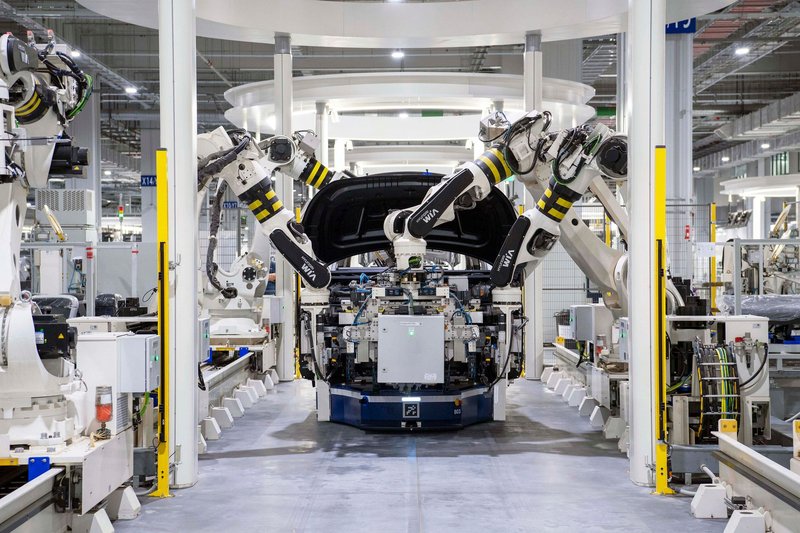
Thailand earned the nickname “Detroit of Asia” the hard way — through six decades of deliberate industrial policy, not luck. Starting in the 1960s, the government required a rising percentage of local content in any vehicle assembled domestically, which pushed Toyota, Isuzu, Honda, and later Ford and Mazda to build real manufacturing bases rather than just import showrooms. The payoff: Thailand now produces close to two million vehicles a year, making it the largest vehicle producer in Southeast Asia and the tenth-largest globally, with a supply chain of more than 700 Tier 1 parts suppliers feeding factories in Rayong and Chon Buri’s Eastern Economic Corridor.
That history matters to your buying decision in a very concrete way: a pickup truck assembled in Samut Prakan costs less, gets serviced faster, and has parts sitting in every upcountry dealership — compared to something shipped in fully built. It’s why pickups from Isuzu, Toyota, and Ford dominate Thai roads far more than they do in most of the world; Thailand isn’t just a market for them, it’s a production home.
The same playbook is now repeating for EVs. BYD opened its first factory outside China in Rayong in mid-2024, a $490 million plant built in sixteen months with capacity for 150,000 vehicles a year — and Great Wall Motor, Changan, and GAC have followed with their own local production commitments. The government is running the same local-content strategy on Chinese EV makers that it ran on Japanese combustion brands two generations ago.
The Established Players {#established-players}
These are the brands that have been building trust — and dealer networks — in Thailand for decades. Market share figures reflect early-2026 registration data.
Toyota
Market leader by a wide margin, holding roughly a third of all new car sales. The Yaris Ativ is currently Thailand’s best-selling single model, and the Hilux Revo remains the pickup benchmark everyone else gets measured against.
Pros: Best resale value in the country, bar none. Parts and service available literally everywhere, including small upcountry towns. Rock-solid reliability track record on the Hilux and Fortuner platforms.
Cons: You pay a premium for the badge on the used market. Styling and interior tech trail behind Chinese competitors at the same price point.
Standout model: Hilux Revo, still the truck taxi drivers and farmers actually choose with their own money.
Honda
Second-largest by share, strong in the sedan and compact SUV segments where Toyota is comparatively weaker.
Pros: Excellent build quality, some of the best warranty coverage among Japanese brands, strong performance in the City and HR-V segments.
Cons: Pickup and larger SUV lineup is thinner than Toyota’s or Isuzu’s — Honda isn’t really playing in that game.
Standout model: Honda City, a long-running favorite for first-time buyers and ride-hail drivers alike.
Isuzu
The pickup and one-ton truck specialist, and it shows — Isuzu punches far above its overall market share in the commercial and rural buyer segment.
Pros: The D-Max is arguably the most rugged, lowest-cost-to-own pickup sold in the country. Diesel engines built for high mileage with minimal fuss.
Cons: Passenger car lineup is essentially nonexistent — Isuzu is a truck brand, full stop.
Standout model: D-Max, especially in single-cab trim for commercial buyers.
Nissan
A mid-pack player with a loyal but shrinking following, still relevant thanks to aggressive pricing.
Pros: Competitive pricing on the Almera and Navara. Kicks e-Power hybrid drivetrain is a genuinely clever piece of engineering — no plug required, EV-like driving feel.
Cons: Resale value lags the Japanese leaders. Dealer network has contracted in recent years as the brand’s overall share has slipped.
Standout model: Kicks e-Power, the easiest way into hybrid driving without range anxiety or a home charger.
Mitsubishi
Best known in Thailand for the Triton pickup and the Xpander MPV, both strong sellers in their segments.
Pros: Long warranty coverage relative to competitors. The Xpander is one of the best-value seven-seaters on the market for growing families.
Cons: Less brand cachet than Toyota or Isuzu among pickup buyers, even where the underlying hardware is comparable.
Standout model: Xpander, the default recommendation for families who need three rows without an SUV price tag.
Ford
A smaller player by volume but a favorite among buyers who want more power and towing capacity than the mainstream Japanese trucks offer.
Pros: Ranger Raptor and Everest deliver genuinely more capable off-road and towing performance. Strong for buyers cross-shopping against premium pickups.
Cons: Parts and specialized service cost more and take longer outside Bangkok, since the dealer footprint is thinner than Toyota’s or Isuzu’s.
Standout model: Ranger Raptor, for buyers who want a performance pickup rather than a work truck.
Mazda
A design-forward alternative in a market that skews conservative on styling.
Pros: Interior quality and driving dynamics that punch above the price bracket. The Mazda2 and CX-30 are genuine driver’s choices, not just appliance cars.
Cons: Smaller dealer network than the big four Japanese brands, which affects resale and service convenience upcountry.
Standout model: CX-30, a compact SUV that actually rewards spirited driving.
Suzuki
The budget entry point, with small hatchbacks and city cars that undercut nearly everyone on price.
Pros: Lowest cost of entry for a new, reliable car. Excellent fuel economy on the Swift and Celerio.
Cons: Limited model range — don’t look here for a pickup or a family SUV. Dealer coverage is real but noticeably thinner outside major cities.
Standout model: Swift, still one of the most fun small hatchbacks sold in Thailand at its price.
The Chinese EV Wave {#chinese-wave}
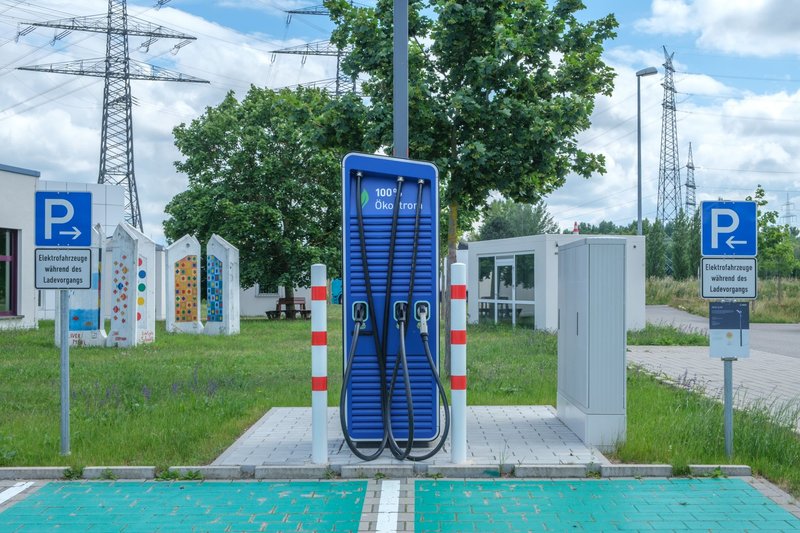
This is the part of the market every 2025-era listicle undersells, and it’s moving fast enough that any static ranking goes stale within months. Chinese brands collectively took roughly 47% of the Thai new-car market in early 2026, up from about 20% a year earlier — driven almost entirely by EV and hybrid demand that Japanese brands were slow to answer.
BYD is the standout. It holds the largest share of any Chinese brand in Thailand and roughly a third of the EV segment outright, helped by the fact that it’s the only one manufacturing locally at scale — the Rayong plant means shorter lead times and fewer import-tariff surprises than brands still shipping fully-built units from China. The Atto 3 and Dolphin are the volume sellers; the Seal competes directly with entry-level Tesla territory on spec sheets, if not yet on resale confidence.
MG got here earlier than most of its Chinese peers — it’s been assembling in Thailand since 2013, well before the current EV wave — which gives it a dealer network and brand recognition the newer entrants don’t have yet. The MG4 and MG ZS EV are common sights on Bangkok roads specifically because MG had showrooms open before “Chinese EV” was even a category buyers thought about.
Great Wall Motor (GWM/Haval) and Changan are the ones to watch rather than buy blind today. Both have committed real manufacturing investment to Thailand, and Changan in particular posted triple-digit growth in early 2026, but their local service infrastructure and resale track record are still being built in real time. Buying one now means betting on where that infrastructure will be in three years, not where it is today.
The honest caveat across all of them: resale value for Chinese EVs in Thailand is still an open question. Nobody has owned one long enough to prove out five-year depreciation curves the way Toyota’s have been proven for decades. Price and features are excellent. Long-term value is a bet, not a fact yet.
Comparison Table {#comparison-table}
| Brand | Typical Price Range | Warranty | Resale Value | Dealer Network |
|---|---|---|---|---|
| Toyota | Budget to premium | 3 yrs / 100,000 km | Excellent | Extensive, nationwide |
| Honda | Budget to mid-range | Up to 5 yrs on select models | Very good | Extensive |
| Isuzu | Budget to mid-range (pickups) | 3 yrs / 100,000 km | Excellent (pickups) | Extensive, strong upcountry |
| Nissan | Budget to mid-range | 3 yrs / 100,000 km | Good | Moderate |
| Mitsubishi | Budget to mid-range | Up to 5 yrs on select models | Good | Moderate to good |
| Ford | Mid-range to premium | Up to 5 yrs on select models | Fair | Moderate, thinner upcountry |
| Mazda | Mid-range | 3 yrs / 100,000 km | Good | Moderate |
| Suzuki | Budget | 3 yrs / 100,000 km | Fair | Moderate |
| BYD | Mid-range | Extended EV/battery coverage | Developing | Growing fast |
| MG | Budget to mid-range | Extended EV/battery coverage | Fair to developing | Established, growing |
Which Brand Should You Actually Buy {#which-to-buy}
If you’re buying for resale value above everything else, Toyota isn’t exciting but it’s correct — a five-year-old Hilux still commands a price that would embarrass most competitors.
If you need a work truck and cost-per-kilometer is the whole game, Isuzu’s D-Max is the default for a reason: parts are everywhere, diesel service is cheap, and the resale market treats it almost as well as Toyota.
If you want more capability and don’t mind paying Bangkok prices for specialized service, Ford’s Ranger lineup delivers genuine performance the Japanese trucks don’t match.
If you’re curious about EVs but want the least risk, BYD is the rational pick among Chinese brands — it’s the only one building locally, which tends to mean better long-term parts availability than brands still importing everything.
And if someone tells you they’re driving a “real Thai car,” ask if it’s a Thai Rung. Chances are it isn’t — and that’s fine. In Thailand, “built here” has mattered more than “owned here” for sixty years, and the car market reflects exactly that.

Tyler Bridges
More from Tyler BridgesHow we reviewed this article
This article was researched against manufacturer records and editorially reviewed before publishing. We accept no payment for coverage. Some guides contain affiliate links; see our affiliate disclosure.