TLDR
- Easiest to own: Honda, Kawasaki and BMW. Parts are plentiful and the bikes were built to be ridden.
- Best character per dollar: Royal Enfield, Jawa and Ural. Simple machines, cheap to fix, endlessly forgiving.
- Best investment: Vincent, Norton and Ducati. Prices are high and rising, and so are the repair bills.
- Most romantic, most painful: Triumph, BSA and Indian. Great bikes, but expect to hunt for parts and learn to wrench.
Table of Contents
- How we grouped these brands
- British vintage motorcycle brands
- Italian vintage motorcycle brands
- American vintage motorcycle brands
- Japanese, German and Eastern European marques
- Comparison table
- Which vintage brand suits you
- FAQ
How we grouped these brands
Most lists of vintage motorcycle brands recite the same ten names and a paragraph of nostalgia each. This one adds the part that matters if you might actually buy one: what the bike was known for, what happened to the company, and what ownership looks like now.
The brands are grouped by country because national character shows up in the machines. British bikes were lean and vibrating, Italian bikes were fast and fussy, American bikes were big and slow-revving, Japanese bikes simply worked. Prices below are rough ranges and swing hard with condition and provenance, so treat them as a starting point for your own checks.
British vintage motorcycle brands
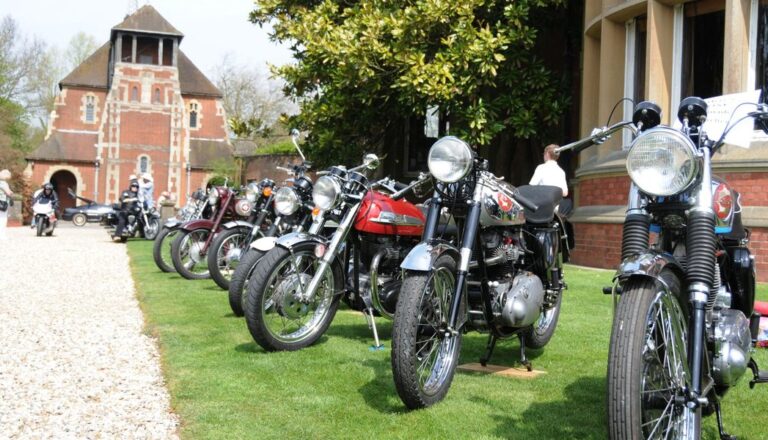
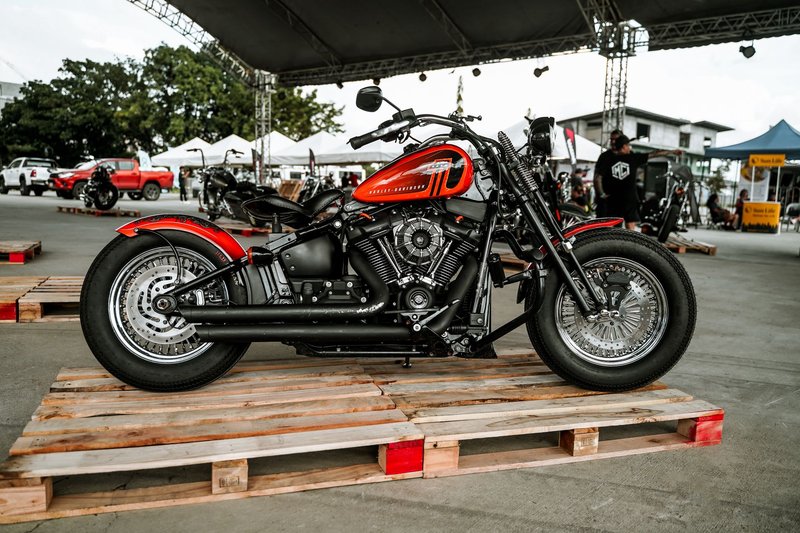
Britain dominated the sport and the market until the 1960s, then lost both to Japan within a decade. The survivors are mostly revivals, which makes the history messy and the badge worth checking carefully.
1. Triumph (founded 1885, motorcycles from 1902)
Triumph started with bicycles and built its first motorcycle in 1902. The name defined the postwar British parallel twin: the Bonneville arrived in 1959 and still sets the template for the modern retro bike. The Meriden factory closed in 1983 after a worker co-operative tried to save it, and businessman John Bloor bought the name and restarted production in Hinckley in 1990.
Owning one: Parts support for the 1960s twins is excellent, with a deep reproduction market. Expect oil leaks, Lucas electrics and a bike that needs regular attention. A running 1960s Bonneville typically costs well into five figures; tired T100s and 650 twins start far lower.
Status: Still producing.
2. Norton (founded 1898)
Norton built racing bikes before it built road bikes, and the Manx single won at the Isle of Man TT for years. The Commando (1967) gave the company its last great road bike, with a rubber-mounted engine that cut the vibration of its parallel twin. The old firm folded in the 1970s. After several owners and one messy administration in 2020, India’s TVS bought it.
Owning one: A Commando is a rewarding classic with strong club and parts support. The Isolastic rubber mounts wear and need replacement or adjustment, which is the first thing to check on any example.
Status: Revived, now under TVS.
3. BSA (founded 1861 as Birmingham Small Arms, motorcycles from 1910)
At its peak in the 1950s, BSA was among the largest motorcycle makers in the world. The Gold Star single, a 500 and 350 built for clubmen who wanted to race on weekends, is the one collectors chase. The group collapsed in the early 1970s and was absorbed into Norton Villiers Triumph. Mahindra bought the brand in 2016, and a new Gold Star went on sale in India in 2021, reaching the UK in 2024.
Owning one: A Gold Star is a serious purchase and fakes exist, so insist on documentation and frame and engine numbers that match. Rolling-chassis A65 twins are far more affordable.
Status: Revived, with modern Gold Stars on sale.
4. Vincent (founded 1928, motorcycles ended 1955)
Philip Vincent bought the HRD company in 1928 and turned it into the fastest road bike maker in Britain. The 1948 Black Shadow, a 998cc V-twin, was claimed to be the quickest production motorcycle in the world. Vincent stopped motorcycle production in 1955 because the bikes cost too much to build for the money they earned.
Owning one: Rare, expensive, and now an investment piece. Good examples trade at prices that rival a decent house deposit. Parts come from specialist firms and the owners’ club, not off a shelf.
Status: Defunct.
5. Royal Enfield (founded 1901)
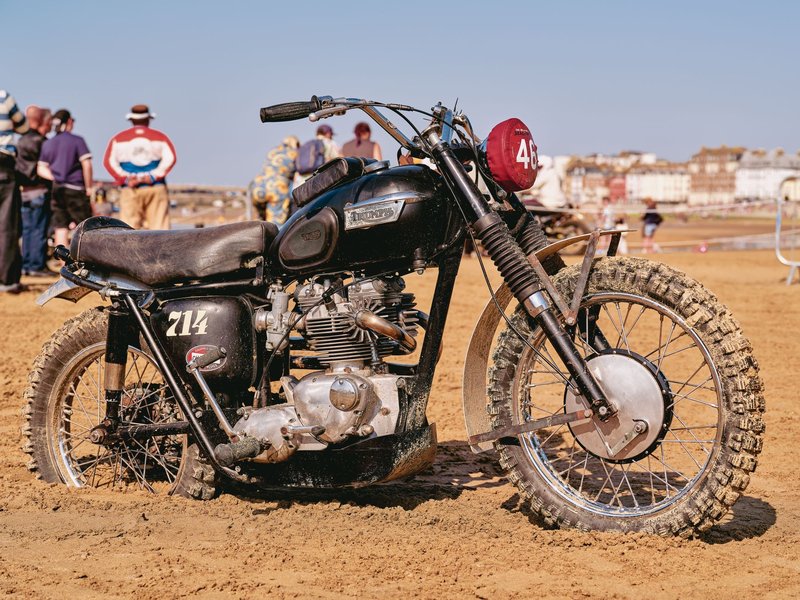
Royal Enfield’s Bullet single dates from the 1930s and is arguably the longest continuously produced motorcycle design in the world. English production ended in 1970, but the company’s Indian arm, which began assembling Bullets in Chennai in 1955, kept making a near-identical bike. Today it sells modern twins and singles globally.
Owning one: The cheapest way to buy into British-style vintage motorcycling. The mechanical layout is simple, spares are cheap and any competent mechanic can work on one.
Status: Still producing, in India.
Italian vintage motorcycle brands
Italian marques sell on sound, shape and racing results. They also cost more to repair, and the bikes reward owners who like tinkering.
6. Ducati (founded 1926)
Ducati started by making radio components in Bologna and moved into motorcycles after World War II. The bevel-drive V-twins of the 1970s define its classic era, particularly the 750 SS, which was built after Paul Smart won the 1972 Imola 200 on a factory 750. Volkswagen’s Audi division has owned the company since 2012.
Owning one: Bevel-drive twins are collectible and priced like it. Valve adjustment, the desmodromic system and original parts matter. Later belt-drive bikes are cheaper and easier to live with.
Status: Still producing.
7. Moto Guzzi (founded 1921)
Carlo Guzzi and Giorgio Parodi founded the company in Mandello del Lario, on the shore of Lake Como, where it still builds bikes. Its transverse V-twin with exposed cylinders is recognizable at a glance. The V7 of 1967 started a line that continues in the current V7. Piaggio has owned the brand since 2004.
Owning one: A good first classic. The engines are tough, parts are widely available and the shaft drive means no chain maintenance. Early V7 Sports are the collector pieces.
Status: Still producing.
8. MV Agusta (founded 1945)
Count Domenico Agusta started MV as a side business to his aviation company, and the racing team that followed collected 38 world championships across 50-odd years of Grand Prix racing. Giacomo Agostini and Mike Hailwood rode the multi-cylinder bikes. The 1970 750S put that DNA on the road. Production stopped in 1977, and the brand returned in the 1990s.
Owning one: The 750S is a blue-chip collectible with a price to match, and the parts are mostly specialist. For ownership you can afford, look at the 1990s Ducati or Cagiva-era models instead.
Status: Revived, still producing in Varese.
American vintage motorcycle brands
The American market drifted toward long, low cruisers with big V-twins. These two companies shaped that, and one of them went away for decades.
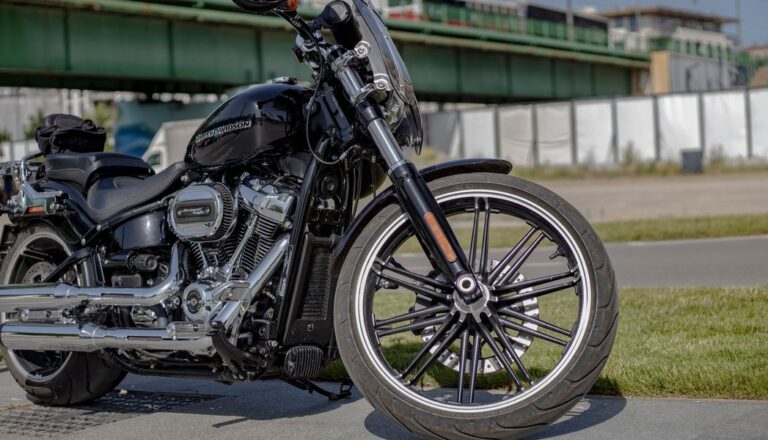
9. Harley-Davidson (founded 1903)
Founded in Milwaukee by William Harley and the Davidson brothers, the company survived the Depression and is the only major American motorcycle maker to produce continuously from the early years. The Knucklehead of 1936, with its overhead-valve V-twin, set the basis for the look people still associate with the brand. For history of this kind, the Smithsonian’s National Museum of American History holds artifacts from the brand’s early decades.
Owning one: Parts availability is the best of any American vintage bike, and the aftermarket is gigantic. Panheads, Shovelheads and Knuckleheads command very different prices, so decide your era first.
Status: Still producing.
10. Indian (founded 1901)
Indian started in Springfield, Massachusetts, where the brand established itself as America’s first serious motorcycle maker during its formative 1900s decade, and for years it was Harley’s only serious rival. The Scout and Chief made its reputation. The company closed in 1953, and the name passed through several owners. Polaris relaunched it in 2011, and it sells bikes today.
Owning one: Pre-1953 Indians are rare, and parts take work to find. Specialist suppliers and the club community are what keep these bikes alive.
Status: Revived and producing.
Japanese, German and Eastern European marques
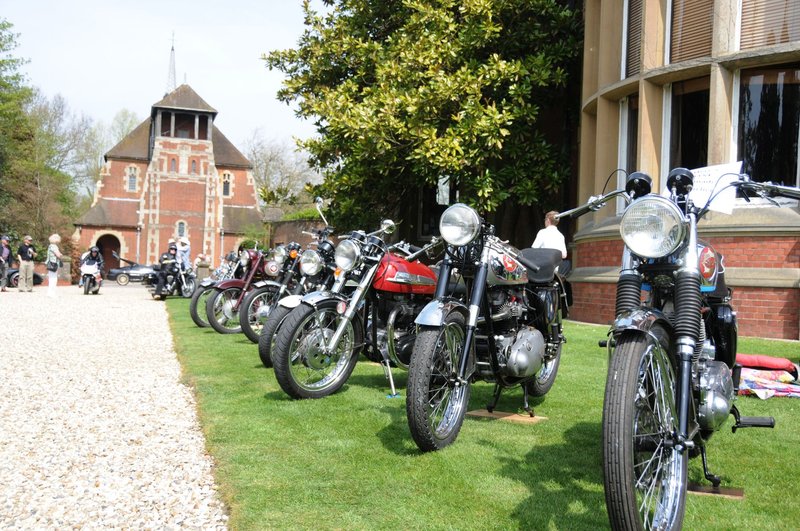
Most vintage lists skip these. They shouldn’t, because they are the sensible answer if you want a classic that starts every morning.
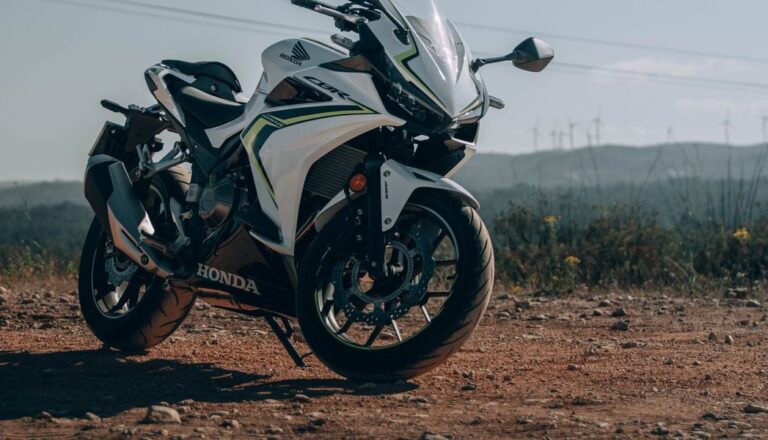
11. Honda (motorcycles from 1948)
The 1969 CB750 Four was the first mass-produced bike to combine a four-cylinder engine, a front disc brake and an electric starter, and it reset what buyers expected. The CB’s smooth inline-four made British twins feel old almost immediately.
Owning one: Easy. Parts are plentiful, the engines are tough and clubs are everywhere. Original sandcast K0 models are the high end of the market, while later CBs are inexpensive.
Status: Still producing.
12. Kawasaki (motorcycles from the 1960s)
The Z1 of 1972 arrived with a 903cc double-overhead-cam four and out-gunned the CB750. Kawasaki’s 1960s two-stroke triples were fast and wild.
Owning one: Z1s are now serious collectors’ pieces. Cheaper Z650 and KZ models give you the look at less cost. Two-stroke triples need patient hands.
Status: Still producing.
13. BMW (motorcycles from 1923)
The R32 of 1923 set the BMW formula: a flat-twin boxer engine and shaft drive, which it still uses. BMW’s pre-1970s boxers were stout, well-built touring machines.
Owning one: Airheads, the air-cooled boxers built until the mid-1990s, are the sweet spot. They’re simple, there’s a strong specialist network and they run for decades if looked after.
Status: Still producing.
14. Jawa (founded 1929)
The Czech firm was founded in Prague by Frantisek Janecek, and the name combines his surname with Wanderer, the German company whose design he licensed. It made two-strokes in huge numbers, and the Jawa 350 was a staple of Eastern Bloc roads and speedway tracks. Mahindra’s Classic Legends brought the brand back in India in 2018.
Owning one: Cheap, simple and charming. Parts come from owners’ clubs and specialist suppliers across Europe.
Status: Revived, with modern bikes built in India.
15. Ural (founded 1941)
Ural’s sidecar rigs began as copies of the BMW R71 and were built in Irbit, Russia, for the Soviet army. The design has barely changed since, and the company has sold two-wheel-drive sidecar outfits worldwide. Production has been disrupted since 2022.
Owning one: Agricultural, slow and weirdly capable in snow and mud. Expect to carry a toolkit and use it.
Status: Still produced in small numbers, with an uncertain supply situation.
Comparison table
| Brand | Founded | Country | Iconic bike | Status |
|---|---|---|---|---|
| Triumph | 1885 | UK | Bonneville | Producing |
| Norton | 1898 | UK | Commando | Revived (TVS) |
| BSA | 1861 | UK | Gold Star | Revived (Mahindra) |
| Vincent | 1928 | UK | Black Shadow | Defunct |
| Royal Enfield | 1901 | UK / India | Bullet | Producing |
| Ducati | 1926 | Italy | 750 SS | Producing |
| Moto Guzzi | 1921 | Italy | V7 | Producing |
| MV Agusta | 1945 | Italy | 750S | Revived |
| Harley-Davidson | 1903 | USA | Knucklehead | Producing |
| Indian | 1901 | USA | Chief | Revived (Polaris) |
| Honda | 1948 | Japan | CB750 | Producing |
| Kawasaki | 1960s (motorcycles) | Japan | Z1 | Producing |
| BMW | 1923 | Germany | R32 | Producing |
| Jawa | 1929 | Czech Republic | Jawa 350 | Revived (Mahindra) |
| Ural | 1941 | Russia | M-72 | Limited production |
Which vintage brand suits you
You want something that starts every time: Honda, Kawasaki or BMW airhead.
You want to learn to wrench on a budget: Royal Enfield, Jawa or Ural.
You want the sound and the heritage: Triumph, Harley-Davidson or Moto Guzzi.
You want a trophy: Vincent, a Ducati bevel twin or an MV Agusta 750S.
You want something nobody else at the rally has: Indian, Jawa or Ural.
Whatever you pick, buy the best example you can afford. A cheap restoration project almost always ends up costing more than a good running bike. The Guggenheim museum’s 1998 exhibition The Art of the Motorcycle was a reminder that these machines are worth preserving, which is as good a reason as any.
FAQ
What are the oldest motorcycle manufacturers still operating?
Royal Enfield (1901), Harley-Davidson (1903) and Triumph (motorcycles from 1902) are among the oldest. Indian was founded in 1901 and has had a long gap in production.
Which classic British motorcycle brands are still around?
Triumph, Royal Enfield, Norton and BSA all exist today, though Norton and BSA are revivals under new owners.
Which defunct motorcycle brands are most collectible?
Vincent is the standard answer. Pre-1953 Indian machines and early MV Agusta racers are also highly collectible.
What are the best vintage motorcycles to buy first?
A Honda CB, a BMW airhead, a Moto Guzzi V7 or a Royal Enfield Bullet. All have parts, clubs and a track record of surviving owners who are still learning.

Marco Delantero
More from Marco DelanteroHow we reviewed this article
This article was researched against manufacturer records and editorially reviewed before publishing. We accept no payment for coverage. Some guides contain affiliate links; see our affiliate disclosure.