Table of Contents
- Why 1987 Matters for Nissan
- 200SX (S12)
- 300ZX (Z31)
- Maxima
- Pulsar NX (N13)
- Sentra (B12)
- Stanza (T12)
- Pathfinder (WD21)
- D21 Hardbody Pickup
- Micra (K10) — The One America Didn’t Get
- 1987 Nissan Spec Comparison
- Which 1987 Nissan Is Actually Collectible Now
Why 1987 Matters for Nissan
By 1987, Nissan had already spent several years scrubbing the Datsun name off its badges in the US — a rebrand that confused more than a few loyal customers who’d bought their last three cars from “Datsun by Nissan” dealers. The name was gone, but the identity crisis wasn’t. Nissan needed 1987 to prove it could be a serious, singular brand: sporty where Toyota was reliable-boring, and technical where Honda was efficient-boring.
That’s exactly what this lineup does. You’ve got a twin-turbo flagship sports car, a brand-new SUV nobody asked for but everyone eventually wanted, and a compact pickup that outsold half the cars on this list combined. This isn’t a museum piece year for Nissan — it’s the year the modern Nissan identity actually clicked into place.
200SX (S12)
The 200SX in 1987 was Nissan’s answer to the question “what if the Sentra had ambitions?” Built on the S12 platform, it came as a notchback coupe or a fastback, with the top-line Turbo trim pushing a CA18ET 1.8-liter turbocharged four good for around 120 horsepower — modest today, genuinely quick against a mid-80s economy coupe.
What made the 200SX stand out wasn’t power, it was the roofline. Nissan gave the fastback a pop-up headlight treatment and a wedge silhouette straight out of the same design language as the 300ZX, which meant a car costing half as much still looked like it belonged in the same showroom. Enthusiasts today mostly remember it as a cheap RWD platform for drifting builds — a fate the base 1987 buyer never saw coming.
300ZX (Z31)
This is the car 1987 is actually remembered for. The Z31 300ZX Turbo had been refreshed for 1987 with a reworked front fascia and, critically, offered a Turbo model running the VG30ET 3.0-liter V6 with a Garrett turbocharger, rated at 200 horsepower — genuinely serious output for a Japanese production car in the Reagan era.
Nissan also ran a limited “Shiro Special” 300ZX Turbo package that year, a factory-tuned trim with a white-only exterior, sport suspension, and a numbered dash plaque. It’s the kind of low-volume special edition that barely registered in period sales brochures and now anchors entire forum threads about what’s “real” versus a dealer-badge fake. The Z31 also holds the distinction of running digital dashboards on certain trims — amber vector displays, a boost gauge that looked like it belonged in a fighter jet cockpit. Gimmicky, dated, and exactly why people love it now.
Maxima
The 1987 Maxima was riding out its first front-wheel-drive generation, a shift that had scandalized some of the brand’s more traditional buyers when it landed a couple of years earlier. Nissan marketed it hard as “the four-door sports car,” which was more aspiration than description, but the SE trim’s VG30E V6 and firmer suspension tuning gave the slogan some teeth.
Inside, the SE went further than most competitors dared with a voice-warning system that would announce things like “the door is open” in a synthesized female voice — a feature people either loved as futuristic or found deeply unsettling, with not much middle ground. It’s a small detail, but it’s the kind of thing that tells you exactly what era this car came from.
Pulsar NX (N13)
New for the 1987 model year, the second-generation Pulsar NX was Nissan’s most overtly playful car in the lineup. Its signature trick: a removable T-bar roof combined with interchangeable rear cargo modules — buyers could swap the standard hatch back panel for the “Sportbak,” which turned the car into something closer to a mini shooting-brake.
It’s a genuinely odd piece of automotive engineering, the sort of modular idea that made total sense on a design studio whiteboard and then quietly vanished from the market within a few years because almost nobody actually swapped the panels after the novelty wore off. Power came from a 1.6-liter E16i or the sportier 1.8-liter CA18DE twin-cam in the XE trim.
Sentra (B12)
The Sentra was Nissan’s volume seller, and the B12-generation car built for 1987 leaned into being unremarkable in the best sense — cheap, light, and reliable enough that high-mileage examples still turn up running errands decades later. The SE trim, though, borrowed the 1.6-liter twin-cam engine from the sportier corners of the lineup, giving budget-conscious buyers a genuinely quick pocket rocket if they knew which box to check.
Stanza (T12)
Positioned above the Sentra and below the Maxima, the Stanza was Nissan’s answer to the Camry-and-Accord-shaped hole in its lineup — a practical, slightly upmarket family sedan and wagon. It never earned much enthusiast affection and rarely shows up at car shows today, but its role in 1987 was structural: it kept Nissan competitive in the segment where Toyota and Honda were quietly winning the decade.
Pathfinder (WD21)
The Pathfinder debuted for the 1987 model year and it’s arguably the most consequential vehicle on this list, even though nobody at the time would have guessed it. Built on the same platform as the D21 pickup, the two-door WD21 Pathfinder arrived with a 2.4-liter Z24 four-cylinder or an optional V6, part-time four-wheel drive, and a boxy shape that made zero design statement — which, in hindsight, was the point.
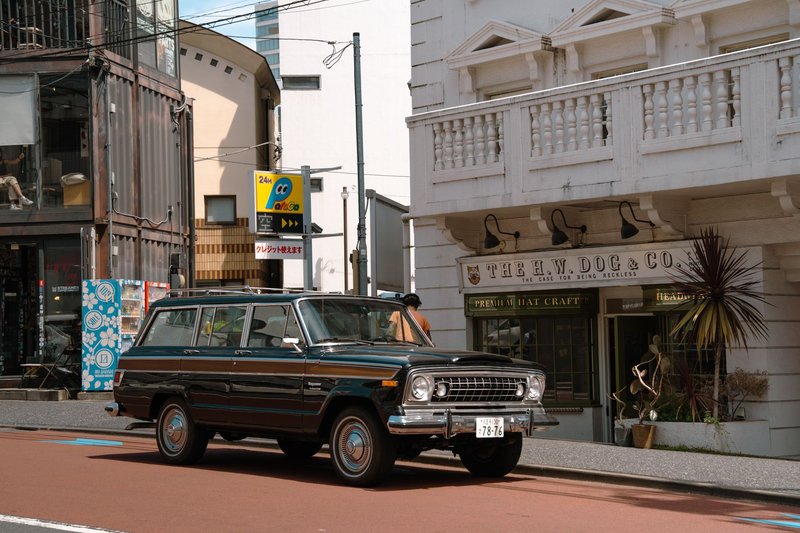
This was the first shot in what became the SUV arms race of the following two decades. Ford, Jeep, and Toyota all had competitors, but the Pathfinder’s timing and Nissan’s truck-building credibility gave it real staying power. Every crossover-SUV Nissan sells now traces its lineage back to this unglamorous two-door.
D21 Hardbody Pickup
Nissan’s compact pickup, nicknamed “Hardbody” for its distinctive ribbed bed panels, had been redesigned for the 1986 model year and carried into 1987 largely unchanged — and it didn’t need to change. The angular sheet metal and available King Cab extended body made it look meaner than most compact trucks of the era, and the available Z24 four-cylinder or VG30E V6 gave buyers a genuine choice between economy and muscle.
The Hardbody quietly outsold most of the passenger cars on this list. It became one of Nissan’s most durable nameplates in the American consciousness — enough so that Nissan revived the “Hardbody” name decades later for a modern compact truck aimed at the same buyer.
Micra (K10) — The One America Didn’t Get
The Micra never came to the US, but it’s worth knowing about because it shows the other half of Nissan’s 1987 strategy. In Japan, Europe, and other right-hand-drive markets, the K10-generation Micra was Nissan’s answer to the Honda City and early Ford Fiesta — a tiny, cheap, front-wheel-drive city car that had nothing to do with the sports-and-trucks image Nissan was cultivating in North America.
It’s a reminder that “1987 Nissan” meant something different depending on which continent you were standing on. The same company selling twin-turbo Z-cars in California was selling economy runabouts the size of a golf cart in Tokyo.
1987 Nissan Spec Comparison
| Model | Body Style | Engine (top trim) | Horsepower | Drivetrain |
|---|---|---|---|---|
| 200SX Turbo | Coupe/Fastback | 1.8L CA18ET turbo I4 | ~120 hp | RWD |
| 300ZX Turbo | 2+2 Coupe | 3.0L VG30ET turbo V6 | ~200 hp | RWD |
| Maxima SE | Sedan | 3.0L VG30E V6 | ~160 hp | FWD |
| Pulsar NX XE | 2-door/T-bar | 1.8L CA18DE I4 | ~100 hp | FWD |
| Sentra SE | Sedan | 1.6L E16 twin-cam I4 | ~100 hp | FWD |
| Stanza | Sedan/Wagon | 2.0L CA20E I4 | ~97 hp | FWD |
| Pathfinder | 2-door SUV | 2.4L Z24 I4 / V6 optional | ~103 hp | 4WD |
| D21 Hardbody | Pickup | 3.0L VG30E V6 optional | ~145 hp | RWD/4WD |
Figures are period manufacturer estimates and vary by market and options package — treat them as a general reference rather than a restoration spec sheet.
Which 1987 Nissan Is Actually Collectible Now
If you’re chasing appreciation, the Z31 300ZX Turbo is the clear anchor of this lineup, especially the Shiro Special or any low-mileage, unmolested example. It’s the car that best represents peak-80s Japanese performance ambition, and clean survivors have been climbing steadily in enthusiast markets. Fuel economy and emissions data for vehicles like it are still catalogued by the EPA’s fueleconomy.gov database, which is worth a look if you’re trying to sanity-check period specs against a listing.
The Pathfinder matters more historically than it does financially — first-generation examples are cheap and plentiful, but they mark the actual birth of a vehicle category that now dominates new-car sales. The Hardbody pickup occupies similar territory: not valuable yet, but foundational, and clean King Cab examples are getting harder to find every year.
Skip the Stanza and base Sentra unless you specifically want a cheap, honest driver — they were appliances then and they’re appliances now, just older ones. If you’re shopping any of these, check the NHTSA’s recall database before you buy; several 1987 Nissan models had open safety campaigns that a decades-old title history won’t necessarily surface.
The short version: buy the 300ZX Turbo for love, buy the Pathfinder or Hardbody for the story, and leave the rest to people restoring a specific childhood memory rather than chasing a return.

James Kowalski
More from James KowalskiHow we reviewed this article
This article was researched against manufacturer records and editorially reviewed before publishing. We accept no payment for coverage. Some guides contain affiliate links; see our affiliate disclosure.