Table of Contents
- Why 1980, Specifically
- BMW R80 G/S
- Honda CB900F
- Yamaha RD350LC
- Suzuki GS1000S
- Kawasaki Z1000 Mk II
- Honda CX500 Turbo (Concept)
- Ducati 900 Mike Hailwood Replica
- Yamaha XT500
- Honda CB250RS
- Suzuki Katana Prototype
- What 1980 Actually Cost
- Where the Market Stands Now
Why 1980, Specifically
Most “best motorcycles of the 1980s” roundups quietly cheat. They pull in the GSX-R750 from 1985, the Ninja 600R from 1985, maybe a Harley Softail from 1984, and call it a decade retrospective. That’s fine if you want the highlight reel. It’s useless if you actually want to know what a showroom looked like in 1980.
1980 sat at an odd hinge point. The superbike wars of the late ’70s — Kawasaki’s Z1, Honda’s CB750, the arms race of inline-fours — had matured into refined, faster machines, but the technologies that would define the mid-’80s (full fairings, liquid-cooled two-strokes as everyday transport, turbocharging) were either brand new or still in the lab. Riding a 1980 bike meant air-cooled engines, drum or single-disc brakes on most models, and a bike that still expected you to know how to set your own points gap.
Here are ten machines that either launched in 1980 or defined what the model year actually looked like on dealer floors, with what made each one specifically a 1980 story — not a “sometime in the ’80s” one.
BMW R80 G/S
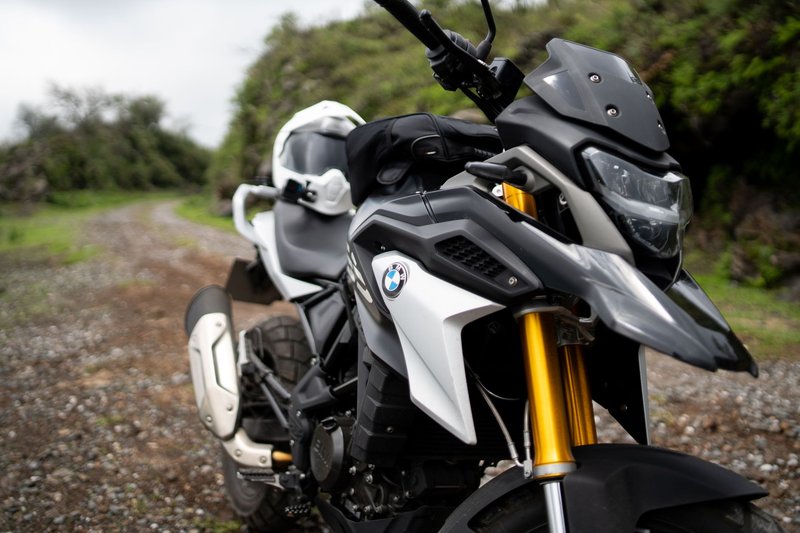
BMW’s R80 G/S arrived in 1980 as a genuine gamble: a road bike and a dirt bike welded into one machine, at a time when “adventure motorcycle” wasn’t a category anyone was asking for. The G/S (Gelände/Straße — off-road/street) paired the boxer twin’s 797cc, 50-horsepower engine with a single-sided Monolever rear swingarm and long-travel suspension nobody expected from a company known for touring bikes.
BMW built it because sales of the R-series were sliding and they needed something to reverse the trend. It worked — the G/S won the Paris-Dakar Rally in 1981 with Hubert Auriol aboard, a result that retroactively validated the whole concept and effectively created the adventure-touring segment that the GS line continues to lead more than four decades later. At launch it ran around 8,500 Deutsche Marks, positioning it above comparable Japanese twins.
Honda CB900F
Honda’s CB900F Bol d’Or landed in Europe and the US for 1980, built to answer Kawasaki’s Z1000 head-on. Its 902cc DOHC inline-four made a claimed 95 horsepower — genuinely quick for the era — and it carried Honda’s first production use of the “Boldor” styling cues borrowed from its endurance-racing namesake, the Bol d’Or 24-hour race in France.
What made it a specifically 1980 bike rather than a generic UJM (Universal Japanese Motorcycle) was the air-adjustable Showa suspension front and rear, a genuine novelty at the time that let owners tune ride height and damping without swapping springs. US buyers paid roughly $3,700 at launch, which undercut BMW and Ducati twins of similar performance by a wide margin.
Yamaha RD350LC
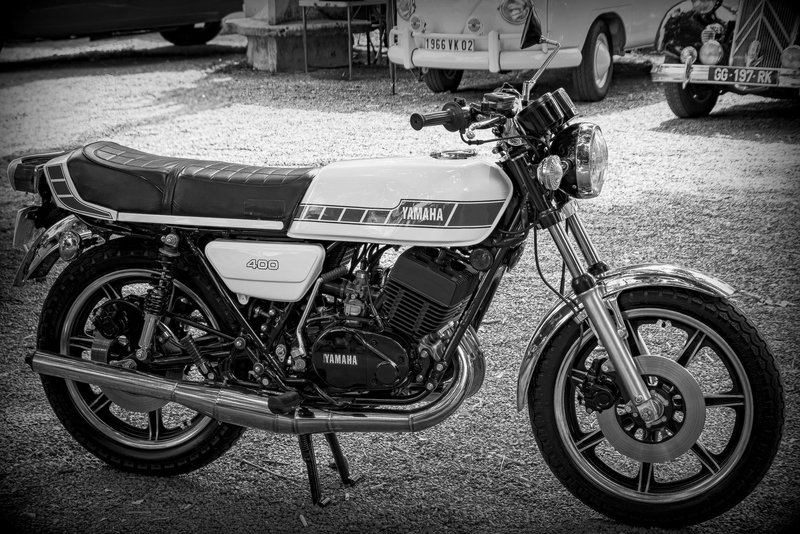
If there’s one bike that British and Irish riders in their fifties will bring up unprompted, it’s this one. The RD350LC — LC for liquid-cooled — hit UK dealers in 1980 and immediately made every air-cooled two-stroke look outdated. Its parallel-twin made a claimed 47 horsepower from 347cc, modest on paper, but the power-to-weight ratio (dry weight around 144kg) made it genuinely fast, and its road-race pedigree was direct: Yamaha built a one-make race series, the Pro-Am, specifically around it.
Insurance premiums on the LC eventually became so notorious among young riders that the bike is partly credited with reshaping UK motorcycle insurance tiers for high-performance two-strokes. Original list price was around £1,200 in the UK.
Suzuki GS1000S
Suzuki’s GS1000S “Wes Cooley Replica” carried the black-and-white livery and number 34 associated with Cooley’s AMA Superbike championship wins, making it one of the first mass-produced motorcycles explicitly styled after a specific racer’s actual bike rather than generic “race replica” graphics. Under the paint sat the GS1000 platform’s 997cc DOHC four, good for roughly 90 horsepower, with a half-fairing that was still uncommon on a standard-production streetbike in 1980.
The S variant’s build numbers were limited enough that surviving examples in Cooley livery command a real premium over the standard GS1000 today.
Kawasaki Z1000 Mk II
By 1980 Kawasaki’s Z1000 had evolved into the Mk II, refining the original Z1’s 1973 design with updated cam profiles, a stronger crank, and revised bodywork that dropped some of the original’s boxiness. The 1015cc air-cooled four still made close to 90 horsepower and remained, on raw acceleration, one of the fastest production bikes a private buyer could register and ride to work.
Kawasaki’s decision to keep evolving rather than replacing the Z1 platform through 1980 reflected a broader Japanese-manufacturer strategy of the year: incremental refinement of proven engines rather than clean-sheet redesigns, which were still a couple of years off industry-wide.
Honda CX500 Turbo (Concept)
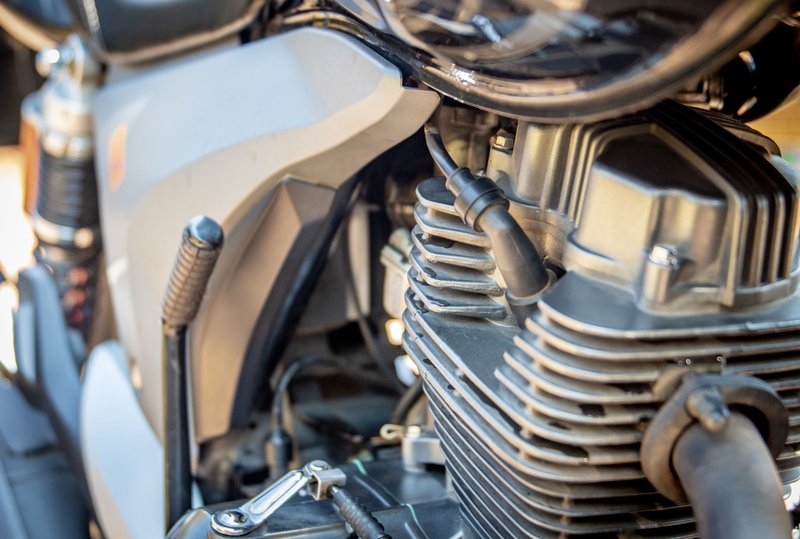
Honda showed the CX500 Turbo as a running prototype through 1980 ahead of its 1981 production release, and it’s worth including here because the engineering decisions were locked in during 1980 and the bike is inseparable from the turbo arms race that defined the early ’80s. Built around the shaft-driven CX500’s 497cc V-twin, the turbocharged version was targeted to roughly double the naturally aspirated bike’s output.
Honda, Yamaha, Suzuki, and Kawasaki each pursued factory turbo streetbikes in this window, chasing displacement-limited markets (particularly Japan’s own tiered licensing system) where forced induction let a smaller-displacement bike compete with larger unrestricted machines.
Ducati 900 Mike Hailwood Replica
Ducati’s 900 MHR commemorated Mike Hailwood’s improbable 1978 Isle of Man TT win on a Ducati after an eleven-year retirement from racing, and the production version reached full-scale availability for 1980. It carried the 864cc bevel-drive desmodromic V-twin in the same red-white-and-green livery as Hailwood’s race bike, a rare case of a manufacturer selling an almost literal replica of a specific winning machine rather than a loosely themed tribute.
Desmodromic valve control — where cams mechanically close the valves rather than relying on springs — remained a Ducati signature that most competitors didn’t attempt at all, let alone put into series production.
Yamaha XT500
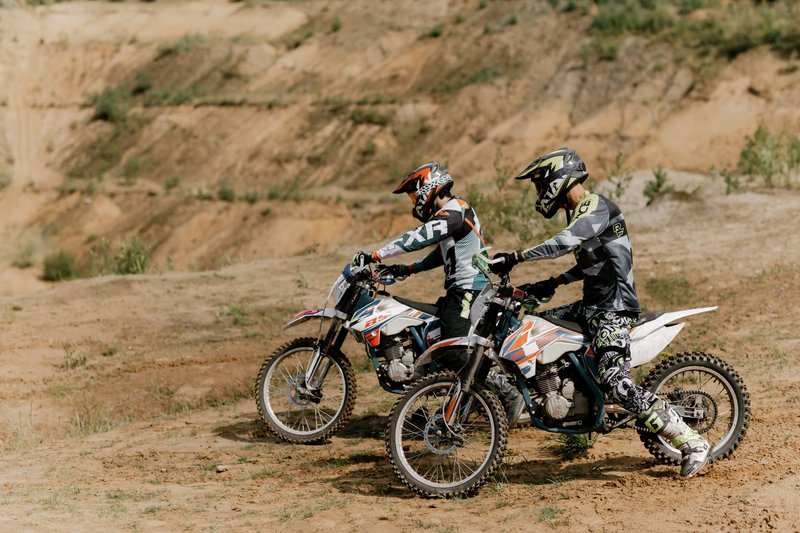
The XT500 wasn’t new for 1980, but its 1980 model year matters because that’s the version that had, by then, already won the first two runnings of the Paris-Dakar Rally (1979 and 1980), with Cyril Neveu taking both. The 499cc air-cooled single, kickstart-only, was a deliberately simple machine built for reliability over sophistication. Its Dakar wins established it as a landmark Yamaha motorcycle and made it the default template for the “big thumper” dual-sport category that Japanese manufacturers would chase for the next decade.
Honda CB250RS
Honda’s CB250RS targeted a different rider entirely: European commuters and new licence holders working within displacement-restricted tiers. Its 249cc single made around 24 horsepower, modest, but the bike’s low seat height and light weight made it a genuinely approachable first “real” motorcycle rather than a moped, at a UK price point under £900.
It’s the kind of bike that never shows up on “best of 1980” lists because it isn’t glamorous, but it represents the actual bulk of what dealers sold that year far more accurately than a superbike does.
Suzuki Katana Prototype
Suzuki’s Katana, styled by Target Design (Hans Muth, Jan Fellstrom, and Hans-Georg Kasten), was shown as a concept through 1980 ahead of full production in 1981, and the design work itself was finalized during 1980 — a genuine break from the boxy UJM look that had dominated Japanese motorcycles for a decade. Its swept, unified fairing-tank-seat line looked more like a concept car than a motorcycle and drew directly on the same German design studio’s work for BMW and Audi.
What 1980 Actually Cost
For context on where these bikes sat relative to each other and to average income: a Honda CB250RS at under £900 in the UK sat roughly where a small hatchback did, while a BMW R80 G/S at around 8,500 Deutsche Marks (roughly £2,000 at 1980 exchange rates) commanded a genuine premium over comparable Japanese twins, reflecting BMW’s positioning even on an off-road-capable model. US buyers paying $3,700 for a Honda CB900F were getting more performance per dollar than at almost any point in the previous decade, as Japanese manufacturers competed hard on price against increasingly expensive European twins.
Where the Market Stands Now
Collector interest in 1980-specific models has diverged sharply by bike. A well-documented, matching-numbers R80 G/S now routinely sells in the $12,000–$18,000 range, driven directly by its status as the GS lineage’s origin point — a line BMW itself still markets on that history. RD350LC values have climbed steadily in the UK and Ireland specifically because of the nostalgia factor among riders who owned or wanted one at seventeen; clean, unmodified examples can clear £6,000–£8,000. The Katana, once dismissed as a styling gimmick, is now one of the most actively collected Japanese bikes of the era, with restored originals commanding several times their original list price.
The CB250RS and similarly humble commuter bikes remain cheap and mostly overlooked, which — if you actually want a rideable, honest 1980 motorcycle rather than a display piece — makes them the more interesting buy today.

Sarah Thornton
More from Sarah ThorntonHow we reviewed this article
This article was researched against manufacturer records and editorially reviewed before publishing. We accept no payment for coverage. Some guides contain affiliate links; see our affiliate disclosure.