TLDR
In 1997, Audi’s US and European lineup was built around four production lines — the A4 (B5), A6 (C4 sliding into the all-new C5 mid-year), A8 (D2), and the aging 80-based Cabriolet — plus a fifth car everyone was talking about but nobody could buy yet: the TT, still a concept but with a production version already locked for 1998. The S4 quattro also joined the B5 A4 range this year, Audi’s first proper turbocharged performance sedan since the Urquattro era. Quick table below, full breakdown after it.
| Model | Generation | Status in 1997 | Notable trim |
|---|---|---|---|
| A4 | B5 | Full production, second model year | S4 quattro added |
| A6 | C4 → C5 | Outgoing C4 early in the year, all-new C5 launches | 2.8 quattro |
| A8 | D2 | Second full year, aluminum Space Frame | 4.2 quattro |
| Cabriolet | 8G (B4-based) | Final years of the run | 2.6 / 2.8 V6 |
| TT | Concept → production confirmed | Not yet on sale | Coupe & Roadster concepts shown |
Table of Contents
- Why 1997 matters for Audi
- Audi A4 (B5): the car that saved the brand
- Audi A6: two generations in one model year
- Audi A8 (D2): the aluminum flagship
- Audi Cabriolet: the last of the old guard
- Audi TT: not for sale yet, but everywhere
- How the 1997 lineup fits together
Why 1997 matters for Audi
Audi in the mid-1990s was still climbing out of a hole. The “unintended acceleration” scandal from a decade earlier had gutted US sales, and the brand spent most of the ’90s rebuilding trust one competent, understated sedan at a time. 1997 is the year that rebuild started to show results. The B5 A4 was proving that Audi could build a genuinely good compact executive car, the C5 A6 was about to leapfrog its German rivals on interior design, and a low, aluminum-bodied concept car with no B-pillar was making car magazine covers before it had a production date.
None of these cars existed in a vacuum. The A8’s aluminum Space Frame construction, the A4’s quattro all-wheel-drive availability on a mainstream sedan, and the TT’s design language all fed into each other — this was Audi figuring out what “Audi” was going to mean for the next two decades.
Audi A4 (B5): the car that saved the brand
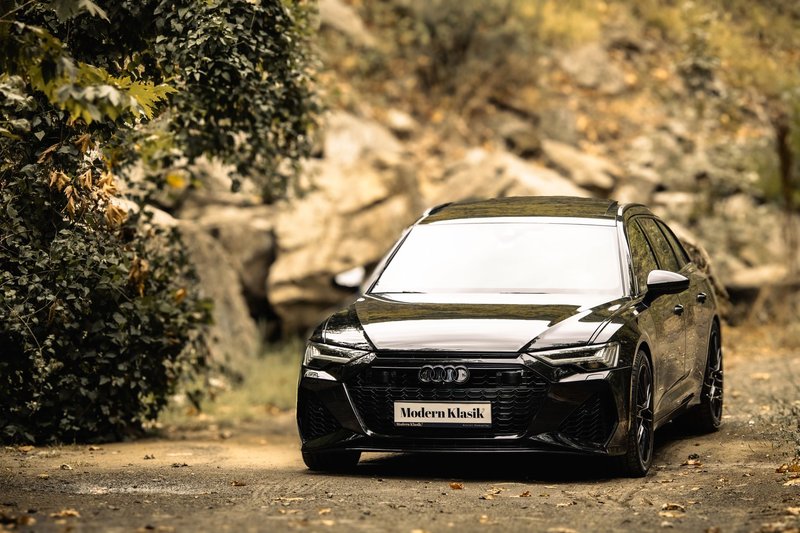
The A4 launched for the 1996 model year as a replacement for the 80, and 1997 was its first full year in showrooms worldwide. It rode on the B5 platform, shared underpinnings with the Volkswagen Passat, and came with a five-cylinder or, in most markets, four-cylinder and V6 engine options.
Engines: 1.6L and 1.8L four-cylinders, 1.8T turbocharged four, 2.6L and 2.8L V6 Drivetrain: Front-wheel drive standard, quattro all-wheel drive available on most trims Body styles: Sedan and, from 1997 on, the Avant wagon MSRP (US, 1997): roughly $24,000 for the base 1.8L, climbing past $30,000 for quattro V6 trims
The big news for the range in 1997 was the S4. Audi dropped a twin-turbocharged 2.7L V6 into the B5 body, paired it permanently to quattro, and built the first Audi performance sedan since the Urquattro that didn’t need an explanation. It made 227 horsepower, which doesn’t sound like much today, but the way it delivered that power — two small turbos instead of one big lag-prone unit — set the template Audi still leans on for its S-badged cars.
Audi A6: two generations in one model year
This is the one that trips people up, because Audi genuinely sold two different A6 generations under the same nameplate in 1997. Early in the year, showrooms still had the C4-generation A6, a facelifted version of the old Audi 100 that had been renamed A6 in 1994. By the end of 1997, that car was being replaced worldwide by the all-new C5.
The C4 A6 was a competent but visually conservative car — soft edges, a fairly plain cabin, engines ranging from a 2.6L V6 up to a 2.8L V6 with quattro. It did its job without making headlines.
The C5, which started reaching customers in late 1997, was a different animal. It introduced Audi’s “single-frame”-adjacent design language before that term existed, a genuinely upscale interior that critics at the time compared favorably to Mercedes-Benz’s E-Class, and the option of a 2.8L 30-valve V6 with quattro. According to Wikipedia’s Audi model history, the C5 is widely credited with repositioning the A6 as a legitimate alternative to the BMW 5 Series rather than a budget option next to it.
C4 A6 (early 1997): 2.6L/2.8L V6, FWD or quattro, sedan and Avant C5 A6 (late 1997 on): 2.4L/2.8L V6 at launch, quattro available, redesigned five-link suspension
If you’re researching a specific 1997 A6, checking the VIN or build date matters — “1997 Audi A6” could mean either car depending on when in the year it was built.
Audi A8 (D2): the aluminum flagship
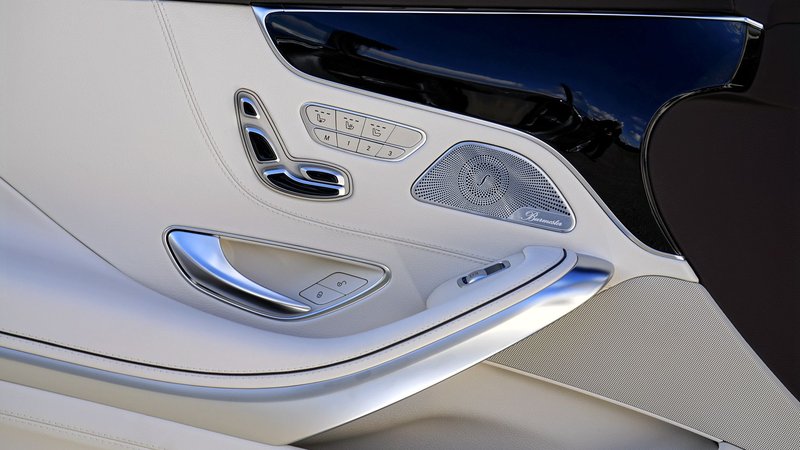
The A8 arrived for 1994 as Audi’s first real swing at the S-Class/7 Series segment, and 1997 was its second full production year with the lineup settled. What made it interesting wasn’t styling — the D2 A8 was handsome but not radical — it was construction. Audi built the entire body from an aluminum Space Frame instead of stamped steel, a first for a mass-production luxury sedan, cutting weight by several hundred pounds versus steel-bodied rivals of similar size.
Engines: 2.8L V6, 3.7L V8, 4.2L V8 Drivetrain: quattro standard on most V8 trims, front-wheel drive on lower-spec V6 versions Standout feature: aluminum Space Frame (ASF) unibody construction
The 4.2 quattro was the range-topper, and it’s the trim most collectors chase now — enough power to embarrass contemporaries that didn’t expect a “budget” German luxury sedan to keep up, plus the novelty of an all-aluminum body that made the car meaningfully lighter than an equivalent 7 Series or S-Class.
Audi Cabriolet: the last of the old guard
Easy to forget, but Audi still sold a convertible in 1997, and it was old by then. The Cabriolet (internally the 8G) was based on the Audi 80/90 platform that the A4 had already replaced in sedan form. Audi kept the drop-top in production past the sedan’s retirement because there wasn’t a direct convertible replacement ready.
Engines: 2.6L V6 or 2.8L V6 Drivetrain: Front-wheel drive only — no quattro option on this one Body style: Two-door convertible, four seats
It’s a pleasant, understated car with a proper fabric top and none of the drama Audi would later chase with the TT Roadster. If you want a 1990s Audi convertible that flies under the radar at a cars-and-coffee meet, this is it — nobody else will recognize it, which is either the appeal or the problem, depending on your priorities.
Audi TT: not for sale yet, but everywhere
The TT wasn’t a 1997 production car — that didn’t happen until the 1998 model year in Europe and 1999 in the US — but it belongs in any honest account of Audi’s 1997. The Coupe concept debuted at the 1995 Frankfurt Motor Show, the Roadster concept followed at the 1995 Tokyo show, and by 1997 Audi had confirmed the car for production essentially unchanged from those concepts. That’s the detail people miss: most concept cars get watered down before they reach a dealership. The TT barely changed at all.
Design-wise, the TT borrowed cues from the original Auto Union Type C racers and the Bauhaus movement — the double-bubble roofline, the perfectly round dashboard vents, the exposed rivets on the shifter surround. None of it looked like anything else on sale in 1997, which is exactly why it generated so much press before a single customer car existed.
By the time it did reach production, it used the same PQ34 platform underpinning the A3 and Golf, with a 1.8T four-cylinder (later joined by a VR6) and quattro available. But in 1997 specifically, all anyone had to go on was the concept and Audi’s word that it was really happening.
How the 1997 lineup fits together
Look at the range as a whole and a pattern shows up: Audi was mid-transition on nearly every front at once. The A4 was proving the compact-executive formula worked and had just gained a proper performance variant in the S4. The A6 was living through its own generational handover in real time, selling the outgoing C4 and incoming C5 in the same calendar year. The A8 was quietly establishing that aluminum construction wasn’t a gimmick. And the TT was previewing a design direction the rest of the lineup hadn’t caught up to yet.
The Cabriolet was the odd one out — a holdover from the platform Audi was actively phasing out, kept around because there was nothing ready to replace it. That’s arguably the most honest snapshot of any car company mid-transition: even while you’re redefining your entire identity, you still need something to sell the customer who just wants a convertible.
For collectors today, the two most sought-after cars from this exact year are the S4 quattro, for being the first modern Audi performance sedan, and the 4.2 quattro A8, for its aluminum construction and relative rarity next to contemporary Mercedes and BMW flagships. The C5 A6 launched too late in 1997 to be a “1997 car” in most buyers’ hands — most C5s on the road are titled 1998 or later — but the design and engineering decisions that defined it were locked in during 1997, which is why it belongs in this lineup at all.

Daniela Voss
More from Daniela VossHow we reviewed this article
This article was researched against manufacturer records and editorially reviewed before publishing. We accept no payment for coverage. Some guides contain affiliate links; see our affiliate disclosure.