TLDR
Bentley built five distinct models across the 1930s, and they split cleanly into two eras. The Cricklewood cars — 8 Litre, 4½ Litre (including the supercharged Blower), and Speed Six — were built under W.O. Bentley before the company went bankrupt in 1931. The Derby Bentleys — 3½ Litre and 4¼ Litre — came after Rolls-Royce bought the wreckage and turned Bentley into a quieter, more refined machine. The Speed Six is the one with the Le Mans wins. The Blower is the one everyone’s heard of, mostly because it never won anything. The 8 Litre is the rarest and, arguably, the best engineering Bentley ever put into a road car pre-war.
Table of Contents
- The two eras of 1930s Bentley, briefly
- Bentley 4½ Litre and the Blower
- Bentley Speed Six
- Bentley 8 Litre
- Derby Bentley 3½ Litre
- Derby Bentley 4¼ Litre
- Spec comparison table
- What these cars are worth now, and where to find one
- Why they still matter
The two eras of 1930s Bentley, briefly
Every list of “1930s Bentleys” is really two different companies wearing the same badge. From 1919 to 1931, Bentley Motors was Walter Owen Bentley’s own outfit, based in Cricklewood, north London, building big, loud, overbuilt cars for people who raced them at Le Mans on the weekend. It went bankrupt in 1931, caught in the same industry collapse that was reshaping car manufacturing, undone by the Depression and the sheer cost of racing-grade engineering. Rolls-Royce bought the name — reportedly by outbidding Napier in a bit of corporate sabotage dressed up as a rescue — and moved production to its own factory in Derby.
The Cricklewood cars (8 Litre, 4½ Litre, Speed Six) are the ones with racing pedigree: aggressive, mechanically brash, built to survive 24 hours flat-out. The Derby cars (3½ Litre, 4¼ Litre) share a chassis with the Rolls-Royce 20/25 and were tuned for something closer to silence than speed. Both are “1930s Bentleys.” They drive nothing alike.
Bentley 4½ Litre and the Blower
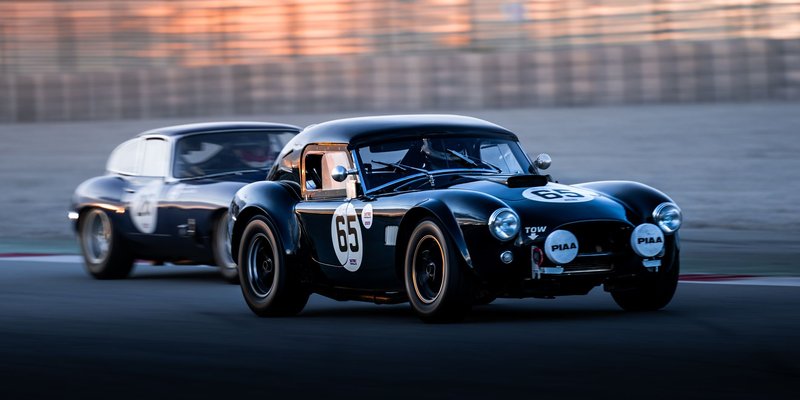
The 4½ Litre replaced the earlier 3 Litre in 1927, when W.O. Bentley decided a bigger, torquier engine suited Le Mans better than more revs. The naturally aspirated version is a solid, if unglamorous, workhorse: a 4,398cc inline-four making around 110 hp, good for roughly 90 mph, and it did the job it was built for — three of the five Bentley Le Mans victories between 1927 and 1930 came from cars in this family.
Then there’s the Blower. Sir Henry “Tim” Birkin, a Bentley Boy with more nerve than patience, wanted forced induction and built 55 supercharged 4½ Litre cars against W.O. Bentley’s explicit objections. Bentley thought superchargers were an unreliable shortcut around proper engine development, and history mostly proved him right: no Blower ever finished, let alone won, at Le Mans. The supercharged cars retired from every 24 Hours they entered.
What the Blower did win was cultural immortality. Ian Fleming put a 4½ Litre Blower in the hands of the original James Bond in the early novels, cementing it as the Bentley most people picture when they hear the name — despite being, by W.O.’s own account, the wrong car built the wrong way. Only 55 were made, and surviving examples are among the most sought-after prewar cars on earth.
- Engine: 4,398cc inline-four, single or supercharged
- Power: ~110 hp (naturally aspirated), ~175 hp (supercharged)
- Produced: 720 total (1927–1931), including 55 Blowers
- Le Mans record: Multiple wins in NA form; zero finishes supercharged
Bentley Speed Six
The Speed Six is the model Bentley purists point to when they want to settle an argument. Introduced in 1928 as a hot-rodded version of the 6½ Litre tourer, it paired a single-port cylinder head, twin SU carburetors, and a higher compression ratio to get 180 hp out of a car meant, on paper, to be a comfortable grand tourer. It wasn’t comfortable. It was the fastest thing Bentley built before the war, and it proved it twice at Le Mans, taking overall victory in both 1929 and 1930 — the second time finishing 1-2 in a “Bentley Boys” walkover that included Woolf Barnato, the team’s playboy financier, driving one of the winning cars himself.
Only 182 Speed Sixes were built between 1928 and 1930, and the model’s racing success is a large part of why the Cricklewood-era Bentley reputation survived the company’s own bankruptcy a year later.
- Engine: 6,597cc inline-six
- Power: 180 hp at 3,500 rpm
- Produced: 182 (1928–1930)
- Le Mans record: Wins in 1929 and 1930
Bentley 8 Litre
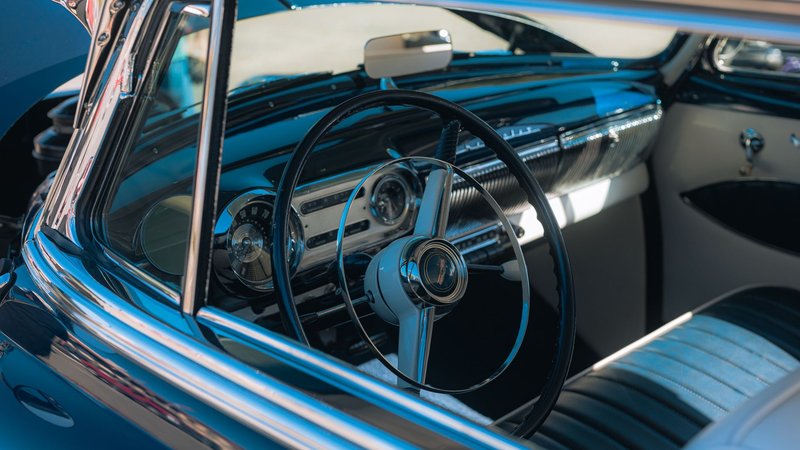
If the Speed Six is the racer, the 8 Litre is the engineer’s answer to “what if we just built the best one, no compromises.” Announced in September 1930, months before the receivers came knocking, it was W.O. Bentley’s last complete design for the company and arguably his most accomplished: a 7,983cc six making 220 hp, capable of pushing even the heaviest formal coachwork to 100 mph — genuinely rare air for a pre-war luxury car.
Buyers could specify a 144-inch or a longer 156-inch wheelbase chassis, sent off to coachbuilders like Mulliner or Park Ward for bodywork, since Bentley (like every manufacturer of the era) sold rolling chassis rather than finished cars. Only 100 were built before the money ran out, making the 8 Litre the rarest of the Cricklewood-era Bentleys and, per marque historians, the one W.O. himself considered his best work.
- Engine: 7,983cc inline-six
- Power: 220 hp
- Produced: 100 (1930–1931)
- Notable: Bentley’s last independent design before the 1931 bankruptcy
Derby Bentley 3½ Litre
Rolls-Royce relaunched Bentley in 1933 with a completely different philosophy. The 3½ Litre shared its chassis and much of its running gear with the Rolls-Royce 20/25, wrapped in sportier coachwork and tuned to be quick without being coarse. The 3,669cc six made around 115 hp through twin SU carburetors, enough to earn the car its enduring nickname — “the Silent Sports Car” — for delivering genuine performance without the mechanical drama of the Cricklewood cars.
It rode on a 126-inch wheelbase with a double-dropped chassis frame, which lowered the car’s center of gravity and gave it a noticeably lower stance than contemporaries. This was the car that convinced Bentley loyalists the Rolls-Royce takeover hadn’t killed the brand, just changed its manners.
- Engine: 3,669cc inline-six
- Power: ~115 hp at 3,800 rpm
- Produced: part of 1,191 3½/4¼ Litre cars built through 1937
- Nickname: The Silent Sports Car
Derby Bentley 4¼ Litre
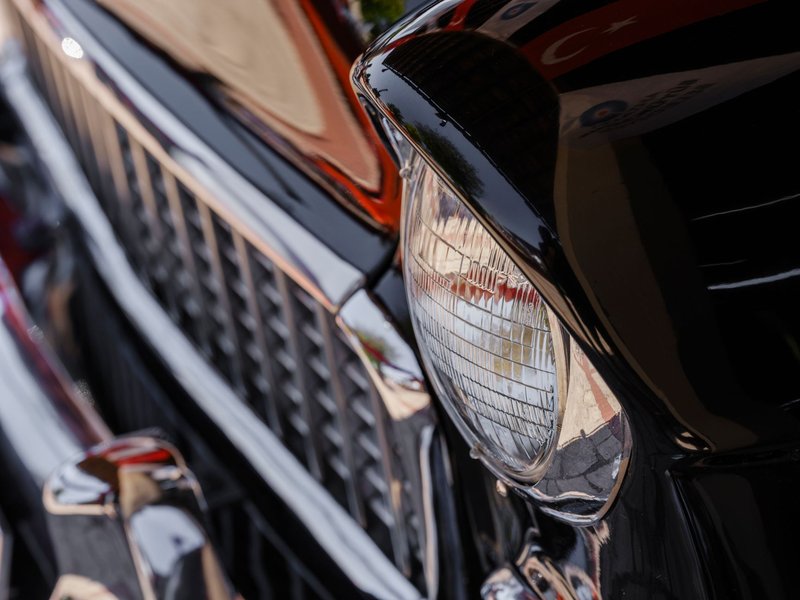
By 1936, demand for more power led Rolls-Royce to bore out the Derby Bentley’s engine to 4,257cc, and the 4¼ Litre quietly took over from the 3½ as the smaller engine was retired. Compression climbed from 6.0:1 to 6.8:1, and dual SU carburetors replaced the original single Stromberg downdraft, lifting output to roughly 126 hp at 4,500 rpm. It kept the double-dropped chassis and the same “silent sports car” character, just with more shove underneath it.
Production ran until 1939, when the war ended civilian car manufacturing across Britain. The 4¼ Litre was the last Bentley model developed before the marque’s identity got folded almost entirely into Rolls-Royce engineering for the next two decades.
- Engine: 4,257cc inline-six
- Power: ~126 hp at 4,500 rpm
- Produced: part of 1,191 3½/4¼ Litre cars built through 1937–1939
- Chassis: Shared with Rolls-Royce 20/25, double-dropped frame
Spec comparison table
| Model | Years | Engine | Power | Units Built | Claim to Fame |
|---|---|---|---|---|---|
| 4½ Litre | 1927–1931 | 4,398cc I4 | ~110 hp | 720 (incl. 55 Blower) | Le Mans wins, James Bond’s car |
| Speed Six | 1928–1930 | 6,597cc I6 | 180 hp | 182 | Back-to-back Le Mans wins |
| 8 Litre | 1930–1931 | 7,983cc I6 | 220 hp | 100 | W.O. Bentley’s final, finest design |
| 3½ Litre | 1933–1937 | 3,669cc I6 | ~115 hp | part of 1,191 | First Derby Bentley, “Silent Sports Car” |
| 4¼ Litre | 1936–1939 | 4,257cc I6 | ~126 hp | part of 1,191 | Final pre-war Bentley model |
What these cars are worth now, and where to find one
Prices track rarity and racing history closely, which puts the Blower and the Speed Six at the top of the market. A genuine 1929–1931 supercharged 4½ Litre routinely clears seven figures at auction, driven as much by the Bond association and the tiny production run as by the driving experience. Speed Sixes with period race history — especially anything connected to the 1929 or 1930 Le Mans teams — trade in a similar bracket.
The 8 Litre, despite being rarer than either, tends to sell for less than a documented Blower, largely because it lacks a comparable racing story; expect strong six figures to low seven figures depending on coachwork and originality. Derby Bentleys are the accessible end of the range. A solid 3½ or 4¼ Litre with unremarkable coachwork can still be found in the low-to-mid six figures, making them the realistic entry point for buyers who want an authentic prewar Bentley without competing against auction houses for a Blower.
Specialist dealers like PreWarCar and Car & Classic list inventory across all five models regularly, and marque specialists such as Frank Dale & Stepsons and the Bentley Drivers Club are worth contacting directly — cars this rare often sell before they’re publicly listed. Provenance documentation matters enormously here; continuation chassis and replica bodies exist throughout this market, so verifying chassis numbers against factory records (held today by the Bentley Drivers Club and Bentley’s own archive) isn’t optional, it’s the difference between buying a car and buying a lawsuit.
Why they still matter
The five 1930s Bentleys map onto a company’s entire existence: independence, ambition, bankruptcy, acquisition, and reinvention, all inside one decade. The Cricklewood cars won on pure mechanical bravado — big, unstressed engines built to survive races their rivals’ more refined machinery couldn’t finish. The Science Museum Group has traced how that era’s engineering philosophy, favoring durability over sophistication, shaped British motorsport thinking well past the war. The Derby cars proved the opposite could also work: that a Bentley could be quiet and still be quick, a formula the brand has leaned on ever since.
None of that fully explains why the Blower specifically still shows up on posters in teenagers’ bedrooms eighty years after it stopped racing. That’s mostly Fleming’s doing, and a reminder that a car’s reputation and its results aren’t always the same thing. The Speed Six actually won. The Blower just looked like it should have — and looking like it should have turned out to matter just as much.

Daniela Voss
More from Daniela VossHow we reviewed this article
This article was researched against manufacturer records and editorially reviewed before publishing. We accept no payment for coverage. Some guides contain affiliate links; see our affiliate disclosure.