Here’s the thing nobody selling you a “1943 Ferrari” model will admit: there was no such car. Not one. The prancing horse wasn’t on a single road car in 1943, because Enzo Ferrari was legally barred from putting his own name on an automobile. Search for “1943 Ferrari models” and you’ll get catalog pages that quietly skip straight to 1947 and hope you don’t notice the four-year gap.
So let’s fill it. The story of 1943 is really the story of a man building machine tools in a factory that would soon get bombed, sitting on a design he couldn’t badge, waiting out a contract and a world war. It’s a better story than any spec sheet.
Table of Contents
- Why No Ferrari Existed in 1943
- The Real Car: Auto Avio Costruzioni 815
- 815 Specifications
- What Enzo Was Doing in 1943
- The First “Real” Ferrari Came in 1947
- About Those 1/43 Scale “1943 Ferrari” Models
- The Short Answer
Why No Ferrari Existed in 1943 {#why-no-ferrari}
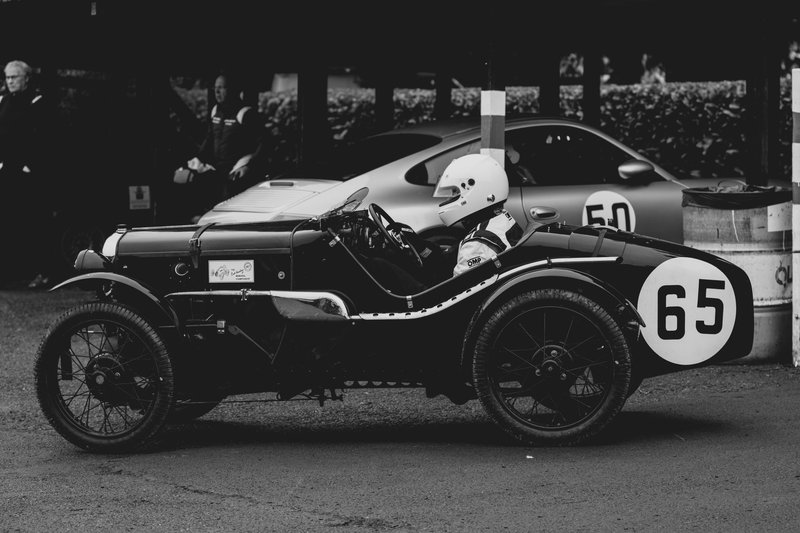
Enzo Ferrari ran the racing operation for Alfa Romeo through the 1930s — Scuderia Ferrari, the team, not the carmaker. When he split from Alfa in 1939, the separation came with a leash: a non-compete clause forbidding him from using the Ferrari name on a car, or from building cars under his own marque, for four years.
Do the math. 1939 plus four gets you to 1943. So the entire window a “1943 Ferrari” would need to exist is precisely the tail end of the period Enzo was contractually forbidden from making one.
He got around the clause once, in 1940, by building a car under a different company name — Auto Avio Costruzioni, the firm he’d set up in the old Scuderia premises in Modena. That car is the closest thing to a pre-1947 Ferrari that ever turned a wheel. It’s what people are actually circling when they search for a 1943 model, even if they don’t know the name yet.
The Real Car: Auto Avio Costruzioni 815 {#aac-815}
The AAC 815 was Ferrari’s first car in everything but name. Two were built in 1940 for that year’s Mille Miglia, and the “815” wasn’t a vanity number — it stood for 8 cylinders, 1.5 litres. Engineer Alberto Massimino designed it, and the elegant barchetta bodywork came from Carrozzeria Touring of Milan, the same coachbuilder behind some of the era’s most beautiful Alfas.
Underneath, it borrowed heavily from Fiat — the 508C “Balilla” donated much of the platform and running gear — because Enzo had neither the time nor, legally, the freedom to engineer a bespoke car from scratch. The straight-eight was essentially two Fiat four-cylinder blocks joined on a common crankcase. Clever, resourceful, and very much a car built by a man working around constraints.
Both 815s ran the 1940 Mille Miglia (rebranded that year as the Gran Premio Brescia because the traditional open-road route was cut short). Neither finished — one retired with a valve failure while leading its class, the other with a broken timing gear. But one had led. In its only race. That’s the DNA that would define Maranello for the next eighty years: fast, fragile, and quick out of the gate.
By 1943, one of the two cars had likely been scrapped or cannibalized. Only a single AAC 815 survives today, held in a private Italian collection — which makes it one of the rarest four-wheeled objects on the planet.
815 Specifications {#815-specs}
| Spec | Detail |
|---|---|
| Full name | Auto Avio Costruzioni Tipo 815 |
| Year built | 1940 |
| Units built | 2 |
| Engine | 1.5L inline-8 (two Fiat 4-cyl blocks) |
| Power | ~72 hp |
| Top speed | ~170 km/h (106 mph) |
| Bodywork | Carrozzeria Touring barchetta |
| Chassis/base | Fiat 508C “Balilla” derived |
| Designer | Alberto Massimino |
| Race debut | 1940 Mille Miglia (Brescia GP) |
| Survivors today | 1 |
Note the number that isn’t there: the Ferrari name. Legally, this car could not carry it. The badge on the nose read Auto Avio Costruzioni.
What Enzo Was Doing in 1943 {#enzo-1943}
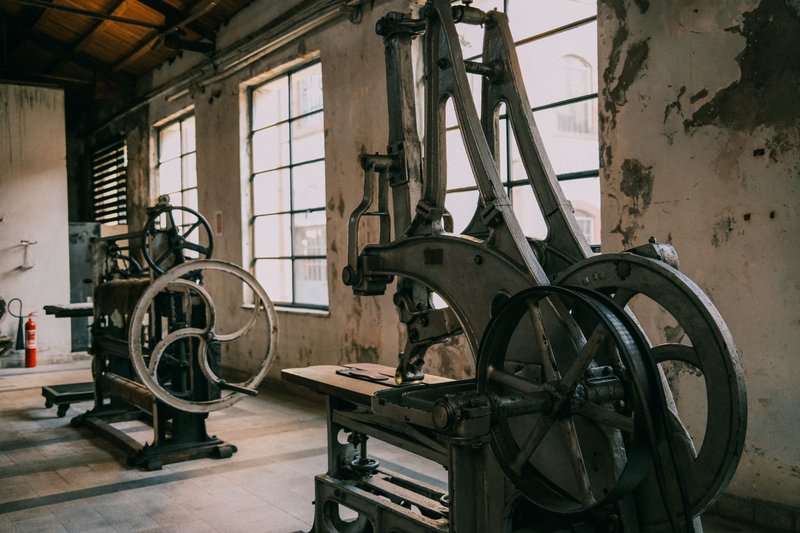
So if he wasn’t building cars, what filled Enzo’s 1943? Two things: war work, and a move that would put a small town on every enthusiast’s map.
Auto Avio Costruzioni spent the war years making machine tools and precision components — grinding machines and parts for the Italian war effort, not race cars. It kept the lights on and the workforce employed while motorsport was, obviously, on hold across Europe.
In 1943, Enzo relocated the operation from Modena to Maranello, about 18 km south. Accounts point to wartime industrial-decentralization pressure — spreading factories away from concentrated targets — as a driver of the move. It didn’t fully spare him: the Maranello plant was bombed by Allied aircraft in 1944, then again in 1945, and had to be rebuilt after the war.
That rebuilt factory is the one. Maranello has been Ferrari’s home ever since, the address behind every road car, every F1 campaign, every screaming V12. It became the company’s home in 1943 — before the company, as the world knows it, technically existed.
The First “Real” Ferrari Came in 1947 {#first-ferrari}
With the non-compete expired and the war over, Enzo finally built a car he could put his name on. The Ferrari 125 S rolled out of Maranello in 1947 — a 1.5-litre V12, the layout that became Ferrari’s signature, engineered by Gioacchino Colombo.
It debuted at the Piacenza circuit in May 1947, where Enzo famously described the result as “a promising failure” after it retired while leading. Two weeks later at the Rome Grand Prix, it won. The prancing horse had its first victory as Ferrari, and the marque was properly born.
So the honest timeline runs: 815 in 1940 (the ghost), war work and the Maranello move through 1943–45, then the 125 S in 1947 (the real beginning). 1943 sits in the quiet middle — no cars, but the foundation being laid.
About Those 1/43 Scale “1943 Ferrari” Models {#scale-models}
If you landed here because a die-cast listing advertised an “815 Auto Avio Costruzioni 1943,” you’re not imagining things — several 1/43 scale model makers catalog the 815 with a 1943 date attached, and MR Models produces a well-regarded resin version. The date is a bit of listing shorthand; the actual car was a 1940 build. But the models themselves are lovely and, for most collectors, the only way to ever own the shape.
If you want a genuinely period-correct “1943 Ferrari” on your shelf, the 815 is the only honest answer. Anything badged Ferrari with a 1943 date is a marketing convenience, not history.
The Short Answer {#short-answer}
There were no 1943 Ferrari models, because a non-compete clause with Alfa Romeo kept Enzo Ferrari from using his own name on a car until the deal expired. The closest thing is the Auto Avio Costruzioni 815 from 1940 — two built, one surviving, and Ferrari’s true first car in all but name. In 1943 itself, Enzo was making machine tools and moving his operation to Maranello, the town that’s been Ferrari’s home ever since. The first car to actually wear the badge was the 1947 Ferrari 125 S.
The badge came late. The bloodline didn’t.

Daniela Voss
More from Daniela VossHow we reviewed this article
This article was researched against manufacturer records and editorially reviewed before publishing. We accept no payment for coverage. Some guides contain affiliate links; see our affiliate disclosure.