Let’s settle this in the first sentence: there are no 1940s Lamborghini models. Not one. The company that builds the Aventador and the Miura didn’t exist until 1963, and its first car rolled out in 1964.
So why does this search keep coming up? Partly because classic-car listing sites auto-generate empty “1940 Lamborghini” pages with zero real inventory, and partly because the marque feels so old and storied that people assume it goes back further than it does. It doesn’t. But the actual 1940s story is better than the myth — because while there were no Lamborghini cars, there was very much a Lamborghini, and he was busy.
Contents
- The short answer
- What Ferruccio was doing in the 1940s
- The 1947 Carioca: the first machine he built
- Lamborghini Trattori, founded 1948
- So when did the cars start?
- The 1940s Lamborghini timeline
- FAQ
The short answer
Automobili Lamborghini was founded in 1963 in Sant’Agata Bolognese. The first production car, the 350 GT, was delivered in 1964. The car most people picture when they hear the name — the mid-engine Miura — came in 1966.
That means the entire 1940s decade predates the car company by roughly fifteen to twenty years. Any page claiming to sell or list a “1940 Lamborghini” automobile is either a templated placeholder or flatly wrong. If you came here for a model list, that’s the honest version: the list is empty.
The interesting question isn’t which 1940s Lamborghini cars existed. It’s what was the man named Lamborghini building back then — because the answer explains how the supercar company got its start money, its engineering instincts, and its founder’s famous stubbornness.
What Ferruccio was doing in the 1940s
Ferruccio Lamborghini was born in 1916 to grape farmers near Ferrara, in Italy’s Emilia-Romagna region. He didn’t care much for grapes. He cared about the machines that worked the land, and he had a knack for taking engines apart and putting them back together better than they came.
During World War II he served in the Italian Royal Air Force as a mechanic, stationed on the Greek island of Rhodes. The posting mattered more than it sounds. He spent the war keeping vehicles running with whatever parts could be scrounged, learning to improvise repairs under shortage conditions. According to his own biography on Britannica, he was captured when the island fell and didn’t return to Italy until 1946.
He came home to a country flattened by war and a countryside desperate for one thing in particular: machines to work the fields. Italy was rebuilding, food production was urgent, and tractors were scarce and expensive. That gap is where the Lamborghini name actually begins.
The 1947 Carioca: the first machine he built
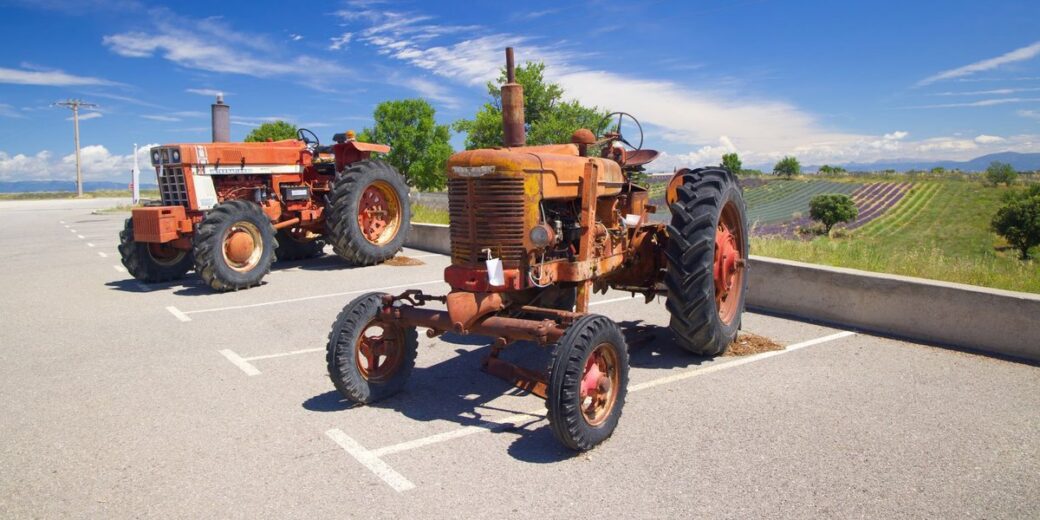
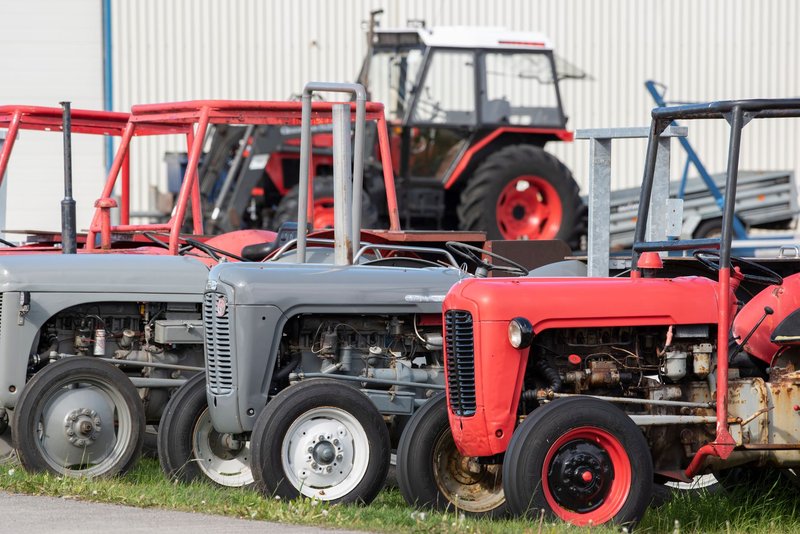
Here’s the detail that gets lost in every “1940s Lamborghini” page that bothers to exist: the first vehicle Ferruccio ever built, in 1947, was a tractor cobbled together from war-surplus parts.
He started with a body and components left over from military vehicles — abandoned trucks, the kind of hardware scattered all over post-war Italy. The engine was a six-cylinder Morris unit sourced through ARAR, the government agency set up to sell off Allied and Axis war-surplus material. He fitted it with a fuel atomizer of his own design so it could start on petrol and then switch to cheaper diesel or even agricultural oil, which mattered enormously to farmers counting every lira.
He called it the Carioca. It was, by every account, a rough and clever machine — exactly the kind of thing a gifted mechanic builds when he has more ideas than money. Crucially, it worked, and word got around the local farming community that the Lamborghini kid could build a tractor that actually ran.
That’s the real 1940s Lamborghini “model,” if you insist on having one: not a car, but a homemade tractor running a salvaged British engine.
Lamborghini Trattori, founded 1948
The Carioca proved there was a business in it. In 1948 Ferruccio founded Lamborghini Trattori in Cento, near Bologna, and started building tractors for real — first from surplus components, then increasingly from parts he engineered himself.
The timing was perfect. Italy’s agricultural recovery and the Marshall Plan poured demand into exactly the product he made. Through the 1950s, Lamborghini Trattori grew into one of the larger tractor manufacturers in the country, and Ferruccio grew rich. By the end of that decade he was a wealthy industrialist who also ran an air-conditioning and heating business, and who collected fast cars as a hobby.
This is the part of the story that makes the supercars possible. The tractor money is what let Ferruccio walk into car building as an independent man who answered to no one. The brand still exists today, by the way — Lamborghini Trattori has been a separate company from the car maker for decades, which is why you can still buy a Lamborghini-badged tractor that has nothing to do with the carmaker in Sant’Agata.
So when did the cars start?
The famous origin story is half legend, half documented: Ferruccio, a Ferrari owner, was unhappy with the clutch in his cars and with how he was treated when he complained. Whether the exchange with Enzo Ferrari went down exactly as retold or not, the result is fact — he decided to build a grand tourer that did everything his Ferraris did, but better mannered.
- 1963 — Automobili Lamborghini founded in Sant’Agata Bolognese.
- 1963 — The 350 GTV prototype debuts at the Turin Motor Show, with a V12 designed by Giotto Bizzarrini.
- 1964 — The production 350 GT is delivered, the first true Lamborghini car. About 120 were built.
- 1966 — The Miura arrives, its transverse mid-mounted V12 rewriting what a road car could be and effectively inventing the supercar template.
From homemade tractor to the Miura took less than twenty years. That’s the trajectory the “1940s Lamborghini” search accidentally points at — it just gets the decade and the product wrong.
The 1940s Lamborghini timeline
| Year | What happened | Cars built |
|---|---|---|
| 1916 | Ferruccio Lamborghini born near Ferrara | — |
| 1940–45 | Serves as a mechanic in the Italian Air Force on Rhodes | — |
| 1946 | Returns to Italy after the war | — |
| 1947 | Builds the Carioca tractor from war-surplus parts and a Morris engine | None |
| 1948 | Founds Lamborghini Trattori in Cento | None |
| 1963 | Founds Automobili Lamborghini | None yet |
| 1964 | Delivers the 350 GT, the first Lamborghini car | First one |
| 1966 | Launches the Miura | The legend |
The “cars built” column stays empty through the entire decade you searched for. That’s not an oversight in the data — that’s the answer.
FAQ
Were there any Lamborghini cars in the 1940s? No. The car company was founded in 1963 and built its first automobile, the 350 GT, in 1964. In the 1940s, Ferruccio Lamborghini was building tractors, not cars.
What did Lamborghini make in the 1940s? Tractors. Ferruccio built the Carioca, a tractor assembled from war-surplus parts, in 1947, and founded Lamborghini Trattori in 1948.
What was the first Lamborghini ever made? If you mean the first car, it’s the 1964 350 GT. If you mean the first machine Ferruccio built under his own name, it’s the 1947 Carioca tractor.
Is the Lamborghini tractor company related to the supercars? They share a founder and a name but have operated as separate companies for decades. Lamborghini Trattori still builds agricultural machinery today and is owned independently of the car maker.
Why do websites list a “1940 Lamborghini”? Those are almost always auto-generated placeholder pages from classic-car listing sites. They have no real inventory behind them, because no such car was ever made.
Marco Delantero
More from Marco DelanteroHow we reviewed this article
This article was researched against manufacturer records and editorially reviewed before publishing. We accept no payment for coverage.