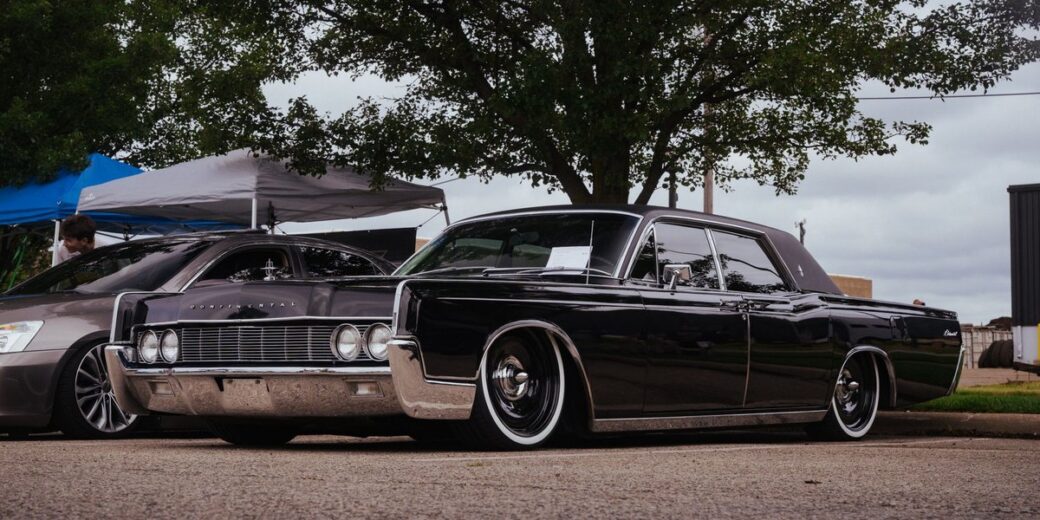
The 1940s split Lincoln in two. The decade opened with one of the most admired American cars ever bodied — the Continental — and closed with a company scrambling to rebuild after four years of building tank engines and gun parts instead of automobiles. Five model years of cars, a three-year hole in the middle where Ford built no civilian Lincolns at all, and a V-12 that people still argue about.
Here’s every Lincoln that wore the name between 1940 and 1949, what made each one matter, and what they trade for today.
Table of Contents
- The quick version
- How Lincoln entered the 1940s
- 1940 Lincoln Continental
- 1940–1942 Lincoln-Zephyr
- 1941 Lincoln Continental
- The Lincoln Custom
- 1942: the last cars before the lights went out
- The wartime gap: 1942–1945
- 1946–1948: the postwar Lincolns
- About that V-12
- 1949: a clean break
- Specs at a glance
- Collectibility today
The quick version {#the-quick-version}
If you only remember one 1940s Lincoln, make it the Continental. Edsel Ford’s personal-luxury coupe, drawn by Bob Gregorie, is the car the Museum of Modern Art put on a pedestal and the one that gave the spare-tire-on-the-trunk look its name. The rest of the decade is the supporting cast: the volume Lincoln-Zephyr, the formal long-wheelbase Custom that replaced the old Model K, and the warmed-over 1946–1948 cars that simply got the company back on its feet after the war.
All of them shared the same basic powerplant — a flathead V-12 that was sweet when it ran right and a headache when it didn’t.
How Lincoln entered the 1940s {#how-lincoln-entered-the-1940s}
Lincoln went into the decade selling two very different things. At the top sat the Model K, a vast, hand-built, V-12 prestige machine that competed with Packard and Cadillac’s grandest offerings and sold in the low hundreds. At the bottom — relatively — sat the Lincoln-Zephyr, a streamlined mid-priced car launched in 1936 that actually moved in real numbers and kept the division alive through the Depression.
The Model K didn’t survive the transition. Its final cars were built in 1940, and with it went the last of the truly bespoke prewar Lincolns. From that point on, every Lincoln rode on Zephyr engineering — including the Continental.
1940 Lincoln Continental {#1940-lincoln-continental}
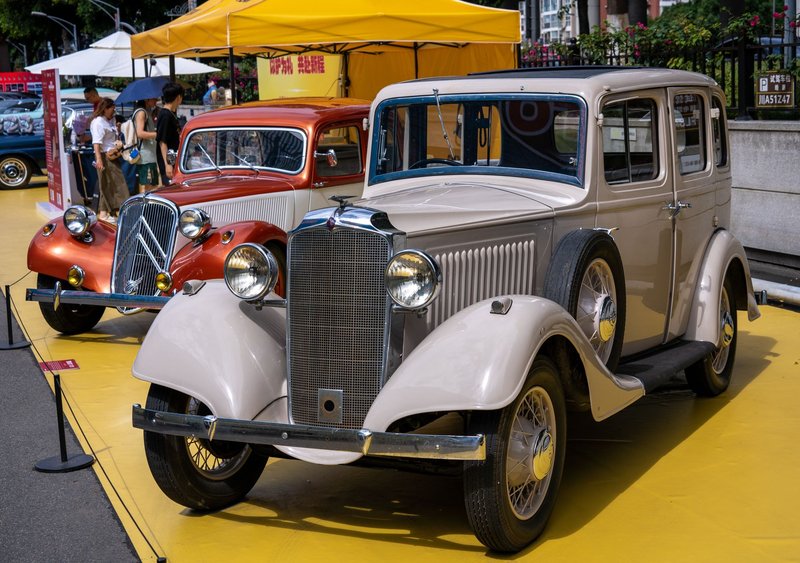
The Continental started as a favor to one man. Edsel Ford — Henry’s son, and the actual taste behind the company — asked design chief E.T. “Bob” Gregorie in 1938 for a personal car to drive on a winter trip to Florida. Something European, low, clean. Gregorie sectioned a Zephyr, chopped the height, stretched the hood, and hung the spare tire vertically off the back. Edsel drove it south, got stopped constantly by people asking where to buy one, and wired Dearborn that he could sell a thousand.
Production began in 1940. Lincoln built roughly 350 Continental coupes and 54 cabriolets that first year — these were nearly hand-assembled, with body panels finished and fitted by hand rather than stamped to final shape. The price landed around \$2,840, real money in 1940 when a Ford sedan cost under \$900.
The styling was the point. Long hood, short deck, no running boards to speak of, and that exposed rear-mounted spare that the industry would copy for decades and call the “Continental kit.” Gregorie’s instruction to the team became legend: don’t change a line. It’s one of the few American cars of the era that looks deliberate from every angle, and it still earns a place near the top of any roundup of the most notable 1940s coupes.
1940–1942 Lincoln-Zephyr {#1940-1942-lincoln-zephyr}
The Zephyr was the bread and butter, and it deserves more credit than it usually gets. Designed with input from aircraft-influenced aerodynamics, it had a low drag profile, unibody-style construction that was advanced for the time, and a price that put a V-12 within reach of upper-middle-class buyers.
Through the early 1940s the Zephyr came as a coupe, sedan, convertible, and town limousine. It carried the same 292-cubic-inch flathead V-12 as the Continental — the Continental was, mechanically, a fancy-bodied Zephyr. By 1942 the styling had grown heavier and more chrome-laden, in step with the industry’s prewar taste for bulk over the cleaner late-’30s lines.
The Lincoln-Zephyr name itself didn’t survive the war. When production resumed in 1946, the “Zephyr” badge was dropped and the cars were sold simply as Lincolns.
1941 Lincoln Continental {#1941-lincoln-continental}
1941 was the Continental’s best prewar year by volume. Lincoln built around 400 cabriolets and 850 coupes, the model’s high-water mark before the war shut everything down. The 1941 cars got minor trim updates and push-button exterior door handles, but the shape Edsel and Gregorie nailed in 1939 carried straight through.
This is the year collectors often chase. The 1941 Continental sits in the sweet spot: enough were built that running examples exist, the design is still the pure original, and it predates the heavier 1942 facelift. It comfortably holds its own among the best cars of 1941, a strong year for American design before the industry went dark.
The Lincoln Custom {#the-lincoln-custom}
With the Model K gone, Lincoln still needed something formal and long for buyers who wanted a chauffeur-driven car — funeral homes, hotels, the genuinely wealthy. The answer was the Lincoln Custom, introduced for 1941: a stretched-wheelbase sedan and limousine built on lengthened Zephyr underpinnings, seating seven.
It never sold in big numbers — a few hundred a year — but it filled the gap at the top of the range without the cost of building a separate, truly bespoke chassis the way the Model K had demanded. The Custom is the obscure 1940s Lincoln, the one even some enthusiasts forget existed.
1942: the last cars before the lights went out {#1942-the-last-cars}
The 1942 model year was a stub. American civilian car production was ordered halted in early February 1942 so the auto industry could convert to war work, which meant the 1942 Lincolns had one of the shortest production runs of any model year.
These cars are oddities. They wear the busiest prewar styling Lincoln ever produced, the V-12 had been enlarged to 305 cubic inches, and very few were built before the assembly lines stopped. A genuine 1942 Continental or Zephyr is rarer than the 1941 — scarcity born of bad timing rather than exclusivity.
The wartime gap: 1942–1945 {#the-wartime-gap}
No general overview ever explains this part well, so here it is plainly: Lincoln built zero civilian cars from February 1942 through most of 1945. The factories went to war work. Ford’s Lincoln operations produced engines and military components as part of the broader wartime conversion of the auto industry, and Edsel Ford himself died in May 1943, never seeing the company come back.
That three-and-a-half-year hole is why there’s no such thing as a 1943, 1944, or 1945 Lincoln. When people talk about “1940s Lincolns,” they’re really talking about two short clusters — 1940–1942 and 1946–1948 — with a wall in between.
1946–1948: the postwar Lincolns {#1946-1948-the-postwar-lincolns}
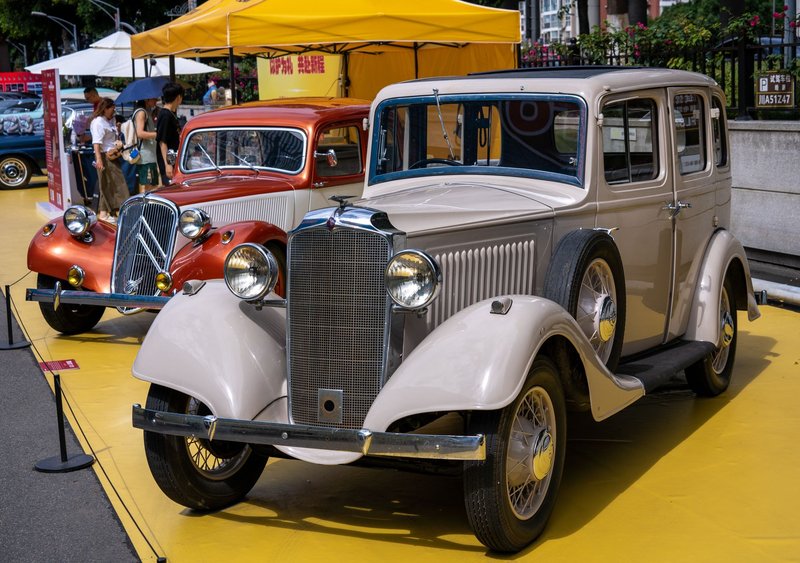
Like nearly every American carmaker, Lincoln restarted in 1946 by building lightly facelifted versions of its 1942 cars. There was no time or money to design anything new — pent-up demand meant anything with four wheels would sell.
The postwar lineup was simpler:
- Lincoln — the former Zephyr, now just “Lincoln,” in coupe, sedan, and convertible form
- Lincoln Continental — the coupe and cabriolet returned, now with a heavier eggcrate grille and more chrome than the pure 1941 cars
- Lincoln Custom — the long-wheelbase formal cars continued in small numbers
The V-12 grew again, to 305 cubic inches and later breathed through revised heads, but it was the same basic flathead architecture from the 1930s. The 1946–1948 Continentals are heavier-looking than the prewar originals and generally trade for less, which makes them the value entry point into Continental ownership.
The Continental name went on hiatus after 1948. It wouldn’t return until 1956 as the standalone Continental Mark II.
About that V-12 {#about-that-v-12}
The Lincoln flathead V-12 has a mixed reputation, and it’s worth being honest about it. On paper it was a luxury feature — twelve cylinders, silky power, a selling point against Cadillac’s V-8. In practice the engine could run hot, suffered from cooling and lubrication weaknesses, and developed a name for sludging up and overheating if it wasn’t maintained carefully.
Restorers today often improve the cooling system, upgrade the oiling, and treat the V-12 with more attention than its original owners did. Run cool and kept clean, it’s smooth and capable. Neglected, it’s the reason some 1940s Lincolns sat in barns for decades. Know which one you’re buying.
1949: a clean break {#1949-a-clean-break}
The decade’s most important Lincoln in engineering terms arrived right at the end. For 1949, Lincoln launched an all-new car with modern slab-sided styling, independent front suspension, and — finally — the retirement of the troublesome V-12 in favor of a 337-cubic-inch flathead V-8.
The 1949s came as the standard Lincoln and the upscale Lincoln Cosmopolitan. They look nothing like the prewar cars: no separate fenders, no exposed running boards, a single smooth body. The Continental was gone, the Zephyr name was long dead, and the V-12 era was over. The 1949 Lincoln is where the modern company really starts.
Specs at a glance {#specs-at-a-glance}
| Model | Years | Engine | Approx. price (new) | Notes |
|---|---|---|---|---|
| Lincoln-Zephyr | 1940–1942 | 292–305 ci V-12 | ~\$1,400–1,800 | Volume model; name dropped postwar |
| Lincoln Continental (coupe) | 1940–1942, 1946–1948 | 292–305 ci V-12 | ~\$2,840 (1940) | Edsel Ford’s design icon |
| Lincoln Continental (cabriolet) | 1940–1942, 1946–1948 | 292–305 ci V-12 | ~\$2,900+ | ~400 built in 1941 |
| Lincoln Custom | 1941–1942, 1946–1948 | V-12 | Highest in range | Long-wheelbase formal cars |
| Lincoln / Cosmopolitan | 1949 | 337 ci V-8 | ~\$3,000+ | All-new; V-12 retired |
Collectibility today {#collectibility-today}
Values run roughly in this order, and the spread is wide:
- 1940–1941 Continental cabriolets sit at the top. Clean, well-restored prewar convertibles regularly trade in the high tens of thousands and the best, documented examples push past \$100,000 at auction. The pure original styling and low production drive it.
- 1940–1941 Continental coupes come in below the cabriolets but still command strong money for a quality car — typically the mid-five figures restored, less for a project.
- 1946–1948 Continentals are the budget door into the model. The heavier postwar look and larger numbers keep prices noticeably lower than the prewar cars.
- Lincoln-Zephyrs are the affordable way to own a 1940s V-12 Lincoln. Solid drivers can be had for a fraction of any Continental, and the Zephyr’s design is genuinely handsome in its own right.
- Lincoln Customs are rare but not especially valuable — formal limousines have a thin buyer pool no matter how scarce they are.
Condition and engine health swing these numbers hard. A 1940s Lincoln with a tired or rebuilt-wrong V-12 is worth far less than its bodywork suggests, because the engine is the expensive part to put right. For values on specific cars, the Hagerty valuation tools track this market closely.
Buy the best example you can afford, get the V-12 inspected by someone who actually knows the flathead twelve, and you’ll own one of the few American luxury cars of the era that still looks like someone meant it.

Marco Delantero
More from Marco DelanteroHow we reviewed this article
This article was researched against manufacturer records and editorially reviewed before publishing. We accept no payment for coverage. Some guides contain affiliate links; see our affiliate disclosure.