2017 was the year Harley finally retired the Twin Cam from its big touring bikes and dropped in the Milwaukee-Eight. That one change reshaped the whole lineup, and it’s the reason a 2017 Harley shops differently than a 2016 or a 2018. If you’re hunting a used one right now, the model year matters more than usual.
This is the complete 2017 catalog, sorted by family the way Harley actually organized it: Street, Sportster, Dyna, Softail, V-Rod, Touring, CVO, and Trike. Each section has a spec table, the original MSRP, and a plain-English note on who the bike was built for. At the end, a used-buyer breakdown — what to inspect, what the early Milwaukee-Eight got wrong, and which 2017 models hold up best today.
Table of Contents
- The big story: Milwaukee-Eight 107 and 114
- TLDR: best 2017 Harley by use case
- Street
- Sportster
- Dyna (the last year)
- Softail
- V-Rod
- Touring
- CVO
- Trike
- Buying a 2017 Harley used
The big story: Milwaukee-Eight 107 and 114
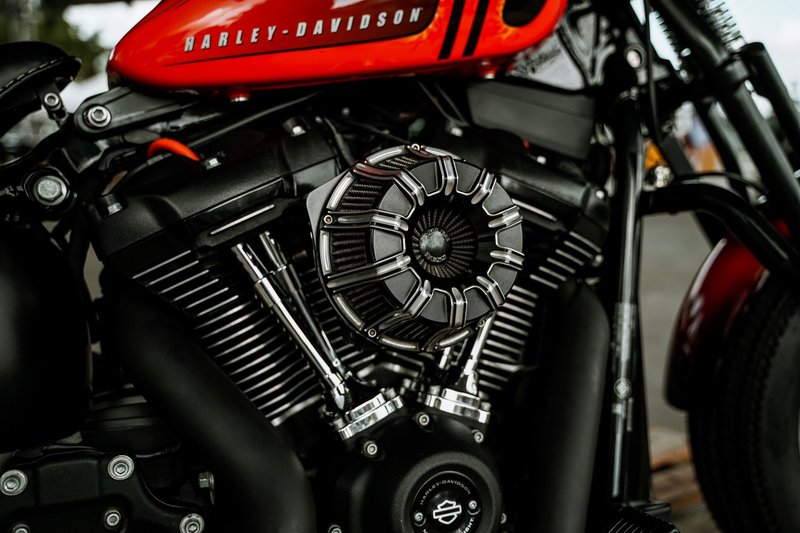
Every 2017 Touring and Trike model got the new Milwaukee-Eight, Harley’s first clean-sheet Big Twin since the Twin Cam arrived in 1999. The name comes from eight valves — four per cylinder, up from two — and it came in two displacements: the 107 cubic inch (1,746cc) on standard Touring bikes and the 114 (1,868cc) reserved for CVO models.
What changed that you can actually feel: more torque down low, noticeably less engine heat on your right leg, and a single counterbalancer that smooths out idle vibration without killing the character. Harley quoted roughly 10 percent more torque than the High Output Twin Cam 103 it replaced. The Milwaukee-Eight also runs a single chain-driven camshaft and a four-valve head that breathes better at the top.
Here’s the wrinkle that matters for shoppers: the Milwaukee-Eight only went into Touring, Trike, and CVO bikes in 2017. The Softail and Dyna families kept the Twin Cam 103 and 110 for one more year. That split is the single most important fact when you’re comparing two 2017 Harleys — a 2017 Street Glide and a 2017 Fat Boy have completely different engines.
TLDR: best 2017 Harley by use case
If you just want the verdict before the spec tables:
- Best for long-distance touring: Road Glide Special or Ultra Limited. Milwaukee-Eight 107, fairing, and luggage sorted from the factory.
- Best for around-town cruising: Softail Heritage Classic or Fat Boy. Twin Cam 103, classic looks, easy to live with.
- Best for new(ish) riders: Street 500 or Iron 883 Sportster. Low seat, light, cheap to insure.
- Best bang-for-buck used buy today: Road King with the Milwaukee-Eight. You get the new engine without paying CVO money, and the bagger-minus-fairing layout ages well.
- Best collector angle: Any 2017 Dyna. It was the final model year before Harley folded Dyna into the Softail line for 2018.
Street {#street}
Harley’s entry point. Liquid-cooled Revolution X engines, built in part for riders coming off smaller bikes, and the cheapest way into a new Harley in 2017.
| Model | Engine | MSRP (from) | Who it’s for |
|---|---|---|---|
| Street 500 | 494cc Revolution X | $6,799 | First-time riders, tight urban commutes |
| Street 750 | 749cc Revolution X | $7,549 | Commuters who want a bit more pull |
| Street Rod | 749cc Revolution X (high output) | $8,699 | New-for-2017 sportier variant |
The Street Rod was the genuinely new bike here. Harley bumped compression, added dual front discs, gave it a more aggressive riding position and longer-travel suspension, and aimed it at younger riders who found the standard Street 750 too sleepy. The base Street 500 stayed the lightest, friendliest Harley you could buy.
Sportster {#sportster}
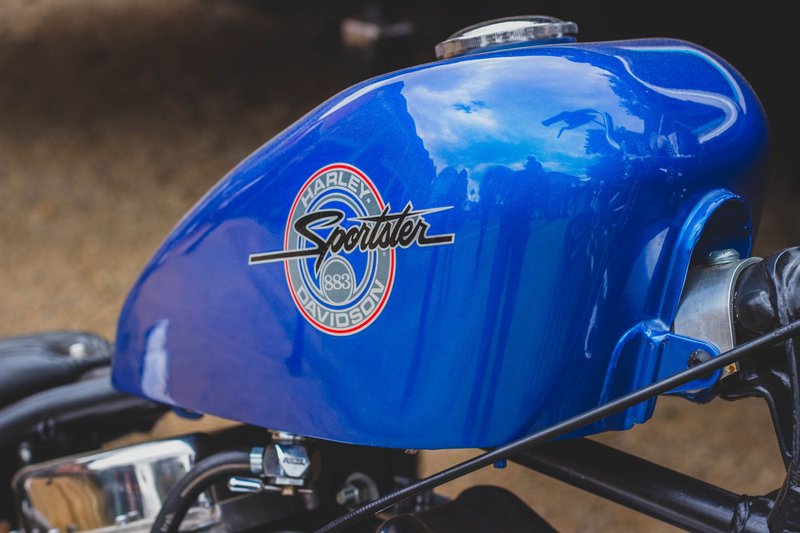
The air-cooled Evolution engine, in 883cc and 1200cc forms, mostly unchanged in 2017 but still the backbone of the cruiser range. Sportsters are light, simple, and the classic gateway into the Big Twin world.
| Model | Engine | MSRP (from) | Who it’s for |
|---|---|---|---|
| SuperLow | Evolution 883 | $8,449 | Low seat, beginner-friendly |
| Iron 883 | Evolution 883 | $8,999 | Blacked-out, urban customizers |
| SuperLow 1200T | Evolution 1200 | $11,199 | Light touring on a small frame |
| 1200 Custom | Evolution 1200 | $10,999 | Cruiser styling, more torque |
| Roadster | Evolution 1200 | $11,299 | Sportier riding position, dual discs |
| Forty-Eight | Evolution 1200 | $11,199 | Fat front tire, peanut tank, bobber look |
| Iron 1200 | — | — | (Note: arrived 2018, not part of the 2017 line) |
The Iron 883 was the volume seller — cheap, mean-looking, endlessly customizable. The Forty-Eight, with its 2.1-gallon peanut tank and fat front tire, was the style statement — a factory take on the stripped-down bobber look that riders often weigh against leaner, cafe-style builds. The Roadster, introduced the year before, was Harley’s nod to riders who actually wanted a Sportster to handle.
Dyna (the last year)
This is the family collectors circle on the used market. 2017 was the final year of the Dyna platform before Harley merged it into the redesigned Softail line for 2018. The Dyna’s exposed twin rear shocks and rubber-mounted Twin Cam gave it a rawer feel than the Softail, and a lot of riders still prefer it.
| Model | Engine | MSRP (from) | Who it’s for |
|---|---|---|---|
| Street Bob | Twin Cam 103 | $13,299 | Stripped-down, mini-ape riders |
| Low Rider | Twin Cam 103 | $14,199 | Mid-controls, two-up comfort |
| Fat Bob | Twin Cam 103 | $16,199 | Dual headlights, aggressive stance |
| Low Rider S | Twin Cam 110 | $16,699 | The hot-rod Dyna, blacked-out |
| Wide Glide | Twin Cam 103 | $15,199 | Raked-out chopper styling |
| Switchback | Twin Cam 103 | $16,749 | Detachable bags and windshield |
The standout was the Low Rider S, which crammed the Screamin’ Eagle Twin Cam 110 — normally a CVO engine — into the Dyna chassis with cartridge forks and premium rear shocks. It was the closest thing to a factory hot rod in the cruiser range, and 2017 was effectively its last Dyna-platform year. Values for clean Low Rider S examples have held unusually well for exactly that reason.
Softail {#softail}
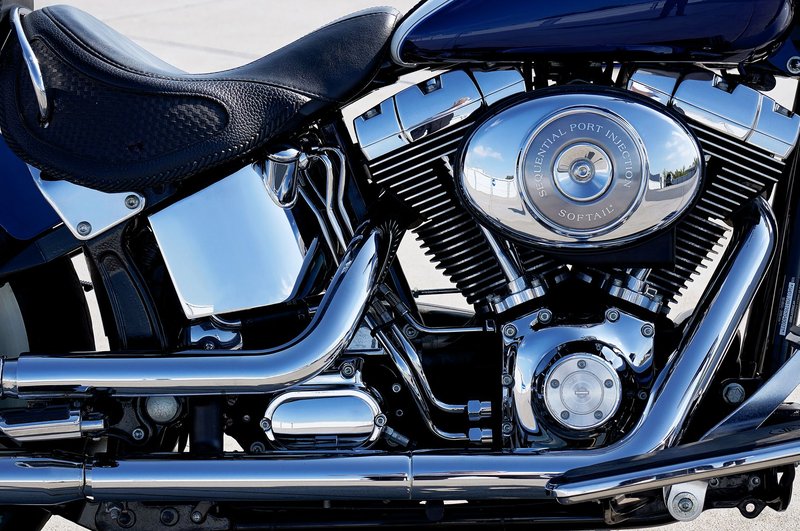
The classic hardtail look with a hidden rear suspension. In 2017 the Softails still ran the Twin Cam 103 and 110 — the redesign with the Milwaukee-Eight didn’t hit Softail until 2018. So a 2017 Softail is the last of the old-platform Softails, which cuts both ways depending on what you want.
| Model | Engine | MSRP (from) | Who it’s for |
|---|---|---|---|
| Softail Slim | Twin Cam 103B | $15,899 | Minimalist bobber styling |
| Fat Boy | Twin Cam 103B | $17,099 | Iconic solid-disc wheels, heavyweight cruiser |
| Fat Boy S | Twin Cam 110B | $18,699 | Darker, more powerful Fat Boy |
| Heritage Softail Classic | Twin Cam 103B | $18,399 | Bags and windshield, light touring |
| Deluxe | Twin Cam 103B | $18,099 | Retro chrome, whitewall tires |
| Breakout | Twin Cam 103B | $18,099 | Drag-strip stance, fat rear tire |
| Slim S | Twin Cam 110B | $17,299 | Performance bobber |
The Fat Boy remains the Softail everyone pictures — those solid Lakester wheels are unmistakable. The Heritage Softail Classic is the practical pick if you want a Softail you can actually tour on, with its hard bags and windshield. The “S” models borrowed the 110 from the CVO parts bin for riders who wanted more grunt without stepping up to a touring bike.
V-Rod
The oddball of the lineup, and 2017 was the V-Rod’s last year. Powered by the liquid-cooled, Porsche-developed Revolution V-twin, the V-Rod made far more horsepower than any other Harley and looked like nothing else in the showroom.
| Model | Engine | MSRP (from) | Who it’s for |
|---|---|---|---|
| V-Rod Muscle | Revolution 1250 | $16,699 | Drag-style power cruiser |
| Night Rod Special | Revolution 1250 | $16,299 | Blacked-out, low and aggressive |
With the V-Rod discontinued after 2017, these are the final examples of Harley’s most powerful production cruiser. The Revolution engine made around 122 horsepower — numbers no air-cooled Big Twin came close to. They’re a niche buy, but a 2017 Night Rod Special is the last of a genuinely unusual Harley.
Touring {#touring}
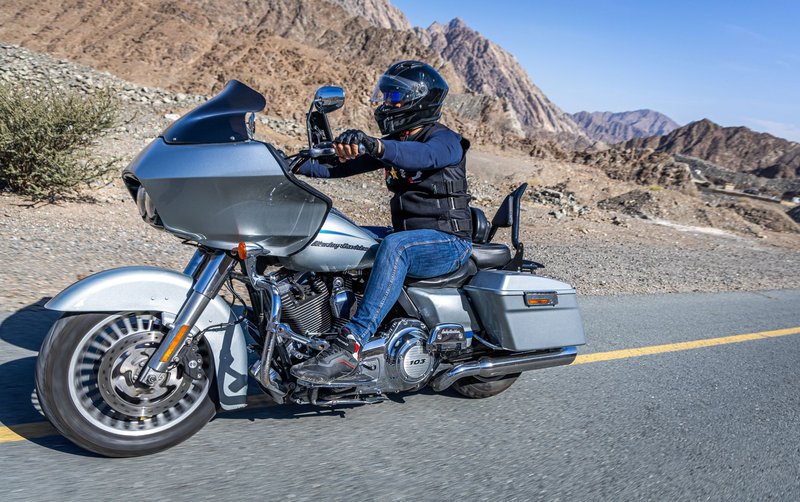
This is where the Milwaukee-Eight 107 went, and where 2017 earns its reputation. Every Touring bike got the new engine, plus updated suspension on most models. If you want the headline 2017 upgrade, you want a Touring bike.
| Model | Engine | MSRP (from) | Who it’s for |
|---|---|---|---|
| Road King | Milwaukee-Eight 107 | $18,999 | Stripped tourer, classic bagger base |
| Street Glide | Milwaukee-Eight 107 | $20,999 | Batwing fairing, the bestseller |
| Street Glide Special | Milwaukee-Eight 107 | $24,899 | Loaded Street Glide, infotainment |
| Road Glide | Milwaukee-Eight 107 | $20,999 | Shark-nose frame-mount fairing |
| Road Glide Special | Milwaukee-Eight 107 | $25,499 | Loaded Road Glide |
| Electra Glide Ultra Classic | Milwaukee-Eight 107 | $24,749 | Full dresser, two-up touring |
| Road King | Milwaukee-Eight 107 | $18,999 | No-fairing tourer |
| Ultra Limited | Milwaukee-Eight 107 | $26,699 | Top-trim full dresser |
| Ultra Limited Low | Milwaukee-Eight 107 | $26,699 | Lower seat, shorter riders |
| Road Glide Ultra | Milwaukee-Eight 107 | $26,899 | Frame-mount fairing dresser |
The Street Glide stayed Harley’s bestselling motorcycle, and the Road Glide is the one to pick if you want the frame-mounted fairing that doesn’t tug at the bars in crosswinds. The Road King is the value play on the used market — Milwaukee-Eight power without the fairing premium, and a cleaner look that doesn’t date. For two-up cross-country riding, the Ultra Limited has everything: fairing lowers, top box, heated grips, and the infotainment screen.
CVO {#cvo}
Custom Vehicle Operations — Harley’s factory-custom flagship line, and the only place you got the bigger Milwaukee-Eight 114 in 2017. Hand-finished paint, premium audio, and the most equipment Harley would bolt on.
| Model | Engine | MSRP (from) | Who it’s for |
|---|---|---|---|
| CVO Pro Street Breakout | Twin Cam 110 | $25,999 | Power cruiser, drag styling |
| CVO Street Glide | Milwaukee-Eight 114 | $38,999 | Top-trim bagger |
| CVO Limited | Milwaukee-Eight 114 | $41,999 | Flagship full dresser |
The CVO Pro Street Breakout kept the Twin Cam 110 since it sits on the Softail platform, while the CVO touring bikes got the 114. These were the most expensive Harleys you could buy in 2017, and they came with everything: 21-inch front wheels on the Breakout, Boom! Box infotainment, and paint schemes that ran into hand-applied detailing.
Trike {#trike}
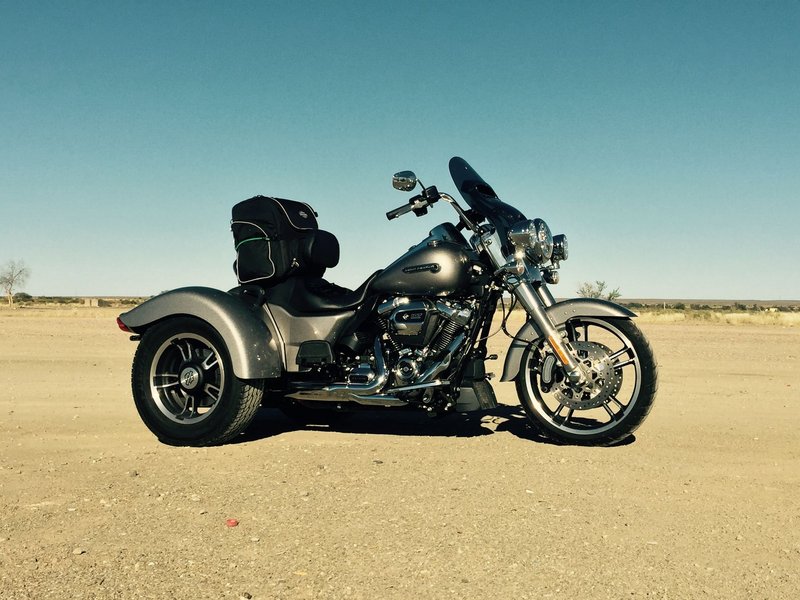
Three wheels, the Milwaukee-Eight 107, and a huge cargo box out back. The Trikes appeal to riders who want to stay on a Harley without balancing one, and they sell steadily to an older demographic.
| Model | Engine | MSRP (from) | Who it’s for |
|---|---|---|---|
| Freewheeler | Milwaukee-Eight 107 | $26,999 | Bagger-style trike, sportier |
| Tri Glide Ultra | Milwaukee-Eight 107 | $33,489 | Full-dress touring trike |
The Tri Glide Ultra is the full-dresser of the two, with the Tour-Pak, fairing, and reverse gear. The Freewheeler is the leaner option — no top box, more of a bagger profile on three wheels.
Buying a 2017 Harley used
A few things to know before you put money down.
Which engine you’re getting. Say it one more time: Touring, Trike, and CVO touring bikes have the Milwaukee-Eight; Softail, Dyna, and CVO Breakout have the Twin Cam. Don’t assume “2017” means new engine.
The early Milwaukee-Eight oil-cooling question. The first Milwaukee-Eight bikes used oil-cooled cylinder heads (Twin-Cooled, the liquid-cooled head variant, was on higher trims). Early owners reported rear-cylinder heat on the standard oil-cooled bikes in stop-and-go traffic. It’s not a reliability killer — the engine has aged well and still ranks among the most reliable Harley-Davidson motorcycles on the used market — but if you ride a lot in city heat, sit on one in traffic before buying, or look for a Twin-Cooled trim.
What to inspect on any used Harley:
- Fork seals and bearings — a quick test ride tells you a lot.
- Service history — the first oil change and primary fluid change matter; ask for records.
- Tire dates — Harleys often sit, and old tires age out before they wear out. Check the DOT date code.
- Stator and voltage regulator — known wear items on high-mileage Twin Cams.
- Aftermarket tuning — a poorly mapped exhaust-and-tuner combo can run lean and hot. Ask if it was dyno-tuned.
For ballpark current pricing, run the model through the Kelley Blue Book motorcycle values tool before you negotiate — it’ll keep you honest on both ends of a deal.
The collector angle. If you care about long-term value, the 2017 Dyna models — especially the Low Rider S — are the ones to watch, since 2017 was the platform’s farewell. The discontinued V-Rod is a similar story for a different kind of buyer.
A 2017 Harley sits at a genuine fork in the brand’s history: the last old-platform Softails and the final Dynas on one side, the first Milwaukee-Eight tourers on the other. Knowing which one you’re looking at is most of the battle. Pick the engine that fits how you ride, inspect it like you mean it, and you’ll get a bike that the model year actually made special.

Sarah Thornton
More from Sarah ThorntonHow we reviewed this article
This article was researched against manufacturer records and editorially reviewed before publishing. We accept no payment for coverage. Some guides contain affiliate links; see our affiliate disclosure.