The 2010s were the decade Aprilia stopped being the brand your mate’s older brother raced in 250 GP and became the company that built the most decorated production superbike of the era. The RSV4 won seven World Superbike titles between 2010 and 2014. The Tuono V4 turned “naked bike with too much engine” into a category everyone else copied. And underneath the V4 fireworks, Noale quietly built a lineup of 750-900cc twins that are now some of the best-value used Italian bikes you can find.
Most pages covering this era are stuck on a single model year or one model. This one walks the whole decade — every major Aprilia sold between 2010 and 2019, what each one was actually like, and which ones make sense to buy now.
Table of Contents
- TLDR: The best used 2010s Aprilias
- The V4 era: RSV4 and Tuono V4
- The 750-900 twins: Shiver, Dorsoduro, Mana
- Small-displacement: RS125, RS4, and the RS660 transition
- The off-road outliers: RXV and SXV
- Aprilia 2010s model timeline
- Specs comparison table
- Buying a used 2010s Aprilia: what to check
TLDR: The best used 2010s Aprilias
If you just want the shortlist:
- Best all-round buy: Aprilia Shiver 750. Cheap, characterful 90-degree V-twin, easy to live with, and the dealer-network anxiety is overblown if you find a serviced one.
- Best superbike: 2015+ Aprilia RSV4 RF. The post-2015 update bumped power and added the APRC electronics that make the bike usable on the road, not just terrifying.
- Best naked: Aprilia Tuono V4 1100 (2015 on). The 1100cc engine and revised ergonomics fixed the original’s two flaws — a bit peaky, a bit committed.
- Best budget thrill: Aprilia Dorsoduro 750. Supermoto stance, V-twin grunt, and prices that undercut a used commuter.
- Most collectible: 2011 RSV4 APRC / Max Biaggi Replica. First production bike with a full lean-aware-adjacent rider aids package for its time, and tied to Biaggi’s 2010 WSBK title.
The rest of this covers why, plus the models you should walk past.
The V4 era: RSV4 and Tuono V4
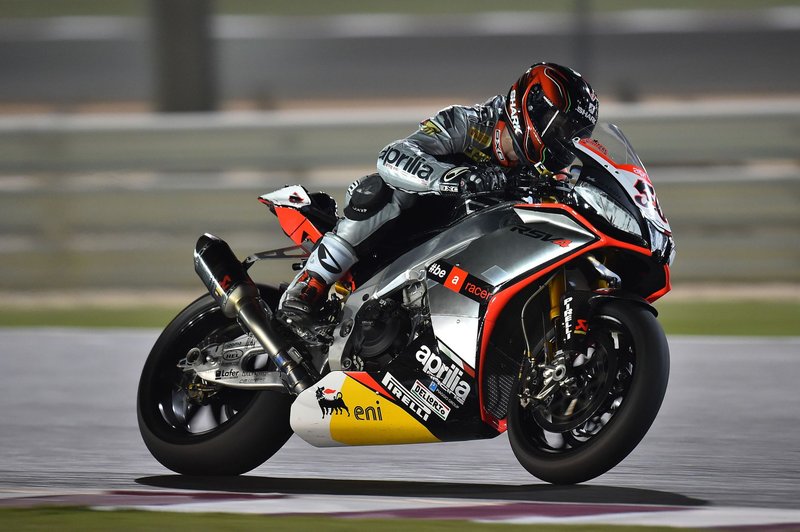
This is the headline. Everything else Aprilia did in the 2010s sat in the shadow of the 65-degree V4 that launched at the tail end of 2009.
Aprilia RSV4 (2009-2019)
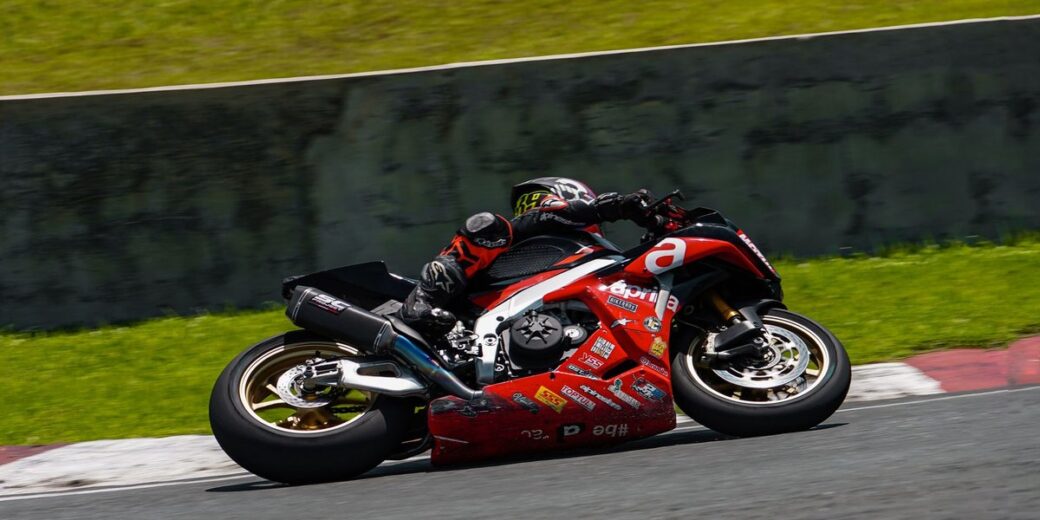
The RSV4 arrived as a 999.6cc V4 making around 180 hp, wrapped in the most compact superbike chassis of its generation — Aprilia famously kept the engine narrow so the whole motorcycle could be smaller than the inline-four competition. Max Biaggi took it to the World Superbike title in 2010, the bike’s first full season, and Aprilia won the manufacturers’ championship the same year.
The model that matters most for buyers is the 2011 RSV4 APRC. APRC (Aprilia Performance Ride Control) bundled traction control, wheelie control, launch control, and a quickshifter — a genuinely advanced package when most rivals were still arguing about whether traction control belonged on a road bike. If you want the cleanest version, the 2015 RSV4 RF is the one: bigger 201 hp output, Öhlins suspension, and refined electronics. By 2019 the engine grew to 1078cc on the RSV4 1100 Factory, pushing past 215 hp and effectively ending the “1000cc superbike” purity argument.
What it’s like: small, intense, and loud in a way that makes inline-fours sound polite. The V4 has a firing character closer to a MotoGP bike than a road superbike, which is exactly why people keep them. According to the FIM Superbike World Championship records, Aprilia took riders’ titles in 2010, 2012, and 2014 on this platform.
Aprilia Tuono V4 (2011-2019)
Take the RSV4, strip the fairing, raise the bars, soften the tune slightly, and you get the Tuono V4 R — launched in 2011 with roughly 167 hp. It became the bike that defined the modern “super naked” alongside the KTM Super Duke and BMW S1000R.
The early Tuono V4 R was brilliant but a little uncompromising: the riding position still leaned forward, and the engine wanted revs. The 2015 Tuono V4 1100 fixed both. The displacement bump to 1077cc fattened the midrange, the ergonomics relaxed, and the electronics caught up to the RSV4’s. For most riders, the 1100 is the better real-world motorcycle than the superbike it’s based on — same drama, far more usable.
If you’re choosing between them on the used market: the RSV4 is the trophy, the Tuono is the bike you’ll actually ride to breakfast and on track days without your wrists filing a complaint.
The 750-900 twins: Shiver, Dorsoduro, Mana
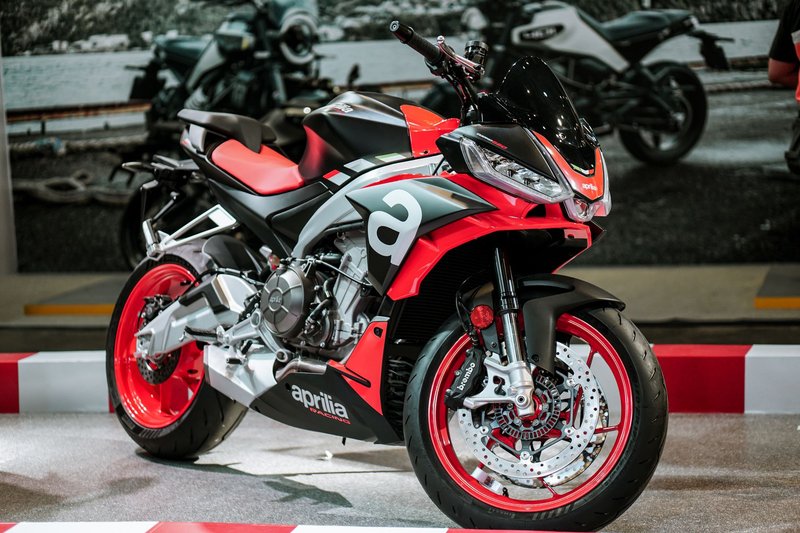
While the V4s grabbed headlines, Aprilia’s volume came from a family of 90-degree V-twins. These are the bikes that make the most sense for normal people in 2026, because they’re cheap, distinctive, and genuinely good.
Aprilia Shiver 750 / 900
The Shiver 750 (launched 2007, sold through the 2010s) was Aprilia’s mainstream naked — an 89 hp, 749cc V-twin with ride-by-wire throttle, which was unusual for a middleweight at the time. It grew into the Shiver 900 in 2017, with 95 hp and a torquier 896cc engine plus an updated TFT dash on later versions.
The Shiver is the answer to “I want an Italian bike with character but can’t justify a Ducati Monster’s price or service bills.” It steers neutrally, the engine pulls cleanly from low revs, and it’s mechanically straightforward. Find one with a service history and it’s one of the smartest used buys on this whole list.
Aprilia Dorsoduro 750 / 900 / 1200
Same V-twin philosophy, supermoto body. The Dorsoduro 750 put the Shiver’s engine into a tall, flat-barred, long-travel chassis aimed at riders who wanted hooligan ergonomics. The Dorsoduro 1200 (2011) cranked it up to a 130 hp 1197cc V-twin — a genuinely fast supermoto that few people remember existed. The line capped off with the Dorsoduro 900 in 2017.
The 750 is the sweet spot for value; the 1200 is the one for people who like the idea of a 130 hp motard and don’t mind hunting for parts.
Aprilia Mana 850
The oddball. The Mana 850 used an 839cc V-twin paired with a CVT automatic transmission (with a manual-shift mode) years before automatics were fashionable on bikes. Commercially it never caught on, and that’s exactly why a used one is cheap. If a clutchless, twist-and-go big-bore commuter sounds appealing, the Mana is a curiosity worth a look — just go in knowing the dealer support and resale are thin.
The practical buyer’s summary on the twins: Shiver for the road, Dorsoduro for the grin, Mana only if the automatic gimmick genuinely solves a problem for you.
Small-displacement: RS125, RS4, and the RS660 transition
Aprilia’s small bikes carried real racing DNA, not just stickers.
The RS125 two-stroke ended its long run as Euro emissions rules closed in, and Aprilia replaced it with the RS4 125 in 2011 — a four-stroke, 15 hp learner-legal sportbike styled to look like a shrunken RSV4. It was never as wild as the smoky two-stroke it replaced, but it became the default “I want a proper sportbike on an A1 licence” choice in Europe for years. Even at this displacement, the full-fairing layout delivers the same handling, braking, and aerodynamic advantages a sport bike holds over a standard motorcycle — which is exactly what makes the RS4 such a useful first step toward the bigger Aprilias. A RS4 50 version covered the smallest licence class.
The decade closed with the model that reset Aprilia’s middleweight ambitions: the RS660, revealed as a concept in 2018 and launched at the very end of the decade. Its 659cc parallel-twin — essentially the front cylinders of the V4 — signaled where Aprilia was heading next. If you’re shopping the 2010s lineup, the RS660 is the bridge to the modern range rather than a true period piece, but it’s worth knowing it bookends the decade.
The off-road outliers: RXV and SXV
Easy to forget Aprilia spent the early part of the decade building proper competition dirt bikes. The RXV (enduro) and SXV (supermoto) ran a remarkable 77-degree V-twin in 450cc and 550cc forms — a V-twin in a dirt bike, which almost nobody else attempted.
They were fast, exotic, and fragile. The narrow V-twin made stunning power for the class but demanded fastidious maintenance, and Aprilia wound the line down early in the decade. As a used buy they’re strictly enthusiast territory: brilliant to ride, a project to own. Buy one because you specifically want that engine, not because you need a dependable dirt bike.
Aprilia 2010s model timeline
A quick map of how the decade unfolded:
- 2010 — RSV4 wins its first WSBK title with Biaggi; Aprilia takes the manufacturers’ crown
- 2011 — RSV4 APRC adds the electronics package; Tuono V4 R launches; Dorsoduro 1200 arrives; RS4 125 replaces the RS125 two-stroke
- 2012 — Second WSBK riders’ title for the RSV4
- 2014 — Third WSBK riders’ title; the platform’s last championship
- 2015 — RSV4 RF (201 hp) and Tuono V4 1100 launch — the big mid-decade refresh
- 2017 — Shiver and Dorsoduro grow to 900cc
- 2018 — RS660 concept revealed, signaling the next chapter
- 2019 — RSV4 1100 Factory breaks 215 hp
Specs comparison table
| Model | Engine | Displacement | Approx. power | Type |
|---|---|---|---|---|
| RSV4 (2011 APRC) | 65° V4 | 999.6cc | ~180 hp | Superbike |
| RSV4 RF (2015) | 65° V4 | 999.6cc | ~201 hp | Superbike |
| RSV4 1100 (2019) | 65° V4 | 1078cc | ~217 hp | Superbike |
| Tuono V4 R (2011) | 65° V4 | 999.6cc | ~167 hp | Super naked |
| Tuono V4 1100 (2015) | 65° V4 | 1077cc | ~175 hp | Super naked |
| Shiver 750 | 90° V-twin | 749cc | ~89 hp | Naked |
| Shiver 900 | 90° V-twin | 896cc | ~95 hp | Naked |
| Dorsoduro 750 | 90° V-twin | 749cc | ~89 hp | Supermoto |
| Dorsoduro 1200 | 90° V-twin | 1197cc | ~130 hp | Supermoto |
| Mana 850 | 90° V-twin | 839cc | ~76 hp | Auto naked |
| RS4 125 | Single | 124cc | ~15 hp | Learner sport |
| RXV/SXV | 77° V-twin | 450/550cc | ~70 hp | Off-road |
Power figures are manufacturer-claimed crank output and vary by market year and emissions spec.
Buying a used 2010s Aprilia: what to check
The Aprilia reputation for fragility is mostly outdated, but the era has a few real watch-points.
Service history is non-negotiable on the V4s. The RSV4 and Tuono V4 are demanding engines with valve-clearance intervals that get skipped by owners who treat them like Japanese bikes. A bike with stamped services from a shop that knows the platform is worth paying more for.
Electronics and dash gremlins. Early ride-by-wire Shivers and Dorsoduros can throw throttle-position sensor faults; it’s usually a sensor or connector, not the end of the world, but factor a possible fix into your offer. Confirm the dash and all warning lights behave on a cold start.
Regulator/rectifier and charging. A known weak spot on several mid-decade twins. Ask whether it’s been replaced and check battery voltage at a fast idle.
Parts and dealer access. This is the genuine downside versus a Japanese rival. Aprilia’s network is thinner, so before buying, find your nearest dealer or a specialist who’ll work on it. The mechanicals are reliable; the inconvenience is sourcing a specific part on short notice.
Mileage matters less than care. A well-maintained 30,000-mile Shiver beats a neglected 8,000-mile one. These engines last when serviced; they punish neglect faster than a Honda will.
Get those boxes ticked and a 2010s Aprilia is one of the few ways to own a genuinely special motorcycle — V4 race pedigree or characterful Italian V-twin — without the badge tax that comes with the obvious alternatives. The RSV4 is the museum piece. The Shiver and Tuono are the ones you’ll keep riding.

Marco Delantero
More from Marco DelanteroHow we reviewed this article
This article was researched against manufacturer records and editorially reviewed before publishing. We accept no payment for coverage. Some guides contain affiliate links; see our affiliate disclosure.