The 2010s nearly killed the fun Japanese car. Toyota was building Camrys, Honda had no manual sports coupe, and the words “Nissan Z” meant a decade-old chassis nobody under 40 wanted. Then the 2020s happened, and something strange went the other way: a manual-transmission revival, a wave of new JDM hardware, and an electrification scramble all landing inside the same five years.
This is the list of the cars that actually define the decade — not the all-time greats list dressed up with a new date. Everything here launched or got its defining version in 2020 or later. Some you can buy new today. A few are already climbing the future-classic charts. And yes, the EVs made the cut, because pretending the Sakura and the Ariya don’t exist is how you write a list that’s already dated.
Table of Contents
- TLDR: The short version
- Why the 2020s mattered for Japan
- Affordable sports cars
- Halo and JDM heroes
- The EV and electrification wave
- Everyday cars worth caring about
- Spec comparison table
- Which one should you buy?
TLDR: The short version
If you want the bottom line before the scrolling:
- Best all-around enthusiast buy: Toyota GR Corolla — a hand-built three-cylinder rally car for the street, available with a manual.
- Best cheap thrills: Mazda MX-5 (ND) or the Toyota GR86 / Subaru BRZ twins. Lightweight, manual, sub-$35K.
- Best halo car: Nissan Z or the GR Supra — pick your engine philosophy (twin-turbo VR30 vs. BMW-sourced B58).
- Best EV that’s actually interesting: Lexus RZ for the badge, Nissan Ariya for the value, Nissan Sakura if you live where kei cars are legal.
- Best future classic to stash now: Honda Civic Type R (FL5) or the original 2020 GR Supra launch cars.
Why the 2020s mattered for Japan
Three things collided. First, the manual transmission came back from the dead. Toyota, Honda, Nissan, and Mazda all decided that the take-rate on a third pedal was worth chasing again, and the GR cars, the Type R, the Z, and the Miata all kept (or added) a stick when the rest of the industry was deleting them.
Second, the electrification pivot got real. Japan was famously slow to commit to full battery EVs — the hybrid was their religion for two decades. The 2020s forced the issue. Nissan, the company that built the Leaf and then sat on it, finally shipped the Ariya and the tiny Sakura, while Toyota’s Lexus arm put out the RZ.
Third, the post-pandemic used-car spike turned a generation of enthusiast Japanese cars into appreciating assets. Hagerty has spent the decade documenting how clean, low-mile examples of cars like the Lexus LFA and early GR Supra stopped depreciating and started climbing. Buy the right new car in the 2020s and you might be buying a future classic, not just a depreciating commuter.
So this isn’t a nostalgia list. It’s a snapshot of a decade where Japan rediscovered the fun car and reluctantly embraced the electric one at the same time.
Affordable sports cars
The heart of the decade. None of these will empty your retirement account, and all of them are genuinely good to drive.
1. Toyota GR86 / Subaru BRZ
The second-generation twins arrived for 2022 and fixed the one real complaint about the originals: the 2.0-liter that ran out of breath at exactly the moment you wanted more. The new 2.4-liter flat-four makes 228 horsepower and, crucially, fills in the torque hole around 3,000 rpm. Still rear-wheel drive, still available with a six-speed manual, still light at roughly 2,800 pounds.
What makes this car the spiritual center of the decade is the price. You can drive one off the lot for around $30,000. There is no other new rear-drive manual sports coupe at that number. The GR86 and BRZ are mechanically near-identical — pick the one whose dealer treats you better and whose styling you prefer.
2. Mazda MX-5 Miata (ND)
The ND generation has soldiered on through the 2020s as the answer to “the best driver’s car for the money” that nobody has managed to dethrone. The 2024 refresh added an asymmetric limited-slip differential and tweaked the steering, proving Mazda still cares about this car when it would be easy to phone it in.
It makes about 181 horsepower from a naturally aspirated 2.0-liter and weighs less than 2,400 pounds. The point of the Miata has never been straight-line speed. It’s the way a B-road becomes the best part of your week. Top down, manual gearbox, a chassis that telegraphs everything — this is the cheapest way to feel like a driving god.
3. Toyota GR86 Cup cars and the track angle
Worth a separate mention: the 2020s turned the GR86 platform into the default entry-level track-day and one-make racing car across multiple series. If you want a single car that does daily duty Monday through Friday and runs a track day Saturday on the same tires, the affordable-sports trio above is where the whole hobby starts in this decade.
Halo and JDM heroes
Now the cars people put on their walls. These cost more, hit harder, and carry the brand flags.
4. Toyota GR Supra (A90)
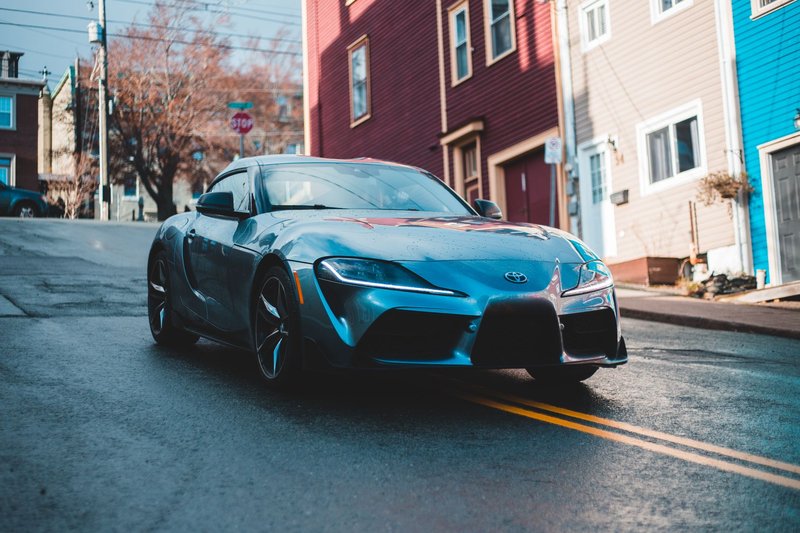
The Supra came back for 2020 after a 22-year absence, and the internet immediately got mad that it shared its B58 inline-six and platform with the BMW Z4. Drive one and the complaint evaporates. The 3.0-liter makes 382 horsepower in current trim, and Toyota’s chassis tuning gives it a personality the BMW never had.
The decade-defining move came in 2023, when Toyota added a six-speed manual — the thing purists had demanded from day one. A manual Supra is the version that will be remembered, and early-build 2020 launch cars are already the ones collectors quietly squirrel away.
5. Nissan Z
The new Z arrived for 2023 carrying a 400-horsepower twin-turbo V6 (the VR30 from the Infiniti Red Sport) and styling that openly references the 240Z and 300ZX. Nissan was broke and could not afford a clean-sheet platform, so the Z rides on a heavily revised version of the old 370Z’s bones. You can feel it.
But here’s the thing: it has a real six-speed manual, a real twin-turbo six, and it undercuts the Supra on price. The Z is the enthusiast’s value play among the halo cars — less polished than the Toyota, more soulful than the spec sheet suggests, and the NISMO version sharpens it into something genuinely quick.
6. Honda Civic Type R (FL5)
The FL5, launched for 2023, is the one the data nerds get excited about. It set a front-wheel-drive lap record at Suzuka, makes 315 horsepower from a 2.0-liter turbo four, and comes only with a six-speed manual. Honda toned down the boy-racer wing-and-vent styling of the previous FK8 and built something that looks like a fast adult’s car.
This is the best front-wheel-drive car ever made, full stop, and it will be remembered that way. It’s also already trading above MSRP, which tells you the market agrees.
7. Lexus LC 500
The LC 500 has been on sale since 2017, but it spent the entire 2020s as Japan’s grand-touring statement piece — and as the last refuge of the naturally aspirated V8 in the lineup. That 5.0-liter makes 471 horsepower, revs to 7,300 rpm, and sounds like nothing else for the money. In a decade obsessed with turbos and batteries, the LC 500’s old-school howl is the reason it belongs here.
8. Lexus LFA (the ghost in the room)
The LFA stopped production in 2012, but its shadow defines the 2020s collector conversation, and Lexus spent the decade teasing a successor. The carbon-fiber, 552-horsepower V10 supercar became one of the most appreciating Japanese cars of the decade — clean examples now trade for multiples of their original $375,000 sticker. It’s the proof that Japan can build a genuine collector hypercar, and the reason the rumored second LFA matters.
The EV and electrification wave
Every other “best Japanese cars of the 2020s” list pretends this section doesn’t exist. That’s a mistake. The electric story is half of what makes the decade interesting.
9. Nissan Ariya
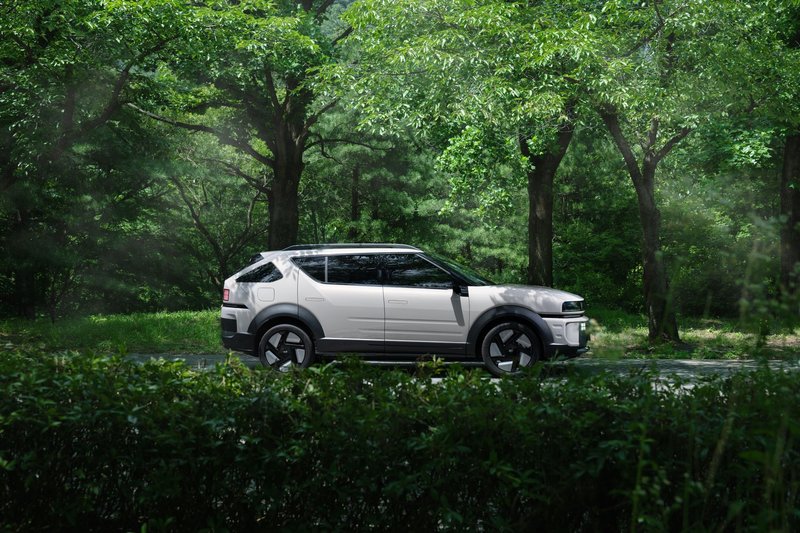
Nissan invented the mass-market EV with the Leaf in 2010, then squandered the lead. The Ariya, which reached US buyers in 2023, is the comeback attempt — a clean-design electric crossover with up to 304 miles of range and a genuinely nice interior. It’s not the fastest or the longest-range EV in its class, but it’s the one that proves Nissan still knows how to make a thoughtful car. Pricing that undercuts the German and Korean competition makes it the value EV of the bunch.
10. Lexus RZ
The RZ is Lexus’s first dedicated battery EV, and it’s the badge play — luxury buyers who want an electric crossover without leaving the Toyota universe. Early versions drew criticism for modest range, and the optional steer-by-wire yoke is a love-it-or-hate-it party trick. But it’s the most premium-feeling Japanese EV you can buy, and it signals where Lexus is heading for the rest of the decade.
11. Nissan Sakura
The Sakura is the most interesting EV on this list and you probably can’t buy one. It’s a kei-class electric city car — tiny, around 112 miles of range, and an instant sales hit in Japan, where it became the best-selling EV almost overnight. The Sakura is proof that the future of urban electric mobility might be small and cheap rather than big and expensive. It’s the decade’s most quietly important Japanese car, and it points at a segment the US market keeps ignoring. The International Energy Agency’s EV reporting has repeatedly flagged small, affordable EVs like this as the missing piece in mass adoption.
Everyday cars worth caring about
Not everything has to be a track weapon. Two everyday Japanese cars from this decade are good enough that enthusiasts actually recommend them.
12. Toyota GR Corolla
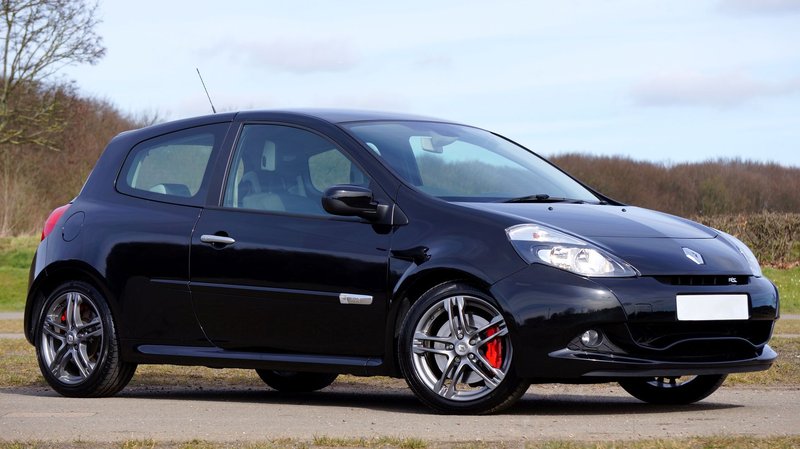
The GR Corolla is the everyday-shaped car that’s secretly a homologation special. Launched for 2023, it takes the GR Yaris’s hand-built 1.6-liter turbo three-cylinder — making 300 horsepower in the US — and bolts it into a five-door hatch with a trick GR-Four all-wheel-drive system and a six-speed manual. Three exhaust pipes. A rally car you can fit a kid’s seat in.
It’s the rare car that does the impossible: practical enough to be your only vehicle, wild enough that you’ll invent reasons to drive it. If this list had to crown one car as the defining enthusiast Japanese car of the 2020s, it would be this one.
13. Toyota Prius (fifth generation)
Stop laughing. The 2023 Prius is on this list because Toyota did the unthinkable and made the Prius desirable. The fifth generation makes up to 220 horsepower, hits 60 in around seven seconds, gets over 50 mpg, and — the genuine shock — looks good. After 20 years of being the punchline, the Prius became a car people choose because they want it. That’s a 2020s story if there ever was one.
Spec comparison table
| Car | Type | Power | Transmission | Approx. US Price | Drive |
|---|---|---|---|---|---|
| Mazda MX-5 (ND) | Roadster | 181 hp | 6MT / 6AT | ~$29,000 | RWD |
| Toyota GR86 / Subaru BRZ | Coupe | 228 hp | 6MT / 6AT | ~$30,000 | RWD |
| Toyota GR Corolla | Hot hatch | 300 hp | 6MT | ~$38,000 | AWD |
| Honda Civic Type R (FL5) | Hot hatch | 315 hp | 6MT | ~$45,000 | FWD |
| Toyota GR Supra (A90) | Coupe | 382 hp | 6MT / 8AT | ~$57,000 | RWD |
| Nissan Z | Coupe | 400 hp | 6MT / 9AT | ~$43,000 | RWD |
| Lexus LC 500 | GT coupe | 471 hp | 10AT | ~$100,000 | RWD |
| Nissan Ariya | Electric SUV | up to 389 hp | 1-speed | ~$40,000 | FWD/AWD |
| Lexus RZ | Electric SUV | up to 308 hp | 1-speed | ~$55,000 | AWD |
| Nissan Sakura | Kei EV | 63 hp | 1-speed | ~$15,000 (JP) | FWD |
| Toyota Prius (gen 5) | Hybrid | up to 220 hp | eCVT | ~$28,000 | FWD/AWD |
Prices are approximate US base figures and shift with trim, model year, and dealer markup. The Sakura is Japan-market only.
Which one should you buy?
Depends what you actually want, so here’s the honest breakdown.
If you have around $30,000 and want maximum smiles per dollar, buy the GR86, BRZ, or a Miata. You will not regret it, and any of the three will teach you more about driving than a car twice the price.
If you want one car to do everything, the GR Corolla is the answer — fast, all-weather, practical, and the kind of thing your future self will be glad you bought new while you could.
If you want the halo car on your wall, choose between the Supra (more polished, BMW heart, get the manual) and the Z (more soul, twin-turbo six, better value). The Civic Type R wins if you’ve made peace with front-wheel drive and want the sharpest track tool of the lot.
If you need it to be electric, the Ariya is the value pick, the Lexus RZ is the luxury pick, and the Sakura is the one you’ll wish you could import.
If you’re buying to collect, stash a manual Supra, an early FL5 Type R, or a clean GR Corolla. The 2020s manual-transmission revival won’t last forever, and the cars that prove it happened are the ones that’ll be worth something when it’s over.
The decade isn’t done. But the cars that define it are already here — and most of them, remarkably, still come with three pedals.

Marco Delantero
More from Marco DelanteroHow we reviewed this article
This article was researched against manufacturer records and editorially reviewed before publishing. We accept no payment for coverage. Some guides contain affiliate links; see our affiliate disclosure.