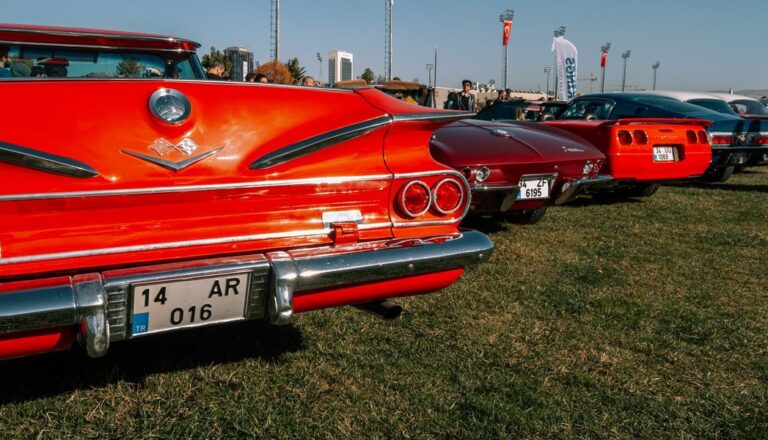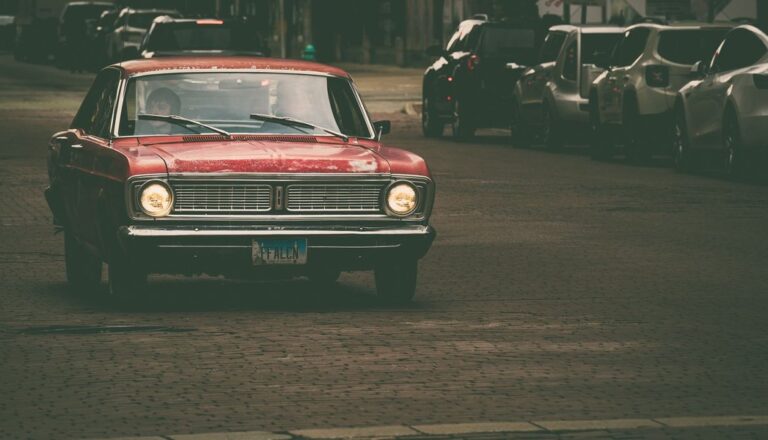
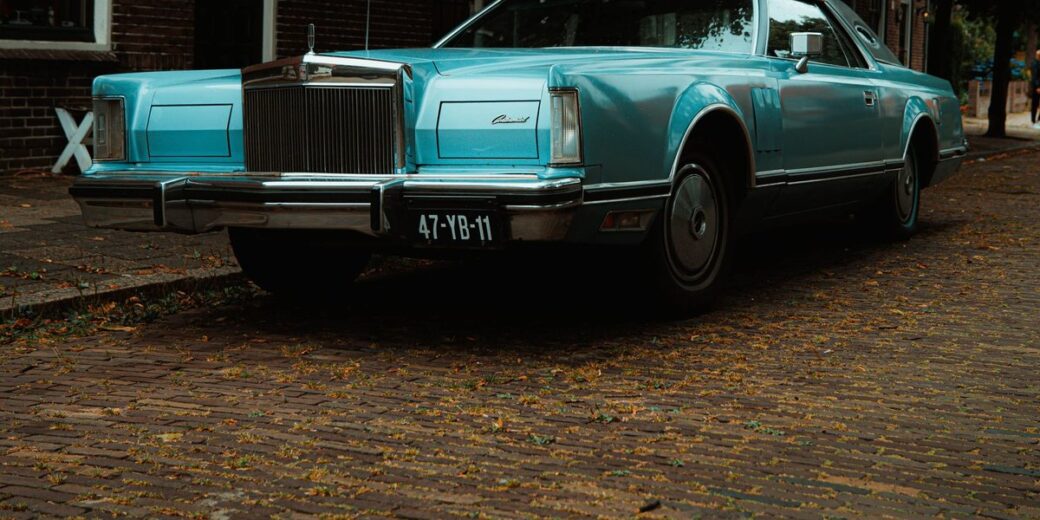
The 1970s were the last decade Lincoln built cars without apology. These were enormous, chrome-laden, velour-lined land yachts with V8s the size of small refrigerators, and Lincoln meant every inch of them. By the end of the decade the fuel crisis and federal emissions rules had started to clip their wings, but for most of the ’70s a Lincoln was a statement: I have arrived, and I brought a 460 cubic-inch engine with me.
If you’re trying to sort out which Lincoln models actually existed in the 1970s — and which one is worth chasing now — here’s the full lineup, model by model, with the specs, the styling cues that separate them, and what they’re going for today.
Table of Contents
- The Lincoln lineup at a glance
- Lincoln Continental (1970–1979)
- Continental Mark III (1970–1971)
- Continental Mark IV (1972–1976)
- Continental Mark V (1977–1979)
- Lincoln Continental Town Car & Town Coupe
- Lincoln Versailles (1977–1980)
- The Designer Series: Bill Blass, Givenchy, Pucci, Cartier
- What 1970s Lincolns are worth today
- Buying and restoring a 1970s Lincoln
- FAQ
The Lincoln lineup at a glance
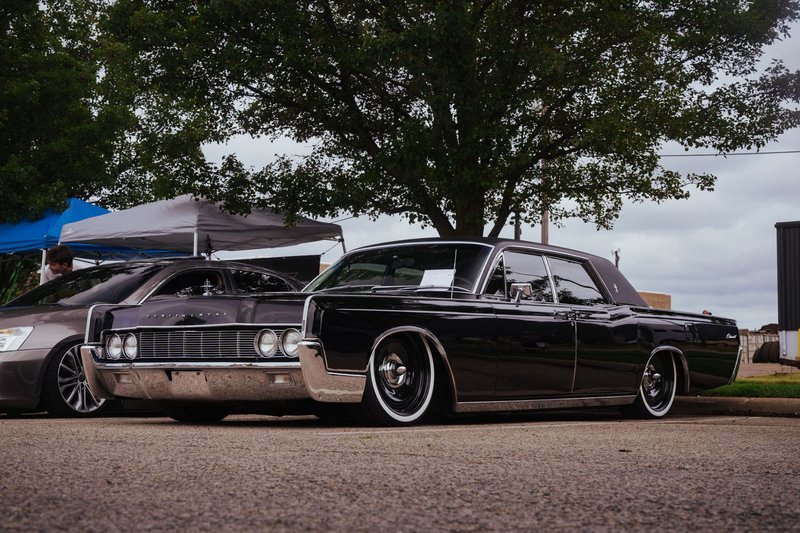
There were really only a handful of nameplates, but Lincoln stretched them across the decade with constant restyling. Here’s how they break down.
| Model | Years (1970s) | Body style | Engine | Notable |
|---|---|---|---|---|
| Continental | 1970–1979 | Sedan / coupe | 460 V8 (later 400 V8) | The volume seller; pillared sedan |
| Mark III | 1970–1971 | Personal luxury coupe | 460 V8 | Carryover from 1968 launch |
| Mark IV | 1972–1976 | Personal luxury coupe | 460 V8 | Oval opera windows, peak excess |
| Mark V | 1977–1979 | Personal luxury coupe | 460 → 400 V8 | Sharper, lighter; Designer Series peak |
| Town Car / Town Coupe | 1970–1979 | Trim level of Continental | 460 V8 | Top-tier interior package |
| Versailles | 1977–1979 (to ’80) | Compact luxury sedan | 351 V8 | Lincoln’s Cadillac Seville answer |
Two things to keep straight before going further. First, “Continental” and “Mark” are not the same car — the Continental was the standard four-door (and two-door) Lincoln, while the Mark series was a separate, more expensive two-door personal luxury coupe with its own identity. Second, “Town Car” in the ’70s was a luxury trim package on the Continental, not the standalone model it became in the 1980s. If you want the bigger picture beyond this decade, our rundown of Lincoln’s older models across the marque’s history traces how these nameplates evolved before and after the ’70s.
Lincoln Continental (1970–1979)
The Continental was the backbone of the range — the car most people actually bought. Lincoln fully redesigned it for 1970, moving to a body-on-frame platform shared with Ford and Mercury full-size cars, and ditching the famous rear-hinged “suicide” doors of the 1960s Continentals.
Early-decade cars (1970–1974) carried the 460 cubic-inch V8, good for around 365 gross horsepower in 1970 before emissions tuning and the switch to net horsepower ratings dropped the published figures into the low 200s by mid-decade. The engine never got smaller in feel, just in claimed output. That collapse in advertised power wasn’t unique to Lincoln — 1974 was the year the whole industry got choked by tightening emissions rules and the first oil embargo, and the Continental wore the change like everything else Detroit built. Hidden headlights behind body-color doors were a signature touch, along with a formal upright grille and acres of flat sheet metal.
The Continental came as a four-door pillared sedan and a two-door hardtop coupe. Length is the headline number: these cars ran well past 18 feet and tipped past 5,000 pounds. Parking one was a project. Riding in one was like floating a sofa down the highway.
For 1975 Lincoln gave the Continental a heavier facelift with a more angular roofline and an even more vertical grille, leaning hard into the “neoclassical” look that defined late-’70s American luxury. By 1977 the 460 was on its way out for emissions reasons, with a 400 cubic-inch V8 taking over as the standard engine in most configurations.
Continental Mark III (1970–1971)
The Mark III actually launched in 1968 as a 1969 model, so by the 1970s it was in its final stretch. It’s worth knowing because it set the template for everything the Mark series became: a long-hood, short-deck two-door built on the Ford Thunderbird platform, with a Rolls-Royce-inspired grille and a fake spare-tire hump molded into the trunk lid — the “Continental” hump that became a Lincoln trademark.
Under the hood was the 460 V8, making the Mark III one of the first cars to use that engine. It was Lee Iacocca’s project, conceived to take on the Cadillac Eldorado, and it worked: the Mark III sold strongly and made the personal-luxury Lincoln a permanent fixture. Production wrapped in 1971 when the Mark IV arrived.
Continental Mark IV (1972–1976)
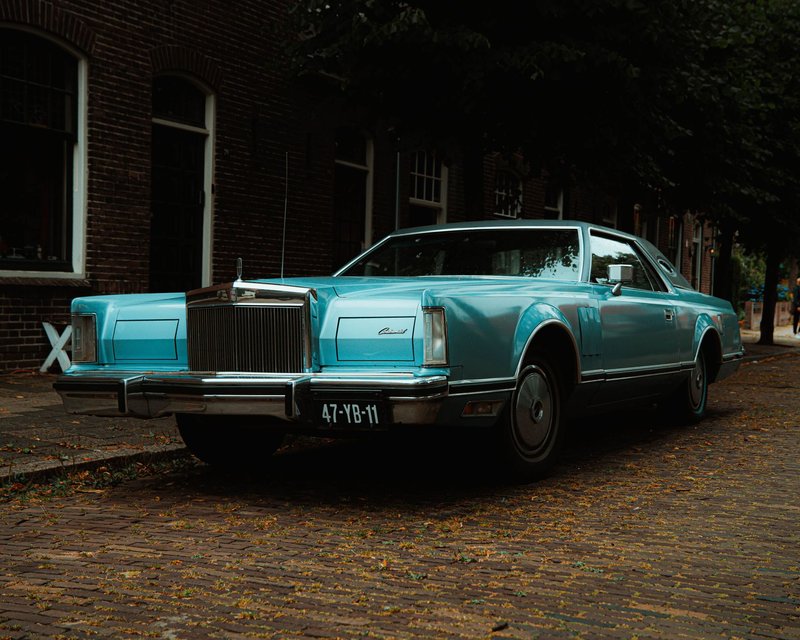
If you picture a 1970s Lincoln in your head, there’s a good chance it’s a Mark IV. This is the car that took the personal-luxury formula to its logical extreme. Bigger than the Mark III in every dimension, the Mark IV introduced the oval opera windows in the wide rear roof pillars — small porthole-style windows that became one of the most copied design cues of the decade.
The Mark IV ran the 460 V8 throughout its life, paired with Ford’s C6 three-speed automatic. It rode on a longer wheelbase than the Mark III and weighed roughly 5,000 pounds before options. The look was unapologetically formal: a tall chrome grille, hidden headlights, a vinyl roof on most cars, and that spare-tire hump out back.
This is also where the Designer Series really took off (more on that below). The Mark IV is where Lincoln figured out that buyers would pay a premium for a name on the dashboard and a coordinated color-and-trim package. By 1976, the final Mark IV year, you could option the car into genuinely exotic territory.
Continental Mark V (1977–1979)
The Mark V replaced the Mark IV for 1977 and, against the trend of the era, managed to look sharper and more modern while keeping the same outrageous scale. Edges got crisper, the body got more sculptural, and the car shed several hundred pounds even though it didn’t look any smaller. It’s widely considered the high point of the classic Mark series design.
Powertrains tell the story of the decade. The 1977 Mark V started with the 460 V8, but for 1978 the standard engine became the 400 cubic-inch V8, with the 460 available as an option before disappearing entirely. Emissions and fuel economy rules were closing in fast, and 1979 was the last year for this generation of full-size Mark before the dramatically downsized 1980 Mark VI arrived.
The Mark V is also the model most associated with the Designer Series at its peak — the Bill Blass, Cartier, Givenchy, and Pucci editions were all offered, each with its own paint, interior, and badging. A loaded Designer Series Mark V was about as much car as money could buy in 1978.
Lincoln Continental Town Car & Town Coupe
The Town Car name in the 1970s was a luxury trim level applied to the four-door Continental, with a Town Coupe version on the two-door. Think of it as the top interior package: deeper carpeting, plusher seating in leather or velour, additional sound insulation, and extra brightwork. The mechanicals were shared with the standard Continental — the same 460 (later 400) V8 and the same body-on-frame chassis.
The reason the name matters is what came next. The Town Car proved popular enough that when Lincoln downsized the full-size line for 1980, Town Car became a standalone model — the long-running, livery-fleet-favorite sedan that carried the badge for decades, and one of the definitive entries in any roundup of classic American sedans. In the ’70s, though, it was the trim you ticked to turn a Continental into the nicest version of itself.
Lincoln Versailles (1977–1980)
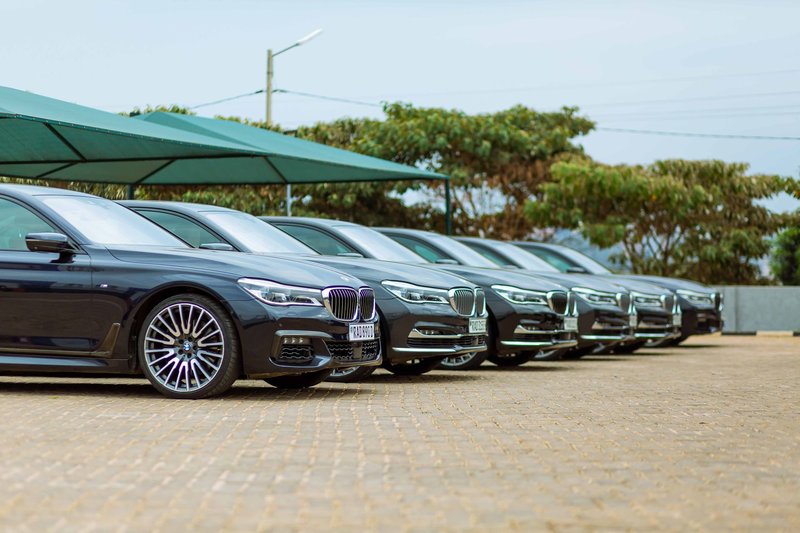
The Versailles is the odd one out, and the most interesting story in Lincoln’s ’70s catalog. Cadillac had launched the compact Seville in 1975 — a smaller, tightly-tailored luxury sedan aimed at import buyers — and it was a hit. Lincoln scrambled to respond, and the Versailles arrived in 1977.
The catch: where Cadillac engineered the Seville as a largely new car, Lincoln built the Versailles on the existing Ford Granada / Mercury Monarch compact platform. Lincoln dressed it up heavily — a formal grille, a Continental hump on the trunk, hood ornament, plush interior, and one genuinely advanced feature: clearcoat paint, which was new to American mass production at the time and gave the Versailles a noticeably deeper finish. It used a 351 cubic-inch V8.
It sold modestly. Buyers who knew the Granada underneath weren’t fooled by the price, and the Versailles never matched Seville volumes. Production ended in 1980. For collectors today that low production makes it a curiosity — rarer than the Marks, but without the same desirability, which keeps prices reasonable.
The Designer Series: Bill Blass, Givenchy, Pucci, Cartier
This is the part most roundups skip, and it’s the most distinctly-1970s thing Lincoln did. Starting on the Mark IV and peaking on the Mark V, Lincoln partnered with four fashion houses to create signature editions, each a coordinated package of exterior paint, interior trim, color-keyed accessories, and badging.
- Bill Blass — typically the most nautical and preppy of the four, often dark blue or cream with a contrasting vinyl roof and a sporting, East Coast feel.
- Cartier — the most reserved and formal, usually in dusk-rose, champagne, or light neutral tones, leaning elegant rather than flashy. Each came with a Cartier-signed dashboard clock.
- Givenchy — French-flavored and distinctive, often in jade or aqua-green schemes that nothing else on the road wore.
- Pucci — the most flamboyant, with bold two-tone color combinations and patterned accents that matched the designer’s reputation for vivid prints.
Each edition added a meaningful chunk to the sticker price and came with the designer’s signature embossed on a dashboard plaque, plus color-coordinated luggage in some cases. The packages were largely cosmetic — same drivetrain, same chassis — but they’re a big part of why certain Marks command premiums today. A documented, original-condition Designer Series Mark V is the one collectors hunt for.
What 1970s Lincolns are worth today
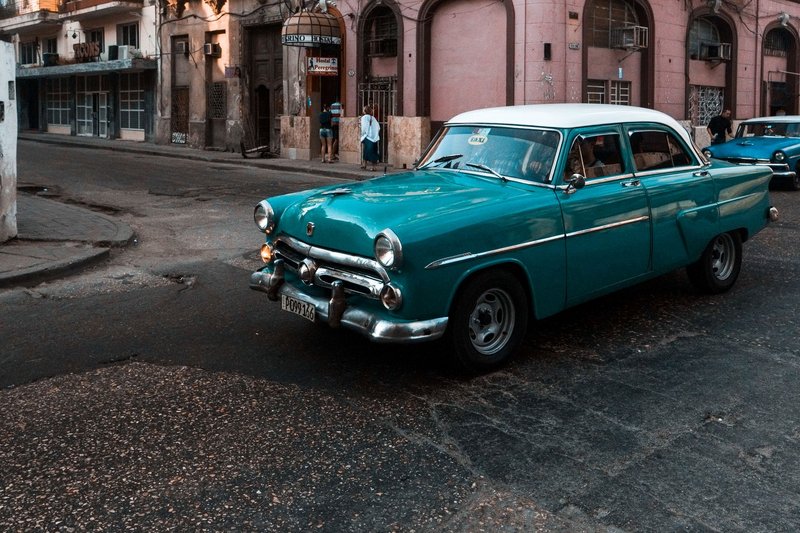
Values vary widely by model, condition, and originality, but the broad picture for clean, running, presentable examples looks roughly like this:
| Model | Typical driver-quality range | Top-condition / desirable examples |
|---|---|---|
| Continental sedan (1970–79) | $8,000–$18,000 | $20,000+ for low-mile originals |
| Continental coupe | $10,000–$22,000 | $30,000+ |
| Mark III | $12,000–$25,000 | $30,000+ |
| Mark IV | $12,000–$28,000 | $35,000+ (Designer Series) |
| Mark V | $15,000–$30,000 | $35,000+ (Designer Series) |
| Versailles | $6,000–$14,000 | $18,000 for exceptional originals |
A few patterns hold. Two-door Marks consistently outrun four-door Continentals because they were the aspirational car when new and they read better at a show. Documented Designer Series cars carry a premium over standard trim. The Versailles stays affordable because it’s rare without being coveted — which, if you actually want one, is good news.
Rust and originality move the needle more than miles on these cars. A high-mileage example with intact original paint, an unmolested interior, and service history will out-sell a lower-mileage car that’s been repainted in the wrong color and re-trimmed in vinyl that didn’t come from the factory.
Buying and restoring a 1970s Lincoln
These cars are mechanically simple and overbuilt — the 460 and 400 V8s are durable, the transmissions are tough, and there’s nothing exotic to break. The trouble is everything around the drivetrain.
Rust is the first thing to check. Look at the lower fenders, rear quarters, trunk floor, and the area around the vinyl roof, where water gets trapped under the material and rots the roof skin from underneath. A spongy-looking vinyl roof is a warning sign, not a cosmetic issue.
Parts availability is mixed. Mechanical parts for the 460/400 V8s and the C6 transmission are easy and cheap — these are common Ford components. Trim, interior pieces, and model-specific items like Designer Series badging, correct fabrics, and bumper fillers are the hard part. The polyurethane bumper fillers in particular crumble with age and are a known headache to source and fit.
Buy on originality and documentation. A car with its build sheet, original window sticker, and service records is worth chasing even at a premium. For Designer Series cars especially, verify the package is genuine and not a clone — the value gap between a real Cartier edition and a regular Mark V badged to look like one is substantial.
Fuel economy is what it is. A 460-powered Lincoln returns single-digit to low-teens miles per gallon. These are weekend cruisers and show cars, not daily drivers, and pricing them that way keeps expectations honest. The U.S. EPA’s fuel economy database lists figures for many of these models if you want the specifics before committing.
FAQ
What engine did most 1970s Lincolns use? The 460 cubic-inch V8 was the standard engine for most of the decade across the Continental and Mark series. Emissions and fuel-economy rules pushed Lincoln to a 400 cubic-inch V8 as the standard engine starting around 1977–78, with the 460 phased out. The compact Versailles used a smaller 351 V8.
What’s the difference between a Lincoln Continental and a Mark IV? The Continental was the standard full-size Lincoln, available as a four-door sedan or two-door coupe. The Mark IV was a separate, pricier two-door personal-luxury coupe built on the Thunderbird platform, with its own styling — oval opera windows, the spare-tire trunk hump, and a more exclusive image.
Was the Lincoln Town Car a separate model in the 1970s? No. In the ’70s, Town Car was a top luxury trim level of the Continental, not a standalone model. It only became its own nameplate after the 1980 downsizing.
Are 1970s Lincolns reliable? The drivetrains are stout and simple, so mechanically they hold up well. The bigger concerns are rust, aging trim, crumbling bumper fillers, and the cost of feeding a thirsty V8. Buy the most original, rust-free example you can find and the ownership experience is straightforward.
Which 1970s Lincoln is the most collectible? The Continental Mark V Designer Series — particularly documented Bill Blass and Cartier editions — sits at the top of the desirability list, followed by the Mark IV. The Versailles is the rarest but the least sought-after, which keeps it the most affordable way into a ’70s Lincoln.

Marco Delantero
More from Marco DelanteroHow we reviewed this article
This article was researched against manufacturer records and editorially reviewed before publishing. We accept no payment for coverage.