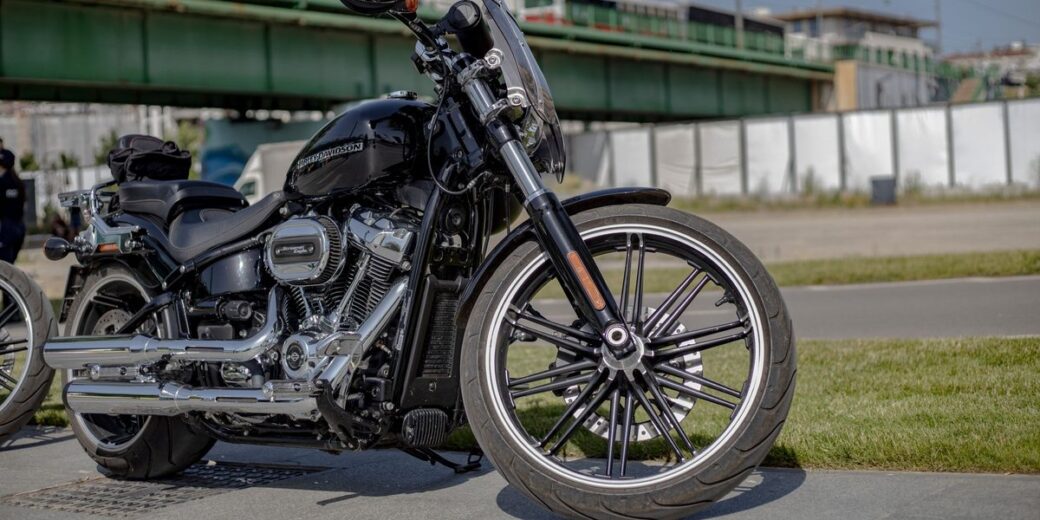
Nineteen eighty-four is the year Harley-Davidson stopped dying. The company had just bought itself back from AMF, was bleeding money, and bet the whole operation on a new engine. That engine — the V2 Evolution — showed up in 1984. So did the first Softail. And the Shovelhead, the motor that powered Harley through its roughest decade, took its final bow.
That makes the 1984 lineup a split-screen moment. Half the catalog runs the old Shovelhead. Half runs the brand-new Evo. A couple of oddballs run neither convention. If you’re shopping a vintage Harley or just trying to figure out which 1984 bikes actually matter, the engine under the tank tells you most of what you need to know.
Here’s the full roster, grouped by family, with what’s notable and what each one fetches today.
Table of Contents
- Why 1984 Was the Turning Point
- The Engine Story: Shovelhead vs. Evolution
- Sportster / XL Family
- FX & FXR Family
- FLT / FLH Touring Family
- The First Softail
- 1984 Model Quick-Reference Table
- Most Collectible 1984 Harleys
Why 1984 Was the Turning Point
Thirteen senior managers led by Vaughn Beals and Willie G. Davidson had bought Harley-Davidson back from AMF in 1981 for around $80 million. The famous “The Eagle Soars Alone” line came from that buyback. But buying the company was the easy part. The bikes still leaked, still vibrated, and still lost to Japanese machines on quality.
The fix was the Evolution engine, an aluminum-top 1,340cc V-twin that ran cooler, sealed better, and didn’t shake itself apart. Harley spent roughly seven years and a reported $40 million developing it. It launched in 1984. Within a couple of years it had pulled the company back from the edge — the same management later took Harley public in 1986 and petitioned to drop the tariff protection it had been granted, because it no longer needed it.
So a 1984 Harley sits right on the seam. The Shovelhead bikes are the end of one era. The Evo bikes are the start of the era that’s still running today. Both are collectible for opposite reasons.
The Engine Story: Shovelhead vs. Evolution
You cannot understand the 1984 lineup without sorting it by engine first.
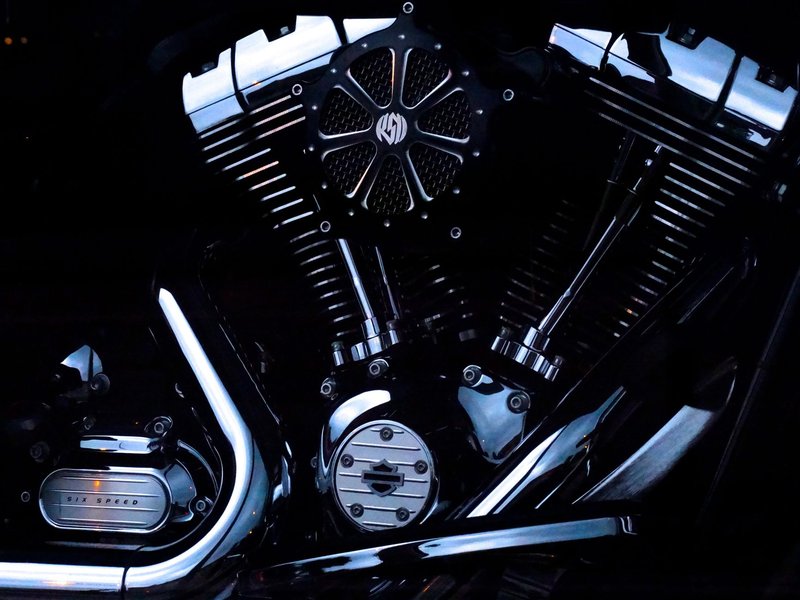
The Shovelhead (introduced 1966) was an 80-cubic-inch (1,340cc) V-twin with cast-iron heads shaped — vaguely — like coal shovels. By 1984 it was a known quantity: charismatic, torquey, and prone to running hot and weeping oil. Several 1984 big twins carried it for one last model year.
The V2 Evolution (“Evo”) was the replacement. Same 1,340cc displacement, but aluminum cylinder heads and barrels, better head sealing, lighter weight, and far better heat management. It made similar power to the Shovelhead while being dramatically more reliable. The Evo would run as Harley’s main big-twin until the Twin Cam arrived in 1999.
The Sportster Ironhead was a separate, smaller engine entirely — an iron-head 998cc (61ci) unit in 1984, still pre-Evolution on the Sportster line (the Sportster wouldn’t get its own Evo until 1986). The XR-1000 used a hopped-up version of this architecture.
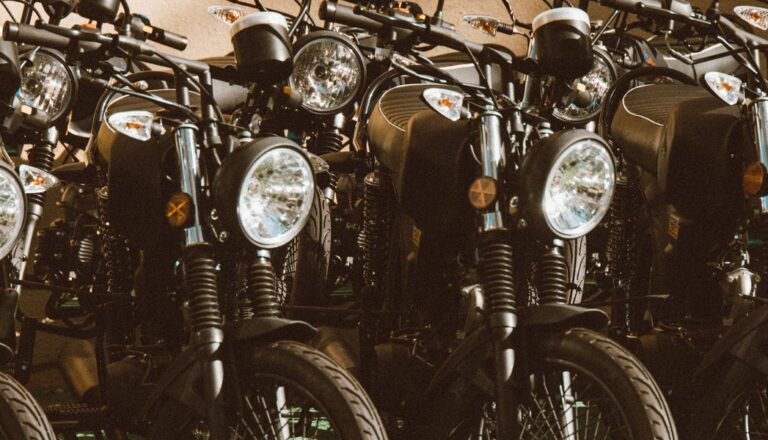
So in 1984 you could buy a Shovelhead big twin, an Evo big twin, or an Ironhead Sportster — three distinct powerplants in one catalog year. That overlap is exactly what makes the year interesting. It also helps to view the bikes in context: a quick look at the motorcycles that filled showrooms just two years earlier shows the Japanese machines Harley was racing to catch on reliability.
Sportster / XL Family
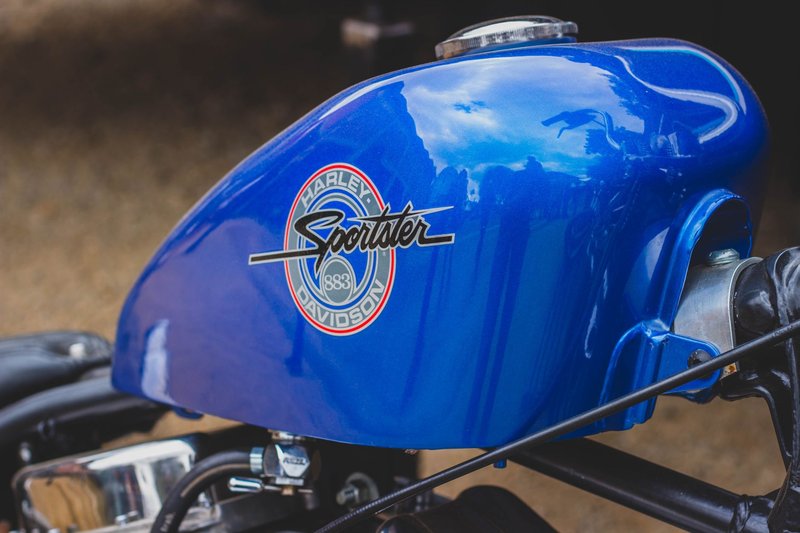
The 1984 Sportsters ran the 998cc Ironhead engine. This was the cheaper, lighter end of the range, and 1984 included one genuine legend.
XLX-61 (“XLX-1000”) — The bare-bones, blacked-out, no-chrome Sportster sold for a famous $3,995 sticker. It was Harley’s “gateway” bike: kickstart looks, solo seat, minimal everything. Solid entry into Ironhead ownership today, and values stay reasonable.
XLH-1000 — The standard full-equipment Sportster: electric start, the usual instrumentation, the workhorse of the line. The most common 1984 Sportster you’ll find.
XR-1000 — The crown jewel of the year, and arguably of the whole Ironhead era. Harley took the XLX, bolted on XR-750-style dual carbs and high-mount exhausts on the right side, ported heads, and aluminum top end. The result made around 70 horsepower — a lot for a 1984 Sportster — but cost nearly double a normal one, so it sold poorly when new. That commercial flop is exactly why it’s so collectible now. Clean XR-1000s regularly trade in the $15,000–$25,000+ range, with concours examples going higher. If a 1984 Harley is going to appreciate, this is the one.
FX & FXR Family
The middleweight cruisers. This is where the Shovelhead-to-Evo split is messiest, because 1984 was a transition year for the FX line and several variants were carried, dropped, or shifted.
FXE Super Glide — The traditional Super Glide, Shovelhead-powered, in its final stretch. A straightforward, stripped big twin.
FXSB Low Rider — The belt-drive Low Rider. Note the “B” — Harley was rolling out toothed-belt final drive in this era, a quieter, cleaner-running alternative to chain that’s now standard across the brand.
FXWG Wide Glide — The factory chopper look: wide front end, raked forks, flames on the tank, bobbed rear fender. Shovelhead power, and a styling template Harley still references.
FXRS / FXRT (Super Glide II / FXR series) — The FXR chassis was the new-school frame: rubber-mounted engine, better handling, and — importantly — available with the new Evolution engine. The FXRT was the sport-touring variant with a frame-mounted fairing and hard bags. The FXR platform is widely considered the best-handling Harley of its generation, and enthusiast demand for clean FXRs has climbed sharply in recent years.
FLT / FLH Touring Family
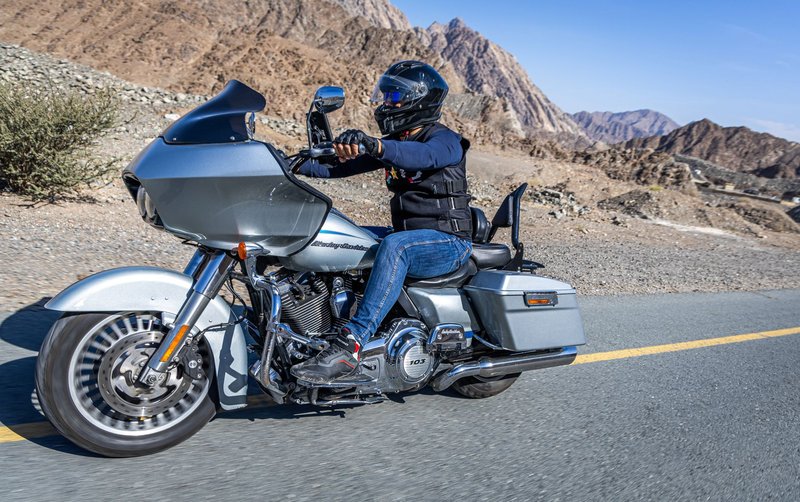
The full-dress baggers. By 1984 these were moving onto the Evolution engine, which is a big deal — a touring Harley that doesn’t cook itself on a long interstate run was a real selling point.
FLHTC Electra Glide Classic — The classic batwing-faired full dresser, now with Evo power. Floorboards, big fairing, hard bags, top box. The bike most people picture when they hear “Electra Glide.”
FLTC Tour Glide Classic — The frame-mounted “shark nose” fairing variant, with twin headlights and a fairing that turned with the frame rather than the bars. Sport-tourer DNA in a full-dress body.
FLHX / FLH Electra Glide — Standard touring variants rounding out the dresser line.
These touring Evos aren’t usually the big appreciators — they were built to be ridden, and many were — but a clean, low-mile 1984 Electra Glide with the first-year Evo is a desirable rider for someone who wants a vintage-look bagger that’s actually dependable.
The First Softail
FXST Softail — This is the other headline bike of 1984, alongside the XR-1000.
The Softail was born from an outside inventor, Bill Davis, who designed a rear suspension that hid its shocks under the transmission, making the bike look like a rigid hardtail frame from the 1950s while actually having give in the back. Harley bought the design and launched the FXST Softail in 1984 with the Evolution engine.
It worked. The Softail nailed the nostalgic hardtail silhouette without the kidney-punching ride of a true rigid, and it became one of the most important model families in Harley’s history — the Heritage, Fat Boy, Deluxe, and dozens of others all descend from this 1984 bike. As the first-year Softail, the 1984 FXST carries real historical weight for collectors, and original-condition examples are sought after for that reason.
So 1984 gave us both the last Shovelhead big twins and the first Softail. End and beginning, same showroom floor.
1984 Model Quick-Reference Table
| Model | Engine | Displacement | Family | Notable |
|---|---|---|---|---|
| XLX-61 | Ironhead | 998cc | Sportster | $3,995 budget Sportster |
| XLH-1000 | Ironhead | 998cc | Sportster | Standard full-equip Sportster |
| XR-1000 | Ironhead (tuned) | 998cc | Sportster | ~70 hp, top collector bike |
| FXE Super Glide | Shovelhead | 1,340cc | FX | Traditional Super Glide |
| FXSB Low Rider | Shovelhead | 1,340cc | FX | Belt final drive |
| FXWG Wide Glide | Shovelhead | 1,340cc | FX | Factory chopper styling |
| FXRS Super Glide II | Evolution | 1,340cc | FXR | New rubber-mount chassis |
| FXRT | Evolution | 1,340cc | FXR | Sport-touring, frame fairing |
| FLHTC Electra Glide Classic | Evolution | 1,340cc | Touring | Batwing full dresser |
| FLTC Tour Glide Classic | Evolution | 1,340cc | Touring | Shark-nose frame fairing |
| FXST Softail | Evolution | 1,340cc | Softail | First-year Softail |
Exact variant counts differ by source — some catalogs list 13 models, others stretch to 21 once you count trim, sidecar, and equipment variations. The families above cover what actually matters.
Most Collectible 1984 Harleys
If you’re buying a 1984 Harley as an investment as much as a rider, the hierarchy is clear.
1. XR-1000 — The flop that became the icon. Lowest production interest when new, highest collector demand now. The one to chase if you can find a clean one and afford it.
2. FXST Softail — First year of the most influential Harley platform of the modern era. Historical significance carries the value here, especially for unmolested originals.
3. Clean FXR-series Evos (FXRT/FXRS) — Not first-year anything, but the FXR’s reputation as the best-handling Harley of its time has pushed prices up among riders who actually want to ride their vintage bike.
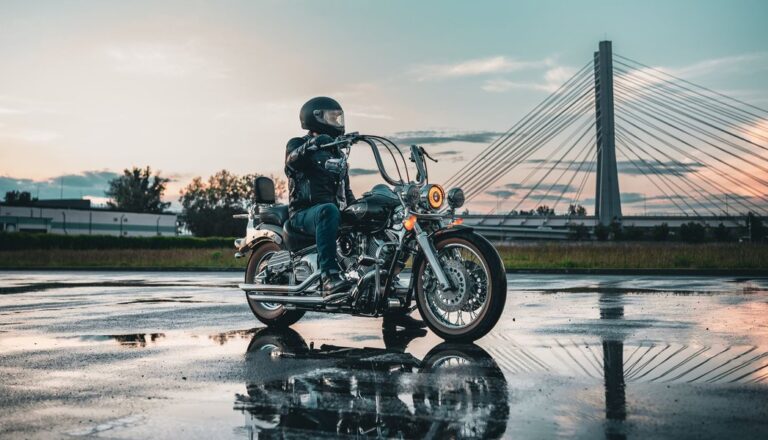
For the Shovelhead big twins, value tracks condition and originality more than rarity — they’re the sentimental end-of-an-era pick rather than the appreciation play. And the budget XLX is the smart way into Ironhead ownership without spending XR money. If you cast a wider net while shopping vintage, it helps to know how Harley stacks up against the full field of motorcycle marques still on the road today.
The takeaway: 1984 isn’t just another year in the catalog. It’s the hinge the whole modern company swings on. Buy the engine first, the model second — and if you find a real XR-1000, don’t overthink it.

Marco Delantero
More from Marco DelanteroHow we reviewed this article
This article was researched against manufacturer records and editorially reviewed before publishing. We accept no payment for coverage. Some guides contain affiliate links; see our affiliate disclosure.