Most “2015 Lamborghini lineup” pages give you a spec card and call it a day. That misses the actual story of the year. 2015 was a hinge moment for Lamborghini: the old V10 Gallardo was gone, the Huracán had just landed to replace it, and the Aventador got its first hardcore variant — the SV. Two model families, a handful of trims, and one of the more interesting transition years in the brand’s modern history.
Here’s every 2015 Lamborghini you could actually buy, what it cost then, what the numbers were, and roughly what they go for on the used market today.
Table of Contents
- The Short Version
- 2015 Lamborghini Aventador
- 2015 Lamborghini Aventador SV (LP 750-4)
- 2015 Lamborghini Huracán
- The Gallardo-to-Huracán Handoff
- 2015 Lineup Spec Comparison
- What They Cost Used Today
- Which 2015 Lamborghini Should You Want?
The Short Version
For the 2015 model year, Lamborghini sold two distinct cars:
- Aventador — the V12 flagship. LP 700-4 coupe and roadster, plus the brand-new, track-focused Aventador SV (LP 750-4 Superveloce) that debuted at the Geneva Motor Show in March 2015.
- Huracán — the V10 “junior” supercar. LP 610-4 coupe, with the LP 610-4 Spyder unveiled at Frankfurt in September 2015 (and reaching customers as a 2016 in most markets).
That’s it. No Gallardo — it was discontinued in 2014. No Urus, no rear-drive trims yet. Two engines, two philosophies, all-wheel drive across the board. If you remember 2015 as the year Lamborghini got the SV and finished killing the Gallardo, you’ve got it.
2015 Lamborghini Aventador
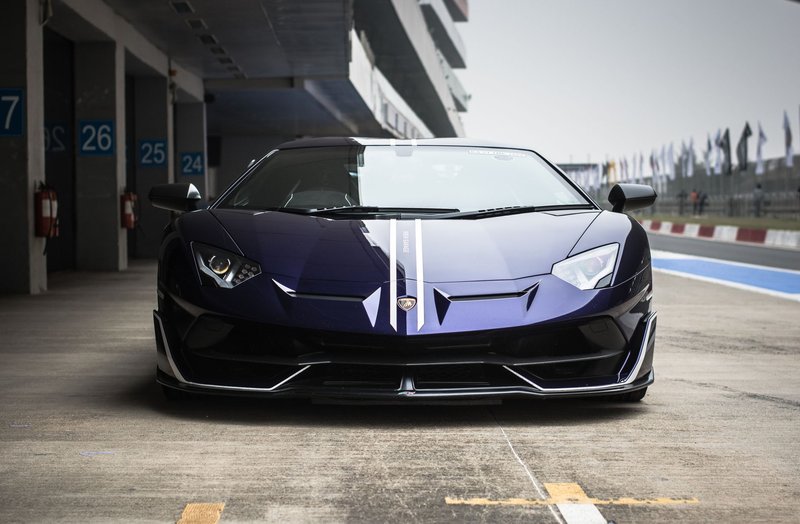
The Aventador LP 700-4 was already three years old by 2015, and it was still the most theatrical car the company made. Scissor doors. A naturally aspirated 6.5-liter V12 making 691 hp (the “700” is metric PS) and 509 lb-ft of torque. A single-clutch automated manual — the ISR gearbox — that shifts with a deliberate, neck-snapping shove rather than the seamless creaminess of a dual-clutch. That’s a feature, not a bug, depending on who you ask.
Numbers: 0–60 mph in roughly 2.9 seconds and a top speed of 217 mph. Power went to all four wheels through a Haldex-based AWD system, and the whole thing sat on a carbon-fiber monocoque that kept dry weight around 3,472 lbs — light for a car with this much engine.
In 2015 you could get it as a coupe or as the LP 700-4 Roadster, which used a two-piece removable carbon roof you stowed under the front hood. Starting price was about $397,500 for the coupe; the Roadster pushed past $440,000. Options did the rest, and Lamborghini buyers are not shy with options.
2015 Lamborghini Aventador SV
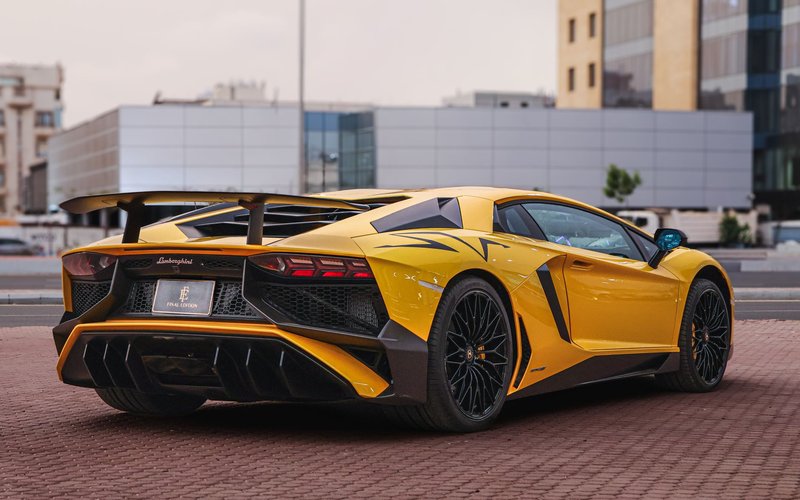
This is the car that made 2015 matter. The Aventador SV — LP 750-4 Superveloce — broke cover at Geneva in March 2015 and represented Lamborghini doing what it does best: taking the flagship and making it meaner.
“Superveloce” means super-fast, and they earned it. The same 6.5L V12 was turned up to 740 hp, the car shed about 110 lbs (down to roughly 3,362 lbs dry), and the suspension, steering, and aero all got the magnetorheological-damper, pushrod, and active-aero treatment. That huge fixed rear wing wasn’t for show — the SV generated significantly more downforce than the standard car.
The result: 0–60 in 2.7–2.8 seconds, a top speed north of 217 mph, and a Nürburgring lap time Lamborghini claimed at 6:59.73 — the first of its cars to officially crack seven minutes there. Production was capped at 600 coupes, with the open-top SV Roadster (limited to 500) following shortly after. Sticker was around $493,000, and good luck finding one near that today. It’s the kind of figure that puts the SV firmly among the best sports cars of the 2010s, and the market has agreed ever since.
If the regular Aventador was a grand statement, the SV was the version built to back the noise up on a track.
2015 Lamborghini Huracán
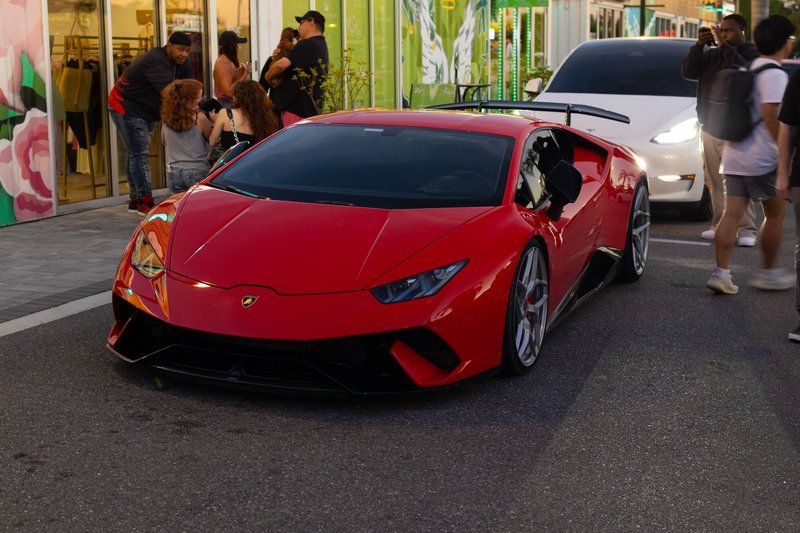
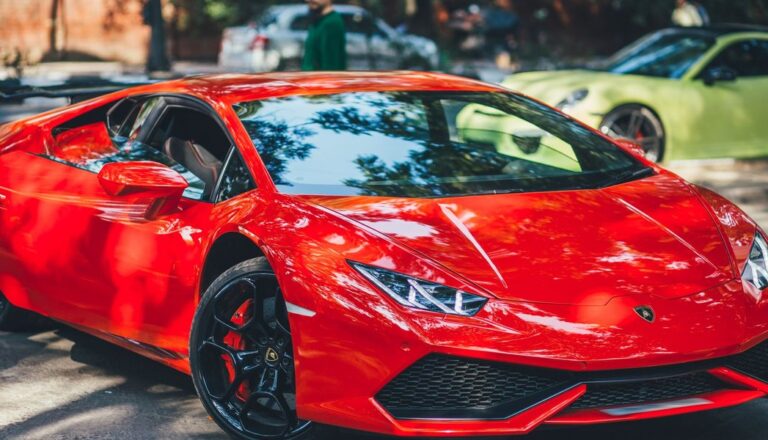
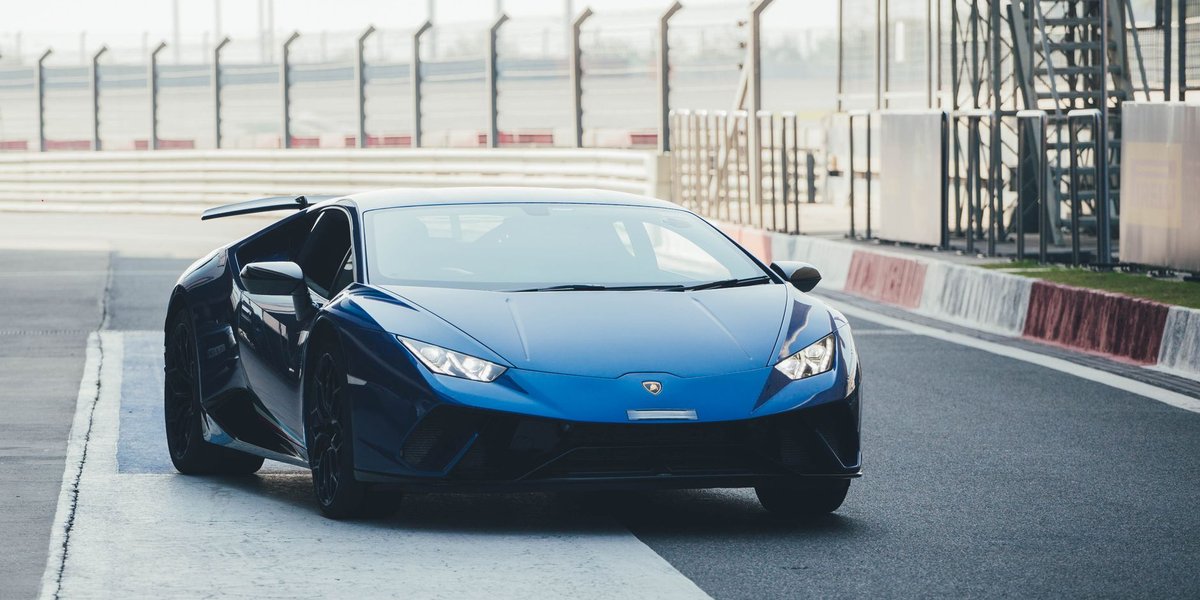
The Huracán LP 610-4 was the genuinely new car of 2015 — the replacement for the long-running Gallardo, and Lamborghini’s most important volume model. Where the Aventador is V12 theater, the Huracán is the one you could actually imagine driving every day without a chiropractor on retainer.
Under the rear deck sat a 5.2-liter naturally aspirated V10 good for 602 hp and 413 lb-ft (the “610” is, again, metric PS). The big mechanical upgrade over the Gallardo was a proper 7-speed dual-clutch transmission — smooth, quick, modern — replacing the old car’s clunky automated single-clutch. AWD was standard, and a “ANIMA” drive-mode selector let you toggle between Strada, Sport, and Corsa.
Performance was supercar-serious: 0–60 in about 3.2 seconds and a top speed of 202 mph. Crucially, the Huracán was the more livable, more forgiving, and more confidence-inspiring of the two 2015 Lamborghinis — a car you could drive fast without it feeling like it was actively trying to fire you into a hedge.
Pricing started around $237,250, making it the entry point to the brand. The LP 610-4 Spyder was revealed at the Frankfurt show in September 2015 with a soft top and the same drivetrain, though it landed in customer hands as a 2016 model in most markets.
The Gallardo-to-Huracán Handoff
Here’s the context the spec directories skip. The Gallardo was the best-selling Lamborghini ever made — over 14,000 units across its decade-long run — and it carried the company financially. When the Huracán replaced it, the stakes were enormous: get the successor wrong and you’ve kneecapped your bread-and-butter model.
They didn’t get it wrong. The Huracán kept the V10 character buyers loved but fixed the Gallardo’s biggest weaknesses — the dated gearbox, the slightly agricultural feel — while adding a stiffer hybrid aluminum-and-carbon chassis. The Gallardo itself sat at the heart of a wave of 2000s European sports cars that defined the decade, which makes its handoff all the more significant. So 2015 sits right on the seam: the very last Gallardo-influenced thinking giving way to the modern, dual-clutch, infotainment-equipped era of the brand. If you want the symbolic dividing line in recent Lamborghini history, this is it.
The fact that one well-known model encyclopedia treats 2015 as a “gap year” between Gallardo and Huracán generations gets it backwards. 2015 wasn’t a gap. It was the changeover happening in real time.
2015 Lineup Spec Comparison
| Model | Engine | Power | 0–60 mph | Top Speed | Transmission | Starting MSRP (2015) |
|---|---|---|---|---|---|---|
| Aventador LP 700-4 Coupe | 6.5L V12 | 691 hp | ~2.9 s | 217 mph | 7-spd single-clutch (ISR) | ~$397,500 |
| Aventador LP 700-4 Roadster | 6.5L V12 | 691 hp | ~3.0 s | 217 mph | 7-spd single-clutch (ISR) | ~$441,600 |
| Aventador SV (LP 750-4) | 6.5L V12 | 740 hp | ~2.8 s | 217+ mph | 7-spd single-clutch (ISR) | ~$493,000 |
| Huracán LP 610-4 Coupe | 5.2L V10 | 602 hp | ~3.2 s | 202 mph | 7-spd dual-clutch | ~$237,250 |
The Huracán Spyder is left off intentionally — it was unveiled in late 2015 but sold as a 2016 in most markets.
What They Cost Used Today
A decade on, these cars have settled into clear lanes — and the SV broke the usual depreciation rules entirely.
- Huracán LP 610-4 coupe — the value play. Clean, well-kept 2015 coupes trade in the $160,000–$210,000 range depending on mileage and service history. For a naturally aspirated V10 supercar, that’s a lot of car per dollar. The catch is upkeep: clutch packs, carbon-ceramic brakes, and tires are all genuinely expensive, and a deferred service can erase your “deal.”
- Aventador LP 700-4 — coupes generally sit in the $280,000–$360,000 band, with Roadsters commanding a premium. The V12 and the noise hold value better than most rivals because nothing newer sounds quite like it.
- Aventador SV — this one appreciated. With only 600 coupes built, clean SVs routinely ask $500,000–$650,000+, comfortably above their original sticker. Limited production plus the “first naturally aspirated V12 hypercar before turbos and hybrids took over” angle makes it a collector piece, not a depreciating toy.
The buyer math is simple: the Huracán is the one to drive, the standard Aventador is the one for the V12 experience without collector-car money, and the SV is the one to buy if you’re treating it as an asset.
Before any purchase, pull the service records and budget for a pre-purchase inspection at a specialist — Lamborghini ownership costs are predictable, but only if you know what’s coming. Buyer-protection basics like checking a vehicle history report apply to a $200,000 Huracán just as much as a $5,000 commuter.
Which 2015 Lamborghini Should You Want?
If you actually want to drive a Lamborghini — daily-ish, on real roads, without the car fighting you — the 2015 Huracán LP 610-4 is the obvious answer. Modern gearbox, usable performance, friendlier handling, and it’s the cheapest entry into the marque on the used market.
If you want the full V12 drama and don’t mind the rougher single-clutch shifts and the lower-and-wider ergonomics, the Aventador LP 700-4 delivers theater no Huracán can match.
And if you’ve got the budget and you’re thinking about value retention, the Aventador SV is the trophy — limited, appreciating, and one of the last great naturally aspirated V12 Lamborghinis built before turbocharging and hybridization changed the formula for good.
Two model families, one transition year, and a lineup that — looking back — captured exactly the moment Lamborghini pivoted into its modern era.

Marco Delantero
More from Marco DelanteroHow we reviewed this article
This article was researched against manufacturer records and editorially reviewed before publishing. We accept no payment for coverage.