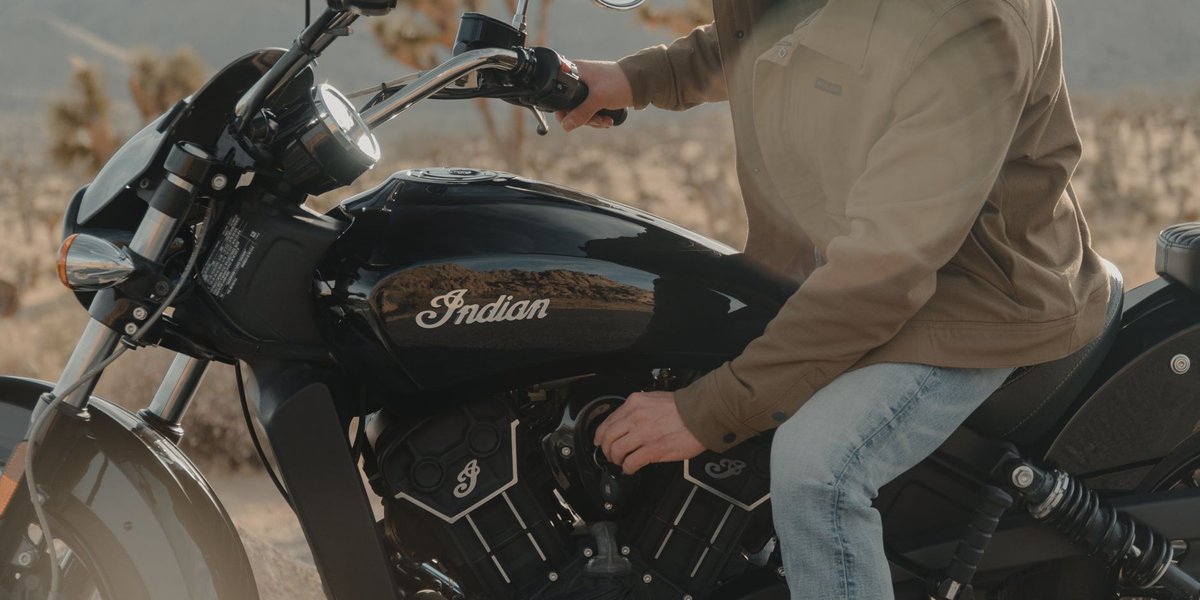
For about four years, you could walk into a dealership and buy a brand-new Indian motorcycle with a 1999 build date. Not a Harley. Not a restored antique. A new Indian, the first since the original company folded in 1953. Then, just as fast, it was gone again.
These are the Gilroy bikes, and they’re one of the strangest chapters in American motorcycling. Today you can pick one up used for the price of a decent secondhand cruiser, which makes them tempting. But the badge hides a complicated story about who built them, what’s actually under the tank, and whether the thing is a genuine Indian or a Harley clone in a feathered headdress. That difference can mean thousands of dollars and a world of pain finding parts.
Here’s the full breakdown: the timeline, the models, the engine question that decides everything, and exactly what to look for before you hand over cash.
Table of Contents
- The TLDR
- The Gilroy Story: A Messy Resurrection
- The Engine Question That Decides Everything
- The Models, Year by Year
- Comparison Table
- What’s a Gilroy Indian Worth Today?
- The Buyer’s Checklist
- So, Should You Buy One?
The TLDR
If you want the short version: Gilroy Indians were built from 1999 to 2003 in Gilroy, California, after the brand’s name was revived from decades of bankruptcy limbo. The single most important thing to know is the engine. Bikes from 1999 to 2001 use an S&S-built motor that is essentially a Harley Evolution clone. The 2002–2003 bikes use Indian’s own 100-cubic-inch “Powerplus” engine, designed in-house.
For a buyer, that means the Powerplus bikes (2002–2003) are the more genuinely “Indian” machines and generally the ones enthusiasts respect, while the earlier S&S bikes are easier to service because half the parts catalog is Harley. Don’t confuse these with the later “Kings Mountain” Indians (2009–2011) or the modern Polaris-built bikes — those are entirely different machines. Expect to pay roughly $7,000 to $14,000 depending on model, mileage, and which engine you’re looking at.
The Gilroy Story: A Messy Resurrection
The original Indian Motocycle Company died in 1953. For the next 45 years, the name bounced around like a hot potato — various people and companies claimed rights to it, slapped the logo on imported bikes, and generally muddied the water. By the late 1990s, nine different entities were fighting over the trademark in court.
In 1998, a federal bankruptcy court in Denver finally consolidated those claims and handed the name to a new outfit, the Indian Motorcycle Company of America (IMCA), which set up shop in Gilroy, California — the garlic-farming town south of San Jose. The first new bike, a 1999 Chief, rolled out late that year. For the first time in nearly half a century, you could buy a new Indian.
It didn’t last. The Gilroy operation never solved its fundamental problem: it was selling a premium-priced cruiser without the dealer network, the parts pipeline, or the engineering budget of Milwaukee. In September 2003, IMCA ran out of money and shut down. Production stopped mid-stream.
That’s not the end of the name’s wandering, though, and this is where buyers get confused. A British investment firm, Stellican, later bought the assets and restarted limited production in Kings Mountain, North Carolina, from 2009 to 2011. Then Polaris — the snowmobile and Victory people — bought Indian in 2011 and turned it into the genuinely successful modern brand you see today. So when someone says “Indian,” they could mean four very different eras. The Gilroy bikes are specifically the 1999–2003 California-built machines, and the Wikipedia history of the Indian Chief lays out the full lineage if you want to trace every owner.
The Engine Question That Decides Everything
If you remember one thing from this guide, make it this. The engine under a Gilroy Indian determines its value, its parts availability, and a lot of its identity. There are two completely different motors across the run.
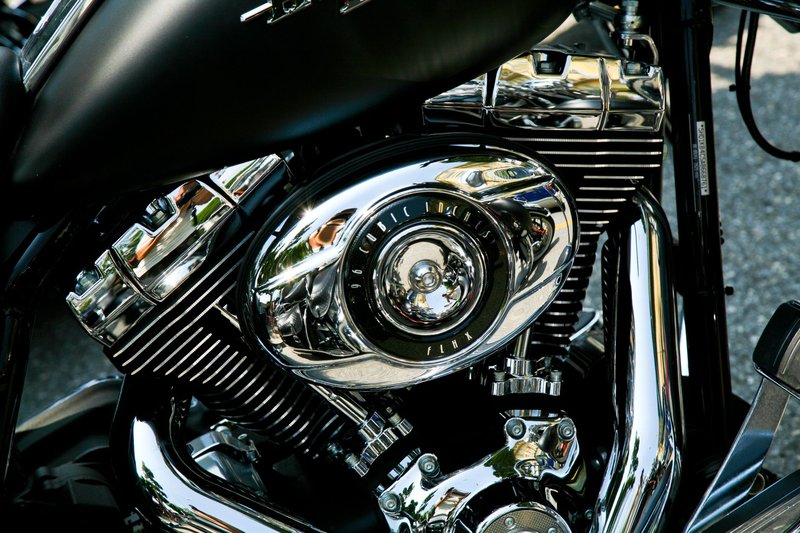
1999–2001: The S&S motor. The early Gilroy bikes used a 88-cubic-inch (and later larger) V-twin built by S&S Cycle, the legendary aftermarket engine maker in Wisconsin. The design is closely based on the Harley-Davidson Evolution engine — same basic architecture, same 45-degree V-twin layout. Purists were merciless about this. Paying Indian money for what was, mechanically, a hopped-up Harley clone struck a lot of people as the brand cashing in on the name rather than building a real Indian.
The upside is practical: because it’s Evo-based, a huge swath of the Harley aftermarket and a competent independent Harley mechanic can keep one of these running. Parts aren’t a mystery.
2002–2003: The Powerplus 100. For the final two model years, Indian launched its own engine, the Powerplus 100 — a 100-cubic-inch (1,638cc) V-twin designed in-house rather than bought from S&S. This was the bike the brand was supposed to be all along: a real Indian motor, not a rebadged clone. Enthusiasts generally consider the Powerplus bikes the most desirable and “legitimate” of the Gilroy era for exactly that reason.
The catch is the flip side of the S&S advantage. The Powerplus is a low-volume, orphaned engine. The company that made it went bankrupt a year after launch. Specialized parts — and the knowledge to work on it — are harder to come by, so you lean on a smaller community of Indian specialists rather than any Harley shop. The trade-off, then, is real: the more authentic engine is also the harder one to support, and the debate plays out constantly on forums like IndianMotorcycles.net.
The Models, Year by Year
Gilroy built a fairly small lineup, all cruisers, all carrying classic Indian styling cues — the valanced fenders, the illuminated war-bonnet front fender ornament, the deep paint.
Indian Chief
The flagship, and the bike most people picture. The Chief is a big, heavy touring-style cruiser with the full skirted fenders front and rear. It’s the most common Gilroy model on the used market and the one that most directly channels the 1940s Indian look. A 2000 Chief Centennial edition celebrated the brand’s 100th anniversary and is among the more collectible variants. If you want the iconic Gilroy Indian, this is it.
Chief Roadmaster
The dressed-up touring version of the Chief, kitted out with a windshield, hard saddlebags, and extra chrome for riders covering distance. It’s heavier and more expensive than a standard Chief, and it’s the model to look at if you actually plan to ride two-up on weekend trips rather than just park it and admire the fenders.
Indian Spirit
A leaner, more stripped-down cruiser than the full-skirted Chief. The Spirit ditches the heavy valanced fenders for a sportier, more bobbed profile, which makes it lighter and a bit more nimble. Buyers who find the Chief too much bike — too heavy, too much chrome — often land on a Spirit.
Indian Scout
The smaller, more accessible model in the lineup, reviving one of Indian’s most storied historical names. The Gilroy Scout was positioned as the entry point to the brand. It’s the least common of the four on the used market and, fairly or not, the least sought-after of the Gilroy Indians.
Comparison Table
| Years | Model(s) | Engine | What it means |
|---|---|---|---|
| 1999–2001 | Chief, Spirit, Scout | S&S V-twin (Harley Evo-based) | Easier parts/service, “clone” reputation |
| 2000 | Chief Centennial | S&S V-twin | Anniversary special, more collectible |
| 2002–2003 | Chief, Roadmaster, Spirit, Scout | Powerplus 100 (in-house, 100ci) | More authentic, harder to source parts |
| 2009–2011 | Chief (Kings Mountain) | Powerplus | NOT a Gilroy bike — different era |
The big dividing line runs right down the middle: everything before 2002 is S&S, everything from 2002 on is Powerplus. Confirm the model year and engine before anything else.
What’s a Gilroy Indian Worth Today?
Gilroy Indians occupy an odd spot in the market. They’re old enough and rare enough to have collector appeal, but the brand’s failure and the “Harley clone” cloud keep prices grounded. That’s good news if you’re buying.
As a rough snapshot, clean Gilroy Chiefs typically trade in the $8,000 to $13,000 range, with low-mileage Powerplus bikes and the 2000 Centennial pushing toward the top. Spirits and Scouts tend to sit a bit lower. Roadmasters, with all their touring equipment, can run higher when they’re in good shape. You’ll find them scattered across listing sites like CycleTrader, where you can watch the spread in real time.
Two things move the price more than mileage: which engine it has, and whether it’s a documented, original bike rather than a questionable one. Which brings us to the checklist.
The Buyer’s Checklist
Used Gilroy Indians have a few specific gotchas. Run through these before you commit.
-
Confirm the engine matches the year. A 2002–2003 bike should have the Powerplus 100; a 1999–2001 should have the S&S. Verify it physically, not just from the title. Mismatches signal a swap or a misrepresented bike.
-
Watch for fakes and “alleged” Gilroys. Because the name floated around for decades, there are bikes out there wearing Indian badges that aren’t genuine Gilroy production machines. Authenticity questions are a recurring theme — there’s an entire forum thread dedicated to a buyer asking whether his “alleged 2000 Gilroy Indian Chief” was real. Get the VIN, check it, and verify the bike’s history.
-
Ask about parts and service history. For a Powerplus bike especially, find out whether the seller has a relationship with a shop that knows the engine. An orphaned motor with no service support is a liability.
-
Inspect the usual cruiser wear points. Leaks around the primary and base gaskets, charging-system health, brake and fork condition, and tire age. These bikes have sat a lot, and rubber and seals don’t love sitting.
-
Check the electrical and the fender lamp. The illuminated war-bonnet front fender light is part of the bike’s signature; make sure it and the rest of the wiring actually work, since electrical gremlins are common on low-volume machines.
-
Get it in writing. Title, VIN, and any documentation of which Gilroy era and engine you’re buying. With a brand this tangled, paperwork protects you.
So, Should You Buy One?
A Gilroy Indian is not a sensible, low-stress cruiser. It’s a piece of a weird, romantic, ultimately doomed attempt to bring an American legend back from the dead, and it rides like the era it came from — big, heavy, full of character.
If you go in clear-eyed, it can be a great buy. Want the easiest ownership experience and don’t mind the clone reputation? A 1999–2001 S&S Chief gives you classic looks with a serviceable, parts-friendly engine. Want the more authentic machine and you’re willing to find an Indian specialist? Hunt down a 2002–2003 Powerplus bike, ideally a documented one. Either way, buy the cleanest, best-documented example you can find rather than the cheapest — with these bikes, a bad one will cost you far more than the discount was worth.
The 2000s Indians were a beautiful failure. That’s exactly what makes them worth owning, as long as you know which one you’re actually buying.

Marco Delantero
More from Marco DelanteroHow we reviewed this article
This article was researched against manufacturer records and editorially reviewed before publishing. We accept no payment for coverage.