1971 was the year Toyota stopped being the cheap import and started being a car company Americans actually wanted. The Celica landed on U.S. soil for the first time. The Corolla was a year into its second generation. And the FJ40 Land Cruiser was quietly becoming the thing it is now: a six-figure collector truck.
Most pages that cover this year either bury 1971 inside a decade-long roundup or give you a thin spec stub with no context. This is the whole 1971 lineup in one place, model by model, with the engines, the body styles, the original sticker prices, and what each one tends to sell for today.
Table of Contents
- 1971 in Toyota’s story
- Toyota Celica
- Toyota Corolla
- Toyota Corona
- Toyota Corona Mark II
- Toyota Crown
- Toyota Land Cruiser FJ40
- Toyota Hilux
- The concept cars: SV-1 and RV-1
- 1971 Toyota spec comparison
- What they’re worth now
1971 in Toyota’s story
Toyota sold more than 285,000 cars in the U.S. in 1971, and the mix tells you exactly where the company was headed. The Corolla did the heavy lifting at 116,435 units. The Mark II surprised everyone at 78,092. The Corona held steady around 67,858. The brand-new Celica moved 17,572 in a partial year, and the big Crown trickled out at fewer than 4,000.
That’s a company climbing the ladder. Cheap economy car at the bottom, a genuine sport coupe in the middle, and a luxury sedan up top that Americans mostly ignored. The two stories that matter most in 1971 are the Celica arriving and the Corolla hitting its stride. Everything else is supporting cast, though the FJ40 turned out to be the long-game winner nobody saw coming.
Toyota Celica
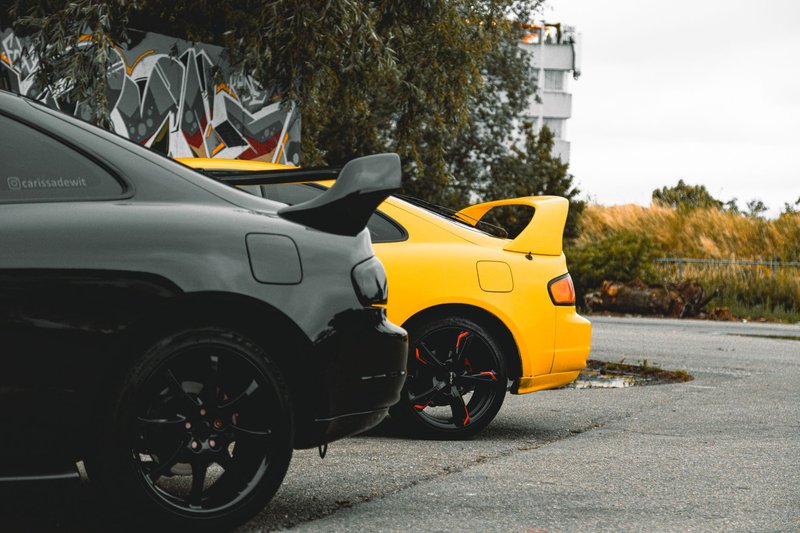
The headliner. Toyota built the first-generation Celica (the TA22) as a deliberate answer to the Ford Mustang’s “buy a sporty shape on an economy-car budget” formula, and 1971 was its U.S. debut.
You could only get the ST coupe that first year. Under the hood sat a 1.9-liter overhead-cam four making 108 horsepower, paired with a four-speed manual and front disc brakes as standard equipment. The notchback hardtop body rode a 95.5-inch wheelbase and weighed a trim 2,290 pounds. Base price: $2,598.
That weight figure is the whole point. The Celica wasn’t fast by muscle-car numbers, but it was light, it handled, and it cost less than a loaded Corona. American buyers got it immediately. The ST gave you bucket seats, a center console, and a tachometer at a time when those still felt like extras on an import.
If you want the deeper history of how the first-gen car evolved into the liftback, Consumer Guide’s feature on the 1971 Celica ST walks through the early cars in detail.
Toyota Corolla
The volume seller, and a better car than its reputation suggests. The 1971 Corolla was a year into the second-generation E20, which had launched in May 1970 with the rounded “coke bottle” styling that replaced the boxy first-gen shape.
The big news for enthusiasts was the 1600. The 2T 1,600cc overhead-valve four made around 102 horsepower in U.S. trim, and a period Road & Track test clocked the Corolla 1600 from 0 to 60 in about 12 seconds while still returning 26.6 mpg. For a sub-$2,000 economy car in 1971, that combination was rare.
Body styles covered the practical spread: two-door coupe, four-door sedan, and a station wagon. An automatic option arrived midyear. The wheelbase was a compact 91.9 inches and curb weight stayed under 2,000 pounds, which is why even the small-engine cars felt lively.
Toyota Corona
The Corona was Toyota’s bread-and-butter mid-size sedan, the car that had built the brand’s American reputation for not breaking. By 1971 it was the sensible middle child: bigger than a Corolla, cheaper and plainer than the Mark II.
It came as a sedan, a two-door hardtop, and a wagon, powered by a roughly 1.9-liter four in the 90-to-108-horsepower range depending on trim and emissions tune. Nobody bought a Corona to be excited. They bought it because it started every morning and the dealer was honest about the service intervals. Sales had actually peaked back in 1969 and were sliding by 1971, squeezed from below by the cheaper Corolla and from above by the roomier Mark II. The fiercest pressure, though, came from Nissan’s parallel rise; the same value pitch was playing out across the whole 1970s Datsun lineup, and the two brands spent the decade trading economy-sedan buyers back and forth.
Toyota Corona Mark II
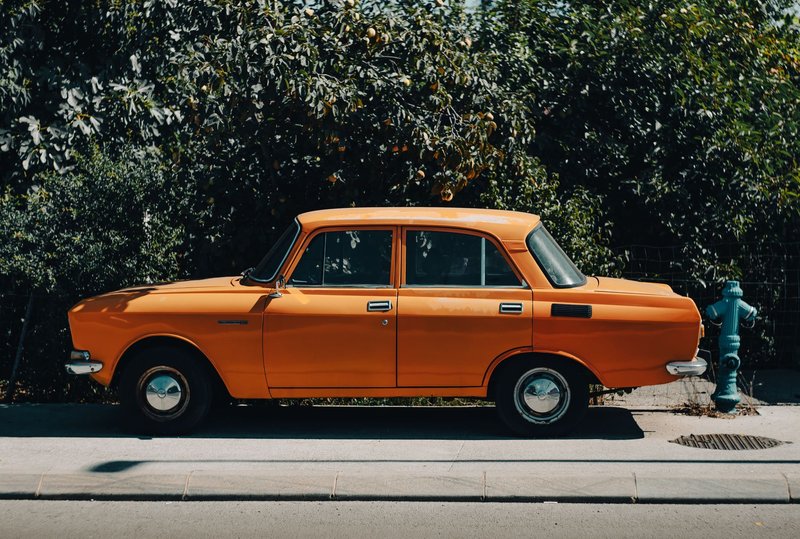
The quiet hit of 1971. The Corona Mark II outsold the Corona itself that year, and 1971 was the final season for the first-generation Mark II before the redesigned second generation arrived in January 1972. That redesign was part of a broader wave of new metal across the industry, and you can see how it stacked up against its global rivals in the roundup of cars made in 1972.
Toyota offered it in a full range: four-door sedan, two-door hardtop, wagon, and a van/utility body. The hardtop carried an 1,859cc four rated at 108 horsepower (SAE gross), available with a column-shift automatic. The pitch was simple. For a few hundred dollars more than a Corona, you got more room, more chrome, and a step up in perceived class without paying Crown money.
It worked. The Mark II is the model that proved Americans would pay Toyota for something other than basic transportation, and it set up the entire Cressida-and-Lexus path that followed two decades later.
Toyota Crown
The flagship that America never warmed to. The Crown was Toyota’s full-size luxury sedan, and in 1971 it moved fewer than 4,000 units in the States.
The problem wasn’t the car. The Crown was well-built, smooth, and loaded with features for the era. The problem was the buyer. Anyone willing to spend Crown money in 1971 wanted a domestic full-size or a European badge, and an upmarket Japanese sedan was a tough sell that early. Toyota would eventually crack the U.S. luxury market, but it took the Cressida and then Lexus to do it — earning the kind of recognition that lands modern Japanese flagships on any list of the best luxury cars of all time. The 1971 Crown is the rare bird of the lineup precisely because so few sold here, which makes a clean survivor genuinely hard to find today.
Toyota Land Cruiser FJ40
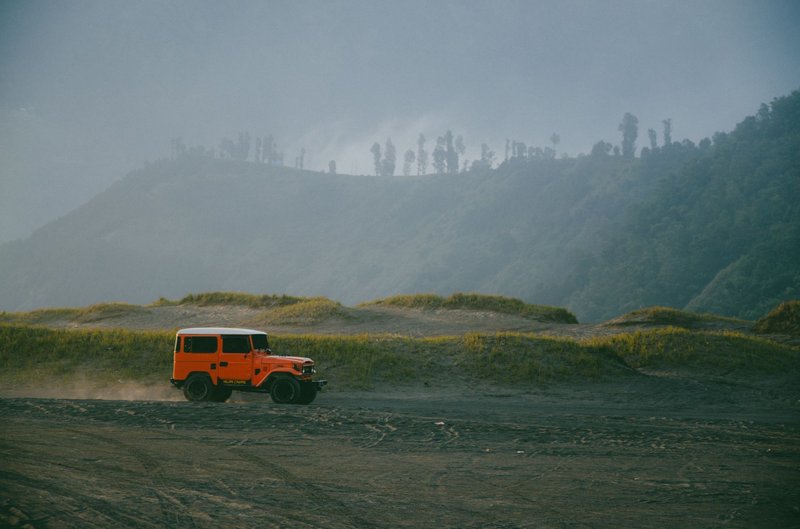
The sleeper investment of the whole 1971 catalog. While everyone watched the Celica, the FJ40 Land Cruiser was the model that would quietly outvalue every car on this list.
The 1971 FJ40 ran the 3.9-liter 1F inline-six, good for about 125 horsepower, bolted to a column-shifted three-speed manual and a two-speed transfer case for proper low-range four-wheel drive. The naming is its own piece of trivia: the F came from the F-series engine, and the J was a nod to the Jeep that inspired the original. Toyota built the J40 in one form or another from 1960 all the way to 1984, which is why so many survived to be restored.
The FJ40 is the durability story made physical. Simple, fixable, and nearly impossible to kill, it earned a reputation among overlanders and ranchers that the collector market caught up to decades later. Many of the cleanest examples have since been restomodded with V8 swaps, though purists chase the original 1F six.
Toyota Hilux
The workhorse. The Hilux pickup wasn’t a U.S. sales star in 1971 the way it was abroad, but it belongs in the year’s lineup because it set the template for the compact trucks that would dominate later.
The 1971 Hilux ran a four-cylinder engine in the roughly 1.6-to-1.9-liter range with rear-wheel drive and a simple leaf-sprung bed. Same philosophy as the FJ40, scaled down and pointed at small businesses: minimal to break, cheap to fix, willing to be abused. It’s the ancestor of the Tacoma, and early survivors are getting harder to find as they were used up rather than babied.
The concept cars: SV-1 and RV-1
Two prototypes rounded out Toyota’s 1971 at the Tokyo Motor Show in October, and both are worth knowing because one of them predicted the future.
The SV-1 was the important one. Built on a Celica TA22 GT chassis, it previewed the Celica liftback that reached production in April 1973. If you’ve ever admired the fastback first-gen Celica, the SV-1 is where that shape was first shown.
The RV-1 was the curiosity: a two-door wagon concept built around an entire recreation system. Toyota imagined it paired with the Marinetta trailer, which packed a fiberglass dinghy, a five-person inflatable tent, and a jet ski on its own trailer. It never reached production, but it shows how seriously Toyota was already thinking about the leisure market in 1971. The full prototype rundown lives on the Toyota concept vehicles archive.
1971 Toyota spec comparison
| Model | Body styles | Engine | Power | Note |
|---|---|---|---|---|
| Celica ST | 2-dr hardtop | 1.9L OHC four | 108 hp | U.S. debut, $2,598 base |
| Corolla 1600 | Coupe, sedan, wagon | 1.6L OHV four | ~102 hp | 0–60 in ~12 sec |
| Corona | Sedan, hardtop, wagon | ~1.9L four | 90–108 hp | Sales past their peak |
| Corona Mark II | Sedan, hardtop, wagon, van | 1.9L four | 108 hp | Outsold the Corona |
| Crown | Sedan | Inline-six | varies | Under 4,000 U.S. sales |
| Land Cruiser FJ40 | Hardtop, soft top | 3.9L 1F six | 125 hp | Two-speed transfer case |
| Hilux | Pickup | 1.6–1.9L four | varies | RWD workhorse |
What they’re worth now
This is where 1971 gets interesting, because the values have completely flipped from the original price ladder. The cheap truck is now the expensive collectible, and the flagship sedan is an oddity.
Land Cruiser FJ40 is the clear king. Auction data shows 1971 FJ40s ranging from around $6,700 for rough projects to a high of $115,500 for the best restored and V8-swapped examples, with a typical sale landing near $30,000. A recent Mecum Kissimmee sale hammered at $37,400. The Hagerty valuation tool tracks the climb if you want current numbers.
Corolla and Celica sit in a friendlier range. Clean second-gen Corollas trade in the high four figures to mid-teens, with standout SR-5 examples occasionally pushing past $30,000. Early Celica STs follow a similar curve and are appreciating as the first-gen cars get recognized as collectible rather than just old.
Corona, Mark II, and Crown remain the affordable entry point into 1971 Toyota ownership, partly because fewer were preserved. The Crown is the wildcard: so few sold in the U.S. that condition and provenance matter more than any price guide.
The takeaway is the same one that runs through the whole year. In 1971 Toyota was a value brand selling sensible cars at sensible prices. The market has since decided that the toughest and the sportiest of those cars were worth far more than their stickers ever suggested, and the FJ40 is the proof.

Marco Delantero
More from Marco DelanteroHow we reviewed this article
This article was researched against manufacturer records and editorially reviewed before publishing. We accept no payment for coverage.