The 2000s were the decade Aprilia stopped being the plucky two-stroke specialist from Noale and became a genuine threat to the Japanese and Italian big guns. Piaggio bought the company in 2004 after a financial wobble, but the bikes that defined the decade were already in motion: a family of Rotax-built 60-degree V-twins that punched way above the brand’s size, plus a 250cc two-stroke that’s still the benchmark for what a small race-replica should be.
If you’re shopping the used market now, this is fertile ground. These bikes have depreciated past the point where they make financial sense to anyone but enthusiasts, the V-twins are mechanically tougher than their exotic reputation suggests, and parts support through Piaggio is still alive. Here are the ten that mattered.
Table of Contents
- TLDR: The Short List
- Aprilia RSV Mille (RSV1000)
- Aprilia RSV Mille R
- Aprilia Tuono 1000 / Tuono R
- Aprilia SL1000 Falco
- Aprilia RST1000 Futura
- Aprilia RS125
- Aprilia RS250
- Aprilia Pegaso 650
- Aprilia ETV1000 Caponord
- Aprilia Dorsoduro 750
- Buying One Today
TLDR: The Short List
Want the bottom line before the detail?
- Best all-rounder sportbike: RSV Mille R — the Öhlins-and-Brembo version, still a riot, still cheap.
- Best hooligan bike: Tuono 1000 R — the naked Mille, and arguably the best thing Aprilia made all decade.
- Best sleeper value: SL1000 Falco — same engine, half the attitude, a third of the price.
- Best small-bore: RS250 — the two-stroke that ruins you for four-strokes.
- Most underrated: RST1000 Futura — a sport-tourer everyone ignored and shouldn’t have.
Now the long version.
Aprilia RSV Mille (RSV1000)
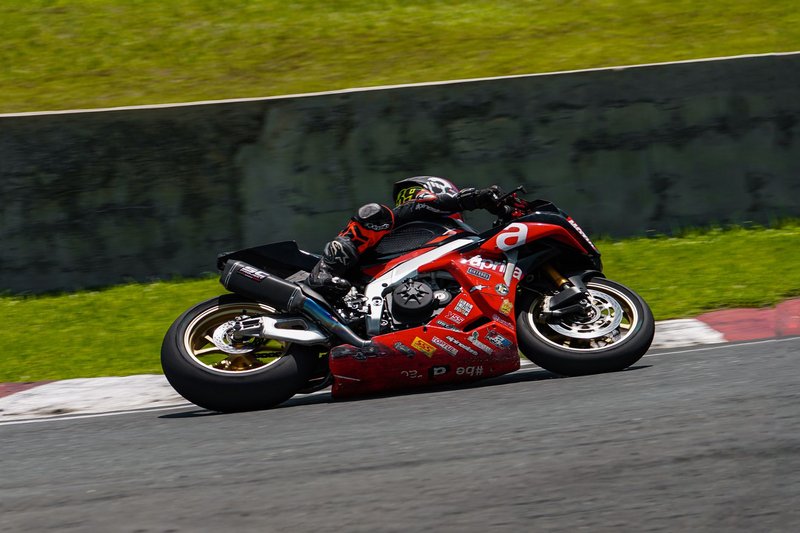
This is the bike that started it all. Launched right at the turn of the millennium, the RSV Mille gave Aprilia a literbike that could trade blows with Ducati’s 996 and the Japanese fours, and it did it with a character entirely its own. Drop it into the wider field of bikes that launched at the start of the decade and the Mille still stands out for how differently it went about the job. The 998cc Rotax V60 Magnesium engine used a 60-degree V-twin layout with a balance shaft Aprilia nicknamed the AVDC, which let them run a narrow vee without the bone-rattling vibration that plagued tighter twins.
What you notice riding one is the midrange. It makes around 128 hp, which on paper looks soft next to a contemporary GSX-R1000, but the torque comes in early and stays flat, so you’re rarely caught in the wrong gear. The chassis is a twin-spar aluminum beam frame that the racing department clearly obsessed over — it steers with a precision that flatters the rider.
Specs: 998cc 60° V-twin · ~128 hp · ~165 mph top speed · produced 1998–2003 (first gen)
Aprilia RSV Mille R
The R was the connoisseur’s Mille. Same engine, but Aprilia threw the good stuff at it: Öhlins forks and rear shock, Brembo radial calipers on the later versions, and a dry weight that crept down toward 185 kg. Carbon fiber bits replaced plastic in a few places, and the suspension transformed the bike from very good to genuinely special.
If you only buy one first-generation Aprilia V-twin, the connoisseurs say buy the R. The Öhlins units can be rebuilt rather than replaced, which keeps the long-term cost sane, and the chassis responds to the better damping like it was waiting for it the whole time. The 2004 redesign brought a sharper, more angular look and bumped output toward 139 hp.
Specs: 998cc 60° V-twin · ~139 hp (post-2004) · ~168 mph top speed · produced 1999–2009
Aprilia Tuono 1000 / Tuono R
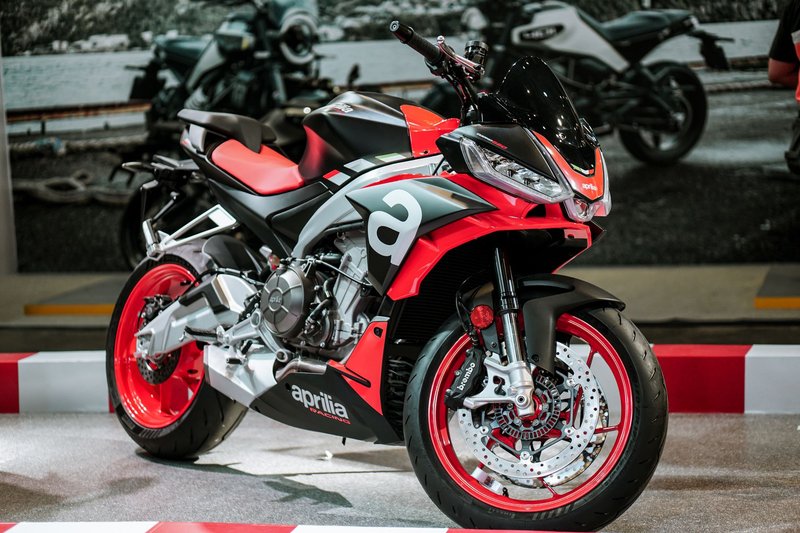
Take an RSV Mille, rip off the fairing, fit wide tapered handlebars and a tiny flyscreen, and you get the Tuono — and somehow the sum is greater than the parts. Introduced in 2002 as a limited Tuono R Racing before going mainstream in 2003, it became the bike that made Aprilia’s reputation among people who actually ride hard on real roads.
The upright stance and that flat-torque twin make it a wheelie machine with manners. You sit up, you can see, and the engine pulls cleanly from 3,000 rpm to the rev limiter without ever feeling peaky. The early Tuono R got the full Öhlins-and-OZ-wheels treatment. Magazines of the era kept calling it the most fun you could legally have, and two decades later the verdict hasn’t aged.
Specs: 998cc 60° V-twin · ~128–139 hp · ~150 mph top speed · produced 2002–2009
Aprilia SL1000 Falco
The Falco is the Mille that grew up and got a job. Aprilia detuned the V-twin slightly, softened the riding position into a half-faired sport-standard layout, and aimed it squarely at the Honda VTR1000F and Suzuki TL1000S crowd. It makes around 118 hp, which is plenty, and it does it with the engine in a more relaxed state of tune that’s arguably easier to live with.
Here’s the enthusiast’s secret: the Falco is the cheapest way into that glorious Rotax twin. Because it never had the race-replica halo, used prices sit well below the RSV, yet the core experience — the sound, the midrange, the build quality — is right there. The fuel injection on early units could be fussy, but a remap sorts it.
Specs: 998cc 60° V-twin · ~118 hp · ~150 mph top speed · produced 1999–2005
Aprilia RST1000 Futura
The Futura is the great what-if of 2000s Aprilia. A full-on sport-tourer built on the same V-twin, with integrated hard luggage, a comfortable reach to the bars, and bodywork that looked like nothing else on the road — love-it-or-hate-it styling that probably hurt sales. It was only made from 2001 to 2004, and Aprilia never replaced it.
That short production run means used examples are scarce, but the people who own them are evangelical. You get the same engine that makes the RSV special, wrapped in a bike that’ll cross a continent two-up. It makes around 113 hp, has a genuinely useful tank range, and the chassis still carries the Aprilia steering DNA. As a used buy, it’s the connoisseur’s sport-tourer that nobody talks about.
Specs: 998cc 60° V-twin · ~113 hp · ~140 mph top speed · produced 2001–2004
Aprilia RS125
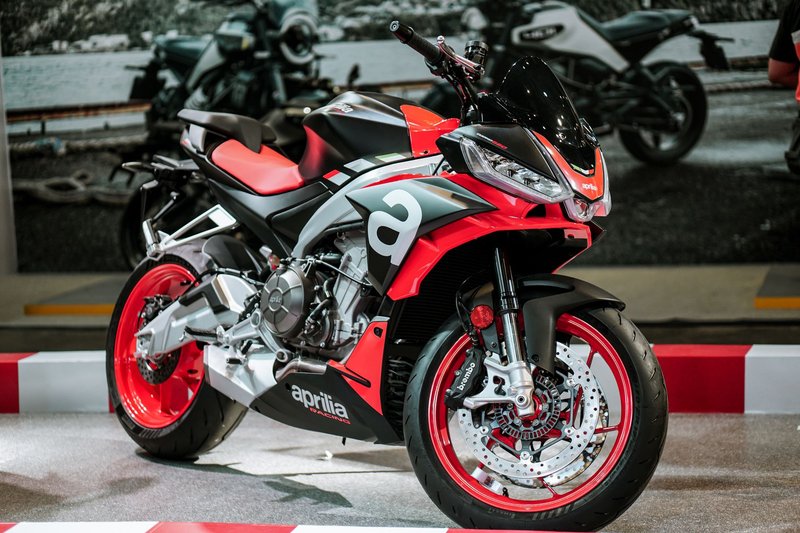
Not everything in Aprilia’s golden age had a thousand cc. The RS125 was the two-stroke race-replica that taught a generation of European teenagers how to ride, and it looked exactly like a scaled-down GP bike because it essentially was one. A single-cylinder Rotax two-stroke 125, around 33 hp in unrestricted form, in a chassis far more serious than the engine demanded.
That chassis is the point. The RS125 handles like a proper racebike because Aprilia built it from racing parts, so learning to ride one quickly teaches you cornering technique that transfers straight to bigger machines. Tightening emissions rules eventually killed the breed, which makes clean 2000s examples increasingly collectible.
Specs: 124cc single-cylinder two-stroke · ~33 hp (derestricted) · ~110 mph top speed · produced through 2012
Aprilia RS250
If the RS125 was the gateway, the RS250 was the hard stuff. Aprilia borrowed Suzuki’s RGV250 V-twin two-stroke, dropped it into their own superb aluminum frame, and built one of the last great two-stroke sportbikes before legislation closed the door. Around 70 hp from 250cc, in a bike weighing about 140 kg dry — the power-to-weight is intoxicating.
You ride it on the pipe, constantly, shifting to keep it in the powerband, and when it hits you understand why people get obsessive. It’s a peaky, demanding, completely uncompromising machine. Production wound down in the early 2000s, so any RS250 is now a genuine modern classic, and prices reflect that. Buy a good one and never sell it.
Specs: 249cc 90° V-twin two-stroke · ~70 hp · ~130 mph top speed · produced 1995–2003
Aprilia Pegaso 650
Every range needs a sensible one. The Pegaso 650 was Aprilia’s friendly single-cylinder dual-sport-adjacent roadster, and the 2000s Strada and Trail versions made a strong case as a do-everything commuter with just enough adventure flavor. The later 660cc unit, shared with BMW and Rotax, gave it smooth, reliable thumper torque.
This isn’t a bike that’ll thrill you on a track day, and it’s not trying to. It’s the Aprilia you ride every day, park anywhere, and never worry about. Easy seat height, manageable weight, frugal at the pump. As a first big bike or an urban runabout with character, the Pegaso quietly earns its place.
Specs: 652cc single-cylinder · ~49 hp · ~110 mph top speed · produced 1992–2009
Aprilia ETV1000 Caponord
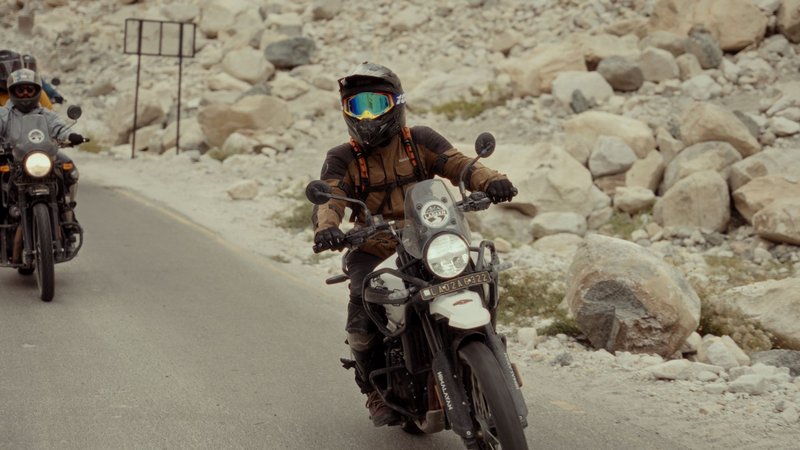
The Caponord was Aprilia’s answer to the BMW R1150GS adventure boom, and it took the corporate V-twin into big-trailie territory. Same 998cc Rotax engine, here tuned for around 98 hp and fitted into a tall, long-travel chassis with a 19-inch front wheel and the option of factory panniers. It’s more road-biased than a true off-roader, but it’ll handle a gravel road without complaint.
What sets it apart is that engine character in an adventure bike — most big trailies of the era were soft and torquey, and the Caponord brought a genuine sporting edge to the segment. It never sold in GS numbers, which means used examples are cheap and a little obscure, exactly the kind of left-field buy that rewards people who do their homework.
Specs: 998cc 60° V-twin · ~98 hp · ~130 mph top speed · produced 2001–2009
Aprilia Dorsoduro 750
The Dorsoduro arrived late in the decade and pointed at where Aprilia was heading next. A supermoto-styled naked with a brand-new 750cc 90-degree V-twin — not a Rotax this time, but Aprilia’s own design — it brought ride-by-wire throttle with selectable engine maps to a category that mostly didn’t have it yet. Around 92 hp, a tall stance, and the kind of front-end attitude that begs for hooligan behavior.
It shared its engine with the Shiver 750, and together they signaled the post-Piaggio Aprilia: more electronics, more in-house engineering, a willingness to chase newer segments. The Dorsoduro is the youngest bike here and the easiest to live with day to day, which makes it a smart entry point if the older V-twins feel intimidating.
Specs: 750cc 90° V-twin · ~92 hp · ~120 mph top speed · produced 2008–2016
Buying One Today
A few things hold true across the V-twin lineup. The Rotax engines are robust — high-mileage examples are common and not scary — but you want service history showing the cam chain tensioners and the AVDC balance system have been looked after. Early fuel injection (Falco, first-gen Mille) can run lumpy and benefits from a remap. The Öhlins-equipped R models cost more up front but hold value better and can be rebuilt indefinitely.
For the two-strokes, condition is everything: an RS250 that’s been thrashed and neglected is a money pit, while a cherished one is a future appreciating classic. For the modern usability play, the Dorsoduro or a late Caponord gives you Aprilia character with fewer compromises.
Aprilia’s racing heritage is the thread running through all of it — the company has racked up more Grand Prix world titles than any other European manufacturer, and you can feel that obsession with handling in every bike on this list. That’s what you’re buying into. Not the cheapest way to get a liter of power, but one of the most characterful, and right now, one of the best-value entries into genuinely special Italian engineering on the used market.

Marco Delantero
More from Marco DelanteroHow we reviewed this article
This article was researched against manufacturer records and editorially reviewed before publishing. We accept no payment for coverage.