Table of Contents
- The Ferrari Lineup in 1996
- Ferrari F355 Berlinetta
- Ferrari F355 Spider
- Ferrari F355 GTS
- Ferrari 456 GT and 456 GTA
- Ferrari F512 M
- 1996 Ferrari Model Comparison
- Market Values and What to Watch For
1996 sits right at the hinge of two Ferrari eras. The Testarossa bloodline was running out its final chapter in the form of the F512 M — a flat-12 swan song — while the mid-engined F355 was hitting its stride as arguably the best driving Ferrari since the 308. Meanwhile, the 456 GT was quietly redefining what a grand tourer could be. Five distinct models. Three completely different philosophies. All wearing the same badge.
Here’s the complete rundown.
The Ferrari Lineup in 1996
Ferrari’s 1996 road car lineup consisted of five models across three platforms:
- Ferrari F355 Berlinetta — fixed-roof coupe
- Ferrari F355 Spider — open-top roadster
- Ferrari F355 GTS — targa-top variant
- Ferrari 456 GT / 456 GTA — front-engined grand tourer (manual and automatic)
- Ferrari F512 M — final evolution of the flat-12 Testarossa
No 550 Maranello yet — that arrived in late 1996 as a 1997 model. If you see it listed under 1996, it’s a production-date technicality at best.
Ferrari F355 Berlinetta
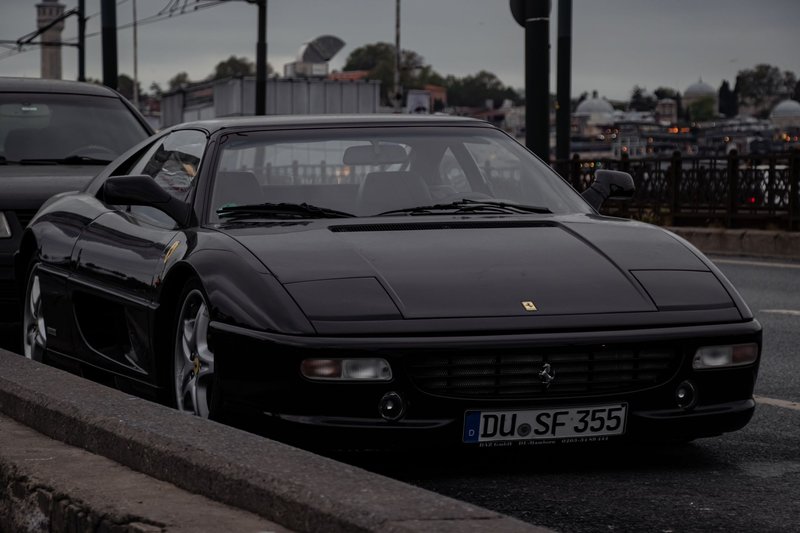
The F355 Berlinetta was the car that silenced the critics who thought Ferrari had lost the plot with the 348. Where the 348 was coarse and intimidating, the F355 was precise and exploitable — a car you could push hard and actually feel rewarded for it. It’s widely considered one of the best cars of the 1990s from any manufacturer, and the specs make a compelling case.
Engine: 3.5L V8, 375 hp at 8,250 rpm
Transmission: 6-speed manual (F1 paddle-shift available from 1997)
0–60 mph: 4.7 seconds
Top speed: 183 mph
Production (1994–1999, total): Approximately 3,830 Berlinettas
The V8’s flat-plane crankshaft gave it a screaming, motorsport-derived character — it revs to 8,500 rpm and sounds completely unlike any other road car Ferrari made in the 1990s. The chassis incorporated five-valve-per-cylinder heads and electronically controlled dampers, which was genuinely cutting-edge engineering for a production car at the time.
For collectors, the Berlinetta is the purest of the three F355 body styles. No additional mechanical complexity from the Spider’s folding mechanism, and a slightly stiffer structure than the GTS.
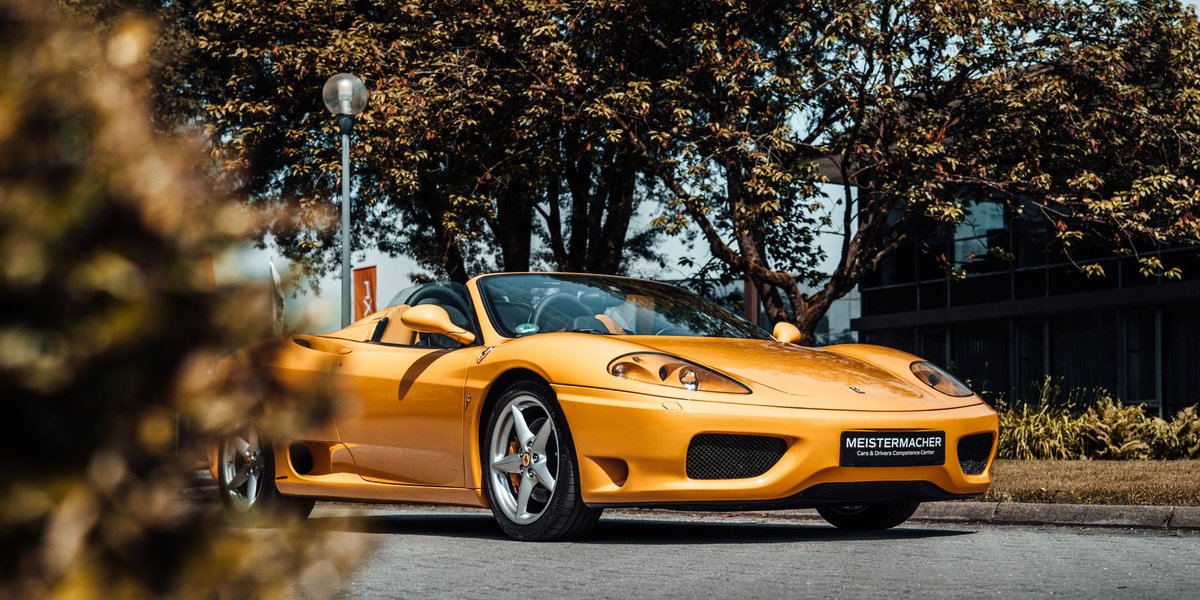
Ferrari F355 Spider
The Spider opened up the F355 to buyers who wanted wind-in-hair driving, and Ferrari delivered a proper convertible — not a compromised one. The electrically operated soft top stowed neatly behind the seats and the structural rigidity, while down from the Berlinetta, didn’t make the car feel loose or nervous.
Engine: Same 3.5L V8, 375 hp
Transmission: 6-speed manual
0–60 mph: 4.7 seconds
Top speed: 181 mph (slight aero penalty with the top down)
Weight: Approximately 50 lbs heavier than the Berlinetta
The Spider commands a premium in today’s collector market for one simple reason: open-air motoring in a proper mid-engined Ferrari is a hard thing to find, and the F355 Spider does it better than almost anything from that decade. Original-paint, low-mileage examples in red or yellow regularly exceed the Berlinetta in auction results.
Ferrari F355 GTS
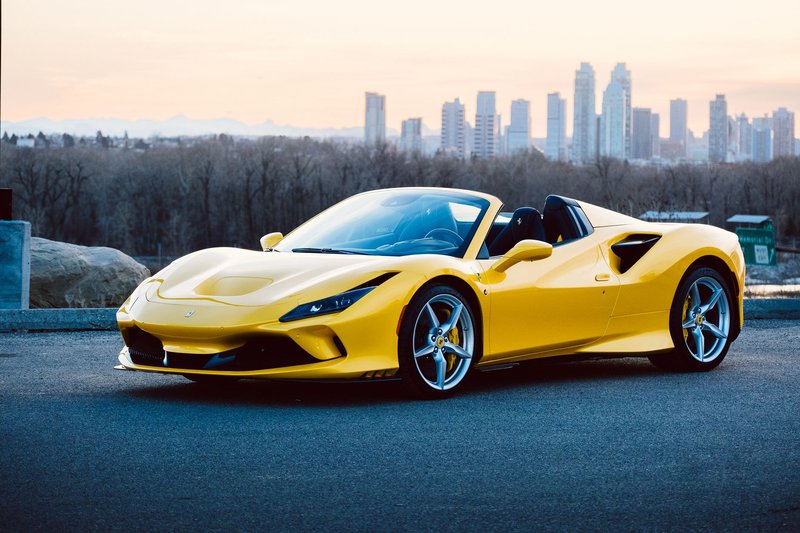
The GTS sat between the Berlinetta and Spider — a targa-top body style where the roof panel lifts out and stows in the front luggage compartment. It gave buyers convertible light and air without a full soft-top mechanism.
Engine: Same 3.5L V8, 375 hp
Transmission: 6-speed manual
Body: Removable targa panel, fixed rear buttresses
Weight: Marginally heavier than the Berlinetta, lighter than the Spider
The GTS is the least common of the three F355 variants in North America — Ferrari allocated fewer to the US market — which makes low-mileage examples disproportionately interesting from a rarity standpoint. Structurally it’s stiffer than the Spider because there’s no full convertible mechanism, but the fixed rear buttresses limit rear visibility.
Ferrari 456 GT and 456 GTA
The 456 GT was Ferrari’s answer to a question the market had been asking since the 365 GTC/4: can you build a genuine Ferrari that four adults can travel in comfortably? The answer, in 1996, was yes — with caveats.
Engine: 5.5L V12, 436 hp
Transmission: 6-speed manual (GT) or 4-speed automatic (GTA)
0–60 mph: 5.2 seconds (GT) / 5.5 seconds (GTA)
Top speed: 192 mph
Body: 2+2 coupe
Production (1992–2003, total): Approximately 3,289 units
The front-mounted V12 connected to a rear transaxle — the same layout Ferrari used in the Daytona — kept weight distribution close to 50/50. In practice, the 456 GT was faster in a straight line than any other road-going Ferrari in 1996, and it did it while carrying luggage and two rear passengers in reasonable comfort.
The GTA automatic variant was controversial among purists at launch. In hindsight, it’s actually the more collectible of the two today — production numbers were lower, and the automatic made the car accessible to a broader ownership pool, which means more were bought as garage pieces rather than tracked or beaten.
Ferrari F512 M
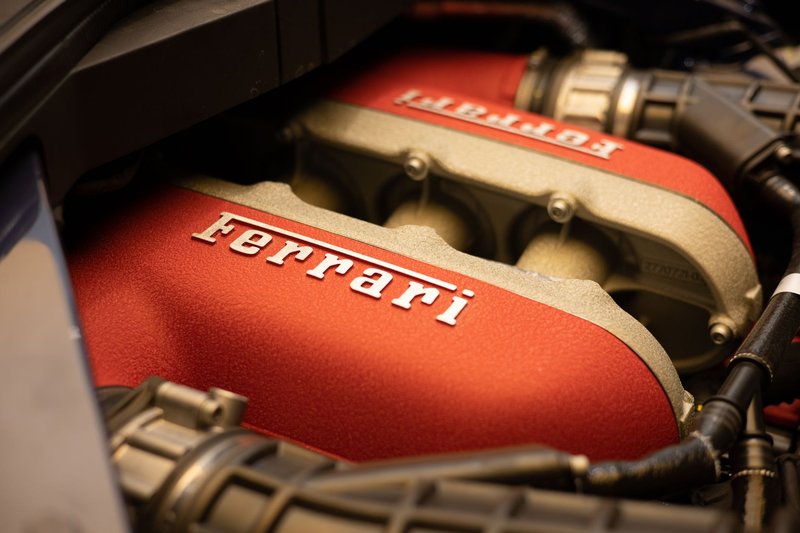
The F512 M was the last car to carry the Testarossa’s flat-12 engine. “M” stood for Modificata — Ferrari’s way of signaling this wasn’t just another facelift but a meaningful evolution of a car that had been in production, in various forms, since 1984. That lineage stretches back through a decade of iconic 1980s sports cars that defined the era’s performance benchmark.
Engine: 5.0L flat-12, 440 hp at 6,750 rpm
Transmission: 5-speed manual
0–60 mph: 4.7 seconds
Top speed: 194 mph
Production (1994–1996, total): 501 units
The 501-unit production run was not accidental. Ferrari deliberately limited F512 M production to create scarcity, and the car was discontinued entirely after 1996 with no direct successor. The flat-12’s soundtrack — a wide, low rumble on startup that builds into something completely unlike a V8 or V12 — is unlike anything else from Maranello before or since.
From a collector perspective, the F512 M is the most significant Ferrari produced in 1996. It’s the end of a lineage. Condition and originality matter enormously; documented service history and matching numbers are the difference between a $350,000 car and a $500,000 car.
1996 Ferrari Model Comparison
| Model | Engine | Power | 0–60 mph | Top Speed | Original MSRP (US) |
|---|---|---|---|---|---|
| F355 Berlinetta | 3.5L V8 | 375 hp | 4.7 sec | 183 mph | ~$128,000 |
| F355 Spider | 3.5L V8 | 375 hp | 4.7 sec | 181 mph | ~$137,000 |
| F355 GTS | 3.5L V8 | 375 hp | 4.7 sec | 182 mph | ~$131,000 |
| 456 GT | 5.5L V12 | 436 hp | 5.2 sec | 192 mph | ~$196,000 |
| 456 GTA | 5.5L V12 | 436 hp | 5.5 sec | 192 mph | ~$198,000 |
| F512 M | 5.0L flat-12 | 440 hp | 4.7 sec | 194 mph | ~$225,000 |
Market Values and What to Watch For
All figures below reflect typical 2024–2025 auction and private sale results for clean, original-condition examples. Ferrari values fluctuate — treat these as directional, not fixed.
Ferrari F355 Berlinetta: $80,000–$140,000
Manual transmission, matching-numbers engine, complete service records. Avoid cars with deferred maintenance — the F355’s Timing belt service (every 3 years or 30,000 miles) costs $4,000–$7,000 at a Ferrari specialist and is non-negotiable. Skipped intervals mean replacing the entire engine if a belt lets go.
Ferrari F355 Spider: $110,000–$175,000
Strong market demand keeps Spiders above Berlinettas. Inspect the convertible top mechanism carefully — replacement tops and motor repairs are expensive, and many cars have had amateur repairs that compound into larger problems.
Ferrari F355 GTS: $90,000–$150,000
Rarer in North America than the other two variants, but the market hasn’t fully priced in that rarity yet. The targa panel seals are worth inspecting; leaks are common and can cause interior water damage that’s hard to fully reverse.
Ferrari 456 GT: $85,000–$130,000
The 456 GT is arguably the most undervalued V12 Ferrari of the 1990s relative to what it actually does. Full service history matters even more here — the V12 is expensive to maintain and the rear transaxle requires specialist knowledge. A car with gaps in the service record is a liability.
Ferrari 456 GTA: $80,000–$125,000
Counter-intuitively, the automatic sometimes sells for slightly less than the manual despite lower production. This is a buyer’s market anomaly that may not last as the collector base for this model matures.
Ferrari F512 M: $350,000–$550,000+
Top-condition, low-mileage examples documented from new sit at the high end. The flat-12 demands professional maintenance; budget $15,000–$25,000 for a full recommissioning on a car that’s been sitting. Hagerty’s valuation guides track F512 M values in real time if you want current data before making an offer.
The Right Call for Each Buyer
Buy the F355 if you want to drive it. The engine note alone is worth the ownership cost, and it’s small and communicative in a way the later V8 Ferraris aren’t.
Buy the 456 GT if you want a usable grand tourer with genuine V12 presence and you understand that “undervalued” also means “the market hasn’t fully caught up to maintenance costs yet.”
Buy the F512 M if you’re thinking about this as a long-term hold and you have the budget to do it properly. Half-hearted ownership of a flat-12 Ferrari is expensive and sad. Full commitment to a genuine example is one of the better bets in modern classic Ferraris — the end of an era, limited production, and a sound that no turbocharged modern car can replicate.
1996 was the last year you could buy a naturally aspirated, flat-12-powered Ferrari off the showroom floor. That’s not a minor footnote.

Marco Delantero
More from Marco DelanteroHow we reviewed this article
This article was researched against manufacturer records and editorially reviewed before publishing. We accept no payment for coverage.