1982 was a genuinely pivotal year for Honda. The company was juggling two different futures at once: the old inline-four era was still selling well, but a new V4 platform had just arrived that would define Honda’s sport and touring bikes for the rest of the decade. The full lineup that year reads like a handoff — classics at the top of their game, and new architecture that was still finding its feet.
Here’s the complete 1982 Honda motorcycle lineup, organized by category, with the context that spec databases don’t bother telling you.
Table of Contents
- Street Bikes and Standards
- Cruisers
- Sport Bikes
- Touring
- Dual-Sport and Trail Bikes
- Off-Road and Motocross
- What Made 1982 Significant for Honda
- Collector Notes and Current Values
Street Bikes and Standards
The bread-and-butter category for Honda in 1982. These were bikes you rode to work and then rode hard on weekends — practical, but with enough personality to keep you interested.
CB750F Super Sport
The CB750F in its third generation was a refined machine. The 748cc DOHC inline-four put out around 67 horsepower, which was competitive without being terrifying. Honda had cleaned up the handling by this point — earlier CB750s had a reputation for wallowing in corners that the F-series addressed with stiffer suspension and a more aggressive riding position.
Key specs: 748cc DOHC inline-four | ~67 hp | 6-speed gearbox | 487 lbs wet
CB750C Custom
The cruiser-influenced sibling to the F. Lower seat, more relaxed bars, stepped saddle. Honda was hedging its bets in the growing cruiser segment, and the C variant was the compromise between the traditional CB and an all-out V45 Shadow approach. A lot of riders bought one because they wanted a cruiser but weren’t ready to give up Japanese reliability in a V-twin wrapper.
Key specs: 748cc DOHC inline-four | ~67 hp | 5-speed gearbox | 495 lbs wet
CB750K
The original formula, still available. No frills, upright bars, the kind of bike that had been proving itself since 1969. By 1982 it was showing its age compared to the F-series but retained a loyal following. Parts availability was — and still is — exceptional.
Key specs: 748cc DOHC inline-four | ~67 hp | 5-speed gearbox
CB900F Super Sport
Step up from the 750 in both displacement and presence. The 901cc inline-four was Honda’s top naturally aspirated standard in 1982, producing around 95 horsepower. The CB900F had a distinctive half-fairing on some variants that became a touchstone for the era.
Key specs: 901cc DOHC inline-four | ~95 hp | 6-speed gearbox | 521 lbs wet
CB1000 Custom
Honda’s largest standard displacement for street use in 1982. The 1000cc engine was tuned for torque over peak power, making it an effortless long-haul commuter. Not a bike anyone bought for canyon carving, but it covered ground without fuss.
Key specs: 998cc DOHC inline-four | ~83 hp | 5-speed gearbox
CM400T / CM450E
The entry-level standards. The CM series was Honda’s answer to the “starter bike that doesn’t embarrass you” problem — capable enough to grow with a new rider, simple enough to work on in a driveway. The twin-cylinder engine was smooth and approachable. The CM450E specifically got electric start as standard, which sounds obvious now but mattered in 1982.
CM400T specs: 395cc parallel twin | ~36 hp | 5-speed CM450E specs: 447cc parallel twin | ~38 hp | 5-speed
Cruisers
V45 Magna (VF750C)
This is where Honda’s new V4 architecture made its first real splash. The V45 Magna used a 748cc 90-degree V4 engine — the first production V4 Honda motorcycle — and dropped it into a cruiser chassis with a low seat, wide bars, and a stepped seat. It was technologically ahead of anything else in the cruiser segment that year, including most Harley-Davidsons of the era.
The V4 made around 86 horsepower, which was genuinely shocking in a cruiser package. Top speed was north of 130 mph. Honda was making a point.
Key specs: 748cc 90° V4 | ~86 hp | 6-speed | 485 lbs wet
V45 Sabre (VF750S)
Same V4 engine, sport-touring body. Half-fairing, more aggressive seating position, adjustable suspension. The Sabre was the V45 Magna for people who wanted the power without the cruiser pretense.
Key specs: 748cc 90° V4 | ~86 hp | 6-speed | 485 lbs wet
Shadow 500 (VT500C)
Honda’s smaller V-twin cruiser. The 491cc V-twin was designed to go after the Harley Sportster market at a lower price point, and it largely succeeded. The Shadow 500 handled well for a cruiser and had a look that was more convincingly American than the metric-cruiser jokes of the time would suggest.
Key specs: 491cc V-twin | ~50 hp | 5-speed | 426 lbs wet
CB450 Custom
The entry-level cruiser slot. Parallel twin, reasonable power, low seat height. A gateway bike for riders who wanted the cruiser aesthetic but weren’t ready for the cost or commitment of a larger machine.
Key specs: 447cc parallel twin | ~38 hp | 5-speed
Sport Bikes
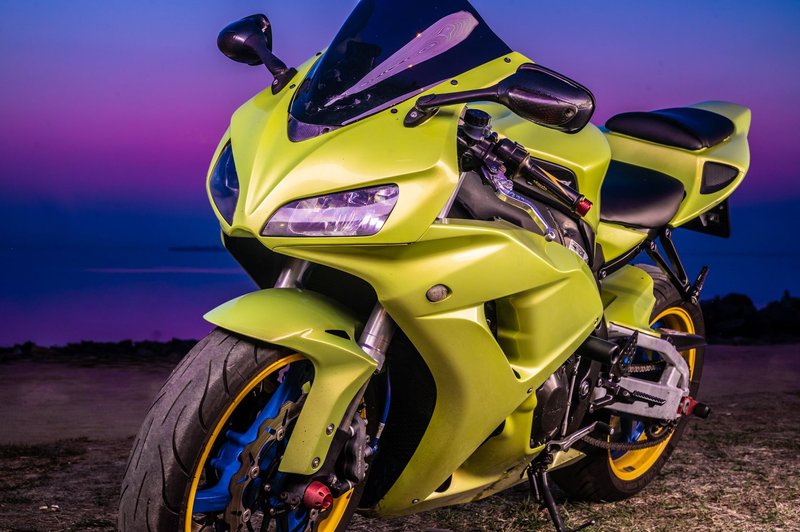
CBX 1000
By 1982 the CBX had evolved from the pure six-cylinder sport bike of 1979 into a sport-touring machine with a full fairing and ProLink rear suspension. The 1047cc inline-six was still the most exotic mass-production engine Honda offered — six carburetors, six exhausts, a sound unlike anything else on the road.
It’s worth noting that by 1982, the CBX was using the ProLink monoshock suspension system Honda had developed for racing. That made it handle substantially better than the original 1979 version. Honda eventually retired the platform entirely — it’s one of the models covered in The Complete List of Honda Discontinued Models, which tracks production years and successors for every model Honda has since phased out.
Key specs: 1047cc DOHC inline-six | ~100 hp | 6-speed | 594 lbs wet
Current CBX values range from $6,000 for project bikes to $15,000+ for clean, unmolested examples.
CB1100F
Honda’s top-of-the-line sport standard. The 1062cc inline-four in the CB1100F was tuned for broad power delivery rather than peak horsepower, making it fast in ways you could actually use on public roads. The bike came with a distinctive bikini fairing and a reputation for being the last of the traditional Honda big-bore standards before the V4 era took over.
Key specs: 1062cc DOHC inline-four | ~95 hp | 5-speed | 551 lbs wet
Touring
Gold Wing GL1100
The original big tourer. By 1982 the GL1100 was in its second model year and Honda had added the Interstate and Aspencade variants that year — the Aspencade being the first Honda to come with a stereo, on-board air compressor, and driver/passenger intercom as standard equipment.
The 1085cc flat-four engine was liquid-cooled and shaft-driven, two things virtually unheard of in Japanese motorcycles at the time. Honda was building the GL1100 the way German engineers built cars: overbuilt, long-lived, and absolutely loaded with features its competitors hadn’t thought of yet.
Key specs: 1085cc liquid-cooled flat-four | ~83 hp | 5-speed | ~790 lbs (Aspencade wet)
The GL1100 Aspencade is particularly collectible today. A clean example in original condition regularly brings $4,000–$8,000.
Dual-Sport and Trail Bikes
XL500S
The serious dual-sport of the lineup. The XL500S used a 498cc single-cylinder RFVC (Radial Four Valve Combustion) engine — Honda’s attempt to extract more power from a single while keeping it tractable for trail use. Long suspension travel, high ground clearance, the kind of bike that could genuinely go off-road without embarrassing itself.
Key specs: 498cc SOHC single | ~44 hp | 5-speed | 310 lbs wet
XL250S
The mid-range dual-sport. 248cc single, lighter than the 500, easier to manage in technical terrain. Popular with riders who found the 500 too heavy for serious off-road work but wanted more than a trail bike.
Key specs: 248cc SOHC single | ~20 hp | 5-speed | 264 lbs wet
XL185S
Entry-level dual-sport. 180cc, lightweight, the kind of bike a teenager could handle on trails and not destroy in an afternoon.
Key specs: 180cc SOHC single | ~15 hp | 5-speed
ATC200E
Technically a three-wheeler, not a motorcycle — but Honda was grouping the ATC line with their motorcycle catalog in 1982, and it would be strange to leave it out. The 196cc ATC200E was one of the more capable three-wheelers Honda offered, used widely by farmers and hunters before the ATC design was legislated out of existence.
Off-Road and Motocross
Honda’s off-road lineup in 1982 was split between trail bikes and purpose-built motocross machines. The CR series were the serious competition bikes.
CR480R
Honda’s flagship open-class motocross bike. The 472cc two-stroke (they called it 480 because marketing) was brutally fast — too fast for most riders, which was part of the appeal. The CR480R was what serious open-class motocross riders used before the 500cc class was phased out.
Key specs: 472cc two-stroke single | 6-speed | ~220 lbs dry
CR250R
The sweet spot in Honda’s motocross lineup. The 249cc two-stroke was competitive at the national level while still being manageable for intermediate riders. The 1982 CR250R is well-regarded among vintage motocross collectors.
Key specs: 249cc two-stroke single | 5-speed
CR125R / CR80R
The junior motocross bikes. The CR125R was a serious race machine despite the small displacement — Honda put real development effort into it. The CR80R was the kids’ bike that plenty of adults raced anyway.
XR500R / XR200R / XR100
The XR series covered the recreational trail riding side. The XR500R was the capable big-bore trail machine, the XR200R was the all-day trail bike, and the XR100 filled the entry-level slot. All used four-stroke engines, which distinguished them from the CR motocross bikes.
What Made 1982 Significant for Honda
Two things stand out.
First, the V4 debut. The VF750C Magna and VF750S Sabre were Honda’s first production V4 motorcycles, and the platform would grow into the Interceptor 500 (VF500F), the VF1000, and eventually influence the VFR series that’s still in production. The V4 wasn’t perfect in 1982 — cam chain problems would surface in later years — but the architecture was fundamentally sound and ahead of its competitors.
Second, the Gold Wing evolution. The Aspencade trim level that arrived for 1982 set a new standard for touring motorcycle equipment. A factory stereo and intercom in 1982 was genuinely unprecedented. Honda was establishing the Gold Wing as a product category, not just a motorcycle model.
The rest of the lineup showed a company that had figured out how to serve multiple segments simultaneously without losing focus. Entry-level bikes that didn’t condescend, mid-range workhorses that lasted forever, and flagship machines that were the best in their categories.
Collector Notes and Current Values
The 1982 model year is well within the range of vintage motorcycles that have stabilized in collector value. A few markers:
Most collectible: CBX 1000 (inline-six, last year before the platform was dropped), Gold Wing GL1100 Aspencade (first year with full electronics package), V45 Magna (first production Honda V4).
Best value for riders: CB750F and CB900F. Solid mechanicals, plentiful parts, still fun to ride. The CB750F in particular is the classic Japanese standard in the eyes of most vintage enthusiasts — prices have risen but clean examples are still findable under $4,000. For context on where Honda’s broader lineup has gone since, the 1982 Motorcycle Models: The Complete List covers all major manufacturers from that model year in a single reference.
Parts availability: Honda’s parts network for the 1982 lineup is exceptional by vintage bike standards. The CB750 and GL1100 both have active owner communities and aftermarket support. CR-series motocross bikes can be harder to source, but specialty vendors have picked up the slack.
What to watch for: Cam chain issues on early V4 motors (VF750 specifically), carb rebuilds on most carbureted models as ethanol-blended fuel has degraded original rubber components, and frame rust on bikes stored outdoors. The XL and XR series are generally straightforward mechanically but check the sub-frame for cracks from years of off-road use.
For anyone who rode a 1982 Honda and wants one back, this is a good window — prices have risen steadily over the past decade, but they haven’t gone stratospheric the way some early CBs and Kawasaki Z-series bikes have. The window probably closes in the next five to ten years.

Sarah Thornton
More from Sarah ThorntonHow we reviewed this article
This article was researched against manufacturer records and editorially reviewed before publishing. We accept no payment for coverage.