TL;DR
The 1990s were Yamaha’s most technically restless decade — the same lineup that produced the barely-legal FZR1000R also gave us hub-center steering (GTS1000), a V4 muscle bike that outlived three redesign cycles at other companies (V-Max), and, in 1998, the bike that reset what a liter sportbike was supposed to be (YZF-R1). If you’re hunting for one to buy today: FZR400s and TZR250s are the affordable, ride-them-hard classics; V-Max and early R1s are the ones actually gaining value; and the GTS1000 is the one nobody wanted then that collectors now can’t find.
Table of Contents
- Why the 90s Were Different for Yamaha
- Sport Bikes
- FZR400 (1988–1994)
- FZR600 (1989–1999)
- FZR1000 (1987–1995)
- YZF-R1 (1998–1999)
- YZF-R6 (1999)
- TZR250 (1986–1995, sold into the early 90s)
- Naked and Standard
- XJR1200 / XJR1300 (1995–1999 window)
- Cruisers
- Virago Series (XV250, XV535, XV750, XV1100)
- V-Max (VMX1200)
- Touring and Dual-Sport
- XTZ750 Super Ténéré
- XT600E
- The Oddball: GTS1000
- Buying a 90s Yamaha Today: What to Check
Why the 90s Were Different for Yamaha
Every Japanese manufacturer had a good decade in the 90s, but Yamaha’s was the strangest. It opened with the FZR1000R — a bike Cycle World would later crown “Bike of the Decade” — and closed with the YZF-R1, which didn’t just win its class, it created a new one. In between, Yamaha spent real engineering money on ideas that had no business making it to a showroom floor: hub-center front suspension on the GTS1000, a five-valve-per-cylinder head across half the sportbike range, and a V4 muscle cruiser that Yamaha kept building, largely unchanged, from 1985 into the 2000s because nobody could talk them into stopping.
That’s the throughline for this list. The 90s weren’t Yamaha’s biggest sales decade. They were the decade Yamaha tried the most things, and enough of them worked that the survivors are still shaping what a Yamaha motorcycle is supposed to feel like.
Sport Bikes
FZR400 (1988–1994) {#fzr400}
| Spec | Detail |
|---|---|
| Engine | 399cc DOHC inline-four, 16-valve, liquid-cooled |
| Frame | Aluminum Deltabox |
| Notable variant | FZR400RR-SP EXUP (1990) |
| Weight | Around 155 kg dry |
The FZR400 never got a proper US release in its RR-SP EXUP form — it was built for Japan and Europe, which is exactly why American enthusiasts spent the 2010s importing them. The engine is the point: it doesn’t make real power until well past 8,000 rpm, and riding one properly means living up near the 14,000 rpm redline, something almost no modern 400 asks of you. Cycle World’s retrospective on the bike calls it one of the defining sportbikes of the era for exactly that reason — it rewards commitment a bigger bike doesn’t need.
FZR600 (1989–1999) {#fzr600}
The FZR600 borrowed its Deltabox frame and swingarm directly from the FZR750, then dropped in a four-valve-per-cylinder 599cc engine instead of the 750’s five-valve unit. Non-EXUP world-market versions made close to 99 hp; EXUP-equipped bikes (with Yamaha’s exhaust powervalve) landed closer to 91. It sold in the UK and US specifically because Japan’s domestic 400cc class rules meant Yamaha needed something else to compete with the CBR600 and GSX-R600 abroad — a middleweight built for markets outside its own home turf.
FZR1000 (1987–1995) {#fzr1000}
The FZR1000R’s 1989 update is the one that matters: over 140 hp, an aluminum frame that shaved roughly 40% of the weight a comparable steel frame would carry, and handling sharp enough that the motorcycle press across multiple outlets named it their bike of the year. It’s also the bike that introduced EXUP — the servo-controlled exhaust valve that flattened the powerband — to a mainstream audience, a technology that quietly spread across most of Yamaha’s sport lineup through the decade.
YZF-R1 (1998–1999) {#yzf-r1}
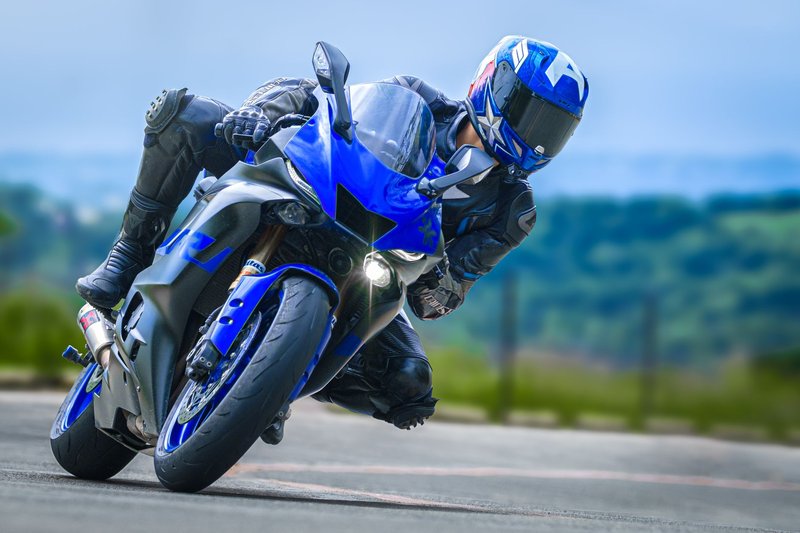
Unveiled at the 1997 Milan show as a 1998 model, the R1 existed to beat the Honda Fireblade and Ducati 916 at their own game, and it did it with a trick nobody else had: a stacked gearbox that shortened the engine front-to-back, which shortened the wheelbase to 1,385 mm without cramping the rider. The result was 150 claimed horsepower in a 177 kg package — numbers that made every other liter bike on sale look like it was designed a generation earlier, a specification that positioned it among the best motorcycles of 1998. Early bikes shipped in white/red or blue, the blue selling out almost everywhere, and a clutch recall followed shortly after launch. None of that slowed the bike down; it’s the single most influential Yamaha of the decade.
YZF-R6 (1999) {#yzf-r6}
Yamaha didn’t wait long to apply the R1 formula downward. The R6 arrived a year later with a 599cc inline-four built specifically to rev harder and lighter than anything in the class, borrowing the R1’s compact-engine philosophy to keep the chassis tight. It landed at the very end of the decade but belongs on this list — it’s the bike that made ‘supersport’ a category people cared about beyond racing.
TZR250 (through the early 1990s) {#tzr250}
The TZR250 is a road bike built to feel like Yamaha’s TZ250 grand prix racer, and in period trim that wasn’t far from true. The 249cc, liquid-cooled, parallel-twin two-stroke used Yamaha’s YPVS power-valve system and made a claimed 50 hp at 10,000 rpm in Japanese-market spec — though most domestic units were restricted closer to 45 hp under Japan’s regulations, with owners commonly de-restricting them past 60 in race trim. At 128 kg dry, it’s astonishingly light by any era’s standard, and that combination — light weight, race-bred chassis, two-stroke urgency — is exactly why collector interest in the model has only grown as clean examples get harder to find outside Japan.
Naked and Standard
XJR1200 / XJR1300 {#xjr}
Yamaha launched the XJR1200 in 1995 with a 1,188cc air-cooled inline-four making 98 hp — a deliberately old-school engine wrapped in a modern chassis, aimed at riders who wanted a big standard bike without a fairing or a race pedigree. By late 1998 it grew into the XJR1300, bumping displacement to 1,251cc and output to 106 hp. The formula — big air-cooled four, round headlight, twin gauges, three-spoke wheels — was a direct answer to the retro-standard wave Kawasaki and Suzuki were also chasing, and it’s aged into one of the more usable classic Yamahas: enough power to matter, simple enough to actually maintain.
Cruisers
Virago Series {#virago}
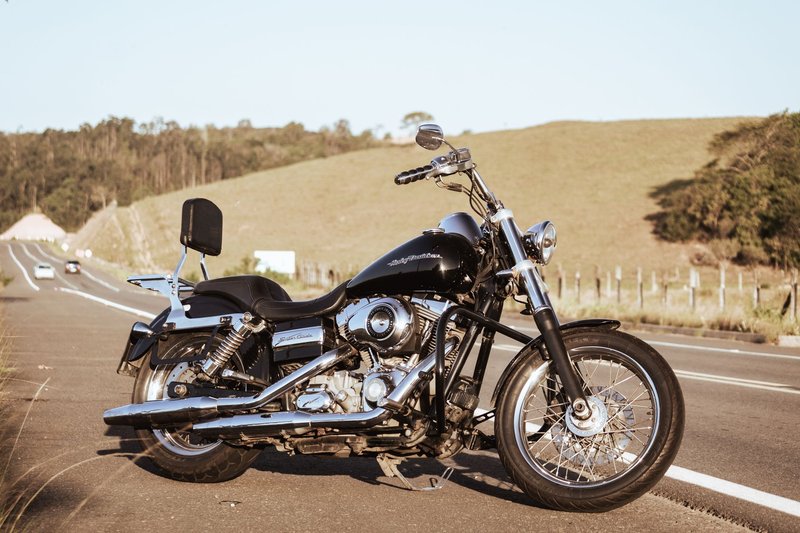
The Virago line spanned nearly the entire displacement spectrum through the 90s. The XV250 (249cc air-cooled V-twin) served as an entry bike; the XV750 (748cc, 55 hp at 7,000 rpm) and XV1100 (1,063cc, 62 hp at 6,000 rpm, 85 Nm of torque at just 3,000 rpm) covered the mainstream cruiser buyer. The XV1100 ran from 1986 all the way to 1999, when it was replaced by the DragStar 1100 — a 13-year production run that tells you how little Yamaha felt the need to mess with the formula once it worked. None of these were fast. That was never the assignment; the assignment was a V-twin that started every time and looked the part, and they did both.
V-Max (VMX1200) {#v-max}
The V-Max is the strangest success story on this list. Built around a tuned version of the Venture touring bike’s V4, with a V-Boost system that electronically opened all four throttle bodies simultaneously above 4,000 rpm for a genuine second surge of power, it made around 145 hp from a shaft-drive engine nobody expected to be quick. It launched in the US in 1985, didn’t officially reach the UK until 1991 (initially restricted to 90 hp), and got its only significant update in 1993 — larger front forks to tame high-speed wobble and four-piston brake calipers — before running essentially unchanged for another decade. According to Hagerty’s writeup, it’s best understood as a muscle car that happened to have two wheels, and that read has aged well: V-Max prices have been climbing steadily because Yamaha never built very many and never stopped building them long enough for the number to catch up with demand.
Touring and Dual-Sport
XTZ750 Super Ténéré {#xtz750}
Born from Yamaha’s Paris-Dakar rally program, the Super Ténéré took a 749cc parallel-twin and wrapped it in genuine long-range touring capability — big fuel tank, tall suspension travel, a windscreen built for real highway miles rather than a showroom photo. It’s the bike that established Yamaha’s adventure-touring DNA years before “adventure bike” became its own marketing category, and it’s a direct ancestor of the modern Ténéré 700.
XT600E {#xt600e}
The XT600E is the utilitarian counterpart to the Super Ténéré: a single-cylinder 595cc thumper built for reliability over excitement, sold across Europe and popular as both a first big bike and a genuine go-anywhere trail machine. It’s unglamorous next to the sport bikes on this list, and that’s precisely its appeal to a certain kind of rider — cheap to run, simple to fix on the side of a road, and still capable of a continent crossing if you point it that way.
The Oddball: GTS1000 {#gts1000}
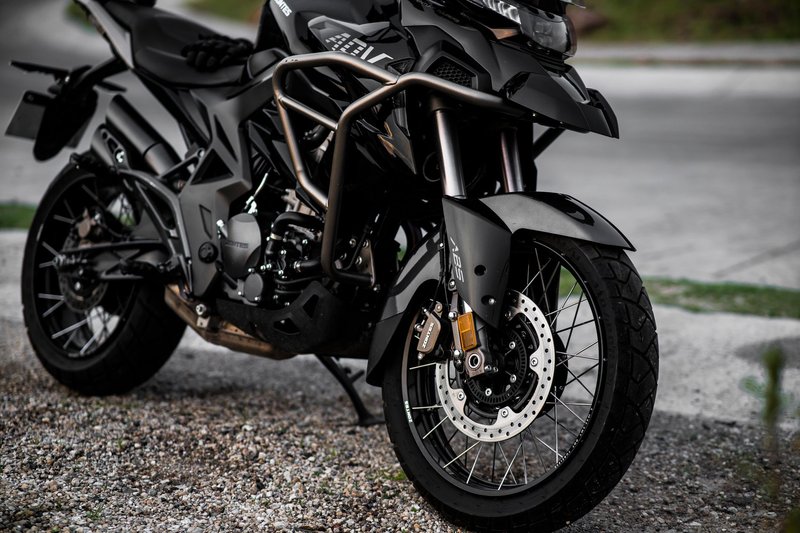
No 1990s Yamaha list is honest without the GTS1000, because no other bike on it represents Yamaha’s willingness to bet on an idea the market didn’t ask for. Introduced in 1993, it paired a 1,002cc, five-valve-per-cylinder engine (about 100 hp) with the RADD front end — a hub-center steering system designed by American engineer James Parker after Honda passed on it. Instead of a telescopic fork, an upper A-arm and a single-sided lower swingarm separated the steering and suspension functions entirely, which meant almost no dive under braking and stable geometry no matter how hard you compressed the front end. The press loved it. Riders didn’t buy it. By 1996 it was effectively finished, a commercial failure that Cycle News still writes about as one of the most interesting dead ends in production motorcycle history. That’s exactly why it’s collectible now — Yamaha never tried anything like it again, and neither has anyone else at scale.
Buying a 90s Yamaha Today: What to Check {#buying-guide}
Frame and swingarm corrosion. Aluminum Deltabox frames (FZR series, TZR250) don’t rust the way steel does, but bearing races and swingarm pivots do — check for play and grinding on any test ride, not just visually.
Carb synchronization on inline-fours. Every bike on this list older than the R1 runs carburetors. Rough idle or a flat spot mid-throttle is almost always sync or float level, not a deeper engine problem — but budget for it, because most examples haven’t been touched in years.
V-Boost and V4 charging systems on the V-Max. The stator and rectifier are known weak points on high-mileage examples; a bike that’s had electrical work documented is worth more than one that hasn’t, regardless of mileage.
GTS1000 parts availability. The RADD front end uses components no other Yamaha shares. Before you buy one, confirm the seller — or a specialist like Sun Coast Cycle — has a parts source, because a broken linkage with nowhere to source it turns a fun oddity into a lawn ornament.
Two-stroke rebuild history on the TZR250. Ring and piston wear on a bike ridden the way these were designed to be ridden is normal, not a red flag — but ask when it was last rebuilt, and discount accordingly if the answer is “never.”
The common thread across all of it: these are 30-plus-year-old motorcycles built before anyone worried about long-term parts support, so documented maintenance history is worth more than a shiny paint job every time.

Sarah Thornton
More from Sarah ThorntonHow we reviewed this article
This article was researched against manufacturer records and editorially reviewed before publishing. We accept no payment for coverage. Some guides contain affiliate links; see our affiliate disclosure.